The failing economy and harsh taxes of François Hollande's beleaguered nation
are sending thousands packing - to Britain's friendlier shores, says Anne-Elisabeth Moutet

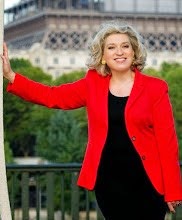
By 2014, France's public expenditure will become the world's highest, at 57 per cent of GDP Photo: Howard McWilliam
A poll on the front page of last Tuesday’s Le Monde, that bible
of the French Left-leaning Establishment (think a simultaneously boring and
hectoring Guardian), translated into stark figures the winter of
François Hollande’s discontent.
More than 70 per cent of the French feel taxes are “excessive”, and 80 per
cent believe the president’s economic policy is “misguided” and
“inefficient”. This goes far beyond the tax exiles such as Gérard Depardieu,
members of the Peugeot family or Chanel’s owners.
Worse, after decades of living in one of the most redistributive systems in western Europe, 54 per cent of the French believe that taxes – of which there have been 84 new ones in the past two years, rising from 42 per cent of GDP in 2009 to 46.3 per cent this year – now widen social inequalities instead of reducing them.
Worse, after decades of living in one of the most redistributive systems in western Europe, 54 per cent of the French believe that taxes – of which there have been 84 new ones in the past two years, rising from 42 per cent of GDP in 2009 to 46.3 per cent this year – now widen social inequalities instead of reducing them.
This is a noteworthy departure, in a country where the much-vaunted value of
“equality” has historically been tinged with envy and resentment of the more
fortunate. Less than two years ago, the most toxic accusation levied at
Nicolas Sarkozy was of being “le président des riches”, favouring his
yacht-sailing CEO buddies with tax breaks and sweet deals. By contrast,
Hollande, the bling-free candidate, was elected on a platform of increasing
state spending by promising to create 60,000 teachers’ jobs, as well as
150,000 subsidised entry-level public-service jobs for the long-time
unemployed and the young – without providing for significant savings
elsewhere.
By 2014, France’s public expenditure will overtake Denmark’s to become the
world’s highest: 57 per cent of GDP. In effect, just to keep in the same
place, like a hamster on a wheel, and ensure that the European Central Bank
in Frankfurt isn’t too unhappy with us, Hollande now needs cash.
Technocrats, MPs and ministers have been instructed to find every euro they
can rake in – in deferred benefits, cancelled tax credits, extra levies. As
they ignore the notion of making some serious cuts (mooted at regular
intervals by the IMF, the OECD and even France’s own Cour des Comptes), the
result can be messy.
On the one hand, the lacklustre economy and finance minister Pierre Moscovici
recently admitted that he “understood” the French’s “exasperation” with
their heavy tax burden. This earned him a sharp rap on the fingers from the
president and his beleaguered PM, Jean-Marc Ayrault. On the other, new taxes
keep being announced, in chaotic fashion, nearly every week. “Announced”
doesn’t mean “implemented”: the Hollande crowd have developed a unique Wile
E Coyote-style of leaks, technical glitches, last-minute tweaks and
horse-market bargaining whereby almost nobody knows, at any given time, who
will be targeted by the taxman, and how. Unsurprisingly, this is liked by no
one except us reptiles of the press, eager to report on the longest series
of own goals in the history of government communications.
Take last year’s famous 75 per cent supertax, on individuals earning over one
million euros a month. This has still not been implemented. First, it got
struck down by France’s Constitutional Council on a technicality. Leaks
suggested the rate would fall to 66 per cent. They were confirmed, then
denied. Hollande eventually vowed that the tax would be paid by the targeted
individuals’ employers, for daring to offer such “obscenely” high salaries.
This has just been approved by the National Assembly, and must still pass
the Senate. So far, it is only supposed to apply to 2013 and 2014 income,
but no one knows if the bill will be prolonged, killed or transformed.
What we do know is that this non-existent (so far) tax has been the clincher that sent hundreds, possibly thousands of French citizens abroad: not just “the rich”, whom Hollande, during his victorious campaign, said he personally “disliked”, and who now are pushing up house prices in South Kensington and fighting bitterly over the Lycée Charles de Gaulle’s 1,200 new places; but also the ambitious young, who feel that their own country will turn on them the minute they achieve any measure of personal success.
In the heart of Paris’s Right Bank, where I live, only foreigners seem to buy flats, at prices entirely disconnected from reality. In my street, I have spotted three new Maseratis. Even before seeing their Qatari plates, I knew they couldn’t belong to local owners: they’re an ostentatious admission of wealth no one wants to make in Hollande’s France. (A luxury car is one of the “outward signs of wealth” your tax inspector has been specifically trained to query. The lesson has been learnt: last year, Rolls-Royce sold no cars in France.) On the Left Bank, elegant Americans buy bijoux apartments on place de Furstenberg, at 30,000 euros per square metre, and venture into the fine Café de Flore for elevenses.
“It’s not only that people don’t like to be treated like criminals just because they’re successful,” says a French banker friend who has recently moved to London. “But this uncertainty in every aspect of the tax system means it is impossible to do business: you don’t know what your future costs are, or your customer’s. You can’t buy, you can’t sell, you can’t hire, you can’t fire.”
While I’m still happy in Paris, I envy him his surroundings, the vibrancy of London, the feeling that anything is possible, the sense of fun I remember from the years I lived there in the Eighties and Nineties, and that I gladly find again every time I zoom in on the Eurostar. Paris, my city of birth, is an elegant museum – where any new idea, in any context, seems to be fated to be shot down by a combination of old, structural conformism and blasé disenchantment.
Today, one out of four French university graduates wants to emigrate, “and this rises to 80 per cent or 90 per cent in the case of marketable degrees”, says economics professor Jacques Régniez, who teaches at both the Sorbonne and the University of New York in Prague. “In one of my finance seminars, every single French student intends to go abroad.”
“The French workforce is now two-speed,” explains a headhunter who shuttles between Paris and London. “Among the young, perhaps a third speak English, are willing to relocate, and want to work. For one thing, their dream employers are the more prosperous of the large French multinationals, almost all those in the CAC40 index, who make over half of their profits abroad, sometimes over 90 per cent – companies like, say, L’Oréal, Schneider or Danone. This is why French universities have shocked the Académie française and now teach many courses in English.
“But I’ve also seen determined young people take jobs in places like Vietnam, with local contracts and nothing like the level of protection afforded by French labour law, in order to gain a proper first experience of business in a competitive environment. And then you have a large group whose ambition is simply to stay outside the economy.”
This means a trade-off with which anyone in France is familiar: young people, and many of their parents, dream of getting any kind of state or local administration post, usually badly paid, very often frustrating, but which ensures complete job security, unrelated to the economic situation, the market, or their own performance.
More than a quarter of the French workforce is employed by some public body or other: schools, hospitals, local and regional councils, the police, the civil service proper – or those new subsidised public-service jobs the Hollande government is so keen on.
While the young French generations were aspiring to cocoon themselves away from the realities of the world, our nearest neighbours were following the opposite trend. In 2000, under a socialist chancellor, Gerhard Schroeder, German businesses paid an astonishing 51.6 per cent company tax – largely to pay for the previous decade’s reunification. Today, this is down to 29.8 per cent, when the French equivalent, the highest in Europe, is 38 per cent. By 2003, Schroeder had embarked on a widespread reform programme, lowering taxes and drastically slashing benefits, curtailing the influence of the unions, and eventually reducing German unemployment from 10 per cent to 7 per cent (it’s 11 per cent in France).
There are many reasons why this wouldn’t work in France, not least because the French Socialists happen to have noticed that Schroeder and his party reformed themselves out of a job. Another is that French unions represent very little: less than 8 per cent of the French workforce overall is unionised, a figure that falls to between 3 per cent and 5 per cent in the private sector. Unions do, however, play a mandated part in a number of negotiation and welfare net structures, the unemployment benefits system, retraining schemes and the national health and pensions co-administration. This, not members’ contributions, keeps them afloat. The law also provides for legal labour dispute fines to be paid to the unions.
French unions see as their main goal the preservation of the status quo: from overprotective labour laws that make it so hard to fire employees that French bosses will do almost anything to avoid hiring new staff (who cost them a whopping 70 per cent in payroll taxes), to perpetuating antiquated regulations dating back to Vichy France, banning Sunday trading and evening shifts.
Recent union legal actions have forced businesses to close on evenings and Sundays, from the cosmetics chain Sephora – where employees protested that they wanted to keep working their late hours – to the British-owned DIY chain Castorama, which belongs to Kingfisher: no wonder Ian Cheshire, Kingfisher’s chief executive, complained last Friday that this harmed the French economy as well as his stores. “The president has said that recovery is in sight: I’m not sure where he’s looking at the moment. The mood is improving in the UK, not in France.”
It wasn’t fated to happen. “By 2000,” says Jacques Régniez, “French multinationals had achieved a very high level of competitiveness. Having committed to the strong franc, in the run-up to the euro they were forced to become lean and efficient. They rationalised production, and French workers became some of the most productive in the world.” French utilities, insurers, aerospace makers and luxury-goods conglomerates were up there with the best. If you wanted the best nuclear plant, crocodile handbag, commercial aircraft, high-speed train, you bought French.
What went wrong, says Régniez, was a bill passed by the then socialist Lionel Jospin government reducing the working week to 35 hours. “Where our competitors, especially the Germans, saw the need to keep prices and costs down, France spent money she couldn’t afford.” The entire system, he explains, tilted fatally to the side of salary hikes, perks and a lowering of retirement age, in the face of every observable demographic trend. Investment slowed down in the private sector, and almost stopped in the public one. “Each year, France has missed out on four GDP points of capital investment. By now, after a decade-and-a-half, we are not only lagging behind, it’s not certain we can make up for it. It would cost a 4.5 per cent hike in VAT, and other significant hikes in payroll taxes. That, quite simply, is not realistic.”
Even France’s vaunted infrastructures – those trains, roads, telecoms cables, the once ultra-performing electrical grid, the nuclear plants, the delayed 4G network – have taken a severe hit.
A French businessman who moved to London last year and asked not to be quoted by name, “because my tax audit would be even more retaliatory than what I’m currently being subjected to”, compares July’s Brétigny train crash, France’s worst rail disaster in a quarter of a century that killed six and injured 100, to the Paddington and Potters Bar derailments. “The rolling stock is ageing, the tracks are in a constant state of disrepair, even the TGVs now have regular delays because of catenary failure.”
Despite disputing allegations of negligence, SNCF have said they will reinforce maintenance “without waiting for the conclusions of the inquiry”. Criticisms have also been made that vast sums went on salaries, benefits and pensions.
But most analysts share the blame between Left- and Right-wing French governments in the past two decades. An investment banker, who has also moved to London recently, dates the wrong choices from the first Jacques Chirac presidency, in 1995. Chirac and his PM Alain Juppé, both Gaullists, decided to reform the huge French public sector’s pension system, to align civil servants’ pay-as-you-go pensions, which were (and still are) much more favourable, with those of the private sector.
There followed three weeks of hard strikes, shutting down the entire country, from schools to public transport to utilities and the post office. Juppé was ready to stick it out, but Chirac blinked. The reform was shelved, and for the next 12 years he stayed in office, Chirac never, ever tried to clash with vested interests again.
Sarkozy had great plans after his 2007 election. He believed in business, and good pay for hard work, and was devastatingly frank about it. It might – perhaps – have passed in prosperous times: one year on, the financial crisis hit, and his brusque style and love of bling clashed with both the times and age-old French preferences. (France is an old Catholic country that, for over a century, was influenced by unapologetic Marxism. It is atavistically hostile to money.) The reforms Sarko managed to pass, much milder than necessary, still ensured his unpopularity. He bet on French realism, and lost.
Realism – actual, real-life realism – is not an accusation you can levy at Hollande. Like Chirac – who supported him both because of a deep personal dislike for Sarkozy, and because they are in many ways very similar – France’s unlikely seventh president of the Fifth Republic is a professional politician, a graduate of the top government school ENA, and has never held a job in the private sector. Both Chirac and Hollande come from Corrèze, in central France, a region that has regularly provided French politics with a certain type of wily opportunist. Both appear easy-going and friendly, and both are complete cynics, with very little in the way of ideals, and an infinite capacity to scheme in order to stay in power.
Chirac, like Hollande, knew how to cultivate an array of political allies: in the case of Hollande, this means keeping the Left of his party as well as his Green allies happy with a number of symbolic measures, from the supertax to the recent anti-fracking bill.
Uninterested in the impact of morale and image on politics and the economy, Hollande believes that the economic cycle is bound to turn (he has said several times already that the recession is behind us), and that all he’s got to do is stay in power until things get better – thanks to the Chinese, the Americans, it hardly matters which. He doesn’t even worry about Marine Le Pen’s inroads in local elections: a junior aide in the Mitterrand Élysée 25 years ago, he believes the National Front, conjured up by his old boss, is a convenient accessory designed to split the Right and help him win a second term in 2017.
Professor Régniez believes this is very dangerous. “Sarkozy narrowly lost in 2012 for personal reasons – his style annoyed voters who could have agreed on his policies, but who wanted to punish him: 18 per cent of them voted for Marine Le Pen, against only 5 per cent for her father in 2007.
“This should be a warning to other countries, like Britain – it’s all very well punishing a conservative politician you’re dissatisfied with by voting for a maverick, Le Pen here, Farage there. But it gets the likes of Hollande elected. Think well: is ours the kind of future you want for your country?”
© Telegraph Media Group & Anne-Elisabeth Moutet, 2013
What we do know is that this non-existent (so far) tax has been the clincher that sent hundreds, possibly thousands of French citizens abroad: not just “the rich”, whom Hollande, during his victorious campaign, said he personally “disliked”, and who now are pushing up house prices in South Kensington and fighting bitterly over the Lycée Charles de Gaulle’s 1,200 new places; but also the ambitious young, who feel that their own country will turn on them the minute they achieve any measure of personal success.
In the heart of Paris’s Right Bank, where I live, only foreigners seem to buy flats, at prices entirely disconnected from reality. In my street, I have spotted three new Maseratis. Even before seeing their Qatari plates, I knew they couldn’t belong to local owners: they’re an ostentatious admission of wealth no one wants to make in Hollande’s France. (A luxury car is one of the “outward signs of wealth” your tax inspector has been specifically trained to query. The lesson has been learnt: last year, Rolls-Royce sold no cars in France.) On the Left Bank, elegant Americans buy bijoux apartments on place de Furstenberg, at 30,000 euros per square metre, and venture into the fine Café de Flore for elevenses.
“It’s not only that people don’t like to be treated like criminals just because they’re successful,” says a French banker friend who has recently moved to London. “But this uncertainty in every aspect of the tax system means it is impossible to do business: you don’t know what your future costs are, or your customer’s. You can’t buy, you can’t sell, you can’t hire, you can’t fire.”
While I’m still happy in Paris, I envy him his surroundings, the vibrancy of London, the feeling that anything is possible, the sense of fun I remember from the years I lived there in the Eighties and Nineties, and that I gladly find again every time I zoom in on the Eurostar. Paris, my city of birth, is an elegant museum – where any new idea, in any context, seems to be fated to be shot down by a combination of old, structural conformism and blasé disenchantment.
Today, one out of four French university graduates wants to emigrate, “and this rises to 80 per cent or 90 per cent in the case of marketable degrees”, says economics professor Jacques Régniez, who teaches at both the Sorbonne and the University of New York in Prague. “In one of my finance seminars, every single French student intends to go abroad.”
“The French workforce is now two-speed,” explains a headhunter who shuttles between Paris and London. “Among the young, perhaps a third speak English, are willing to relocate, and want to work. For one thing, their dream employers are the more prosperous of the large French multinationals, almost all those in the CAC40 index, who make over half of their profits abroad, sometimes over 90 per cent – companies like, say, L’Oréal, Schneider or Danone. This is why French universities have shocked the Académie française and now teach many courses in English.
“But I’ve also seen determined young people take jobs in places like Vietnam, with local contracts and nothing like the level of protection afforded by French labour law, in order to gain a proper first experience of business in a competitive environment. And then you have a large group whose ambition is simply to stay outside the economy.”
This means a trade-off with which anyone in France is familiar: young people, and many of their parents, dream of getting any kind of state or local administration post, usually badly paid, very often frustrating, but which ensures complete job security, unrelated to the economic situation, the market, or their own performance.
More than a quarter of the French workforce is employed by some public body or other: schools, hospitals, local and regional councils, the police, the civil service proper – or those new subsidised public-service jobs the Hollande government is so keen on.
While the young French generations were aspiring to cocoon themselves away from the realities of the world, our nearest neighbours were following the opposite trend. In 2000, under a socialist chancellor, Gerhard Schroeder, German businesses paid an astonishing 51.6 per cent company tax – largely to pay for the previous decade’s reunification. Today, this is down to 29.8 per cent, when the French equivalent, the highest in Europe, is 38 per cent. By 2003, Schroeder had embarked on a widespread reform programme, lowering taxes and drastically slashing benefits, curtailing the influence of the unions, and eventually reducing German unemployment from 10 per cent to 7 per cent (it’s 11 per cent in France).
There are many reasons why this wouldn’t work in France, not least because the French Socialists happen to have noticed that Schroeder and his party reformed themselves out of a job. Another is that French unions represent very little: less than 8 per cent of the French workforce overall is unionised, a figure that falls to between 3 per cent and 5 per cent in the private sector. Unions do, however, play a mandated part in a number of negotiation and welfare net structures, the unemployment benefits system, retraining schemes and the national health and pensions co-administration. This, not members’ contributions, keeps them afloat. The law also provides for legal labour dispute fines to be paid to the unions.
French unions see as their main goal the preservation of the status quo: from overprotective labour laws that make it so hard to fire employees that French bosses will do almost anything to avoid hiring new staff (who cost them a whopping 70 per cent in payroll taxes), to perpetuating antiquated regulations dating back to Vichy France, banning Sunday trading and evening shifts.
Recent union legal actions have forced businesses to close on evenings and Sundays, from the cosmetics chain Sephora – where employees protested that they wanted to keep working their late hours – to the British-owned DIY chain Castorama, which belongs to Kingfisher: no wonder Ian Cheshire, Kingfisher’s chief executive, complained last Friday that this harmed the French economy as well as his stores. “The president has said that recovery is in sight: I’m not sure where he’s looking at the moment. The mood is improving in the UK, not in France.”
It wasn’t fated to happen. “By 2000,” says Jacques Régniez, “French multinationals had achieved a very high level of competitiveness. Having committed to the strong franc, in the run-up to the euro they were forced to become lean and efficient. They rationalised production, and French workers became some of the most productive in the world.” French utilities, insurers, aerospace makers and luxury-goods conglomerates were up there with the best. If you wanted the best nuclear plant, crocodile handbag, commercial aircraft, high-speed train, you bought French.
What went wrong, says Régniez, was a bill passed by the then socialist Lionel Jospin government reducing the working week to 35 hours. “Where our competitors, especially the Germans, saw the need to keep prices and costs down, France spent money she couldn’t afford.” The entire system, he explains, tilted fatally to the side of salary hikes, perks and a lowering of retirement age, in the face of every observable demographic trend. Investment slowed down in the private sector, and almost stopped in the public one. “Each year, France has missed out on four GDP points of capital investment. By now, after a decade-and-a-half, we are not only lagging behind, it’s not certain we can make up for it. It would cost a 4.5 per cent hike in VAT, and other significant hikes in payroll taxes. That, quite simply, is not realistic.”
Even France’s vaunted infrastructures – those trains, roads, telecoms cables, the once ultra-performing electrical grid, the nuclear plants, the delayed 4G network – have taken a severe hit.
A French businessman who moved to London last year and asked not to be quoted by name, “because my tax audit would be even more retaliatory than what I’m currently being subjected to”, compares July’s Brétigny train crash, France’s worst rail disaster in a quarter of a century that killed six and injured 100, to the Paddington and Potters Bar derailments. “The rolling stock is ageing, the tracks are in a constant state of disrepair, even the TGVs now have regular delays because of catenary failure.”
Despite disputing allegations of negligence, SNCF have said they will reinforce maintenance “without waiting for the conclusions of the inquiry”. Criticisms have also been made that vast sums went on salaries, benefits and pensions.
But most analysts share the blame between Left- and Right-wing French governments in the past two decades. An investment banker, who has also moved to London recently, dates the wrong choices from the first Jacques Chirac presidency, in 1995. Chirac and his PM Alain Juppé, both Gaullists, decided to reform the huge French public sector’s pension system, to align civil servants’ pay-as-you-go pensions, which were (and still are) much more favourable, with those of the private sector.
There followed three weeks of hard strikes, shutting down the entire country, from schools to public transport to utilities and the post office. Juppé was ready to stick it out, but Chirac blinked. The reform was shelved, and for the next 12 years he stayed in office, Chirac never, ever tried to clash with vested interests again.
Sarkozy had great plans after his 2007 election. He believed in business, and good pay for hard work, and was devastatingly frank about it. It might – perhaps – have passed in prosperous times: one year on, the financial crisis hit, and his brusque style and love of bling clashed with both the times and age-old French preferences. (France is an old Catholic country that, for over a century, was influenced by unapologetic Marxism. It is atavistically hostile to money.) The reforms Sarko managed to pass, much milder than necessary, still ensured his unpopularity. He bet on French realism, and lost.
Realism – actual, real-life realism – is not an accusation you can levy at Hollande. Like Chirac – who supported him both because of a deep personal dislike for Sarkozy, and because they are in many ways very similar – France’s unlikely seventh president of the Fifth Republic is a professional politician, a graduate of the top government school ENA, and has never held a job in the private sector. Both Chirac and Hollande come from Corrèze, in central France, a region that has regularly provided French politics with a certain type of wily opportunist. Both appear easy-going and friendly, and both are complete cynics, with very little in the way of ideals, and an infinite capacity to scheme in order to stay in power.
Chirac, like Hollande, knew how to cultivate an array of political allies: in the case of Hollande, this means keeping the Left of his party as well as his Green allies happy with a number of symbolic measures, from the supertax to the recent anti-fracking bill.
Uninterested in the impact of morale and image on politics and the economy, Hollande believes that the economic cycle is bound to turn (he has said several times already that the recession is behind us), and that all he’s got to do is stay in power until things get better – thanks to the Chinese, the Americans, it hardly matters which. He doesn’t even worry about Marine Le Pen’s inroads in local elections: a junior aide in the Mitterrand Élysée 25 years ago, he believes the National Front, conjured up by his old boss, is a convenient accessory designed to split the Right and help him win a second term in 2017.
Professor Régniez believes this is very dangerous. “Sarkozy narrowly lost in 2012 for personal reasons – his style annoyed voters who could have agreed on his policies, but who wanted to punish him: 18 per cent of them voted for Marine Le Pen, against only 5 per cent for her father in 2007.
“This should be a warning to other countries, like Britain – it’s all very well punishing a conservative politician you’re dissatisfied with by voting for a maverick, Le Pen here, Farage there. But it gets the likes of Hollande elected. Think well: is ours the kind of future you want for your country?”
© Telegraph Media Group & Anne-Elisabeth Moutet, 2013