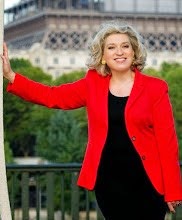
Showing posts with label Rachida Dati. Show all posts

Wednesday, October 3, 2012

The politics and sex scandal that brought some glitz back to France

Does Rachida Dati's paternity suit finally solve Paris's most tantalising mystery?
 
Rachida Dati: opponents say she is simply stirring the pot - The politics and sex scandal that brought some glitz back to France
Rachida Dati: opponents say she is simply stirring the pot Photo: Rex Features
All it took was one legal injunction – and François Hollande’s depressed, tax-burdened France was suddenly recalling the glitz of the Sarkozy years. Rachida Dati, the Dior-clad former justice minister, now a Euro MP, had for the past four years steadfastly refused to name the father of her daughter Zohra. Miss Dati – always referred to in France as Rachida – has just filed a paternity case against the hotel tycoon Dominique Desseigne, heir to one of France’s great fortunes.

Rachida’s rapier-writ seemed finally to answer one of Paris’s tantalising mysteries: the identity of the country’s most famous single mother’s mysterious lover. Mr Desseigne’s had been among the names bandied about, but so was that of Spain’s former premier José-Maria Aznar. The married Mr Aznar had to issue a denial. Also mentioned were the EDF Energy chairman, Henri Proglio; Qatar’s attorney-general, Ali Bin Fetais al-Marri; the then President Sarkozy’s brother François, a star paediatrician; the former sports minister Bernard Laporte; and the actor Vincent Lindon. All hurried to deny the rumours.

All Rachida’s men are of a type: raffish, worldly, elegantly middle-aged, either well-off or seriously rich, and close to Nicolas Sarkozy (rightly or wrongly, the former president himself was briefly included in the tally, for which his third wife, Carla Bruni, never forgave Rachida). I remember thinking that for the Becky-Sharp-ambitious Rachida to keep such a close lid on the name, it was possible that baby Zohra’s father was a complete unknown.

Within 10 minutes of working my telephone yesterday, I felt thrown back into the overheated rumour mill of the Sarkozy Noughties. Two sources had radically opposite readings of the situation. One was a long-time friend of Mr Desseigne’s: “He’s absolutely, positively not the father. Rachida is just trying to stir the pot.” He’s betting on Aznar. “They were texting all the time when she was pregnant.” No proof, of course, was given.

The other – a Sarkozyste politician – was quite sure Mr Desseigne was the father: “Rachida isn’t stupid. There will be DNA testing. She wants some sort of child support, I expect. It also puts her back in the news at a time when the opposition is in dire need of a strong candidate for Paris mayor in 2014.”

All the same, Rachida Dati, once the bright star of Sarkozy’s rainbow cabinet, may have overplayed her hand. She was given a sinecure as mayor of Paris’s seventh arrondissement, a district that makes Knightsbridge look depressed, but couldn’t get chosen for a safe MP’s seat last June. She must have felt in danger of being forgotten – but will the whiff of bling she brings back be an asset or a liability in austerity-hit France?

---------------
The former president himself suddenly seems to be everywhere. Apart from calls for a halt to the Syrian repression, Sarkozy has kept uncharacteristically silent since his defeat in May. He now jogs in the Bois de Boulogne, or attends football matches or society weddings. At a time when François Hollande’s ratings have plummeted faster than any Fifth Republic president’s – to more than 50 per cent negative – Sarkozy is basking in a new-found popularity: 44 per cent now say he’d tackle the economic crisis better than the current lot.

---------------
The French rarely feel that foreigners can write convincingly about their history, but the first readers of Jo Graham’s new novel, The General’s Mistress, say her portrait of Ida Saint-Elme, a Dutch-born courtesan loved by Marshal Ney, gets it right. Saint-Elme rode with Napoleon’s army, travelled from Russia to Egypt and wrote the biggest-selling memoirs of the early 19th century, earning herself the scandalous name of “the female Casanova”.

© Telegraph Media Group & Anne-Elisabeth Moutet, 2012

Wednesday, June 13, 2012

France's battle royal between Ségolène Royal and Valérie Trierweiler has the nation gripped

The warring women on the frontline are giving politics a sharply feminine edge.

Valérie Trierweiler: giving France a delightful taste of personal strife - France's battle royal between Ségolène Royal and Valérie Trierweiler has the nation gripped
Valérie Trierweiler: giving France a delightful taste of personal strife Photo: AFP/Getty Images
The French, like most of us, love a catfight. When First Girlfriend Valérie Trierweiler tweeted her support for the opponent of Ségolène Royal, the rival she supplanted in the affections of President François Hollande, in Sunday’s parliamentary elections, the entire nation sank with delight into the bliss of watching the political become personal.

Barely a month ago, the day after her partner was elected President of the French Republic, Trierweiler confidently told Agence France Presse how much better suited to the job she was than her predecessor, Carla Bruni, Nicolas Sarkozy’s third wife. “Carla Bruni comes from a world entirely alien to politics: fashion, showbusiness. She doesn’t know its codes.” She, on the other hand, Trierweiler explained somewhat smugly, had been a political journalist for 20 years. “I know politics, I know the media.”

The woman many of the French are calling “Rottweiler” then illustrated the shortest way to link the words “pride”, “goeth”, “before” and “fall”. Nicolas Sarkozy had been kicked out of office chiefly for having paraded his private life with ostentation. Demurring that she would play “no political part whatsoever”, Trierweiler made it difficult to forget her existence for one minute. Whether she was bemoaning that she didn’t like the title “First Lady” and inviting the public to think up a new one, or insisting that she could remain a working Paris Match reporter “in all independence” while maintaining a staff and office at the Élysée Palace, she was hardly ever out of the news.

Scenting a rich vein, the political puppet show Les Guignols de l’info hastily recycled the puppet they’d used for Jacques Chirac’s spin-doctor daughter Claude, slapping on a new wig and redoing its make-up to rush their Valérie on air. They now portray Hollande as a bumbling, henpecked husband. Deferring to She-Who-Must-Be-Obeyed, the President is depicted fleeing to the comforting arms of a softer, sweeter, more understanding female – Angela Merkel.

But in real life, the woman Trierweiler has been obsessing about for nearly a decade is Ségolène Royal, Hollande’s former partner of 23 years and the mother of his four children. Trierweiler admits to having started her affair with Hollande in 2005. He was then Socialist Party leader; she had been covering the Left as a Paris Match political correspondent for years. But they’d met years before: it was a young Trierweiler who reported from Royal’s maternity ward after she gave birth to her and Hollande’s last child, Flora, in 1992. She’d remained friendly with Flora’s father ever since.

Royal, who had gradually become aware of her partner’s betrayal, kept silent until the night of her 2007 defeat against Nicolas Sarkozy. Then, minutes after the result, she announced that the doors of her house were “now closed to Hollande” – who, while still officially living with her, had in fact moved into Trierweiler’s flat. It transpired that Trierweiler had egged him on to sabotage Royal’s presidential bid during the campaign.

Having lost her bid for a second presidential try in last year’s Socialist primaries, Royal immediately gave her support to her children’s father. Meanwhile, Trierweiler went to absurd lengths to sideline her. In rallies, Royal found herself seated away from other party bigwigs, and excluded from pictures. The children, who also were involved with the campaign, tried to intervene with Hollande, but to no effect; instead he often remonstrated with his advisers that they should “support Valérie: she’s so insecure”. Royal was excluded from Hollande’s Élysée swearing-in, but he did give her his official support in her bid for the La Rochelle seat, in the region where she has been council president for eight years.

This infuriated Trierweiler and led to this week’s tweeting extremes, igniting the kind of nationwide ruckus which is still in full swing. She has dug her heels in, refusing to recant her tweet. Meanwhile, several former Royal adversaries, all women, including Socialist leader Martine Aubry and Green leader Cécile Duflot, have very loudly sided with her. “I hope this tweet gets [Royal] elected,” Aubry said yesterday.

Feminine solidarity is relatively new in France, in politics and elsewhere: it was really only seen last year, at the height of the Strauss-Kahn affair, when women politicians from Marine le Pen to a Trotskyite, including two then Cabinet ministers, denounced casual sexism and double standards. Earlier, Rachida Dati, Sarkozy’s glamorous justice minister, found relatively little support when she chose to become a single mother in office, then got sidelined partly because she’d been a friend of her boss’s second wife. But all signs are that Trierweiler’s latest outburst may have triggered unintended consequences. “You started missing Sarkozy, now you will miss Carla,” Nadine Morano, a former Sarkozy minister, tweeted yesterday.

© Telegraph Media Group & Anne-Elisabeth Moutet, 2012

Monday, February 20, 2012

Needy Nicolas Sarkozy looks to the upper class to get re-elected

The French president has said he is going for posh, not brash, in this election, writes Anne-Elisabeth Moutet.
Needy Nicolas looks to the upper class; Sarkozy is running for office again, despite low opinion poll ratings; Reuters
Sarkozy is running for office again, despite low opinion poll ratings Photo: Reuters

Once, as he blithely launched into his first presidential campaign five years past, Nicolas Sarkozy made a point of staffing his team with the kind of faces few were used to in the arch-homogeneous French political world. (Think white, middle-class, middle-aged, usually male, graduated from two or three elite institutions, unbearably smarmy.) Out the conservative candidate went to the country’s banlieues and tough estates, plucking French-Arab and African community organisers and entrepreneurs to help blur his Rightist image. For his spokesperson, Sarkozy picked Rachida Dati, a combative mid-level judge born of a Moroccan father and Algerian mother, who became a star, then – as the new face of diverse France – justice minister, featuring on magazine covers in Dior and Louboutin heels.

As it turned out, the hirings soon soured on Sarkozy, or he soured on them. The president has just announced he is going for posh, not brash this time. His campaign spokesperson is the arch-establishment Nathalie Kosciusko-Morizet, the 38-year-old minister for environment, grand-daughter of a former ambassador to the US and descended from a general who fought with George Washington.

NKM, as she is known, cultivates a pre-Raphaelite beauty – diaphanous skin, long red hair, large blue eyes – with the blunt expressions of someone who chose to do national service in the French Navy. Her style is about as far from Rachida Dati’s conventional haute-bling as possible – NKM mixes arcane Japanese designers with white silk shirts, a family signet ring with artist-designed chokers. NKM is a hard worker and a canny communicator – she has by far the most Twitter followers of the cabinet, at 110,000. She has been known to stand up to Sarkozy – at one stage he demoted her to junior minister to the digital economy, seen as the graveyard shift. She fulfils the almost impossible equation of pleasing both the traditional Right, where the president’s pollsters think that there are enough votes to claw back from the dismal figures, and the Bobos, the affluent liberal voters seduced by the Greens and the more modern wing of the Socialist party.

What she isn’t, though, is well-liked among her own. She is seen, not without cause, as no team player. The youth employment minister, Nadine Morano, the John Prescott of the cabinet, a lorry-driver’s daughter competing for the spokeswoman job, sees NKM as a personal enemy. Not a single one of the MPs in NKM’s constituency call her an ally. They recall bitterly that as minister she used up all her subsidies budget for the one train line that reached her town, leaving not a centime for the other branch line.

If Sarkozy scrapes by for a second term on May 6, NKM is well-placed for a major ministry, possibly even for the PM’s job. She obviously feels that it is worth ruffling a few feathers.

...

I am now (sort of) famous on Twitter, after Sarah Brown elle-même retweeted my last Telegraph piece on the Merkozy duo. Obviously she felt calling Angela Merkel “Sarko’s latest arm candy” was offensive to women everywhere. I would have thought seeing Sarkozy start his presidency flaunting, as a PR stunt, a Prada-dressed trophy wife on his arm and ending it with the leader of Europe’s most powerful country at his side signalled a realigned sense of priorities. Never mind, I’m enjoying all the nice new followers.

...

They used to call it Tinseltown, but it may become Glittertown now that the statuesque Nadja Swarovski, of the crystal dynasty, has set up a production company to put out a new Hollywood version of Romeo and Juliet, scripted by Julian Fellowes. No doubt we’ll finally get to know why the Capulets wouldn’t let Juliet marry Romeo. Too nouveau? Fish knives and cruet holders at the Montague dinners?

© Telegraph Media Group & Anne-Elisabeth Moutet, 2012

Sunday, October 9, 2011

An expectant nation waits for Carla to deliver

Could the president's popular wife become Paris' first yummy mummy, asks Anne-Elisabeth Moutet

Carla Bruni-Sarkozy has complained about not being allowed to smoke or drink during pregnancy (REUTERS)

Forget little Florence Cameron. Forget Tony and Cherie’s Leo – and those embarrassing Balmoral disclosures. Nicolas and Carla’s bébé, due to arrive imminently, promises to send France into a rarely-seen frenzy, right in time for next year’s presidential election.

Coyly alluded to for months before the obviously growing bump prompted the happy Maman to disclose her condition in a Bastille Day interview about Libya (as one does), the presidential child will, we are assured, be shielded from media intrusion. No pictures, either, at the chic Clinique de La Muette in the 16th arrondissement of Paris where she is expected to give birth (rated on the forums of auFeminin.com, France’s answer to Mumsnet, as the Parisian woman’s favourite).

“I made a mistake early on when I allowed my son Aurélien to be photographed,” Carla told Madame Figaro magazine a few weeks ago, referring to her much-publicised first holiday in Egypt with the then-courting Sarkozy in 2008. She went on to explain that children should be “protected from the world”.

Few in France doubt that her actual meaning was that Nicolas Sarkozy should be protected from any relapse into his early show-off antics, when the president swaggered in Ray-Ban aviator glasses with his glamorous wife du jour on his arm, seemingly measuring his success by the number of paparazzi clicking away in the immediate vicinity. This has never gone down well here, where aloofness – even cold arrogance – has, over the centuries, been the default attitude of successful monarchs and presidents alike. It is especially a no-no in times of economic hardship.

Carla Bruni, a wealthy and successful woman in her own right, has always managed to stay far more popular than her husband by a combination of understated simplicity, precision-calibrated self-deprecation – and a shrewd instinct for discretion honed by an Italian childhood spent under the very real threat of kidnapping by the Red Brigades.

In this she blends seamlessly with her adopted habitat, the Seizième sud, home of the discreet Parisian bourgeoisie. Her neighbours in the 75016 postcode, Nicolas Sarkozy’s natural constituency, strongly disapproved of the initial Sarko style, which included parading his three sons (by his two previous wives) and two bottle-blonde stepdaughters at his 2007 Elysée inauguration.

The new régime, in which Carla’s instincts collude with Sarko’s spin-doctoring team, has been protesting (unconvincingly) that “no-one is interested in this private event” – there won’t even be an official Presidency communiqué for the birth – while overseeing a few strategic leaks to upmarket women’s magazines.

Adding a light skirmishing touch to the whole setup is Sarkozy’s somewhat louche 82-year-old father, the Hungarian-born Baron Pal Sarkozy de Nagy-Bocsa, who has become an unofficial but quite chatty source to German tabloids, on every matter from the Catholic baptism to the (inaccurate, as it turned out) date planned for the birth. There is no love lost between Nicolas Sarkozy and his four-times-married father who abandoned his wife when young Nicolas was eight; but there is a feeling here that if the president had really wanted to shut Daddy up, he would have succeeded.

Predictably, all the celebrity websites and weeklies have been scrambling to find out every possible detail of the forthcoming birth. A picture of the baby is currently quoted at €50,000 by the main photo agencies. Clinique de La Muette, where the former justice minister Rachida Dati had her own daughter Zohra two years ago, denied that a whole floor had been booked and cordoned off to ensure Carla’s privacy, implicitly confirming the rest of the reports – that a couple of €250-a-night “ordinary rooms” on either side of Ms Bruni-Sarkozy’s modest suite will be occupied by security officers. La Muette has a controversially-high rate of C-sections, but there has been no indication that the 43-year-old Bruni thinks herself too posh to push.

Carla herself has tried to forestall probable criticism in acknowledging herself “incredibly fortunate – I have help, staff; I don’t have to get back to a job.” (And a good thing, too, as she has indicated she will use “green” washable cloth nappies.)

She, Sarkozy and Aurélien do not live at the Elysée but in her pretty rue Pierre Guérin townhouse, right next to the leafy Villa Montmorency gated enclave where Gérard Depardieu, Celine Dion and missile-and-media tycoon Arnaud Lagardère have homes – and just across the garden from Aurélien’s father, the philosopher and radio personality Raphaël Enthoven. Far from resenting this proximity, Sarko relishes it: an unhappy, lonely boy himself, raised by a working mother and an adored grandfather, he famously likes to gather his children and extended families, and greeted a bemused Enthoven the first time he met him, at the traditional 2008 Elysée Christmas party, with: “Now you’re a member of the tribe...”

France doesn’t really have yummy mummies, but if anyone were to start the trend, Carla Bruni is by far the best-placed. Like famous mothers here before her – Catherine Deneuve, Inès de La Fressange, Princess Caroline – she’d bring a definite Gallic twist to it. “I can’t stand this pregnancy any longer; this baby can’t come soon enough so that I can smoke and drink again,” she moaned recently, to no outrage whatsoever.

But it is also Bruni who put her husband on a strict training regimen with her personal trainer almost as soon as they got together. The trainer, the improbably-named Julie Imperiali, talked to the press about the “perineal exercises” she designed for the couple, to “tone up posture” and “improve their sex life”. Apart from her rounded belly, Carla seems to have gained no weight at all during her pregnancy: everyone expects her – and, indeed, this being Paris, expects of her – to be back in model shape by Christmas. (It’s not just mummies: all Frenchwomen are deeply competitive when it comes to appearance.)

Carla Bruni breast-fed Aurélien briefly, and may well do the same this time, although enquiries on the subject are met with a stony silence at the Elysée – Frenchwomen are rarely evangelical about this, and take the transition to bottles in their stride. It is likely the baby will be dressed by Bonpoint, Jacadi, Tartine et Chocolat, possibly even receive presents from Baby Dior – although since this is all too often nicknamed “Baby Emir”, Carla might decide to steer clear of it.

Carla won’t have a real nanny problem. She already has live-in staff (to whom she is notably generous: she once employed an ex-convict she had met begging in the streets); and her mother, the expansive concert pianist Marisa Bruni-Tedeschi, who likes her son-in-law very much, will certainly insist on baby-sitting her new grandchild. She can afford to hire the best, who need only be vetted for security reasons by the French police.

Of course, most Frenchwomen aren’t in the same elevated circumstances, and while dreaming of the Norland graduates only employed these days by oligarchs and Gulf princes, end up with au pairs from Britain, Germany, Eastern Europe (there is a brisk network for Nice Polish Girls among traditionalist Catholic mothers), and girls from former French colonies such as Morocco and Sénégal. If you’re lucky, they have the accumulated experience of having cared for six small brothers and sisters, and become a family member, then friend, for years. If you’re unlucky, they are mostly interested in your dress cupboard and/or your husband – and everything ends up in a spectacularly messy divorce.

The Sarkozys will not have to worry about finding a good school for their child (or the vast amounts needed for the fees). France still enjoys an overall decent public education system, and a highly-subsidised private system which must follow the national curriculum by law. While Carla should not have to resort to state-subsidised day care, she might start her child in her local state nursery school at three – the received wisdom here being that this is a good time to start socialising children.

Frenchwomen also have a far less dogmatic attitude to child-rearing than their British middle-class counterparts. Their priorities are different – parents will pay vast premiums to move to the catchment area of a top-rate collège or lycée, but they will not, as a rule, interfere much with the teachers. Both Sarkozys attended private but not especially-distinguished schools, Carla in Switzerland and Sarkozy as a day pupil in Paris, after flunking out of Lycée Chaptal. If their child manages, down the line, to find a place in the infinitely more prestigious State-run Lycées Louis le Grand, Henri IV or Saint Louis in Paris, he or she will be considered to have done better than them.

It is worth noting that in this process, nobody here seems to be interested in a child’s self-esteem: the psychoanalyst Pascal Baudry has estimated that by the time he or she reaches the age of 18, a French child has been criticised 100,000 times – mostly with little kindness in mind. Schools are expected to produce academically-able children, not well-rounded characters. (This occasionally helps explain the humourless tone of public debate in the country.)

But this is still far in the future, when, no matter how next May’s election pans out, Baby Sarkozy will be the child of a former, not a sitting chief of State. Meanwhile the nation awaits l’enfant, the first legitimate baby to be born to a French president in history. However she decides to play things, Carla Bruni will be blazing a trail.


Sunday, September 19, 2010

Would the real Carla Bruni please step forward? Rival biographies sow confusion over the first lady of France

Rival biographies of Carla Bruni raise the question of which image of Nicolas Sarkozy's wife is correct - and what kind of influence she is on the French president.

Would the real Carla Bruni please step forward? Rival biographies sow confusion
Would the real Carla Bruni please step forward? Rival biographies sow confusion over the first lady of France Photo: AFP

It says much about Carla Bruni-Sarkozy, her complicated relationship with her husband, the French political world at large, and her personal sense of self that of her two biographies published last week, the one with which she co-operated paints the less flattering portrait.

According to Carla et les Ambitieux, a gossipy but well-documented tome by two journalists who have previously produced best-selling instant biographies of Cecilia Sarkozy and Rachida Dati, France's first lady regularly overrules her husband's chief foreign policy adviser, an experienced diplomat whom she tried to have fired.

She obtained police and secret service files in order to finger the source of rumours on her and her husband's alleged infidelities; she disclosed an embarrassing private conversation with Michelle Obama in which the American president's wife allegedly confessed to hating life in the White House; and she believed herself the victim of a conspiracy between former justice minister Dati, Sarkozy's brother's ex-wife, and a mysterious "mage" to spread slander about her private life.

She also, the book says, reorganises her husband's schedule at the last minute if she thinks puts too great a burden on him, no matter how much work was involved in arranging it or how many people will be stood up as a result.

And that's the good news.

While she sat for several lengthy interviews with Michael Darmon and Yves Derai, the authors of the first book, Bruni not only refused to grant access to Besma Lahouri, a sometime Zinedine Zidane biographer who wrote Carla, une Vie Secrète; she also discouraged aides and friends from having anything to do with the author.

Yet many of Lahouri's "revelations" and "insights" paint a picture of a self-possessed and intelligent woman, hard-working and dedicated, whose success in her chosen professions – modelling and singing – was achieved by dint of clearly thinking through her objectives, and how best to achieve them.

We learn from former colleagues, photographers, fashion editors and agents that from the tender age of 16, when she started on the catwalks, Bruni was unfailingly punctual, polite, and considerate to stars and humblest staffers alike.

She never threw a strop or complained about endless waiting times ("so unlike Naomi Campbell", says a former editor of ELLE); she never stopped taking singing lessons, requesting blunt criticism from the composers and songwriters with whom she worked; and she did not hesitate humbly to petition for work with those stars whom she admired, yet who seemed at first to be unaware of her existence, from Christian Lacroix, the couturier, to Jean-Jacques Goldman, the musician.

In general, she could have taught Alan Sugar a thing or two about hard-earned success.

Lahouri tells us that Bruni went after the men in her life, whether Eric Clapton, Mick Jagger or Nicolas Sarkozy, with the same intelligent determination.

Again, this is the stuff of self-improving Cosmopolitan and Marie-Claire features: all that's missing from the story of how she inserted herself into Clapton's life, then hopped into the arms (and bed) of Jagger are a few bullet points and a pop quiz.

"You have a ticket to a concert by a top musician whose best friend is the rock star you've worshipped since you were 12. Do you a) stay in your assigned seat; b) work your way across the mosh pit to the front row, hoping to be noticed; c) immediately score an invitation to visit backstage; or d) ditch the first musician for the even bigger rock star as soon as possible? Give yourself a pat on the back if you've answered b, c and d." (Half the nation sighs wistfully.)

Well, wouldn't we all, if we could?

The difference being that Bruni manages to remain good friends with all her exes. Lahouri describes amusing summer holidays in the Bruni family's elegant Riviera house, where an easy-going Sarkozy jogs with one of his wife's former lovers, bikes with another and plays cards with a third. Then everyone meets for long dinners in the Mediterranean evenings, punctuated by the sounds of the sea and the cicadas in the garden.

Ditto with allegations that she repeatedly underwent plastic surgery. None of that is new, mind you: after Bruni, at a chic house party in Marrakesh 10 years ago, "stole" the glamorous philosopher Raphaël Enthoven from under the nose of his young wife Justine Lévy, the wronged wife retaliated by writing a transparent roman à clef. A character obviously modelled on France's future first lady was described as "the bionic woman", "sewn up and Botoxed to complete facial rigor."

Ms Bruni now denies ever going under any kind of knife; Lahouri, however, has dug up early employers as well as former model colleagues who have a different story, sometimes with telling snapshots.

Yet who would today criticise surgical improvement, or condemn out of hand someone who chooses to lie about it? On a scale of sins surely this ranks well below wearing high heels when your husband is four inches shorter than you.

Carla et les Ambitieux, written by two Elysée correspondents, Michaël Darmon and Yves Derai, purports to be a far more political book. Bruni went out of her way to help the writers, no doubt because of their earlier hatchet jobs on both Rachida Dati and Sarkozy's previous wife, Cecilia.

In addition to Bruni, her aides and friends also spoke to the authors at length, so there can be little doubt of the accuracy of the anecdotes quoted. In the incestuous world of the French media, where most politicians, bosses and celebrities ask and get to read their interviews before publication, it is very likely that Bruni also saw significant excerpts of the manuscript before the book went to press.

That she (and, presumably, her husband too) apparently never imagined the result might come back and bite her says a lot about the peculiar deafness which develops after a couple of years in power.

Perhaps in belated response, the Elysée Palace last week declared that Bruni had not in any way "authorised" the book.

Bruni comes across as a political animal of a well-known French persuasion, the luvvie-intellectual who's never seen a liberal piety she doesn't approve of, or failed to take a woolly stand comforted by the approval of the chattering classes.

An unthinking left-winger all her life ("I'm not sure about Ségolène Royal, but I'd vote for her if I were French because my family have always voted on the left," she memorably said just before the 2007 presidential election, before Sarkozy had appeared on her personal horizon), she has pushed her husband into making a couple of costly political mistakes.

One was picking Frédéric Mitterrand, the nephew of the former president, to become the minister of culture. A sensitive, clever man with a genuine talent as a writer, film-maker and broadcaster, Mitterrand would indeed have been a good bi-partisan choice – except that he had admitted in his best-selling autobiography, which Bruni had read and given her husband to read, to a taste for gay sexual tourism in Thailand.

When the inevitable political fracas ensued, Bruni lobbied hard for Mitterrand to keep his job, which he did – something for which Sarkozy's core voters never forgave him. (It didn't help when Mitterrand then supported Roman Polanski against the US Department of Justice.)

Similarly, in her eagerness to score points over Sarkozy's second wife Cecilia, Bruni made a point of becoming friends with his first wife, Marie-Dominique Culioli, with whom he'd had his two elder sons. This played a significant part when Sarkozy decided to push his 23-year-old son Jean, a law student with not a single diploma to his name, as candidate to head the development council for the La Défense business district west of Paris, the largest and most emblematic in France.

His move was seen as blatant nepotism, and the scandal lasted far too long since the president refused for weeks to back down.

Finally the younger Sarkozy himself withdrew, making an elegant public statement and prime time television interview which justified some of his father's confidence in him. But by then the president had been significantly and lastingly harmed.

Because Carla Bruni-Sarkozy comes from old money, and has been keen to tutor her husband away from his much-decried early fondness for bling-bling – making him switch his Rolex watch for a more subdued Patek Philippe, and his Ray-Ban Aviators for tamer eye wear, for instance – many in France still think she is a good influence on him.

A poll last week found that 54 per cent of voters like her, and 71 per cent believe she helps France's image abroad. So far, most do not think she has any political influence on her husband; of the minority who think otherwise, 17 per cent believe it's a positive one while 10 per cent think the opposite.

But her latest spin effort may very well change this perception. Her "great friend" Michelle Obama has just discovered that luxury holidays abroad can earn you a costly "Michelle-Antoinette" nickname. Yet the French revolutionaries resented the Austrian queen's political influence far more than her spending.

The authorised biography reveals, indisputably, that Bruni has an appetite for political meddling - so will its publication trigger a sudden revulsion, if not a revolution, against France's Carla-Antoinette?

© Copyright Telegraph Media Group & Anne-Elisabeth Moutet 2010

Monday, April 26, 2010

Le Président Doth Protest Too Much

A THIN-SKINNED NICOLAS SARKOZY TAKES ON THE PRESS.

Paris

It’s hard to think of anything Nicolas Sarkozy could have done worse in his handling of le scandale (also known, somewhat unimaginatively, as Twittergate) these past two weeks. What started as vague Internet rumors and idle post-cheese course dinner-party gossip on the love life of the French president and his third wife—safely insulated from any media airing by some of the most stringent privacy laws this side of Beijing—has morphed into a major political crisis, threatening, as no mere opinion poll ratings could, Sarkozy’s bid for reelection in 2012.

The facts, if you can call them that, are a couple of blog and Twitter posts, soon alluded to on France’s answer to the HuffPost, LePost.fr, suggesting that Carla Bruni-Sarkozy had allegedly moved in with award-winning singer Benjamin Biolay (who once worked on one of her albums) while her husband, supposedly on the rebound, was said to have been giving the benefit of his presidential experience to environment minister (and French karate champion) Chantal Jouanno.

The rumors, carefully avoided by the mainstream French media, fully aware of guaranteed dire judicial and political fallout, then surfaced in the British tabloid press, which went at it with glee, even a certain insouciance. Sarkozy and Madame have from the start been a staple of the London popular newspapers, a piñata sent from heaven to revive flagging sales and casual anti-French prejudice (tinged with envy: any poll run by the Sun or the Daily Mail would find its readers convinced that the elevator-shoed poison dwarf ruling France has more fun and a better sex life than 90 percent of them). British tabloids have bid at auction on nude pictures of Carla Bruni, run endless jokes on Sarkozy’s lack of height (and Carla’s occasional “wardrobe malfunctions,” Fleet Street code for visible lack of undergarments), commented on Sarko’s custom-made low-slung lecterns, alleged that he planned to slight the queen at the last D-Day celebrations (with more than a bit of help from White House press secretary Robert Gibbs on that one), have seemingly never quoted La Bruni’s name without mentioning her string of famous ex-lovers (Mick Jagger, Eric Clapton, Donald Trump .  .  .), and in general been having what they see as clean, harmless fun.

So everyone was flabbergasted when, far from ignoring the whole brouhaha in dignified fashion, the Elysée mounted a campaign against what Pierre Charon, a senior Elysée press adviser and old political pal of Sarkozy’s, described as “an international plot by foreign financial interests, aimed at sabotaging the 2011 French presidency of the G20.” “These rumors have cropped up in coordinated fashion,” charged Thierry Herzog, the Sarkozys’ lawyer. “Someone must be behind this.”

There followed, in the age-old French tradition, a witch hunt. A blogger and the web editor of Le Journal du Dimanche who had alluded to the rumors were promptly sacked by their publisher, Hachette-Filipacchi Presse, which happens to be owned by a crony of Sarkozy’s, Arnaud Lagardère, the missile and aerospace manufacturer. (Hachette-Filipacchi is a perilous place to mention the president’s private affairs: The editor of Paris Match, the celebrity weekly, was similarly fired two years ago for having run a picture of Cécilia Sarkozy, the president’s previous wife, with the man she’s now remarried to, on a New York street.) Hachette-Filipacchi also requested a judicial inquiry into the “fraudulent entry of data into a computer network,” strongly believed to have been pushed for by Sarkozy. Charon, meanwhile, settling some private scores, accused former justice minister Rachida Dati, now exiled in disgrace to Brussels as a Euro-MP, of spreading the rumors (probably true, but then they were on everyone’s lips) and even manufacturing them (unlikely). The glamorous Dati hit back, posing as a victim (“My phones were tapped!”) and threatening lawsuits of her own.

If the hoped-for effect was the cowing of the French press, predictably, for all but the Elysée grand strategists, it backfired. Timid (and underfinanced) the Paris newspapers may be, but all this legal activity gave them the perfect excuse: They reported on the cases, never (heaven forbid!) the actual rumors. By early April, all but the names in play were the subject of French front page stories, cover features, and TV news flashes. The last veil was then ripped by Biolay himself, egged on, it was said, by Carla Bruni, who sued France’s respected but little-watched international news channel France 24 for mentioning him in a review of the foreign press coverage, and thereby put himself in the glare of any media attention he had until then managed to escape.

By this time Sarko, having first dismissed at length a Sky news interviewer during a visit to London (“I don’t have even half a second to consider these absurdities .  .  . ”), found himself reduced to sending his wife onto the morning radio talk shows and such friendly venues as Madame Figaro, the women’s supplement of Paris’s most respectful daily, to decry, in pained but restrained tones, the vulgarity and cheapening nature of it all. Bruni, who has more experience of the foreign celebrity media than her husband, laughed off any suggestion of conspiracy, protested that Dati was “a friend,” and denied that any police investigations had been ordered. (Unfortunately for her, Bernard Squarcini, the head of DCRI, French homeland security, contradicted her hours later.)

L’Affaire is by no means over. Last week Sarko, in Washington, was again quizzed, this time in a Katie Couric interview on Iran’s nuclear program. (Couric gave him a much easier time than she did, say, Sarah Palin: “It must get slightly annoying?” she commiserated about the coverage of his private life.) Even austere newspapers like Le Monde have run many column inches on the consequences for Sarkozy’s reelection in two years. “Can the president keep his cool?” is the implicit question.

As with every ailing regime, leaks now gush out, in print, of every instance of Sarkozy weakness—how he was nearly incapacitated by his 2007 divorce; how he has surrounded himself with courtiers who daren’t warn him of obvious mistakes. (Pierre Charon was described to me by an Elysée aide as “un amuseur, someone who, 500 years ago, would have worn a parti-colored costume and a hat with bells on around the king.”) What makes all this unfortunate is that Sarkozy is still sensible in his political decisions​—reforming France’s cumbersome state pension system and, abroad, pushing for tougher sanctions on Iran, to cite just two. But unlike most of his predecessors (recall Mitterrand who for 14 years hid the existence of two parallel families, in addition to his legal one, from the public, using the vast resources of the French state), Sarkozy is no cynic. If you prick him, he does bleed. And if you wrong him, he shall want revenge.

© Copyright The Weekly Standard & Anne-Elisabeth Moutet 2010

Friday, May 15, 2009

Carla Bruni is fine - it's Sarkozy the neighbours can't handle

Sarko jogs early in the morning, accompanied by a retinue of aides and protection officers; has breakfast before 7am; then zooms to the office in a motorcade of bulletproof limousines, all sirens blaring. Nobody in rue Pierre-Guérin can sleep in, says Anne Elisabeth Moutet.
As every deal-deprived Paris estate agent enviously knows, Carla Bruni, épouse Sarkozy, is house-hunting. Her pretty 5,000 sq ft house on rue Pierre-Guérin, in the depths of the very bourgeois 16th arrondissement, is proving inconvenient as main presidential residence.

As long as Carla lived there with her cat, her dog, and her son Aurélien – whose father, philosopher Raphaël Enthoven, conveniently resides across the garden in another building – everything was hunky-dory, not least with her staid neighbours, who could recognise une jeune fille de bonne famille; one of theirs, however Bohemian.

Carla was always polite; if she gave parties, apologetic handwritten notes warned of possible disturbances; her in-house recording studio was soundproof.

Enter Nicolas Sarkozy, aka le Président bling-bling. Suddenly, residents’ cars parked on the quiet rue Pierre-Guérin are moved to make room for police protection and back-up; uniformed flics start checking the IDs of passers-bys; half the street’s wheelie bins (including the noisy glass-container ones) are moved at all hours to prevent terrorists using them for bombs; and everyone’s life is made thoroughly miserable.

Sarko jogs early in the morning, accompanied by a retinue of aides and protection officers; has breakfast before 7am; then zooms to the office in a motorcade of bulletproof limousines, all sirens blaring. Nobody in rue Pierre-Guérin can sleep in.

Sarko has famously said that he would “never yield to the pressure of the street”; but he meant the demonstrations the French so appreciate. The pressure of the Seizième rue was apparently harder to bear. And so Carla and Nicolas have been looking at suitable places to buy. It is, after all, the right time for it – Paris house prices have fallen by an average 25 per cent. The happy couple have looked at a 12 million euro former Carmelite monastery not far from Carla’s present address. Last week, they were spotted at Yves Saint Laurent’s old pad on rue de Babylone.

Wags have made a lot of the fact that Carla’s best-known old flame, Mick Jagger, owns two flats in the same building; but that’s not something Sarkozy will object to – if anything, he finds it an added attraction. A tribal man, he early on forced the bewildered Enthoven to call him tu; as the father of his wife’s son, he explained, he was now “part of the family”.

* The French are bemused by the MPs’ expenses scandal. French MPs, who are more or less paid the same amount as their British counterparts, have for a long time been in the habit of employing wives and relatives as parliamentary aides, a practice no one bats an eyelid about. They do not get large expenses, but enjoy low-interest bank loans, free first-class train tickets, and a good pension and health coverage plans. Those who do spend, spend, spend are Cabinet ministers. Rachida Dati famously claimed for tights and make-up.

* When former president Jacques Chirac heard that Google was planning to digitise all books, including French ones, with Google Books, he nearly blew a gasket. A commercial, American company? A large budget was immediately allotted to a committee of upper civil servants to create the digital library that would Save French Culture. Alas, three years later, Gallica, the Bibliothèque nationale de France website, is still unable to provide more than a couple of thousand electronic books, so that it is still easier to read online Balzac, Molière or Proust in English at Project Gutenberg than in the original French.

© Copyright Telegraph Media Group & Anne-Elisabeth Moutet 2009

Friday, January 30, 2009

Sarkozy's rainbow cabinet turns drab

Rachida Dati is just one of the victims as harsh reality saps the glamour from the French cabinet, says Anne-Elisabeth Moutet.
Rachida Dati
Rachida Dati: charm could not save her Photo: EPA

You know there's a real recession on when glamour no longer saves your bacon in Paris. Justice minister Rachida Dati found this out last week, when Nicolas Sarkozy ordered her to give up her cabinet post and add some much-needed diversity to his party's Euro-elections list.

You can't fire the government's brightest star, Sarko was warned by his spin doctors. Oh yes I can, said the president, who had tired in equal parts of Dati's lacklustre performance as justice minister and celebrity turn as Dior model, Paris Match cover girl and mysterious single mother. More than a million people filled the streets on Thursday, striking against the handling of the economic crisis. It is no time to parade a cabinetful of smart, exotic women in couture pencil skirts over four-inch Louboutins.

Another widely tipped casualty is Senegal-born junior minister Rama Yade, 32, who was first to decline the dreaded Euro elections job, earning Sarkozy's lasting ire. She can no longer call the president directly, and her many letters and ingratiating gifts (including a heart-shaped giant box of chocolates) to Sarko haven't even been acknowledged.

Of Sarkozy's famed 2007 rainbow cabinet, there will soon remain only one: Fadela Amara, the 44-year-old French-Algerian urban affairs minister, who was seen early on as the one most likely to fail. Her aides were as inexperienced as she was, top mandarins sniffed. Ms Amara, a former Socialist alderwoman from Clermont-Ferrand in Auvergne, is chiefly known for founding Ni Putes, Ni Soumises (Neither Sluts Nor Submissives), a feminist association fighting forced marriages, violence and gang rapes of women in France's most depressed areas.

There's a lot of gritty commitment, and the occasional flash of raw charm to Fadela Amara, but no glamour. She shops at H&M, cuts her hair in her own bathroom, and still lives in a working-class part of Paris rather than use her ministry's official residence near the Eiffel Tower. For long, Fadela Amara was the ungainly tortoise to her colleagues' elegant hares. Her protective colouring and native virtue seem to have paid off at last: even in Paris, 2009 will be the year of drab.

ŠThe demonstrators may have been out in force, but the so-called general strike was, in fact, practically unnoticeable in most parts of France. Metro trains were spaced by only a couple of additional minutes; buses ran normally; the post landed on my doormat as usual; even suburban trains were available at peak hours.

So who was blocking traffic in most high streets, singing Marxist anthems and demanding more jobs, more pay, bank bosses hanging from lampposts? Public sector employees, of course – those in the private sector are only too aware of how precarious their jobs are – and the swelling ranks of France's new far-Left coalition, led by a dapper Trotskyite former postman, Olivier Besancenot. The 34-year-old's clean looks and smile sit oddly with his militant rhetoric, but he is a firm favourite with Sarkozy: the more votes he polls, the more he splits the traditional Left.

* Only one person, it seems, can attend a star-studded dinner-party in top-to-toe YSL and sapphire-and-diamond jewellery on the very day of the strikes, and still escape criticism: Carla Bruni, of course, who enjoys cross-party, Obama-esque poll ratings. La Bruni presided with aplomb over the Aids charity Sidaction's traditional Fashion Week dinner. When the first lady's husband made a surprise appearance at the end of the evening to pick her up, she even got him a round of applause – certainly the only one Sarkozy earned that day.

© Copyright Telegraph Media Group & Anne-Elisabeth Moutet 2009

Saturday, January 10, 2009

Rachida Dati left baby at home to save career

If you think France's most famous single mother, the justice minister Rachida Dati, had a choice when she returned to work just five days after delivering her daughter Zohra by caesarean section, think again.
Rachida Dati feared losing her job if she decided to stay at home with her baby. Photo: REUTERS

Pictures of the radiant mother in the Elysée forecourt, coiffed, made-up and manicured, in a severe but figure-hugging size eight black Yves Saint Laurent outfit and four inch heels, stirred debate across France.

Was the 43-year-old minister striking a blow for women's liberation or setting it back 40 years?

Amid the clamour of competing opinions one important point can be easily overlooked: Miss Dati went back to work not from a position of strength but from a position of weakness. She feared losing her job if she decided to stay at home with her baby.

The French president, Nicolas Sarkozy, who is planning a government reshuffle next week, is a notoriously impatient boss and his justice minister's competence has been called into question.

The purpose of her stage-managed picture opportunity was to ensure that nobody could possibly have thought of her as an unfit, over-the-hill mother left pregnant by a commitment-shy (and possibly adulterous) casual boyfriend.

In French politics, weakness is the cardinal mistake; image matters above everything. And women make it by being four times tougher than everybody else.

Miss Dati, was a highly-praised adviser to Mr Sarkozy, when he was interior minister. She was also an efficient presidential campaign spokesman for him 18 months ago when he won the highest office in the land.

However, no one could pretend she has been a successful justice minister. Given the task of making sweeping reforms to get more efficiency from France's creaking judicial bureaucracy, she antagonised magistrates' and prison wardens' unions – not least when they saw her modelling a Dior chiffon dress on the cover of Paris-Match the same week that she called for more budget cuts.

She has gone through more chiefs of staff at her ministry (conveniently located next to the Ritz on Place Vendôme) than Diana, the Princess of Wales, did at Kensington Palace.

Like almost every powerful woman in high office, she is said to be mercurial and bad-tempered, a charge rarely levelled against her equally Napoleonic male counterparts in France's political elite.

All the same, few ministers would have hauled a provincial judge out of bed after midnight to explain why a young thief had been sent to prison, where he subsequently committed suicide, prompting angry headlines.

Miss Dati had no such reluctance.

And fewer ministers, perhaps, would have chosen a tête-à-tête breakfast with Prince Albert of Monaco over a long-scheduled meeting with representatives from the prison wardens' unions, an incident said to have enraged Mr Sarkozy.

Significantly, he took it upon himself to announce yet another major, and potentially unpopular, reform of the justice system last week rather than waiting for his minister to return to work.

Any other minister would have been a foregone casualty in the projected cabinet reshuffle. Once an intimate of the Sarkozy couple – she and Mr Sarkozy's previous wife Cecilia called one another "sister" – Miss Dati has fallen from grace at the Elysée. She is a bête noire of the new Madame Sarkozy, Carla Bruni.

More significantly, she is not included in the Group of Seven, the seven ministers most appreciated by the president, who gather informally with him to plan the government's next moves.

However, it should be said that neither is the prime minister, François Fillon, who is nevertheless expected to keep his job next week.

For months, Miss Dati's job was saved by who she was: the primary face of Mr Sarkozy's rainbow coalition, the first Muslim in charge of a major cabinet post.

If not quite the most popular politician in the country, she is certainly the one whose face sells the most newspapers and magazine covers.

Young people like her. Women like her. Minorities like her. The Left pulls its punches when it comes to her.

Even her well-publicised spat with Mr Sarkozy's other high-profile cabinet minority appointment, the popular Senegal-born human rights secretary, Rama Yade, has failed to make a dent in her reputation. Her rival is in hot water with Mr Sarkozy, having refused to lead the Gaullist list in the European elections, prompting the president to call her a "spoiled brat".

But all this is predicated on one essential quality: Miss Dati must at all costs look like a winner. Let her stumble but once, and the thumbs will turn down in seconds. French politics is like a gladiator's arena: woe to the vanquished.

Her pregnancy could have finished her, and she knew it.

Hence the cameras outside the maternity clinic (positively restrained, the minister's friends will tell you, compared with the former Socialist presidential candidate, Ségolène Royal, who held a photocall in the room where she had given birth to her daughter). Hence the YSL outfits and the make-up artist; hence the coy speculation, sometimes fuelled by the minister herself, about the identity of the baby's father.

The candidates include a Spanish politician, two chief executives of France's largest companies, a cabinet colleague, a television presenter and the president's brother.

Far from being a social reject, Miss Dati revelled in the celebrity spotlight. Mr Sarkozy saw his ratings plummet when he was tagged the "bling-bling president". But Miss Dati correctly assessed that making headlines, any kind of headlines, was better than fading into the background. Every newspaper article on her motherly qualities (or lack thereof), her feminism (or crass destruction of such) puts her firmly at the centre of attention.

Would you fire a woman triumphantly embodying the 21st century's contradictions?

© Copyright Telegraph Media Group & Anne-Elisabeth Moutet 2009

Sunday, September 7, 2008

The French press play it cool over Rachida Dati

Rachida Dati
French journalists are keeping quiet about the father
of Rachida Dati's unborn child

The French press is hunting for the name of the father of (unmarried) justice minister Rachida Dati's unborn child. Well, the journalists write that they are. When you break Poilâne with them at chic dinner parties, they tell you they have known for weeks. The names being bandied about include a television show host, two millionaire chief executives, married former Spanish premier José-María Aznar and even Nicolas Sarkozy.

Twenty years ago, it was the same with François Mitterrand's mistress and her daughter. It was only the public, poor saps, who weren't supposed to know. It's always been the case with French journalists that they would rather be in the loop than have a scoop, which is why they don't really complain about the country's stringent privacy laws.

When the elegant Ms Dati, sporting a slightly rounded belly under a charcoal cashmere jumper, told inquiring hacks: "I have a very complicated private life, and that's where I draw the line with the press," they didn't push her. At any rate, she said, she was 42, which meant she was still at a stage where her pregnancy might not succeed. "If it happens, I'll be over the moon. If not, I'll be hugely disappointed, but I'll put on a coat of lipstick, and I'll carry this burden alone."

You might expect more than one French politician to seize this opportunity to brand Dati as another "pitbull with lipstick", using the best example of the breed, the US vice-presidential candidate Sarah Palin. But Ms Dati is getting a cushy ride, from the Right-most wing of her party to the extreme Left. Single mother? Pregnant? Yawn. France, which encourages marriage and children with significant tax incentives and benefits, is not hung up on what people here won't even call "morality". Will she stay on as minister? "It's not an illness," Ms Dati snaps. Of course she will. This will make her the fourth pregnant French cabinet minister in office; before her, Ségolène Royal, Florence Parly, and Frédérique Bredin had babies while taking their boxes all the way to the maternity clinic. The unmarried Royal even invited a camera crew to her delivery room, which was rightly seen as the first step of her presidential bid.

* Mrs Palin is getting no credit in France for being a successful, savvy woman and an exciting new face in politics. If the US elections were held in France, Barack Obama would poll a Mugabe-esque 83 per cent of the vote. Palin is painted here as an ignorant religious fanatic, a gun nut, and proof positive that the American heartland is a more dangerous place than Anbar province.

She is also seen as irrelevant, and one more reason why John McCain's bid is doomed. Even the usually sharp-antennaed Sarkozy tilts towards Obama, whom, unlike McCain, he greeted on the Élysée steps and favoured with a high-profile joint press conference during the American's whirlwind French visit. It will be interesting to watch reassessments should the Republican ticket win.

* Long defined as a country of farmers, France is slowly seeing wimpy townie manners take over. The inhabitants of the Alpine village of Villaz (pop 3,000) are suing a local farmer, Michel Déronzier, because they don't like being kept awake by his herd of Pie Rouges' cowbells at night.

"It's only seven cows out of 70 who have a bell!" Déronzier protests. "It's necessary, because it helps the dogs locate them faster. And at any rate, there have always been cowbells in the country. If people don't like it, they should move to the city; they won't like the noise of cars there." So far, it's a standoff.