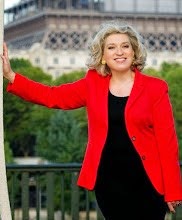
Anne-Elisabeth Moutet meets the widow of the great Surrealist in Paris.
What struck me first was the intercom button. It was made of ordinary translucid plastic, one in a row lit from inside, with "Man Ray" inscribed on it, among names like Jean Bernard and Jean-Claude Amselle, and Marie-Thérèse Fischer - who, come to think of it, could have been one of Picasso's mistresses, late Cubist period - and Berthe Michel, who sounded like a late XIXth century revolutionary; and Yolande Zelmanovich, who I was sure could have been one of those bedraggled Russian nihilists throwing bombs at the Czar's carriage. STOP! this was a lot too much to daydream about in this perfectly ordinary early seventies cossu French apartment block, admittedly marble-plated, admittedly in one of Paris's choicest locations (rue d'Assas, in the Sixième, just opposite the Luxembourg gardens, average price per square ft. freehold £ 350,) terribly banal nonetheless. We were about 800 yards and one zillion years away from La Coupole, circa 1922. This was not the kind of building where I expected Juliet Man Ray, widow of the famous Surrealist photographer, painter, sculptor, designer, touche-à-tout, to live.
Juliet herself was more like the real thing - even though, in many ways, she isn't. (For one thing she never knew Man Ray's truly great days, in Paris in the Twenties and Thirties, when everyone from James Joyce to the Marquis de Castellane vied to pose in his studio. They met in Hollywood, in Vine Street of all places, in the Forties: he'd fled Paris, she was a tourist from the Midwest.) She is a slight, vague, elegant little old lady with the dark hair colour she's obviously decided to keep forever, a quiet knit dress, Ferragamo pumps, who won't tell you her age with a simpering "Oh, a lady really doesn't say, does she?"
She has somehow appointed herself guardian of that curious unshrine-like shrine, that white, square-roomed, plate-glass-windowed modern flat on Rue d'Assas, almost entirely filled and furnished with Man Ray oeuvres d'art. There's the chess-set director Albert Lewin used in his best film, the mythical 1946 "Pandora", with Ava Gardner and James Mason. There are variations on Man Ray's Marquis de Sade's famous portrait - in copper, in wood, in watercolour. There are wonderful articulated screens with her name written in Man Ray's round, unchildlike, distinctive handwriting - "the twenty days and nights of Juliette", Juliette happening to be Sade's most famous heroine - the virtuous one. There are priapic compositions of two round stone balls and an erect column, several of them, set on the floor, size from 2 to 4 ft. There is a bronze broom which she urges you to try and use (impossible), giggling at the 55-year-old joke. There are her shopping lists on the coffee-table, presumably written for the French daily, "cibolette" for "chives", "aile" for "garlic", etc. in her bad French, on ordinary squared notepaper (Man Ray wrote grammatically impeccable French). Next to these is a book with a black and white photograph of an impossibly beautiful and enigmatic woman, partly veiled.
"I saw this in a bookstore recently and thought, 'this looks very much like me'," Juliet Man Ray says, in her slightly quivering voice. It doesn't, but you let it pass, because she is rambling on anyway, telling you that she almost got the main part in "A Farewell to Arms." Then she shows you the book, a French coffee-table edition of Man Ray's photographs, and there she is, you know her now, the shape of the jaw, something in the firm mouth, on every page, wonderful photographs etched over with strong lines by Man Ray, evocative of Matisse's or Picasso's drawings, or lit with sensuous softness, or superimposed with the shadows of a decaying stone wall. It is splendid, imaginative, elegant - and yes, yes, something does click now, you can forget about the white-walled, too modern apartment in which she has lived for only three years. (Every single object in the sitting-room, including the hardwood chairs with their inkwell-shaped ashtrays in the arm, was designed by Man Ray.)
"We met in Hollywood," she says. They were married there, with Max Ernst as their witness in front of a Beverly Hills justice of the peace. "It was quieter then," she says, "almost provincial." There she met other exiled surrealists, a French group unhappy in Southern California, the poets Paul Eluard and Tristan Tzara - both communist fellow-travelers; and Jean Renoir who was making movies and would, years later, after some years in France, reconciled with Hollywood, return to California to live his last years. But Man Ray didn't like his native country - he wasn't feted like some of the Surrealists, he wasn't exotic enough. They returned to Paris in 1951.
Then her memory fades a bit; dates and places and time waver just like in one of her husband's compositions. Tim Mayotte, the tennis champion, who's currently playing in the French Open at Roland Garros stadium, is coming to visit her this afternoon, she says. They are friends because his girlfriend in an American journalist and wrote an article on her, she says. He likes the chess-set, she says. Would I like to see her bedroom? Yes, I would, and so we go and see the same casual mixture of impersonal modern furnishing, Man Ray objetcts and paintings, and shelves with nothing but books on him and his work. Would I like to see the chess set? I remember the chess set from a passage in "Pandora", which has been playing in one or the other Paris revival houses almost non-stop for at least twenty years, and is the most surrealistic and romantic film I've ever seen, a blue-lit gem set in an imaginary Spanish coast in the madcap Twenties - no Revolution, no Spanish War, no Republic, no Francisco Franco... - with sets like Delvaux and Chirico paintings, and Ava Gardner as the femme fatale. There it is, in the beige pile wall-to-wall carpeed hallway, the board surrounded by Man Ray's inscription like a poem, in his rounded script: "Le Roi est à moi, la Reine est la tienne, la Tour fait un four, le Fou est comme vous, le Cavalier déraille, le Pion fait l'espion ,comme toute commande, fait de toutes pièces, Man Ray."
The two rooms on the other side of the flat are two offices where Jerome G__ , a soft-spoken American art expert, who doubles as sometimes nurse and dame de compagnie for Juliet Man Ray, quietly toils away at cataloguing all of Man Ray's as yet unpublished photograps and manuscripts, has been working on the forthcoming book and a large retrospective at the Smithsonian Museum in Washington, and, like some mediaeval monk, seems exclusively devoted to the anonymous praise of the artist (he didn't want to be quoted or his name printed.) "I will gladly help you to check any facts you need," he said humbly. "Mrs Man Ray can sometimes mix them up, as you perhaps have noticed." (I hadn't noticed that many facts in our rambling conversation.) He showed me photographic plates and prints and explained there were many more. He praised Bloomsbury for republishing Man Ray's autobiography, self-portrait. It was clear he'd written Juliet Man Ray's Afterword himself, although he was quick in denying any credit for it. His selflessness, whatever its motivations, was rather endearing.
And then, of course, next to the matt black filing drawers and the chrome office chair on its hi-tech casters, I saw the wooden filing cabinet, about four feet tall. It was ugly and scratched and overvarnished with the kind of cheap, yellowing varnish used on unexpensive, utilitarian office furniture in Paris in the Twenties and Thirties. It had four drawers with old lttle brass label holders on them, where you slid a card indicating the contents of the drawer. Two drawers were unremarkable but the third had a yellowing bit of cardboard that said "Letters", in a rounded script I'd seen on many priceless objects in the flat. "That was Man Ray's, wasn't it?" I couldn't help asking. "Yes," Jerome told me. "That's his handwriting, isn't it?" Yes, it was, and the drawer was used to store personal correspondence, as it alwas had been. That ugly wood filing cabinet touched me in a way no other art object in the flat had. It was neither on display nor exalted nor catalogued. But it had existed, serving the same purpose, in Paris in the Twenties when La Coupole was just the brasserie next door from Man Ray's atelier, a few yards and a zillion years away from this pretty modern flat. "Nice label," I said. "Label? Oh... yes," said Jerome.
© Copyright The Tatler & Anne-Elisabeth Moutet 1988
Wednesday, June 1, 1988


Sunday, April 10, 1988
Raine at the Ritz
Lord and Lady Spencer, the Escoffier Cookery School, and Paris Ritz memories
"Can you be at the Ritz tomorrow morning by 11:30?" a Mr. Klein said out of the blue on the telephone. "Lord and Lady Spencer will be opening the new Ritz cookery school." "Tomorrow?" I said. "Tomorrow. Earl Spencer, you know, the Princess of Wales's father. And Lady Spencer, uh..." "...is her stepmother. Barbara Cartland's daughter," I said. "Yes, we-ell, yes. Well, can you make it?" I said this was jolly short notice, and I might be ten minutes late, due to a prior appointment at the other end of Paris. "Oh, that's quite all right," Mr Klein (who later turned out to be the Paris Ritz's president, no less) said. "Actually, we're expecting Lord and Lady Spencer at noon, but you know how it is, we want the press to be there before them."
I then knew exactly how it was: we - half a dozen hacks and twice as many photographers - were going to get the closest to a Royalty walkabout as could possibly be contrived. Be there before them. Don't leave before they go. Dutifully smile at their jokes. Don't touch. Look, but don't stare. Jot down every utterance, however inane. And, puh-leeeze, give a good plug to the new Ritz-Escoffier cookery school, ready from April 5 to take on Le Cordon Bleu and La Varenne in the highly competitive market of expensive Paris-based top class cookery schools (one week spent in the basement of the Ritz under neon lights, learning to knead pate brisee, starts at £450; the full 12-week course costs £5650,) whose attendance is roughly equally divided between English society debs (there is life after spag. bol.) and serious aspirant two-rosette chefs from all over the world (there is life after kiwi fruit.) In fact, the man in charge of the Ecole De Gastronomie Francaise Ritz-Escoffier, an inexpressibly chic American with a Mid-Atlantic accent called Gregory Usher, was poached by Mr Klein from La Varenne, which he manages to praise while letting it be known that the Ritz-Escoffier will be a lot "more inventive."
The following morning found us dutifully assembled in the immaculate Ritz basement kitchens - a far cry, indeed, from George Orwell's horrendous, squalid descriptions of the neighbouring Hotel Lotti's, circa 1928, in Down and Out in Paris and London. The New York Times was there, and the Sunday Times, and the Telegraph, and ELLE, and Le Figaro Madame. The white-hatted Ritz chef Guy Legay, one of the three French chefs to be awarded the Legion d'Honneur (the other two are Paul Bocuse and Jean Troisgros) was handing out his card to everyone in sight, and promising us he would explain the recipes again afterwards. It was all very cosy, due to the absence of students, who were not expected to start courses until about a month later. Gregory Usher looked charming. Mr Klein looked worried. And then, at 12:00 on the dot, They appeared.
As always when you meets celebrities whose pictures you've seen everywhere, you had to adjust for a fraction of a second to what they really look like. Raine, Countess Spencer, for instance, is much taller than you'd expect - almost as tall as her husband, whom she calls John (not Johnny.) This, coupled with the fact that Princess Di's dad is a quiet sort of unassuming chap, with a friendly manner and unsure smile (not unlike his youngest daughter's in the days when she tried to avoid the press outside her Coleherne Court flat,) certainly contributed to the instantaneous effect she gave - of being totally and immediately in charge.
Clad in an impeccably cut blue dress and a few good jewels (canary yellow diamond ring, diamond bracelet, huge pearl choker, pearl and diamond brooch, all in definite need of cleaning) Raine swept into the gleaming white-tiled kitchen, her husband meekly following three paces behind. (Well, perhaps two paces. Behind.) She exhibited definitely royal graciousness, underscored with Princess Michael-like aplomb. How perfectly lovely, she said, and how extraordinary that in forty years that she'd been coming to the Ritz, she'd never been down to the kitchens before. The two assistant chefs who were about to demonstrate how to cook a Tarte Tatin and a Mussel Soup were duly introduced. "Je ne sais absolument pas faire la cuisine," Raine said in excellent French, translating for our benefit "I really can't boil an egg", then switched back to French, never missing a beat. "Mon mari adore le Ris de Veau, vous savez. Nous venons ici depuis toujours." The Ritz people were impressed. We were impressed.
"Your wife speaks excellent French," I told Lord Spencer, who had pottered away from the group, unnoticed. "She does, doesn't she?" he said with obvious pride, beaming at her. "D'you know, she speaks Japanese too." Japanese? "With all those tourists coming to Althorp, our house I mean. She learnt Japanese and now they're tremendously chuffed when she starts speaking. Fluent Japanese, d'you know." Did he speak Japanese? Oh no, he said, he wasn't clever like his wife. But French, perhaps? Lord Spencer demurred. "Pas devant la famille", he said somewhat puzzlingly with an atrocious accent, making his point.
In the background, the two Ritz cooks had started preparing the mussel soup with swift, competent moves, chopping shallots and heating butter and mincing vegetables and in general being very, very efficient, without anyone paying much attention. The mussels disappeared into a pan, reappeared, got shelled and chopped so fast that I'd defy a competent cook to see how it got done, let alone our little platoon. (Guy Leguay said yes, the cooks would take more time during an actual class.) Within minutes, a small round pan containing an appetizing, sophisticated saffron-yellow steaming mixture was presented to Lord and Lady Spencer, who got at it with large spoons and obligingly posed for the photographers, the full spoons poised in mid-air. Then Raine spoon-fed Lord Spencer, twice (one of the photographers had missed his shot the first time round.) Excellent, they pronounced. Wonderful, very good, first class, absolutely marvellous. The two young cooks then started on the Tatin, ignored by the group - it was now time for the requisite bit of chitchat with Lady Spencer.
"When, uh, when was the first time you came to the Ritz ever," I asked. "Oh, it's such a long time ago," she said a bit vaguely. "Years and years and years. Such a lovely place." I was about to tell her her husband had just told me of his first stay here on Place Vendome, in 1947, aged 22, on his way to ski-ing in Meribel (he'd remembered how his telephone call to his family had been "a big thing, had to book it hours in advance, in those days") then checked myself. Raine Spencer had first stopped at the Ritz when she was still married to the Earl of Dartmouth, while her adoring husband was taking his first wife, Frances Fermoy, now Mrs Shand Kydd, to that same gilded, grand palace of a place. The Paris Ritz, one of the world's truly magical places, had started as separate memories for them - before their messy divorces, before their marriage.
So instead I lamely asked about her knowledge of Japanese. "There are already a lot of Japanese tourists coming to the UK, and we must attract some more," Raine said forcefully, her manner switching in a flash from Royal to New Tory - she reeled off so many figures she could have been Mrs Thatcher on the campaign trail. "The largest group is the Americans, two and a half million. Then the French, 897,000; then the Germans. I was in Berlin recently for the World Tourism Fair, you know." She is, she explained, a member of the British Tourism Authority, has been for years, long before she opened Althorp to the public. "I already was very active when I was married to my first husband." She was recently a judge in a Bed-and-Breakfast competition ("We British must stick to what we're best at, but excel at it") and another tourism design competition. What was she like as a judge? "Oh, I suspect I'm rather bossy," she said with a smile. "But it's worth its while - you feel you're doing something effective."
In past years, Raine Spencer has often been cast in an unfavourable light - her flogging off XVIIth century paintings to refurbish Althorp earned her a lot of flak, as did the tabloids' easy picture of her as the Princess of Wales's wicked stepmother, not to mention the high visibility of her best-selling authoress mother. But with our little flock of journalists, including the notoriously hard-bitten French photographers, she came out with flying colours. "Elle est très sympathique, cette Lady," the tall burly paparazzo from the Gamma picture agency, with his 35lbs of expensive Japanese hardware dangling from his soulders and neck, said between clicks.
Under the eyes of an agitated Mr Klein, I sidled up to her during a brief lull in the baking of the Tarte Tatin. Would she and her husband perhaps agree to a portrait picture upstairs, in the great Ritz hallway? "Of course," she said. We waited for the Spencers for a good while, slightly worried that once the function had been performed, they might have vanished to enjoy their holiday in Paris in peace. But they were as good as their word. "You must excuse us - my husband was a bit tired, and needed to rest for a while," Raine said. I couldn't help remembering that it was she who nursed him, willed him back to life ten or fifteen years ago, when he suffered a serious stroke and lay in hospital in a coma. She had never stopped talking to him for days, until he responded, and it was agreed in the family that she had "brought him back." "Are you all right, sir?" we asked. "Oh, yes, fine," said Lord Spencer. "Well," said Raine Spencer brightly, "where would you like us to stand?" She led her husband over Aubusson carpets into the great gilded and paneled corridor, its French windows opening onto the lovely indoors Ritz garden, and obligingly stood next to him in the best-lit spot, holding his arm and smiling. "We've been coming here for forty years," Lord Spencer said.
CHARLOTTE AU CHOCOLAT
Ingredients for 6 to 8 servings
3 layers of sponge cake
Sponge fingers for a charlotte
1 cup (1/4 l) black coffee
Chocolate Mousse (recipe below)
Method
Brush the sponge cake layers with black coffee. Place one inside a flan ring on a serving platter. Slide the sponge fingers in-between the sides of the ring and the sponge base.
Pour a third of the mousse into the ring, smooth the surface and place the second sponge base on top. Fill with half the remaining mousse and cover with the remaining base.
Finish with the rest of the mousse. Decorate with chocolate curls and a dusting of icing sugar.
Refrigerate for at least 3 hours. Remove the flan ring before serving.
Mousse au Chocolat Ingredients:
5 tbsp (7cl) black coffee
9oz (250g) plain chocolate chopped into small pieces
1 cup (1/4 l) egg whites
6 tbsp (75g) sugar
Method
Heat the coffee in a small saucepan until it almost boils. Remove from the heat, add the chocolate and stir until smooth and creamy. Leave to cool.
Beat the egg whites until stiff, but not overly so, then fold in the sugar little by little until perfectly smooth. Combine a little of the whites with the chocolate, then transfer mixture to the remaining whites and fold in, using a spatula. The mousse should be perfectly smooth when finished.
N.B. The egg whites are easier to beat and much smoother if a little lemon juice is added to them first
"Can you be at the Ritz tomorrow morning by 11:30?" a Mr. Klein said out of the blue on the telephone. "Lord and Lady Spencer will be opening the new Ritz cookery school." "Tomorrow?" I said. "Tomorrow. Earl Spencer, you know, the Princess of Wales's father. And Lady Spencer, uh..." "...is her stepmother. Barbara Cartland's daughter," I said. "Yes, we-ell, yes. Well, can you make it?" I said this was jolly short notice, and I might be ten minutes late, due to a prior appointment at the other end of Paris. "Oh, that's quite all right," Mr Klein (who later turned out to be the Paris Ritz's president, no less) said. "Actually, we're expecting Lord and Lady Spencer at noon, but you know how it is, we want the press to be there before them."
I then knew exactly how it was: we - half a dozen hacks and twice as many photographers - were going to get the closest to a Royalty walkabout as could possibly be contrived. Be there before them. Don't leave before they go. Dutifully smile at their jokes. Don't touch. Look, but don't stare. Jot down every utterance, however inane. And, puh-leeeze, give a good plug to the new Ritz-Escoffier cookery school, ready from April 5 to take on Le Cordon Bleu and La Varenne in the highly competitive market of expensive Paris-based top class cookery schools (one week spent in the basement of the Ritz under neon lights, learning to knead pate brisee, starts at £450; the full 12-week course costs £5650,) whose attendance is roughly equally divided between English society debs (there is life after spag. bol.) and serious aspirant two-rosette chefs from all over the world (there is life after kiwi fruit.) In fact, the man in charge of the Ecole De Gastronomie Francaise Ritz-Escoffier, an inexpressibly chic American with a Mid-Atlantic accent called Gregory Usher, was poached by Mr Klein from La Varenne, which he manages to praise while letting it be known that the Ritz-Escoffier will be a lot "more inventive."
The following morning found us dutifully assembled in the immaculate Ritz basement kitchens - a far cry, indeed, from George Orwell's horrendous, squalid descriptions of the neighbouring Hotel Lotti's, circa 1928, in Down and Out in Paris and London. The New York Times was there, and the Sunday Times, and the Telegraph, and ELLE, and Le Figaro Madame. The white-hatted Ritz chef Guy Legay, one of the three French chefs to be awarded the Legion d'Honneur (the other two are Paul Bocuse and Jean Troisgros) was handing out his card to everyone in sight, and promising us he would explain the recipes again afterwards. It was all very cosy, due to the absence of students, who were not expected to start courses until about a month later. Gregory Usher looked charming. Mr Klein looked worried. And then, at 12:00 on the dot, They appeared.
As always when you meets celebrities whose pictures you've seen everywhere, you had to adjust for a fraction of a second to what they really look like. Raine, Countess Spencer, for instance, is much taller than you'd expect - almost as tall as her husband, whom she calls John (not Johnny.) This, coupled with the fact that Princess Di's dad is a quiet sort of unassuming chap, with a friendly manner and unsure smile (not unlike his youngest daughter's in the days when she tried to avoid the press outside her Coleherne Court flat,) certainly contributed to the instantaneous effect she gave - of being totally and immediately in charge.
Clad in an impeccably cut blue dress and a few good jewels (canary yellow diamond ring, diamond bracelet, huge pearl choker, pearl and diamond brooch, all in definite need of cleaning) Raine swept into the gleaming white-tiled kitchen, her husband meekly following three paces behind. (Well, perhaps two paces. Behind.) She exhibited definitely royal graciousness, underscored with Princess Michael-like aplomb. How perfectly lovely, she said, and how extraordinary that in forty years that she'd been coming to the Ritz, she'd never been down to the kitchens before. The two assistant chefs who were about to demonstrate how to cook a Tarte Tatin and a Mussel Soup were duly introduced. "Je ne sais absolument pas faire la cuisine," Raine said in excellent French, translating for our benefit "I really can't boil an egg", then switched back to French, never missing a beat. "Mon mari adore le Ris de Veau, vous savez. Nous venons ici depuis toujours." The Ritz people were impressed. We were impressed.
"Your wife speaks excellent French," I told Lord Spencer, who had pottered away from the group, unnoticed. "She does, doesn't she?" he said with obvious pride, beaming at her. "D'you know, she speaks Japanese too." Japanese? "With all those tourists coming to Althorp, our house I mean. She learnt Japanese and now they're tremendously chuffed when she starts speaking. Fluent Japanese, d'you know." Did he speak Japanese? Oh no, he said, he wasn't clever like his wife. But French, perhaps? Lord Spencer demurred. "Pas devant la famille", he said somewhat puzzlingly with an atrocious accent, making his point.
In the background, the two Ritz cooks had started preparing the mussel soup with swift, competent moves, chopping shallots and heating butter and mincing vegetables and in general being very, very efficient, without anyone paying much attention. The mussels disappeared into a pan, reappeared, got shelled and chopped so fast that I'd defy a competent cook to see how it got done, let alone our little platoon. (Guy Leguay said yes, the cooks would take more time during an actual class.) Within minutes, a small round pan containing an appetizing, sophisticated saffron-yellow steaming mixture was presented to Lord and Lady Spencer, who got at it with large spoons and obligingly posed for the photographers, the full spoons poised in mid-air. Then Raine spoon-fed Lord Spencer, twice (one of the photographers had missed his shot the first time round.) Excellent, they pronounced. Wonderful, very good, first class, absolutely marvellous. The two young cooks then started on the Tatin, ignored by the group - it was now time for the requisite bit of chitchat with Lady Spencer.
"When, uh, when was the first time you came to the Ritz ever," I asked. "Oh, it's such a long time ago," she said a bit vaguely. "Years and years and years. Such a lovely place." I was about to tell her her husband had just told me of his first stay here on Place Vendome, in 1947, aged 22, on his way to ski-ing in Meribel (he'd remembered how his telephone call to his family had been "a big thing, had to book it hours in advance, in those days") then checked myself. Raine Spencer had first stopped at the Ritz when she was still married to the Earl of Dartmouth, while her adoring husband was taking his first wife, Frances Fermoy, now Mrs Shand Kydd, to that same gilded, grand palace of a place. The Paris Ritz, one of the world's truly magical places, had started as separate memories for them - before their messy divorces, before their marriage.
So instead I lamely asked about her knowledge of Japanese. "There are already a lot of Japanese tourists coming to the UK, and we must attract some more," Raine said forcefully, her manner switching in a flash from Royal to New Tory - she reeled off so many figures she could have been Mrs Thatcher on the campaign trail. "The largest group is the Americans, two and a half million. Then the French, 897,000; then the Germans. I was in Berlin recently for the World Tourism Fair, you know." She is, she explained, a member of the British Tourism Authority, has been for years, long before she opened Althorp to the public. "I already was very active when I was married to my first husband." She was recently a judge in a Bed-and-Breakfast competition ("We British must stick to what we're best at, but excel at it") and another tourism design competition. What was she like as a judge? "Oh, I suspect I'm rather bossy," she said with a smile. "But it's worth its while - you feel you're doing something effective."
In past years, Raine Spencer has often been cast in an unfavourable light - her flogging off XVIIth century paintings to refurbish Althorp earned her a lot of flak, as did the tabloids' easy picture of her as the Princess of Wales's wicked stepmother, not to mention the high visibility of her best-selling authoress mother. But with our little flock of journalists, including the notoriously hard-bitten French photographers, she came out with flying colours. "Elle est très sympathique, cette Lady," the tall burly paparazzo from the Gamma picture agency, with his 35lbs of expensive Japanese hardware dangling from his soulders and neck, said between clicks.
Under the eyes of an agitated Mr Klein, I sidled up to her during a brief lull in the baking of the Tarte Tatin. Would she and her husband perhaps agree to a portrait picture upstairs, in the great Ritz hallway? "Of course," she said. We waited for the Spencers for a good while, slightly worried that once the function had been performed, they might have vanished to enjoy their holiday in Paris in peace. But they were as good as their word. "You must excuse us - my husband was a bit tired, and needed to rest for a while," Raine said. I couldn't help remembering that it was she who nursed him, willed him back to life ten or fifteen years ago, when he suffered a serious stroke and lay in hospital in a coma. She had never stopped talking to him for days, until he responded, and it was agreed in the family that she had "brought him back." "Are you all right, sir?" we asked. "Oh, yes, fine," said Lord Spencer. "Well," said Raine Spencer brightly, "where would you like us to stand?" She led her husband over Aubusson carpets into the great gilded and paneled corridor, its French windows opening onto the lovely indoors Ritz garden, and obligingly stood next to him in the best-lit spot, holding his arm and smiling. "We've been coming here for forty years," Lord Spencer said.
© Copyright Associated Newspapers - Mail on Sunday & Anne-Elisabeth Moutet 1988
CHARLOTTE AU CHOCOLAT
Ingredients for 6 to 8 servings
3 layers of sponge cake
Sponge fingers for a charlotte
1 cup (1/4 l) black coffee
Chocolate Mousse (recipe below)
Method
Brush the sponge cake layers with black coffee. Place one inside a flan ring on a serving platter. Slide the sponge fingers in-between the sides of the ring and the sponge base.
Pour a third of the mousse into the ring, smooth the surface and place the second sponge base on top. Fill with half the remaining mousse and cover with the remaining base.
Finish with the rest of the mousse. Decorate with chocolate curls and a dusting of icing sugar.
Refrigerate for at least 3 hours. Remove the flan ring before serving.
Mousse au Chocolat Ingredients:
5 tbsp (7cl) black coffee
9oz (250g) plain chocolate chopped into small pieces
1 cup (1/4 l) egg whites
6 tbsp (75g) sugar
Method
Heat the coffee in a small saucepan until it almost boils. Remove from the heat, add the chocolate and stir until smooth and creamy. Leave to cool.
Beat the egg whites until stiff, but not overly so, then fold in the sugar little by little until perfectly smooth. Combine a little of the whites with the chocolate, then transfer mixture to the remaining whites and fold in, using a spatula. The mousse should be perfectly smooth when finished.
N.B. The egg whites are easier to beat and much smoother if a little lemon juice is added to them first
© Copyright Escoffier Cookery School, Associated Newspapers - Mail on Sunday & Anne-Elisabeth Moutet 1988
Friday, January 15, 1988
Fink Tank
Alain Finkielkraut is the Left Bank's most conspicuous new star. Anne-Elisabeth Moutet studies his fatal attraction
They may have sold La Coupole to the mass-market Brasseries Flo chain, and admittedly Lipp's is wall-to-wall nobody now that Monsieur Cazes has died, and yes, the level of the French novel has sunk to the point that Philippe Djian, of Betty Blue fame -- Philippe Djian! -- is rated the best writer in France these days; but don't let yourself be deceived: your Left-Bank French intellectual -- bright, elitist, arrogant, handsome, seductive, mad, bad, and bent on the pursuit of universal truth pour épater le bourgeois -- is around and kicking and still published by Gallimard's, juste like Sartre and Camus before him. The only concession he may make to these sad modern times is to chainsmoke Marlboros instead of Gauloises. (For our Gordon Gekkos of the intellect, low-tar is for wimps.)
Consider this: I am sitting at a choice table in Les Antiquaires, the Hôtel du Pont-Royal restaurant, just above the bar where Sartre and Malraux and Philippe Sollers drank, where Francoise Sagan used to beg her publisher Henri Flammarion for fatter advances, where Michel Foucault indulged in a spot of (harmless?) highbrow cruising. Pierre Nora, the historian, is engrossed in serious speculation with a Nouvel Observateur columnist two tables away. The white-maned, 70-year-old Claude Gallimard is ensconced behind me, his back (safely?) to the wall, with a novelist, whose face I know and whose name I can't place, from his nearby stable receiving eagerly The Word between morsels of Oeufs Savignac.
And, next to me, simultaneously berating les copains: Libération, the trendy Globe magazine, all six French television channels, humanitarian champion Bernard Kouchner, philosophers André Glucksmann, Bernard-Henri Lévy and Gilles Lipovetsky, and the slowness of the waiter, is Alain Finkielkraut, 38, latest boy wonder of the Paris literary scene, a former Agrégé de Lettres turned visiting professor at Berkeley, turned philosopher-at-large at Gallimard's, turned sudden bestseller and media superstar last summer with his eighth essay, La Défaite de la Pensée, now turned Savonarola of the establishment that created him. A ho-hum everyday success story on the Left Bank. The Parisian Dream writ in 12-point Plantin typeface inside the white and red covers of a Collection Blanche Gallimard novel.
"Television ought to be restricted to one, two channels maximum, and be forbidden to show movies, any movies at all," Finkielkraut is intoning. "This... debauch of images is perverting us, debilitating our culture, trivialising everything. It's a drug, an addiction -- you come home tired, you turn the box on, you leave it droning on and on. Fellini is right: films should be shown in theatres, on a real screen, in the dark, the way they were meant to be seen, none of this cropping the edges to make the pictures fit, no commercial breaks. Television shoud be educational -- definitely more than just one or two hours of intelligent programmes a week. I mean, how can you hope to counteract the daily effects of Wheel of Fortune or Falcon Crest with one hour on Lacan or Dumézil every other month? Am I talking too fast? Did you take all of this down?" he asks solicitously, peering at the illegible scrawl on my notebook. Yes, I assure him. "Will you be able to re-read it?" he insists, his voice gently blending concern and doubt. "Certainement," I say, which single reassuring word triggers new bursts of impassioned eloquence against those misguided spirits who think fashion is art and equate a Jean-Paul Gaultier suit with a Turner painting, graffiti on Métro cars with the Divine Comedy. "Do have some wine," he offers at the end of a period, never missing a beat -- hell, he must be a lot thirstier than I am. "It's not bad at all, non?"
Since it is Château La Lagune 1985, I should jolly well say it's not bad at all, nod, and down some more. These mad reforming monks of the French intelligentsia wouldn't dream of going out to the barricades without some decent claret. That's why changing the world in Left Bank cafés is so... well, comfortable. (The same form applies in, say, a fight between two motorists in the middle of a traffic jam on Place de La Concorde at 6:00 pm. You shout a lot, wave your arms a lot, "...et vous en êtes un autre, Monsieur!" a lot. You don't whisk out a .22 rifle and shoot indiscriminately. That's for Americans, who, as we know, are naught but overgrown children and flood our French airwaves with the deplorable Dallas and Dynasty.)
Yet, for all his imprecations against late 80s mod. cons., Finkielkraut is not your French egghead buffoon, as reviled in (for instance) Sun leaders. La Défaite de la Pensée is a surprisingly clear book, making a few points which Spectator readers might find themselves agreeing with. To wit: the seal of approval indiscriminatingly granted Third World dictatorships as long as they call themselves "progressive," punk musicians, rock video directors et al, always proceeds from the same spirit of appeasement -- when in doubt, follow the latest fashion. Finkielkraut dares to challenge current sacred cows (youth "culture;" the mediacracy -- no better in France that in England; the little coteries who run the publishing world; Live Aid; the myth that the Barbie trial would clear up France's past; France's most watched book programme, Apostrophes and its Clive James-style star presenter Bernard Pivot; the Pope) in a tone Peregrine Worsthorne might now disavow.
Finkielkraut himself is articulate, intense, handsome. For all his disdain of the star-system, he did allow himself to be photographed for an 8-page French ELLE spread enticingly headlined Les Nouveaux Séducteurs, in which he was profiled next to actors Peter Coyote, Rupert Everett, Jean-Hugues Anglade, and heartthrob Paul Belmondo -- and so he became the latest coqueluche in Paris, being interviewed on anything from Israel's policies to the deeper meanings of the film Fatal Attraction -- which, incidentally, he hated. "It's a regressive, infantile fantasy. Americans are so scared of AIDS that they'll call 'an instance of moral revival' what is really little more than a juju dance."
This is when I remember that Finkielkraut also wrote two essays on the need for a return to what he calls "the wisdom of love:" Le Nouveau Désordre Amoureux and La Sagesse de l'Amour. "You've read them?" he asks a little impatiently. Well, no, I haven't, for the very good reason (to me) that they're out of print. I am soon made to feel that I ought to have bought them at the outset. Broadly, he explains, we ought to try for fresh emotions, for a creative romanticism, for relationships that break out of our era's tired routine -- "not just between men and women but in all the relationships of love -- love toward friends, family, parents." (After our lunch I managed to track down copies of the books, and they indeed contained beautiful pages in his distinctive, clear, literary style -- on watching the face of someone you love; on dispelling a child's fear of the dark; on the rapture of being in love -- pages that brought to mind Stendhal's cristallisation theory, and bore evidence to Finkielkraut's literary training.)
He is Jewish, born of Polish parents who settled in France in the Thirties and managed to escape the Nazis during the Occupation. His unsettling, almost Sartrian honesty in describing the strange condition of being a young Jew growing up in France after the Holocaust has often provoked -- enraged -- militant French Jews. "I experienced all the vicarious advantages of being a hero without having been exposed to real danger. Being Jewish was an easy way out of the eventless Fifties." Jewishness as a safe course out of the Zeitgeist does not necessarily tally with the more orthodox views of a, say, Bernard-Henri Lévy, and Finkielkraut doesn't make things any easier with offhand remarks such as: "Of course I was not immune to bouts of depression -- but I had over the other children the immense superiority of being able to dramatise my own biography. Out of my people's real tragedy I created a tragic theatre in which I was the hero."
True to form, Finkielkraut delights in being hard to place. Having taken firm stands against the Revisionists during the Faurisson and Barbie trials -- he'll say flatly he doesn't believe, "on the dubious grounds of freedom of expression," in allowing the publication of Revisionist history treaties, the kind which pile up thousands of grim, surrealistic figures (time needed to consume a human body multiplied by square feet on concentration camp groundplans multiplied by cost of fuel...) to deny the Nazi genocide of the Jews -- he then voiced concern at Israel's invasion of Lebanon, and, recently, handling of the Palestinian riots.
"I don't think the French are anti-Semitic," he says, "but I do believe the real anti-Semites are the antii-Zionists. You just can't be anti-Semitic anymore in Europe -- you can't shout 'Death to the Jews' because too many Jews died already. But you can keep a smug Left-Wing stance and be anti-Zionist -- this is socially acceptable, this is the latest in radical chic. Instead of telling the Jews: "You are an evil race," you tell them "You are racist; Israel leads Nazi policies; therefore you have to justify yourselves for Israel's policies. I hear this all the time around me."
This is one of the exquisite attractions of La Rive Gauche: one can indeed have a serious, intense conversation while sipping Château La Lagune and ordering more coffee and bitter chocolates. Our talk turns to the loss of quality in life, the evermore accepted sloppiness in intellectual pursuits; in books, in films. Finkielkraut likes to quote Hannah Arendt wondering whether the world's greatest works of art would survive their trivialising commercial exploitation.
"Well, she wrote it of Hollywood in the Fifties. You know, people who saw Doctor Zhivago, or Madame Bovary, or The Idiot -- and assumed they'd read the books. Now they produce this pap for television." Doesn't he watch television? (He certainly has appeared on it quite a few times.) "Of course I do. I hate myself for it. I feel soiled, dirty when I've watched it -- but it's addictive and I can get myself sucked in by it." Oh, the demons that threaten a French Left Bank intellectual! The dragons that lurk in a book-lined Quatorzième flat! And all of this before you've bought your morning copy of Libé, which you'll read spluttering with rage at your rivals' infernal gall! "I loathe the Libération - Globe branché crowd because they work on a principle of exclusion. Fashion is exclusion. Trendiness is exclusion -- and an admission of defeat. You blow with the wind, you hold no moral convictions, you start pushing this infernal idea of consensus, you annihilate any kind of debate. Left is not Right! It is now de rigueur in France to despise the body politic. Well, politics have a function -- one that can't simply be fulfilled by humanitarian associations. One-shot orgies of charity, Live-Aid pop concerts and the such, are an easy way to buy oneself a clear conscience -- it's Wash'n Dri absolution!"
He motions to the waiter. No, no, I protest, the lunch's on Tatler. We go through the accepted motions, in French polite society, of fighting for the bill. (Finkielkraut does this ritual dance very well, and loses gracefully. I pay.) Whom does he like, then? He looks surprised. He likes lots of people and things. Francis Ford Coppola. Ryszard Kapuscinski. Jacques Derrida. Duke Ellington. Mozart. A new French writer called Claire Desréaux. Fellini's Intervista; in fact anything by Fellini. This, you understand, is Paris, where bookshops on Boulevard Saint-Germain, next to the Café de Flore, stay open until 2:00 am; where you can see 500 different films a week; where they're building a fourth Opéra on Place de la Bastille; where you can hear jazz at Le Rosebud and Barbara Hendricks at Théâtre des Champs-Elysées; where you can get up from lunch at Les Antiquaires at 3:45 pm, having agonised over the problems of the world, pronounced against false prophets from the rival publishing houses, polished off a bottle of Château La Lagune over a Navarin d'Agneau -- and all of this without guilt! For this is how we live, on the Left Bank, upholding our right to freedom, truth, equality, and the pursuit of happiness. Or at least of a really good book programme on prime time television.
They may have sold La Coupole to the mass-market Brasseries Flo chain, and admittedly Lipp's is wall-to-wall nobody now that Monsieur Cazes has died, and yes, the level of the French novel has sunk to the point that Philippe Djian, of Betty Blue fame -- Philippe Djian! -- is rated the best writer in France these days; but don't let yourself be deceived: your Left-Bank French intellectual -- bright, elitist, arrogant, handsome, seductive, mad, bad, and bent on the pursuit of universal truth pour épater le bourgeois -- is around and kicking and still published by Gallimard's, juste like Sartre and Camus before him. The only concession he may make to these sad modern times is to chainsmoke Marlboros instead of Gauloises. (For our Gordon Gekkos of the intellect, low-tar is for wimps.)
Consider this: I am sitting at a choice table in Les Antiquaires, the Hôtel du Pont-Royal restaurant, just above the bar where Sartre and Malraux and Philippe Sollers drank, where Francoise Sagan used to beg her publisher Henri Flammarion for fatter advances, where Michel Foucault indulged in a spot of (harmless?) highbrow cruising. Pierre Nora, the historian, is engrossed in serious speculation with a Nouvel Observateur columnist two tables away. The white-maned, 70-year-old Claude Gallimard is ensconced behind me, his back (safely?) to the wall, with a novelist, whose face I know and whose name I can't place, from his nearby stable receiving eagerly The Word between morsels of Oeufs Savignac.
And, next to me, simultaneously berating les copains: Libération, the trendy Globe magazine, all six French television channels, humanitarian champion Bernard Kouchner, philosophers André Glucksmann, Bernard-Henri Lévy and Gilles Lipovetsky, and the slowness of the waiter, is Alain Finkielkraut, 38, latest boy wonder of the Paris literary scene, a former Agrégé de Lettres turned visiting professor at Berkeley, turned philosopher-at-large at Gallimard's, turned sudden bestseller and media superstar last summer with his eighth essay, La Défaite de la Pensée, now turned Savonarola of the establishment that created him. A ho-hum everyday success story on the Left Bank. The Parisian Dream writ in 12-point Plantin typeface inside the white and red covers of a Collection Blanche Gallimard novel.
"Television ought to be restricted to one, two channels maximum, and be forbidden to show movies, any movies at all," Finkielkraut is intoning. "This... debauch of images is perverting us, debilitating our culture, trivialising everything. It's a drug, an addiction -- you come home tired, you turn the box on, you leave it droning on and on. Fellini is right: films should be shown in theatres, on a real screen, in the dark, the way they were meant to be seen, none of this cropping the edges to make the pictures fit, no commercial breaks. Television shoud be educational -- definitely more than just one or two hours of intelligent programmes a week. I mean, how can you hope to counteract the daily effects of Wheel of Fortune or Falcon Crest with one hour on Lacan or Dumézil every other month? Am I talking too fast? Did you take all of this down?" he asks solicitously, peering at the illegible scrawl on my notebook. Yes, I assure him. "Will you be able to re-read it?" he insists, his voice gently blending concern and doubt. "Certainement," I say, which single reassuring word triggers new bursts of impassioned eloquence against those misguided spirits who think fashion is art and equate a Jean-Paul Gaultier suit with a Turner painting, graffiti on Métro cars with the Divine Comedy. "Do have some wine," he offers at the end of a period, never missing a beat -- hell, he must be a lot thirstier than I am. "It's not bad at all, non?"
Since it is Château La Lagune 1985, I should jolly well say it's not bad at all, nod, and down some more. These mad reforming monks of the French intelligentsia wouldn't dream of going out to the barricades without some decent claret. That's why changing the world in Left Bank cafés is so... well, comfortable. (The same form applies in, say, a fight between two motorists in the middle of a traffic jam on Place de La Concorde at 6:00 pm. You shout a lot, wave your arms a lot, "...et vous en êtes un autre, Monsieur!" a lot. You don't whisk out a .22 rifle and shoot indiscriminately. That's for Americans, who, as we know, are naught but overgrown children and flood our French airwaves with the deplorable Dallas and Dynasty.)
Yet, for all his imprecations against late 80s mod. cons., Finkielkraut is not your French egghead buffoon, as reviled in (for instance) Sun leaders. La Défaite de la Pensée is a surprisingly clear book, making a few points which Spectator readers might find themselves agreeing with. To wit: the seal of approval indiscriminatingly granted Third World dictatorships as long as they call themselves "progressive," punk musicians, rock video directors et al, always proceeds from the same spirit of appeasement -- when in doubt, follow the latest fashion. Finkielkraut dares to challenge current sacred cows (youth "culture;" the mediacracy -- no better in France that in England; the little coteries who run the publishing world; Live Aid; the myth that the Barbie trial would clear up France's past; France's most watched book programme, Apostrophes and its Clive James-style star presenter Bernard Pivot; the Pope) in a tone Peregrine Worsthorne might now disavow.
Finkielkraut himself is articulate, intense, handsome. For all his disdain of the star-system, he did allow himself to be photographed for an 8-page French ELLE spread enticingly headlined Les Nouveaux Séducteurs, in which he was profiled next to actors Peter Coyote, Rupert Everett, Jean-Hugues Anglade, and heartthrob Paul Belmondo -- and so he became the latest coqueluche in Paris, being interviewed on anything from Israel's policies to the deeper meanings of the film Fatal Attraction -- which, incidentally, he hated. "It's a regressive, infantile fantasy. Americans are so scared of AIDS that they'll call 'an instance of moral revival' what is really little more than a juju dance."
This is when I remember that Finkielkraut also wrote two essays on the need for a return to what he calls "the wisdom of love:" Le Nouveau Désordre Amoureux and La Sagesse de l'Amour. "You've read them?" he asks a little impatiently. Well, no, I haven't, for the very good reason (to me) that they're out of print. I am soon made to feel that I ought to have bought them at the outset. Broadly, he explains, we ought to try for fresh emotions, for a creative romanticism, for relationships that break out of our era's tired routine -- "not just between men and women but in all the relationships of love -- love toward friends, family, parents." (After our lunch I managed to track down copies of the books, and they indeed contained beautiful pages in his distinctive, clear, literary style -- on watching the face of someone you love; on dispelling a child's fear of the dark; on the rapture of being in love -- pages that brought to mind Stendhal's cristallisation theory, and bore evidence to Finkielkraut's literary training.)
He is Jewish, born of Polish parents who settled in France in the Thirties and managed to escape the Nazis during the Occupation. His unsettling, almost Sartrian honesty in describing the strange condition of being a young Jew growing up in France after the Holocaust has often provoked -- enraged -- militant French Jews. "I experienced all the vicarious advantages of being a hero without having been exposed to real danger. Being Jewish was an easy way out of the eventless Fifties." Jewishness as a safe course out of the Zeitgeist does not necessarily tally with the more orthodox views of a, say, Bernard-Henri Lévy, and Finkielkraut doesn't make things any easier with offhand remarks such as: "Of course I was not immune to bouts of depression -- but I had over the other children the immense superiority of being able to dramatise my own biography. Out of my people's real tragedy I created a tragic theatre in which I was the hero."
True to form, Finkielkraut delights in being hard to place. Having taken firm stands against the Revisionists during the Faurisson and Barbie trials -- he'll say flatly he doesn't believe, "on the dubious grounds of freedom of expression," in allowing the publication of Revisionist history treaties, the kind which pile up thousands of grim, surrealistic figures (time needed to consume a human body multiplied by square feet on concentration camp groundplans multiplied by cost of fuel...) to deny the Nazi genocide of the Jews -- he then voiced concern at Israel's invasion of Lebanon, and, recently, handling of the Palestinian riots.
"I don't think the French are anti-Semitic," he says, "but I do believe the real anti-Semites are the antii-Zionists. You just can't be anti-Semitic anymore in Europe -- you can't shout 'Death to the Jews' because too many Jews died already. But you can keep a smug Left-Wing stance and be anti-Zionist -- this is socially acceptable, this is the latest in radical chic. Instead of telling the Jews: "You are an evil race," you tell them "You are racist; Israel leads Nazi policies; therefore you have to justify yourselves for Israel's policies. I hear this all the time around me."
This is one of the exquisite attractions of La Rive Gauche: one can indeed have a serious, intense conversation while sipping Château La Lagune and ordering more coffee and bitter chocolates. Our talk turns to the loss of quality in life, the evermore accepted sloppiness in intellectual pursuits; in books, in films. Finkielkraut likes to quote Hannah Arendt wondering whether the world's greatest works of art would survive their trivialising commercial exploitation.
"Well, she wrote it of Hollywood in the Fifties. You know, people who saw Doctor Zhivago, or Madame Bovary, or The Idiot -- and assumed they'd read the books. Now they produce this pap for television." Doesn't he watch television? (He certainly has appeared on it quite a few times.) "Of course I do. I hate myself for it. I feel soiled, dirty when I've watched it -- but it's addictive and I can get myself sucked in by it." Oh, the demons that threaten a French Left Bank intellectual! The dragons that lurk in a book-lined Quatorzième flat! And all of this before you've bought your morning copy of Libé, which you'll read spluttering with rage at your rivals' infernal gall! "I loathe the Libération - Globe branché crowd because they work on a principle of exclusion. Fashion is exclusion. Trendiness is exclusion -- and an admission of defeat. You blow with the wind, you hold no moral convictions, you start pushing this infernal idea of consensus, you annihilate any kind of debate. Left is not Right! It is now de rigueur in France to despise the body politic. Well, politics have a function -- one that can't simply be fulfilled by humanitarian associations. One-shot orgies of charity, Live-Aid pop concerts and the such, are an easy way to buy oneself a clear conscience -- it's Wash'n Dri absolution!"
He motions to the waiter. No, no, I protest, the lunch's on Tatler. We go through the accepted motions, in French polite society, of fighting for the bill. (Finkielkraut does this ritual dance very well, and loses gracefully. I pay.) Whom does he like, then? He looks surprised. He likes lots of people and things. Francis Ford Coppola. Ryszard Kapuscinski. Jacques Derrida. Duke Ellington. Mozart. A new French writer called Claire Desréaux. Fellini's Intervista; in fact anything by Fellini. This, you understand, is Paris, where bookshops on Boulevard Saint-Germain, next to the Café de Flore, stay open until 2:00 am; where you can see 500 different films a week; where they're building a fourth Opéra on Place de la Bastille; where you can hear jazz at Le Rosebud and Barbara Hendricks at Théâtre des Champs-Elysées; where you can get up from lunch at Les Antiquaires at 3:45 pm, having agonised over the problems of the world, pronounced against false prophets from the rival publishing houses, polished off a bottle of Château La Lagune over a Navarin d'Agneau -- and all of this without guilt! For this is how we live, on the Left Bank, upholding our right to freedom, truth, equality, and the pursuit of happiness. Or at least of a really good book programme on prime time television.
© Copyright The Tatler & Anne-Elisabeth Moutet 1988
Saturday, September 5, 1987
Robert DeNiro: Shadow of the Chameleon
Robert De Niro is sitting in a corner of Deauville's Hotel Royal bar, half-hidden by: four bodyguards; Brian De Palma, who directed The Untouchables, the stylish remake of the 1963 TV series set in the Chicago of the Prohibition that's already grossed some $200 million worldwide; Art Linson, the film's producer; two press agents; and Jared Martin, formerly a Dallas featured cast member (he didn't get Sue-Ellen), now an aspiring director in his own right, and part of De Palma's travelling entourage at the Deauville film festival. The time is nine-fifteen p.m. The De Niro party is sitting out The Untouchables 's European premiere, prior to attending a private dinner for De Palma's birthday. Outside the glassed-in bar, in the hotel lobby, pandemonium reigns. Paparazzi, Hotel Royal residents, fans, holidaymakers, festival-goers, even participating lesser movie stars, are glued to the bar's windows, trying to catch a glimpse of the most mysterious screen actor of the day.
The problem is that nobody, not even the most dedicated fans, who've been standing for over an hour pressed against the glass partition, is sure of what De Niro actually looks like. The word is out that he's already shed the two stone he'd gained to play Al Capone - for only ten minutes of actual screen-time, and a reported 2 million dollar-fee. But what about the hair? There isn't a French filmgoer in sight who doesn't know that De Niro went through a harrowing, seven-hour hair-by-hair depilation session with his barber, to exactly reproduce Capone's depleted, receding hairline. So the question goes, has it grown back? Could it be long again, the way De Niro wore it in The Mission and Angel Heart? Is the man bearded? Bespectacled? Tall? Short? At one stage, when Art Linson (6'3", longish hair, greying beard) got up to get another drink, there was a lot of craning and pushing and shoving behind the glass: was he the goods? The real McCoy? De Niro himself? The best film actor of his generation (with two Oscars behind his belt, for The Godfather, Part II and Raging Bull) is at last in town - and no-one even knows how to recognise him.
"Would you like some more Perrier?" De Niro asks in his soft, low voice. Robert De Niro, at 44, looks almost ten years younger. He is of average height and build, with a shock of dark, short, unruly hair; greenish-brown eyes that crinkle at the corners when he smiles, which is often - an unsure, hesitant, never-finished smile. This evening, he's wearing a wrinkled suit in dark-blue linen, a narrow tie, a white shirt and a lizard-skin belt. He's hardly said a word for the past half-hour - sitting back quietly while De Palma dissects Alfred Hitchcock classics and Linson mulls over the seven interviews he's given in the afternoon. When drawn into the conversation, De Niro usually nods in ready agreement: "Yeah... yeah, sure...", he says to Linson, apropos the enthusiastic reception the film's crowd just received in the Casino screening room. But mostly, he just sits there, watching, listening, observing - like some kind of negative presence, a mesmerizing shadow on the leather banquette.
"Mr De Niro?" A young man has hesitantly made his way from the other end of the bar to the "Untouchables" party, the bodyguards around us suddenly alert. It's Lou Diamond Phillips, the 22-year-old star of the rock hit La Bamba, come to plug his film at Deauville. "Mr De Niro, don't you remember me? I'm the bellhop who brought you champagne earlier. At your hotel." Two hours ago, Robert De Niro, holed up in the Presidential Suite of the Normandy hotel, opened the door to a bellhop in a gold-braided red uniform and cap, carrying a bottle of Bollinger champagne and two glasses on a salver. The bellhop uncorked the bottle, had De Niro sign a receipt, pocketed a tip and went off without a word. It was the only way, Diamond Phillips explains now, he could meet the actor he admires most, so he'd borrowed the uniform from one of the hotel's bellboys and bought the champagne himself. De Niro smiles: "That's a good one... that was real good, you did it real good..." he tells Diamond Phillips, who's still shaking from the experience. De Niro's voice is very soft, the tone almost unsure. And still, there's no mistaking it - it still echoes with Al Capone's nasal inflexions, those same flat vowels that ring in one of the film's unforgettably brutal scenes, as Capone shouts to his goons: "I want you to find that nancy boy Eliot Ness, I want him dead, I want his family dead, I want his house burnt to the ground, I want to go there in the middle of the night, I want to piss on the ashes!"
Robert De Niro is definitely the only Hollywood star to be able, as he actually did last year on Broadway, to walk through a crowd of autograph-hunters that have been waiting for him for over three hours, without anyone recognising him. "Where is De Niro? When's De Niro coming out?" eager New York fans once shouted at Ralph Di Macchio, the former Karate Kid, who co-starred as the drug-dealer De Niro's son in the play Cuba and His Teddy Bear. "He's just behind," Di Macchio would say, and the fans obediently turned away from the young actor and his anonymous, plaid-shirted companion - De Niro himself. There have been times when this versatility has proved hasardous to De Niro - such as the day, back in 1981, in Rome, when he and Keith Carradine, the actor, were arrested as terrorists by carabinieri whom paparazzi, enraged at De Niro's refusal to cooperate with them, had tipped off. It took De Niro over an hour in the police station to be able to prove his identity - this barely one month before he was to receive his second Academy Award for his startling portrayal of the boxer Jake La Motta in his friend Martin Scorcese's Raging Bull. There are many stories like these revolving round the secretive De Niro's legend, and most of them are true. "Why didn't you said hello when I came to your class at the Actor's Studio?" De Niro once reproached his long-time friend Shelley Winters. "I would have, except I didn't see you - you're the invisible man!" Winters shot back. "Well, then, have you seen me in [Alan Parker's] Angel Heart?" "Not yet but-" Winters begins, as De Niro, furious, hangs up on her.
"Bobby only exists when he's in someone else's skin," the director Paul Schrader (who wrote the screenplay for Taxi Driver) once said. De Niro's oldest friends remember the bulging closets taking up most of a room in his dingy West 14th Street New York apartment back in the 60s, full of disguises and costumes he'd put together, to come out dressed as a subway conductor, as a Wall Street type, as a university professor complete with small round spectacles, as a hard-hatted labourer. At the time, De Niro, the high-school dropout only son of two painters, Robert De Niro Sr. and Virginia Admiral (they divorced when he was 2) was desperately trying to break into the New York theatre world, auditioning for off-off-off Broadway plays, experimental shows, anything. "At first," he says, "being a star was a big part of it. When I got into it, it became more complicated. To totally submerge into another character and experience life through him, without having to risk the real life consequences - well, it's a cheap way to do things you would never dare to do yourself."
What does Robert De Niro know of real life these days? His asking price has gone up to $5 million per film. He is insulated from the press as well as from most of his acquaintances by a barrage of secretaries who pick up the telephone wherever he is - even in his own flat, a large TriBeCa loft in New York. His friends swear he hasn't lost contact - that he is capable of real warmth. He did come to Deauville (he hadn't at Venice) because it was Brian De Palma's birthday, and De Palma and him go back a long way. De Palma gave him his first screen parts in three low-budget films, The Wedding Party (1966), Greetings (1968) and Hi Mom! (1970), and even though De Niro left midway through the private dinner party given after the Untouchables screening, to fly back to London (where he'd registered at Blake's Hotel under an alias) he had made the trip especially. He also made a point of attending the spring wedding of his friend Michelle Halberstadt, the editor of "Premiere" magazine. He regularly sees both his parents, each of whom he presented with a large loft in Manhattan. (When the struggling De Niro used to go to casting calls back in the early Sixties, he would always take a portfolio and slides of his father's paintings, showing them to anyone he could persuade to look.) He'll spend whole week-ends talking with his friend Martin Scorcese, who grew up in the same Manhattan Lower East Side neighbourhood, and who directed him in five of his best films (Mean Streets, Taxi Driver, New York, New York, Raging Bull, The King of Comedy.) "Martin and Bobby will spend half an hour just discussing the way a character knots his tie," the writer Julia Cameron, Scorcese's former wife, once said with some pique.
Robert De Niro has been living for the past few years with Toukie Smith, a beautiful black New Yorker who owns her own catering company, and is the sister of the late designer Willi Smith. (Smith died of AIDS earlier this year, and De Niro made a point of attending the funeral.) He has two children: Raphael, 10, by the black actress Diahanne Abbott - to whom he remains legally married - and Nina-Nadjea, 5, by the black singer Helena Springs. (He invested in a sizeable trust fund for Helena Springs.) The pattern holds: he has also been rumoured to date the equally black singer Whitney Houston.
He has apparently recovered from the difficult period that started with his friend John Belushi's death, of an overdose of heroin and cocaine, at the Chateau Marmont hotel in Hollywood in 1982. (De Niro was staying in the next room and had seen Belushi the night before he died. Bob Woodward, the Washington Post reporter of Watergate fame, wrote a detailed biography of Belushi, Wired, chronicling his drug-taking, and alleging that De Niro had shared in Belushi's drug-taking. De Niro - who never talked to Woodward and was allowed to give his testimony for the inquest on the telephone - never sued. ) But even two years later, he still indulged in wild parties - such as the ones that got him thrown out of the Carlton Hotel during the Cannes film festival in 1984, when he took to relieving himself in the Carlton's corridors. (De Niro, who was at Cannes promoting The King of Comedy, moved on to the Hotel du Cap ten miles away.) There is a dark side to De Niro - which, at 22, sent him to an analyst's couch where he says he found no answers; and which will make him say flippantly "If I hadn't been an actor, I would have been a psychotic or a murderer."
It took Robert de Niro exactly a decade to become the most talked- about actor of the day, an actor whose amazing dedication makes him merge into, and be engulfed by, the characters he plays - to an extent where his own personality, during and after shooting any particular film, is altered by his current part. To play the young Brando in The Godfather, Part II - in which he says only eight words in English - he took daily lessons in Sicilian dialect, spent six weeks in Sicily to work on the part, and studied Brando's performance in the initial film frame by frame. "I didn't want to do an imitation of Brando, but I wanted to make it believable that I could be him as a young man," De Niro said. "I would see some little movements that he would do and try to link them with my performance. it was like a mathematical problem - having a result and figuring out how to make the beginning fit."
To become Travis Bickle, the misfit Vietnam veteran in Taxi Driver, De Niro drove a beat-up cab in New York for several weeks. He learned Latin to be the priest in True Confessions; he trained as a boxer for Raging Bull - building up a magnificent physique and training until, in Jake La Motta's own estimate, he was "among the twenty best heavyweights in the world today," then demolishing all by gorging up in French and Italian restaurants for three months, to gain the fifty-five pounds that would, in his mind, make his ageing, over-the-hill character believable. "A really heavy man doesn't move in the same way," he explained. "He'll walk differently, he'll breathe differently, he won't even speak in the same voice." To play Mendoza, the slave trader turned Jesuit in Roland Joffe's The Mission, De Niro spent six months in the Columbian jungle, bearing up under incredibly tough conditions - mosquitoes, torrential rains, dysentery - as if, like his character, he were doing penance. He actually learnt to play the saxophone for New York, New York.
More than once, De Niro's "instructors" have found it difficult to cope with the magnetic presence of "the goddamn chameleon", as De Palma nicknamed him - the actor-spy who watches and watches and almost seems to want their souls. "My lips were aching and still he was playing," the jazz saxophonist Georgie Auld, who worked with him for New York, New York, said. "Bobby De Niro is as boring as the 'flu!" Jake La Motta's former wife accused him of having caused the breakup of her marriage: "He moved into our house and never left Jake alone, day or night, until my husband lost track of reality, started reliving his whole life of a quarter century ago, and left me. Mr De Niro is a pest!"
The object of those conflicting opinions is still quietly sitting on the banquette of the Royal bar, while snatches of conversation pass over his head: the Untouchables' amazing box-office success (it has passed Beverly Hills Cop 2 on the weekly Variety charts in the U.S.); the profusion of film festivals in France, a country which De Niro loves (he used to live in a Paris bed-sitter 22 years ago, and was given his first screen part ever here, as an extra on film veteran Marcel Carné's Trois Chambres A Manhattan.) A commotion in the lobby signals that the screening is over. The bodyguards then start negotiating our difficult progression across the packed 70-odd yards between the bar and the private dining-room where De Palma's birthday party is to be given. As the crowd presses on all sides, the most striking feature of De Niro's face is that it is totally expressionless. He still smiles his little half-smile, his neck somewhat hunched in his shoulders, while Paramount Pictures security guards make a way for him, and finally show him to his table.
Most of the dinner guests are wary of staring too hard, and only a few dare to walk up to the star and talk to him. (A typical exchange: "The movie is wonderful. " "Thank you." "You really were an unforgettable Capone." "Thank you very much.") De Niro left even before the huge birthday cake was wheeled in, surrounded by bodyguards, a Paramount executive, and the chauffeur. "Is the plane ready to take off?" he asked, still with Al Capone's uncongruous vowels for such an innocuous question. He was told it was. He and his entourage were subsequently swept away, creating a kind of re-pressurisation in the room - everyone's conversation went up several decibels, as if some window had been closed against a cold draft.
Later that night, when the dinner was over, I walked back to the Normandy, and, on the spur of the moment, decided to ask the night concierge to show me the suite De Niro had occupied for a few hours next to my room, on the first floor. It hadn't been cleaned yet, and I hoped to find some sign, some clue, a trace of De Niro's - the chameleon's, the Invisible Man's - passage. There were half a dozen messages slipped under room136's door - letters from fans addressed to De Niro that he had neither opened nor even picked up. But the rest of the suite, under the harsh light of the ceiling fixture, was empty. There were no crumbled papers in the waste basket, not even the imprint of his body on the turned-down bedspread. The basket of fresh fruit from the hotel management were still wrapped in cellophane. The room was vacant - waiting. Like its temporary tenant - between parts.
© Copyright Telegraph Media Group & Anne-Elisabeth Moutet 1987.
The problem is that nobody, not even the most dedicated fans, who've been standing for over an hour pressed against the glass partition, is sure of what De Niro actually looks like. The word is out that he's already shed the two stone he'd gained to play Al Capone - for only ten minutes of actual screen-time, and a reported 2 million dollar-fee. But what about the hair? There isn't a French filmgoer in sight who doesn't know that De Niro went through a harrowing, seven-hour hair-by-hair depilation session with his barber, to exactly reproduce Capone's depleted, receding hairline. So the question goes, has it grown back? Could it be long again, the way De Niro wore it in The Mission and Angel Heart? Is the man bearded? Bespectacled? Tall? Short? At one stage, when Art Linson (6'3", longish hair, greying beard) got up to get another drink, there was a lot of craning and pushing and shoving behind the glass: was he the goods? The real McCoy? De Niro himself? The best film actor of his generation (with two Oscars behind his belt, for The Godfather, Part II and Raging Bull) is at last in town - and no-one even knows how to recognise him.
"Would you like some more Perrier?" De Niro asks in his soft, low voice. Robert De Niro, at 44, looks almost ten years younger. He is of average height and build, with a shock of dark, short, unruly hair; greenish-brown eyes that crinkle at the corners when he smiles, which is often - an unsure, hesitant, never-finished smile. This evening, he's wearing a wrinkled suit in dark-blue linen, a narrow tie, a white shirt and a lizard-skin belt. He's hardly said a word for the past half-hour - sitting back quietly while De Palma dissects Alfred Hitchcock classics and Linson mulls over the seven interviews he's given in the afternoon. When drawn into the conversation, De Niro usually nods in ready agreement: "Yeah... yeah, sure...", he says to Linson, apropos the enthusiastic reception the film's crowd just received in the Casino screening room. But mostly, he just sits there, watching, listening, observing - like some kind of negative presence, a mesmerizing shadow on the leather banquette.
"Mr De Niro?" A young man has hesitantly made his way from the other end of the bar to the "Untouchables" party, the bodyguards around us suddenly alert. It's Lou Diamond Phillips, the 22-year-old star of the rock hit La Bamba, come to plug his film at Deauville. "Mr De Niro, don't you remember me? I'm the bellhop who brought you champagne earlier. At your hotel." Two hours ago, Robert De Niro, holed up in the Presidential Suite of the Normandy hotel, opened the door to a bellhop in a gold-braided red uniform and cap, carrying a bottle of Bollinger champagne and two glasses on a salver. The bellhop uncorked the bottle, had De Niro sign a receipt, pocketed a tip and went off without a word. It was the only way, Diamond Phillips explains now, he could meet the actor he admires most, so he'd borrowed the uniform from one of the hotel's bellboys and bought the champagne himself. De Niro smiles: "That's a good one... that was real good, you did it real good..." he tells Diamond Phillips, who's still shaking from the experience. De Niro's voice is very soft, the tone almost unsure. And still, there's no mistaking it - it still echoes with Al Capone's nasal inflexions, those same flat vowels that ring in one of the film's unforgettably brutal scenes, as Capone shouts to his goons: "I want you to find that nancy boy Eliot Ness, I want him dead, I want his family dead, I want his house burnt to the ground, I want to go there in the middle of the night, I want to piss on the ashes!"
Robert De Niro is definitely the only Hollywood star to be able, as he actually did last year on Broadway, to walk through a crowd of autograph-hunters that have been waiting for him for over three hours, without anyone recognising him. "Where is De Niro? When's De Niro coming out?" eager New York fans once shouted at Ralph Di Macchio, the former Karate Kid, who co-starred as the drug-dealer De Niro's son in the play Cuba and His Teddy Bear. "He's just behind," Di Macchio would say, and the fans obediently turned away from the young actor and his anonymous, plaid-shirted companion - De Niro himself. There have been times when this versatility has proved hasardous to De Niro - such as the day, back in 1981, in Rome, when he and Keith Carradine, the actor, were arrested as terrorists by carabinieri whom paparazzi, enraged at De Niro's refusal to cooperate with them, had tipped off. It took De Niro over an hour in the police station to be able to prove his identity - this barely one month before he was to receive his second Academy Award for his startling portrayal of the boxer Jake La Motta in his friend Martin Scorcese's Raging Bull. There are many stories like these revolving round the secretive De Niro's legend, and most of them are true. "Why didn't you said hello when I came to your class at the Actor's Studio?" De Niro once reproached his long-time friend Shelley Winters. "I would have, except I didn't see you - you're the invisible man!" Winters shot back. "Well, then, have you seen me in [Alan Parker's] Angel Heart?" "Not yet but-" Winters begins, as De Niro, furious, hangs up on her.
"Bobby only exists when he's in someone else's skin," the director Paul Schrader (who wrote the screenplay for Taxi Driver) once said. De Niro's oldest friends remember the bulging closets taking up most of a room in his dingy West 14th Street New York apartment back in the 60s, full of disguises and costumes he'd put together, to come out dressed as a subway conductor, as a Wall Street type, as a university professor complete with small round spectacles, as a hard-hatted labourer. At the time, De Niro, the high-school dropout only son of two painters, Robert De Niro Sr. and Virginia Admiral (they divorced when he was 2) was desperately trying to break into the New York theatre world, auditioning for off-off-off Broadway plays, experimental shows, anything. "At first," he says, "being a star was a big part of it. When I got into it, it became more complicated. To totally submerge into another character and experience life through him, without having to risk the real life consequences - well, it's a cheap way to do things you would never dare to do yourself."
What does Robert De Niro know of real life these days? His asking price has gone up to $5 million per film. He is insulated from the press as well as from most of his acquaintances by a barrage of secretaries who pick up the telephone wherever he is - even in his own flat, a large TriBeCa loft in New York. His friends swear he hasn't lost contact - that he is capable of real warmth. He did come to Deauville (he hadn't at Venice) because it was Brian De Palma's birthday, and De Palma and him go back a long way. De Palma gave him his first screen parts in three low-budget films, The Wedding Party (1966), Greetings (1968) and Hi Mom! (1970), and even though De Niro left midway through the private dinner party given after the Untouchables screening, to fly back to London (where he'd registered at Blake's Hotel under an alias) he had made the trip especially. He also made a point of attending the spring wedding of his friend Michelle Halberstadt, the editor of "Premiere" magazine. He regularly sees both his parents, each of whom he presented with a large loft in Manhattan. (When the struggling De Niro used to go to casting calls back in the early Sixties, he would always take a portfolio and slides of his father's paintings, showing them to anyone he could persuade to look.) He'll spend whole week-ends talking with his friend Martin Scorcese, who grew up in the same Manhattan Lower East Side neighbourhood, and who directed him in five of his best films (Mean Streets, Taxi Driver, New York, New York, Raging Bull, The King of Comedy.) "Martin and Bobby will spend half an hour just discussing the way a character knots his tie," the writer Julia Cameron, Scorcese's former wife, once said with some pique.
Robert De Niro has been living for the past few years with Toukie Smith, a beautiful black New Yorker who owns her own catering company, and is the sister of the late designer Willi Smith. (Smith died of AIDS earlier this year, and De Niro made a point of attending the funeral.) He has two children: Raphael, 10, by the black actress Diahanne Abbott - to whom he remains legally married - and Nina-Nadjea, 5, by the black singer Helena Springs. (He invested in a sizeable trust fund for Helena Springs.) The pattern holds: he has also been rumoured to date the equally black singer Whitney Houston.
He has apparently recovered from the difficult period that started with his friend John Belushi's death, of an overdose of heroin and cocaine, at the Chateau Marmont hotel in Hollywood in 1982. (De Niro was staying in the next room and had seen Belushi the night before he died. Bob Woodward, the Washington Post reporter of Watergate fame, wrote a detailed biography of Belushi, Wired, chronicling his drug-taking, and alleging that De Niro had shared in Belushi's drug-taking. De Niro - who never talked to Woodward and was allowed to give his testimony for the inquest on the telephone - never sued. ) But even two years later, he still indulged in wild parties - such as the ones that got him thrown out of the Carlton Hotel during the Cannes film festival in 1984, when he took to relieving himself in the Carlton's corridors. (De Niro, who was at Cannes promoting The King of Comedy, moved on to the Hotel du Cap ten miles away.) There is a dark side to De Niro - which, at 22, sent him to an analyst's couch where he says he found no answers; and which will make him say flippantly "If I hadn't been an actor, I would have been a psychotic or a murderer."
It took Robert de Niro exactly a decade to become the most talked- about actor of the day, an actor whose amazing dedication makes him merge into, and be engulfed by, the characters he plays - to an extent where his own personality, during and after shooting any particular film, is altered by his current part. To play the young Brando in The Godfather, Part II - in which he says only eight words in English - he took daily lessons in Sicilian dialect, spent six weeks in Sicily to work on the part, and studied Brando's performance in the initial film frame by frame. "I didn't want to do an imitation of Brando, but I wanted to make it believable that I could be him as a young man," De Niro said. "I would see some little movements that he would do and try to link them with my performance. it was like a mathematical problem - having a result and figuring out how to make the beginning fit."
To become Travis Bickle, the misfit Vietnam veteran in Taxi Driver, De Niro drove a beat-up cab in New York for several weeks. He learned Latin to be the priest in True Confessions; he trained as a boxer for Raging Bull - building up a magnificent physique and training until, in Jake La Motta's own estimate, he was "among the twenty best heavyweights in the world today," then demolishing all by gorging up in French and Italian restaurants for three months, to gain the fifty-five pounds that would, in his mind, make his ageing, over-the-hill character believable. "A really heavy man doesn't move in the same way," he explained. "He'll walk differently, he'll breathe differently, he won't even speak in the same voice." To play Mendoza, the slave trader turned Jesuit in Roland Joffe's The Mission, De Niro spent six months in the Columbian jungle, bearing up under incredibly tough conditions - mosquitoes, torrential rains, dysentery - as if, like his character, he were doing penance. He actually learnt to play the saxophone for New York, New York.
More than once, De Niro's "instructors" have found it difficult to cope with the magnetic presence of "the goddamn chameleon", as De Palma nicknamed him - the actor-spy who watches and watches and almost seems to want their souls. "My lips were aching and still he was playing," the jazz saxophonist Georgie Auld, who worked with him for New York, New York, said. "Bobby De Niro is as boring as the 'flu!" Jake La Motta's former wife accused him of having caused the breakup of her marriage: "He moved into our house and never left Jake alone, day or night, until my husband lost track of reality, started reliving his whole life of a quarter century ago, and left me. Mr De Niro is a pest!"
The object of those conflicting opinions is still quietly sitting on the banquette of the Royal bar, while snatches of conversation pass over his head: the Untouchables' amazing box-office success (it has passed Beverly Hills Cop 2 on the weekly Variety charts in the U.S.); the profusion of film festivals in France, a country which De Niro loves (he used to live in a Paris bed-sitter 22 years ago, and was given his first screen part ever here, as an extra on film veteran Marcel Carné's Trois Chambres A Manhattan.) A commotion in the lobby signals that the screening is over. The bodyguards then start negotiating our difficult progression across the packed 70-odd yards between the bar and the private dining-room where De Palma's birthday party is to be given. As the crowd presses on all sides, the most striking feature of De Niro's face is that it is totally expressionless. He still smiles his little half-smile, his neck somewhat hunched in his shoulders, while Paramount Pictures security guards make a way for him, and finally show him to his table.
Most of the dinner guests are wary of staring too hard, and only a few dare to walk up to the star and talk to him. (A typical exchange: "The movie is wonderful. " "Thank you." "You really were an unforgettable Capone." "Thank you very much.") De Niro left even before the huge birthday cake was wheeled in, surrounded by bodyguards, a Paramount executive, and the chauffeur. "Is the plane ready to take off?" he asked, still with Al Capone's uncongruous vowels for such an innocuous question. He was told it was. He and his entourage were subsequently swept away, creating a kind of re-pressurisation in the room - everyone's conversation went up several decibels, as if some window had been closed against a cold draft.
Later that night, when the dinner was over, I walked back to the Normandy, and, on the spur of the moment, decided to ask the night concierge to show me the suite De Niro had occupied for a few hours next to my room, on the first floor. It hadn't been cleaned yet, and I hoped to find some sign, some clue, a trace of De Niro's - the chameleon's, the Invisible Man's - passage. There were half a dozen messages slipped under room136's door - letters from fans addressed to De Niro that he had neither opened nor even picked up. But the rest of the suite, under the harsh light of the ceiling fixture, was empty. There were no crumbled papers in the waste basket, not even the imprint of his body on the turned-down bedspread. The basket of fresh fruit from the hotel management were still wrapped in cellophane. The room was vacant - waiting. Like its temporary tenant - between parts.
© Copyright Telegraph Media Group & Anne-Elisabeth Moutet 1987.
Tuesday, May 12, 1987
Of Russia, spies and old friends: Graham Greene at 82
Graham Greene tells Anne-Elisabeth of his Moscow reunion with his old friend Kim Philby, 25 years on
On the bamboo coffee-table in Graham Greene's modern one-bedroom flat at Antibes lies a dog-eared Penguin copy of Our Man in Havana. The book's cover has been crudely repaired with opaque brown Sellotape by Greene himself. "I'm afraid I've rather made a mess of it," he says apologetically. The book, he explains, was a present from a Russian cosmonaut he met in Moscow last September, when he returned to the Soviet Union for the first time since 1961, invited by the Union of Writers. (Since then Greene returned briefly to attend last February's massively publicised Peace Forum.) On the flyleaf is an inscription written in English by the cosmonaut.
"He took it with him in space," Greene says, sitting in a wicker chair in his small, unstylish book-lined sitting-room overlooking the noisy Antibes harbour. "It was the mission that broke the record for the longest time in space, five men out there for over five months. They were only allowed three books each."
The inscription reads: "There are books which you forget as soon as you've read them, there are some which make you read them a second and a third time; and as to this one, I've been re-reading it all my life, both on Earth and in Space. I've learnt it by heart; while in Havana, I specially visited all the places described here. This is the most valuable thing of mine, and I give it back to you with gratitude."
Greene only remembers the first name of the cosmonaut - "Yorgi - it's the equivalent of George, in Russian..." - but he values the book and shows you underlined words in the text - places in Havana: the President's Palace, the Chacha Club; colloquial expressions. "He used it to learn English, you see," Greene says, apparently pleased.
Today most of Graham Greene's books, including The Power and The Glory, Monsignor Quixote, and even The Human Factor, are all in print in the Soviet Union; but for over ten years he'd forbidden his work to be published in Russia, following the internment in a labour camp of the dissidents, Siniavski and Daniel, in the late Sixties.
In his usual fashion, Greene made that decision public by writing to the Times: in his letter he also said he wouldn't set foot in the USSR as long, he wrote, "as new conditions are not brought about". A few weks after its publication, he received a Moscow-stamped letter from his old friend and wartime colleague, Kim Philby, breaking a silence of seven years since his defection in 1963.
Philby wrote he approved of Greene's decision - and hoped that "the conditions" in the USSR might change, "not only because what you did is just and honourable, but also because it might result for us in some unexpected gratification, some meal together, for instance, when we could talk like in old times..."
A correspondence ensued, "largely on private matters," Greene insists: "Well, if there was anything political in it, I knew that Kim would know that I would pass it on to Maurice Oldfield, so it was either information or disinformation...", he says, letting his voice trail off.
In a span of some fiteen years, Philby wrote seven or eight times. Greene sent him all his books, as well as the manuscript of The Human Factor - a novel about an Intelligence Service agent who defects to Moscow - for comment. (Philby answered that the flat assigned to Greene's hero in Moscow was too drab and that he'd been much better treated; but Greene stuck to his description, which he'd based on Eleanor Philby's account of her life in Moscow.) And so, as Greene finally visited Gorbachev's glasnost-tempered Russia twice in the past six months, he did have his long-awaited reunion with Kim Philby.
"I don't say anything about that," he says, when first asked. And again, as you insist; "I don't give any answer to that." But to a point-blank question he will not lie - honesty has been an habit with him for so long. "Well, actually yes, I met him both times."
There were three meetings in September, when Greene had come from France with a woman friend of 25 years; then a quiet dinner in Philby's flat, cooked by Philby's wife, in February, when the two men swapped stories of their wartime years in SIS - where Philby was Greene's immediate superior - over Russian wine and vodka. Greene will gladly tell you that Philby's Russian mother-in-law fussed about his coming and helped prepare the dinner, but he remains vague about the conversation itself. Philby, unlike Burgess - whom he dismisses as "drunk and homosexual - I didn't like him very much" - remains a friend. (Even before receiving Philby's first letter from Moscow, Greene had agreed to write an introduction to his autobiography.)
Greene is uneasy talking about these meetings - when asked a precise question he will answer with an abrupt non-sequitur, either veering the conversation on Gorbachev, whom he met in February and admires very much ("His speech at the Peace Forum was almost unanswerable - moderate, non agressive... I wish there was a similar character in Washington...") or on his most recent trip to Nicaragua, two weeks ago, when he visited the Sandinista government, whom he has been supporting wholeheartedly since president Somoza's overthrow in 1979.
"Well," he finally answers, "when I went to meet Kim the first time, he said: 'No questions, Graham.' I said 'I've only got one question: how is your Russian?' And we drank and conversed about the past..."
At 82, Graham Greene, possibly the greatest living English writer - and a long-time contender for the Nobel Prize for Literature - has not much changed from his photographs of the Fifities, when he used to live at the Albany in London. He is very tall, with only a hint of a stoop, white hair, and slightly protruding, very clear blue eyes. He pays little attention to his clothes - on the coldish day we met last week, he wore a short-sleeved light blue shirt, shapeless beige trousers, and an uncongruous solid gold Rolex watch with a simple black leather strap.
The watch has a story. Greene explained it was a present from President Paredes of Panama, the man who succeeded his friend General Omar Torrijos when Torrijos died in a plane crash in 1982. "Paredes asked me to go and see Castro in Cuba and assure him that Panama's intentions towards Cuba remained the same. So I went off, and told Fidel, 'Fidel, I'm not the messenger, I'm the message.' Fidel knew how much Omar and I were close, you see." On his return Greene was presented with the watch, and promptly got rid of its flashy solid gold strap.
Politics and travel still take a great deal of Greene's time these days. He is just back from two weeks in Nicaragua. He is furious that the Times wouldn't publish a letter of his about Contra atrocities - "the Sandinistas may have shot by mistake some innocents in the course of a war, but there's no such thing as shooting by mistake an innocent baby, which the Contras do routinely," he says. He is planning to spend August in Siberia, where he's been invited to visit.(To the question "won't you be - well, haunted, by the ghosts of the people who've died there?" he answers "I daresay I will, but it will be purely tourism. And it is a new place to discover.")
There hasn't been a book since Monsignor Quixote, although he is working with difficulty on a novel started 15 years ago, abandoned, then picked up and left off once more five years ago. He doesn't know, he says, "whether I'll have time to finish it," and doesn't talk about it either, except to deny that it's about his recent Central American travels.
"I find that when I talk about a novel, it's dead. But I recently found an old unfinished play of mine in a drawer, that I'd abandoned ten years ago because I couldn't see how it would end. I reread it and rather liked it, and I saw quite clearly what the third act would be, so I wrote it. It's now with my agent."
The play, called The House of Reputation, takes place in Central America.
"In a brothel," Greene says with relish. "It has a rather good song in it. The girls sing it: 'I was born in a dive on Geronimo Street, Between one strip-tease and another, A man at the bar heard a baby bleat, And there I was with my mother, More naked than the law allows...' ...and each verse ends like that, 'More naked than the law allows...' ...and then there's this awful sentimental young man who's the son of the minister of the Interior, and falls in love with one of the girls. So to take her out he has the House of Reputation smashed up... But he doesn't get her all the same."
The "awful, sentimental young man" bears a more than passing resemblance with Ernie Pyle, the Quiet American, Greene's prophetic novel of American involvement in Vietnam; and Greene remains more than ever wary of what he calls "the dangers of innocence."
"You know, there are some people who'll tell you 'some of my best friends are Jews;' well... some of my best friends are American," he says. "There's an awful kind of innocence even behind the lies and stupidity of Reagan." He doesn't hide his dislike of America, which contrasts strongly with his respect of Gorbachev, and even of Andropov, whom he saw as a reformer. "Any change in the Soviet Union will have to come from the KGB," he says. "Because they take the youngest and the brightest and they train them and they send them abroad, where they learn about the world. Whereas the army are really a bunch of Napoleonic old men."
Greene watches little television apart from the news, hates book programmes ("There's no use doing them if you're bad, and if you're good they turn you into a television star. John Betjeman became a television star and it didn't do his poetry any good") and sees much less films than during his London and Paris days. He spent a very long time fighting a complicated custody battle for a goddaughter of his who had a messy divorce from a young Nice hoodlum, and although the case was finally won in appeal, he still has scathing words for the judges and the Mayor of Nice. He still gets up in the morning to write, and rewrite, and rewrite, in his spindly handwriting, some 300 words that will get typed and rewritten some more. What he enjoys most these days, he says, is "the company of a friend."
On the bamboo coffee-table in Graham Greene's modern one-bedroom flat at Antibes lies a dog-eared Penguin copy of Our Man in Havana. The book's cover has been crudely repaired with opaque brown Sellotape by Greene himself. "I'm afraid I've rather made a mess of it," he says apologetically. The book, he explains, was a present from a Russian cosmonaut he met in Moscow last September, when he returned to the Soviet Union for the first time since 1961, invited by the Union of Writers. (Since then Greene returned briefly to attend last February's massively publicised Peace Forum.) On the flyleaf is an inscription written in English by the cosmonaut.
"He took it with him in space," Greene says, sitting in a wicker chair in his small, unstylish book-lined sitting-room overlooking the noisy Antibes harbour. "It was the mission that broke the record for the longest time in space, five men out there for over five months. They were only allowed three books each."
The inscription reads: "There are books which you forget as soon as you've read them, there are some which make you read them a second and a third time; and as to this one, I've been re-reading it all my life, both on Earth and in Space. I've learnt it by heart; while in Havana, I specially visited all the places described here. This is the most valuable thing of mine, and I give it back to you with gratitude."
Greene only remembers the first name of the cosmonaut - "Yorgi - it's the equivalent of George, in Russian..." - but he values the book and shows you underlined words in the text - places in Havana: the President's Palace, the Chacha Club; colloquial expressions. "He used it to learn English, you see," Greene says, apparently pleased.
Today most of Graham Greene's books, including The Power and The Glory, Monsignor Quixote, and even The Human Factor, are all in print in the Soviet Union; but for over ten years he'd forbidden his work to be published in Russia, following the internment in a labour camp of the dissidents, Siniavski and Daniel, in the late Sixties.
In his usual fashion, Greene made that decision public by writing to the Times: in his letter he also said he wouldn't set foot in the USSR as long, he wrote, "as new conditions are not brought about". A few weks after its publication, he received a Moscow-stamped letter from his old friend and wartime colleague, Kim Philby, breaking a silence of seven years since his defection in 1963.
Philby wrote he approved of Greene's decision - and hoped that "the conditions" in the USSR might change, "not only because what you did is just and honourable, but also because it might result for us in some unexpected gratification, some meal together, for instance, when we could talk like in old times..."
A correspondence ensued, "largely on private matters," Greene insists: "Well, if there was anything political in it, I knew that Kim would know that I would pass it on to Maurice Oldfield, so it was either information or disinformation...", he says, letting his voice trail off.
In a span of some fiteen years, Philby wrote seven or eight times. Greene sent him all his books, as well as the manuscript of The Human Factor - a novel about an Intelligence Service agent who defects to Moscow - for comment. (Philby answered that the flat assigned to Greene's hero in Moscow was too drab and that he'd been much better treated; but Greene stuck to his description, which he'd based on Eleanor Philby's account of her life in Moscow.) And so, as Greene finally visited Gorbachev's glasnost-tempered Russia twice in the past six months, he did have his long-awaited reunion with Kim Philby.
"I don't say anything about that," he says, when first asked. And again, as you insist; "I don't give any answer to that." But to a point-blank question he will not lie - honesty has been an habit with him for so long. "Well, actually yes, I met him both times."
There were three meetings in September, when Greene had come from France with a woman friend of 25 years; then a quiet dinner in Philby's flat, cooked by Philby's wife, in February, when the two men swapped stories of their wartime years in SIS - where Philby was Greene's immediate superior - over Russian wine and vodka. Greene will gladly tell you that Philby's Russian mother-in-law fussed about his coming and helped prepare the dinner, but he remains vague about the conversation itself. Philby, unlike Burgess - whom he dismisses as "drunk and homosexual - I didn't like him very much" - remains a friend. (Even before receiving Philby's first letter from Moscow, Greene had agreed to write an introduction to his autobiography.)
Greene is uneasy talking about these meetings - when asked a precise question he will answer with an abrupt non-sequitur, either veering the conversation on Gorbachev, whom he met in February and admires very much ("His speech at the Peace Forum was almost unanswerable - moderate, non agressive... I wish there was a similar character in Washington...") or on his most recent trip to Nicaragua, two weeks ago, when he visited the Sandinista government, whom he has been supporting wholeheartedly since president Somoza's overthrow in 1979.
"Well," he finally answers, "when I went to meet Kim the first time, he said: 'No questions, Graham.' I said 'I've only got one question: how is your Russian?' And we drank and conversed about the past..."
At 82, Graham Greene, possibly the greatest living English writer - and a long-time contender for the Nobel Prize for Literature - has not much changed from his photographs of the Fifities, when he used to live at the Albany in London. He is very tall, with only a hint of a stoop, white hair, and slightly protruding, very clear blue eyes. He pays little attention to his clothes - on the coldish day we met last week, he wore a short-sleeved light blue shirt, shapeless beige trousers, and an uncongruous solid gold Rolex watch with a simple black leather strap.
The watch has a story. Greene explained it was a present from President Paredes of Panama, the man who succeeded his friend General Omar Torrijos when Torrijos died in a plane crash in 1982. "Paredes asked me to go and see Castro in Cuba and assure him that Panama's intentions towards Cuba remained the same. So I went off, and told Fidel, 'Fidel, I'm not the messenger, I'm the message.' Fidel knew how much Omar and I were close, you see." On his return Greene was presented with the watch, and promptly got rid of its flashy solid gold strap.
Politics and travel still take a great deal of Greene's time these days. He is just back from two weeks in Nicaragua. He is furious that the Times wouldn't publish a letter of his about Contra atrocities - "the Sandinistas may have shot by mistake some innocents in the course of a war, but there's no such thing as shooting by mistake an innocent baby, which the Contras do routinely," he says. He is planning to spend August in Siberia, where he's been invited to visit.(To the question "won't you be - well, haunted, by the ghosts of the people who've died there?" he answers "I daresay I will, but it will be purely tourism. And it is a new place to discover.")
There hasn't been a book since Monsignor Quixote, although he is working with difficulty on a novel started 15 years ago, abandoned, then picked up and left off once more five years ago. He doesn't know, he says, "whether I'll have time to finish it," and doesn't talk about it either, except to deny that it's about his recent Central American travels.
"I find that when I talk about a novel, it's dead. But I recently found an old unfinished play of mine in a drawer, that I'd abandoned ten years ago because I couldn't see how it would end. I reread it and rather liked it, and I saw quite clearly what the third act would be, so I wrote it. It's now with my agent."
The play, called The House of Reputation, takes place in Central America.
"In a brothel," Greene says with relish. "It has a rather good song in it. The girls sing it: 'I was born in a dive on Geronimo Street, Between one strip-tease and another, A man at the bar heard a baby bleat, And there I was with my mother, More naked than the law allows...' ...and each verse ends like that, 'More naked than the law allows...' ...and then there's this awful sentimental young man who's the son of the minister of the Interior, and falls in love with one of the girls. So to take her out he has the House of Reputation smashed up... But he doesn't get her all the same."
The "awful, sentimental young man" bears a more than passing resemblance with Ernie Pyle, the Quiet American, Greene's prophetic novel of American involvement in Vietnam; and Greene remains more than ever wary of what he calls "the dangers of innocence."
"You know, there are some people who'll tell you 'some of my best friends are Jews;' well... some of my best friends are American," he says. "There's an awful kind of innocence even behind the lies and stupidity of Reagan." He doesn't hide his dislike of America, which contrasts strongly with his respect of Gorbachev, and even of Andropov, whom he saw as a reformer. "Any change in the Soviet Union will have to come from the KGB," he says. "Because they take the youngest and the brightest and they train them and they send them abroad, where they learn about the world. Whereas the army are really a bunch of Napoleonic old men."
Greene watches little television apart from the news, hates book programmes ("There's no use doing them if you're bad, and if you're good they turn you into a television star. John Betjeman became a television star and it didn't do his poetry any good") and sees much less films than during his London and Paris days. He spent a very long time fighting a complicated custody battle for a goddaughter of his who had a messy divorce from a young Nice hoodlum, and although the case was finally won in appeal, he still has scathing words for the judges and the Mayor of Nice. He still gets up in the morning to write, and rewrite, and rewrite, in his spindly handwriting, some 300 words that will get typed and rewritten some more. What he enjoys most these days, he says, is "the company of a friend."
© Copyright Telegraph Media Group & Anne-Elisabeth Moutet 1987
Friday, May 1, 1987
Shooting Paloma Picasso
Anne-Elisabeth Moutet watches the artists's daughter model Yves Saint Laurent and Chanel for Cosmo's photographer.
There comes a moment in everyone's life when one's cup runneth over. Mine overflew on the afternoon Princess Ira of Furstenberg, with an extremely elegant young man dancing attendance, waltzed into our lavish Hôtel Royal Monceau suite in Paris, in the middle of the shooting session for the Paloma Picasso pictures you see here.
Now, in case you think one photographs Paloma the way the Press Association pool designate does Fergie & Andy on the steps of Buck House ("Give us a smile, Fergie... click-clack. Could you kiss her, sir? Click-clack. The ring! Show us the ring! Click-clack. That's enough now. Click-clack. Thank you"), let me tell you there were fifteen people in that suite already, discounting the odd white-jacketed waiter wheeling in at regular intervals what looked like half the Czarist Russian Court silver laden with triple-layered club sandwiches, seven deep. We'd been at it since morning.
There was Paloma, of course, padding barefooted about the suite in a big white Royal Monceau terrycloth robe, in between her top-to-toe Alaia-, Chanel- and Saint-Laurent-sheathed apparitions for the shots, looking just as cool and composed as if the surrounding madness was a perfectly normal occurrence, which to her it was, and had been for years. And then, among the cameras, pancake make-up, rouge pots, arc lights, nine huge silver pots of coffee, clothes, Manolo Blahnik shoes, red-and-black Paloma Picasso scent press kits, petits fours on paper lace napkins, hair rollers, little heaps of casually discarded jewelry on the side tables, Louis Vuitton suitcases, quilted leather Chanel handbags, and little complimentary Royal Monceau sewing kits, there were:
The photographer, Richard Horton; Richard's assistant; Cosmo's art director, Denise Barnes; Deborah Bennett, the English PR for Paloma's new scent; Isabelle, the hairdresser from Carita's; one make-up girl also from Carita's; Paloma's high-powered French PR, Francoise Dumas, a charming, understated woman who can throw a ball at Versailles as easily as you organise a spag. bol. dinner-party for five in Fulham; an assistant of Dumas' laden with Saint Laurent boxes; another assistant equally laden with Chanel boxes, who manned the suite's telephones relaying Paloma's questions like "Ask Karl [as in Lagerfeld] whether he'll be in New York on Monday"; Paloma's chauffeur; an executive from l'Oréal, the French cosmetics conglomerate who produce and distribute the scent; someone from the hotel's staff; Paloma's husband, the exiled Argentine playwright Rafael Lopez Sanchez; and myself.
Wait, wait, wait, there was also Paloma's 7-year-old English bulldog Martha, distinguishing herself by being the only living creature in the suite not on a diet, and who binged on the sandwich mountain we'd been practically tying our hands behind our backs not to touch. The famous line "you can never be too rich or too thin," variously attributed (like all good quotes) to jet-set heroines from the Duchess of Windsor to Jackie O. may not be in the line of what Paloma Picasso would say; but she's certainly having a good shot at living by it. And - are you ready for this - she doen't even look like she's trying. Trying hard, anyway.
The first thing to know about Paloma Picasso is that she's extremely nice. At 35 (which she has been looking for the past ten years, and will go on looking for the next twenty,) weighing all of 7 1/2 stone for her 5 ft. 5, with her dark eyes, beautiful wide mouth, Velasquez infanta-white skin, and queenly posture, she looks striking, and could get away with quite a lot, even discounting her parentage, money, talent. She however remains unfailingly soft-spoken, with a nice, soft sense of humour; obviously well-balanced - no mean feat for the illegitimate daughter of the century's greatest painter, who couldn't legally bear her genius father's name until she was 11, but spent all her summers at his house in Mougins, among family friends called Jacques Prevert and Marcel Carné and Simone Signoret and André Malraux; pursued by photographers and autograph hunters everytime they ventured out for coffee; and whose special case (and her brother Claude's) prompted a major 1960 French law reform granting illegitimate children the same rights (name, inheritance, etc.) as legitimate ones.
This afternoon, she is polite to waiter, photographer and L'Oréal big shot alike; apologises to Patricia, the make-up girl, for having done most of her work already (Patricia prononces the job almost perfect, and does little more than dab a little powder here, a little shadow there, accentuating but not changing Paloma's expert handiwork) and to us all for being two hours late this morning. She was at Saint-Laurent's, she says, trying on every dress they'd prepared for the session.
Which leads us to the second thing to know about Paloma (it helps explain the first.) She is a perfectionist. Having signed a very fat licensing scent contract with L'Oréal, for what is usually referred to, in respectful terms as "a major undisclosed sum" (meaning seven figures at least,) she could have done a Sophia Loren. (Remember "Sophia", the scent of the year before last? No? Don't worry, neither does anyone else.) A few afternoons of autograph-signing on Selfridge's ground floor, two and a half minutes of Breakfast TV, cash in your check and addio.
Not so Paloma. If her name was to be on the bottle, what was in it had better be top-rate. It did take her quite a bit of very quiet fighting and striving to become Paloma first, Picasso next. The last thing she'd want is compromise that hard-gained, carefully composed image. She once told me how she had discovered the particular shade of the red lipstick she always uses, with the kind of earnestness one associates with major ethical choices, and at the time, it seemed a pretty frivolous concern for that obviously intelligent, cultured woman. Buch such single-mindedness bears fruit: in none of her activities of the last ten years - theatre costume designing, jewelry designing (for Tiffany's, the New York jewellers, who are opening a Bond Street boutique, featuring her range, this summer), patronage of the arts, and even, nay, especially her jet-set, fire-and-ice, style-icon modelling stints - did she ever smack of spoilt amateurism. No swim-suit designing, Vanity Fair cover girl, one-time-lucky pop singer Princess Stephanie she.
She was therefore very much involved in the creation of the scent, and drew the bottle herself, after a design she once used for pieces of jewelry from her Tiffany collection. She and her husband carefully checked the advertising, the pictures, the interview schedule, the promotion tours - there were lots of promotion tours, of the "if-it's-Tuesday-it-must-be-Saks- Fifth-Avenue, Albuquerque, New Mexico" type - everything down to the typeface on the invitations for the Paris launch party.
"I'm sure the L'Oréal people didn't expect me to be so demanding, so finicky," she says with a smile. The L'Oréal exec and hubby Rafael both react to this with soft noises and gentle babble, to the effect that she isn't finicky, nott-at-t-tall, she just likes a job well done. A little while later, while Paloma is back in the suite's drawing room being photographed in the red Saint Laurent dress, someone mentions to Rafael a request for an interview and a picture session for a new American magazine. "What do they mean, a collective cover shot?" he asks. "Paloma and three other women together? No, no, no, no, no. That won't do at all. And the circulation is not good either. Let them ask again when they are well established. I mean, how many first pictures, how many first issues can you agree to do? It's all very well to help struggling friends, but one's got to draw the line somewhere."
Although Rafael Lopez Sanchez, the 37-year-old Argentine playwright whom Paloma met in 1973, married in 1978, and of whom she says: "he is really the only man who ever mattered in my life," still writes critically well-received plays and articles (always with a friend, co-writer Javier Arroyuelo), he has taken on the full-time management of her "image" and her career as well, advising her with theatrical flair. He is a slight blond man with South American courtliness and an easy smile, impeccably dressed in a beautifully-cut, waist-hugging, non-vented suit that shrieks Cifonelli for miles. Until democracy was restored, he hadn't set foot in Argentina since 1975: he took Paloma there, for the first time, last May.
Their meeting, as she tells it, happened fifteen years ago in the simplest possible way. "I was just out of university and had started doing some theatre costume designing, not a big job, you understand; and I liked his plays. So I asked some theatre people to introduce us. We got along extremely well from that first dinner."
What strikes you most is how undramatical her life seems, quite at variance with her looks, and family history. She reminds you that she's French - never set foot in Franco's Spain - and that her mother, the talented artist Francoise Gilot, left Picasso when Paloma was 4, and went back to Neuilly, Paris's South Kensington, in a house near her very bourgeois parents. (Funnily enough, Emile Gilot, Paloma's grand father, owned a scent manufacturing plant, Les Parfums Gilot.) Every summer Paloma and Claude would travel down to the South of France, at Mougins, then Cannes and finally Vauvenargues. "I first realised my father was different when I was perhaps five, and people would come to him in the streets," she says. "I can't really remember not being the daughter of someone very exceptional. In a way it helps dealing with celebrity if you've started very young." She doesn't remember any awkwardness arising from her illegitimacy at school, but that too may have had to do with her father's fame. In Republican France, where intellectuals and artists are lionised, Picasso's status was roughly equivalent to that of an English Royal Duke.
Until she inherited one of the world's finest collections of Picassos, literally hundreds of pieces, after a protracted, immensely complex legal arrangement between Picasso's children by various mistresses and wives - not to mention the French State, who in lieu of estate duties took all the Picassos now exhibited in Paris's beautiful Picasso Museum in the XVIIIth-century Hotel de Salé - she was not, she says, rich.
"I was brought up normally, with not too much pocket money," she says, "which was a very good thing." On the other hand one should take her notions of normality with a grain of salt. She remembers for instance going at 18 with Manolo Blahnik, an old friend, for a week-end in England to "some friends' place in the country." They were late for lunch, and had to find their way to the dining room. "I thought, well, this is a nice country cottage. Then I noticed visitors and those velvet ropes closing off doorways." The "nice country cottage" was Woburn.
Like all bourgeois French girls, she was sent for "linguistic summers" to England, staying with the Millinaires and the Adeanes, escaping to London and the King's Road and Portobello Road, Sixties havens. (She dressed at the time, she says, "like a hippie," which you find hard to believe.)
It all makes for nice, safe recollections: the Neuilly Lycée, holidays in England, university at Nanterre near Paris (where the May 68 riots started, the year she was there) jewelry design school, a little bit of acting (she was the vampiresque Countess Bathory in Walerian Borowczyk Immoral Tales). It sounds a happy, elegant, untroubled life, and no doubt it was. But then Paloma tells about her drawing. As a child, she says, she spent a lot of time drawing. "My mother said 'well, she can draw, but all children draw. We'll know if she's really interested in drawing when she is 14.' Came my fourteenth birthday and I simply stopped, never picked up a pencil until I was 18." You wait for a comment but none comes.
She lives in New York these days, in a dramatic, splendid Park Avenue duplex penthouse, which she and Rafael devoted months to find, and two years to decorate. The result is splendid, a showcase of a place, with a mixture of Art Deco furniture, Regency looking-glasses, Venetian marble lions, ancient Egyptian and Greek pieces, and of course some splendid Picassos, although their display is by no means ostentatious, some framed drawings just propped up on tables, while two splendid oils dominate the drawing-room and Rafael's library. The colour schemes are bold, in typical Paloma style, yellows and reds and blacks. Right now, she doesn't own a place in Paris. This time, she and Rafael were lent a flat on Place Vendôme for a few days. "It's so lovely, we wanted to buy it, but the owner won't sell," she says. She sighs. You sigh. Fourteen people around you sigh. You wish the flat on Place Vendôme was for sale.
This is when Princess Ira erupts on the scene, mercifully saving it from incipient melancholy. Princess Ira of Furstenberg, once romantically linked to Prince Rainier of Monaco (they both denied the rumours) is an extremely handsome brunette, a tall, sunny woman, whose sunflower yellow silk dress exactly matches her mood. You've got to understand that Princess Ira lives at the Royal Monceau. (Wouldn't you if you could afford the room service?) So of course she had to drop by to say hello to Paloma, and hello to Rafael ("I seem to meet sooooo many Argentine friends these days!" she trills, and you can't help smiling because Princess Ira is an immensely good-natured person), and hello to Francoise Dumas who's also a friend, Francoise would. Princess Ira's beautiful young man politely kisses or shakes hands. Yet another waiter comes in through the open double-doors with coffee for 48. Paloma and Princess Ira talk about their recent stay at Biarritz' Hotel Miramar for the cure. Did we know that Farrah Fawcett, yes, Farrah is staying at the Royal Monceau too? (She's in Paris shooting a miniseries on the life of Beate Klarsfeld, the Nazi hunter, in which she'll play Beate, an inspired piece of casting.) "Farrah'll drop by later," someone says. "With Ryan?" someone else asks. I told you: my cup runneth over.
There comes a moment in everyone's life when one's cup runneth over. Mine overflew on the afternoon Princess Ira of Furstenberg, with an extremely elegant young man dancing attendance, waltzed into our lavish Hôtel Royal Monceau suite in Paris, in the middle of the shooting session for the Paloma Picasso pictures you see here.
Now, in case you think one photographs Paloma the way the Press Association pool designate does Fergie & Andy on the steps of Buck House ("Give us a smile, Fergie... click-clack. Could you kiss her, sir? Click-clack. The ring! Show us the ring! Click-clack. That's enough now. Click-clack. Thank you"), let me tell you there were fifteen people in that suite already, discounting the odd white-jacketed waiter wheeling in at regular intervals what looked like half the Czarist Russian Court silver laden with triple-layered club sandwiches, seven deep. We'd been at it since morning.
There was Paloma, of course, padding barefooted about the suite in a big white Royal Monceau terrycloth robe, in between her top-to-toe Alaia-, Chanel- and Saint-Laurent-sheathed apparitions for the shots, looking just as cool and composed as if the surrounding madness was a perfectly normal occurrence, which to her it was, and had been for years. And then, among the cameras, pancake make-up, rouge pots, arc lights, nine huge silver pots of coffee, clothes, Manolo Blahnik shoes, red-and-black Paloma Picasso scent press kits, petits fours on paper lace napkins, hair rollers, little heaps of casually discarded jewelry on the side tables, Louis Vuitton suitcases, quilted leather Chanel handbags, and little complimentary Royal Monceau sewing kits, there were:
The photographer, Richard Horton; Richard's assistant; Cosmo's art director, Denise Barnes; Deborah Bennett, the English PR for Paloma's new scent; Isabelle, the hairdresser from Carita's; one make-up girl also from Carita's; Paloma's high-powered French PR, Francoise Dumas, a charming, understated woman who can throw a ball at Versailles as easily as you organise a spag. bol. dinner-party for five in Fulham; an assistant of Dumas' laden with Saint Laurent boxes; another assistant equally laden with Chanel boxes, who manned the suite's telephones relaying Paloma's questions like "Ask Karl [as in Lagerfeld] whether he'll be in New York on Monday"; Paloma's chauffeur; an executive from l'Oréal, the French cosmetics conglomerate who produce and distribute the scent; someone from the hotel's staff; Paloma's husband, the exiled Argentine playwright Rafael Lopez Sanchez; and myself.
Wait, wait, wait, there was also Paloma's 7-year-old English bulldog Martha, distinguishing herself by being the only living creature in the suite not on a diet, and who binged on the sandwich mountain we'd been practically tying our hands behind our backs not to touch. The famous line "you can never be too rich or too thin," variously attributed (like all good quotes) to jet-set heroines from the Duchess of Windsor to Jackie O. may not be in the line of what Paloma Picasso would say; but she's certainly having a good shot at living by it. And - are you ready for this - she doen't even look like she's trying. Trying hard, anyway.
The first thing to know about Paloma Picasso is that she's extremely nice. At 35 (which she has been looking for the past ten years, and will go on looking for the next twenty,) weighing all of 7 1/2 stone for her 5 ft. 5, with her dark eyes, beautiful wide mouth, Velasquez infanta-white skin, and queenly posture, she looks striking, and could get away with quite a lot, even discounting her parentage, money, talent. She however remains unfailingly soft-spoken, with a nice, soft sense of humour; obviously well-balanced - no mean feat for the illegitimate daughter of the century's greatest painter, who couldn't legally bear her genius father's name until she was 11, but spent all her summers at his house in Mougins, among family friends called Jacques Prevert and Marcel Carné and Simone Signoret and André Malraux; pursued by photographers and autograph hunters everytime they ventured out for coffee; and whose special case (and her brother Claude's) prompted a major 1960 French law reform granting illegitimate children the same rights (name, inheritance, etc.) as legitimate ones.
This afternoon, she is polite to waiter, photographer and L'Oréal big shot alike; apologises to Patricia, the make-up girl, for having done most of her work already (Patricia prononces the job almost perfect, and does little more than dab a little powder here, a little shadow there, accentuating but not changing Paloma's expert handiwork) and to us all for being two hours late this morning. She was at Saint-Laurent's, she says, trying on every dress they'd prepared for the session.
Which leads us to the second thing to know about Paloma (it helps explain the first.) She is a perfectionist. Having signed a very fat licensing scent contract with L'Oréal, for what is usually referred to, in respectful terms as "a major undisclosed sum" (meaning seven figures at least,) she could have done a Sophia Loren. (Remember "Sophia", the scent of the year before last? No? Don't worry, neither does anyone else.) A few afternoons of autograph-signing on Selfridge's ground floor, two and a half minutes of Breakfast TV, cash in your check and addio.
Not so Paloma. If her name was to be on the bottle, what was in it had better be top-rate. It did take her quite a bit of very quiet fighting and striving to become Paloma first, Picasso next. The last thing she'd want is compromise that hard-gained, carefully composed image. She once told me how she had discovered the particular shade of the red lipstick she always uses, with the kind of earnestness one associates with major ethical choices, and at the time, it seemed a pretty frivolous concern for that obviously intelligent, cultured woman. Buch such single-mindedness bears fruit: in none of her activities of the last ten years - theatre costume designing, jewelry designing (for Tiffany's, the New York jewellers, who are opening a Bond Street boutique, featuring her range, this summer), patronage of the arts, and even, nay, especially her jet-set, fire-and-ice, style-icon modelling stints - did she ever smack of spoilt amateurism. No swim-suit designing, Vanity Fair cover girl, one-time-lucky pop singer Princess Stephanie she.
She was therefore very much involved in the creation of the scent, and drew the bottle herself, after a design she once used for pieces of jewelry from her Tiffany collection. She and her husband carefully checked the advertising, the pictures, the interview schedule, the promotion tours - there were lots of promotion tours, of the "if-it's-Tuesday-it-must-be-Saks- Fifth-Avenue, Albuquerque, New Mexico" type - everything down to the typeface on the invitations for the Paris launch party.
"I'm sure the L'Oréal people didn't expect me to be so demanding, so finicky," she says with a smile. The L'Oréal exec and hubby Rafael both react to this with soft noises and gentle babble, to the effect that she isn't finicky, nott-at-t-tall, she just likes a job well done. A little while later, while Paloma is back in the suite's drawing room being photographed in the red Saint Laurent dress, someone mentions to Rafael a request for an interview and a picture session for a new American magazine. "What do they mean, a collective cover shot?" he asks. "Paloma and three other women together? No, no, no, no, no. That won't do at all. And the circulation is not good either. Let them ask again when they are well established. I mean, how many first pictures, how many first issues can you agree to do? It's all very well to help struggling friends, but one's got to draw the line somewhere."
Although Rafael Lopez Sanchez, the 37-year-old Argentine playwright whom Paloma met in 1973, married in 1978, and of whom she says: "he is really the only man who ever mattered in my life," still writes critically well-received plays and articles (always with a friend, co-writer Javier Arroyuelo), he has taken on the full-time management of her "image" and her career as well, advising her with theatrical flair. He is a slight blond man with South American courtliness and an easy smile, impeccably dressed in a beautifully-cut, waist-hugging, non-vented suit that shrieks Cifonelli for miles. Until democracy was restored, he hadn't set foot in Argentina since 1975: he took Paloma there, for the first time, last May.
Their meeting, as she tells it, happened fifteen years ago in the simplest possible way. "I was just out of university and had started doing some theatre costume designing, not a big job, you understand; and I liked his plays. So I asked some theatre people to introduce us. We got along extremely well from that first dinner."
What strikes you most is how undramatical her life seems, quite at variance with her looks, and family history. She reminds you that she's French - never set foot in Franco's Spain - and that her mother, the talented artist Francoise Gilot, left Picasso when Paloma was 4, and went back to Neuilly, Paris's South Kensington, in a house near her very bourgeois parents. (Funnily enough, Emile Gilot, Paloma's grand father, owned a scent manufacturing plant, Les Parfums Gilot.) Every summer Paloma and Claude would travel down to the South of France, at Mougins, then Cannes and finally Vauvenargues. "I first realised my father was different when I was perhaps five, and people would come to him in the streets," she says. "I can't really remember not being the daughter of someone very exceptional. In a way it helps dealing with celebrity if you've started very young." She doesn't remember any awkwardness arising from her illegitimacy at school, but that too may have had to do with her father's fame. In Republican France, where intellectuals and artists are lionised, Picasso's status was roughly equivalent to that of an English Royal Duke.
Until she inherited one of the world's finest collections of Picassos, literally hundreds of pieces, after a protracted, immensely complex legal arrangement between Picasso's children by various mistresses and wives - not to mention the French State, who in lieu of estate duties took all the Picassos now exhibited in Paris's beautiful Picasso Museum in the XVIIIth-century Hotel de Salé - she was not, she says, rich.
"I was brought up normally, with not too much pocket money," she says, "which was a very good thing." On the other hand one should take her notions of normality with a grain of salt. She remembers for instance going at 18 with Manolo Blahnik, an old friend, for a week-end in England to "some friends' place in the country." They were late for lunch, and had to find their way to the dining room. "I thought, well, this is a nice country cottage. Then I noticed visitors and those velvet ropes closing off doorways." The "nice country cottage" was Woburn.
Like all bourgeois French girls, she was sent for "linguistic summers" to England, staying with the Millinaires and the Adeanes, escaping to London and the King's Road and Portobello Road, Sixties havens. (She dressed at the time, she says, "like a hippie," which you find hard to believe.)
It all makes for nice, safe recollections: the Neuilly Lycée, holidays in England, university at Nanterre near Paris (where the May 68 riots started, the year she was there) jewelry design school, a little bit of acting (she was the vampiresque Countess Bathory in Walerian Borowczyk Immoral Tales). It sounds a happy, elegant, untroubled life, and no doubt it was. But then Paloma tells about her drawing. As a child, she says, she spent a lot of time drawing. "My mother said 'well, she can draw, but all children draw. We'll know if she's really interested in drawing when she is 14.' Came my fourteenth birthday and I simply stopped, never picked up a pencil until I was 18." You wait for a comment but none comes.
She lives in New York these days, in a dramatic, splendid Park Avenue duplex penthouse, which she and Rafael devoted months to find, and two years to decorate. The result is splendid, a showcase of a place, with a mixture of Art Deco furniture, Regency looking-glasses, Venetian marble lions, ancient Egyptian and Greek pieces, and of course some splendid Picassos, although their display is by no means ostentatious, some framed drawings just propped up on tables, while two splendid oils dominate the drawing-room and Rafael's library. The colour schemes are bold, in typical Paloma style, yellows and reds and blacks. Right now, she doesn't own a place in Paris. This time, she and Rafael were lent a flat on Place Vendôme for a few days. "It's so lovely, we wanted to buy it, but the owner won't sell," she says. She sighs. You sigh. Fourteen people around you sigh. You wish the flat on Place Vendôme was for sale.
This is when Princess Ira erupts on the scene, mercifully saving it from incipient melancholy. Princess Ira of Furstenberg, once romantically linked to Prince Rainier of Monaco (they both denied the rumours) is an extremely handsome brunette, a tall, sunny woman, whose sunflower yellow silk dress exactly matches her mood. You've got to understand that Princess Ira lives at the Royal Monceau. (Wouldn't you if you could afford the room service?) So of course she had to drop by to say hello to Paloma, and hello to Rafael ("I seem to meet sooooo many Argentine friends these days!" she trills, and you can't help smiling because Princess Ira is an immensely good-natured person), and hello to Francoise Dumas who's also a friend, Francoise would. Princess Ira's beautiful young man politely kisses or shakes hands. Yet another waiter comes in through the open double-doors with coffee for 48. Paloma and Princess Ira talk about their recent stay at Biarritz' Hotel Miramar for the cure. Did we know that Farrah Fawcett, yes, Farrah is staying at the Royal Monceau too? (She's in Paris shooting a miniseries on the life of Beate Klarsfeld, the Nazi hunter, in which she'll play Beate, an inspired piece of casting.) "Farrah'll drop by later," someone says. "With Ryan?" someone else asks. I told you: my cup runneth over.
© Copyright Cosmopolitan (UK) & Anne-Elisabeth Moutet 1987
Friday, May 2, 1986
The Frog Kissed by Three Princesses
Roger Vadim tells Anne-Elisabeth Moutet all about his memoirs, Bardot, Deneuve, Fonda.
Bertie Wooster would strongly disapprove of Roger Vadim. "One doesn't bandy a woman's name in mess" hardly ever was one of Vadim's ruling principles. France's best-known seductor, a director renowed less for his films than for the actresses he married and divorced, and one of the very few male exponents of the "kiss-and-tell" memoirs, Vadim just looooves to discuss his life, loves, and lovelife with the likes of Brigitte Bardot, Catherine Deneuve, or Jane Fonda. His conversation is peppered with anecdotes, the names gently dropped, a worldly half-smile softening the innuendos. He has also had several shots at his favourite subject in print. (In 1976 he stormed Britain with a publicity tour for his first autobiography, Memoirs of the Devil, with comments on all of his wives and girl friends - including the "Danish bombshell" Annette Stroyberg, and his then (fourth) wife Catherine Schneider, president Giscard's cousin.)
His latest book, of almost anatomical precision, is succintly entitled Bardot, Deneuve, Fonda - Three Women. They've all had a look at the manuscript, he swears - to forestall possible legal action - and have okayed it, but one can't help wondering how they can possibly like it. Not so Vadim, who seems to believe that Fonda and Bardot at least couldn't have any objections to having the torrid details of their nights with him recounted in graphic detail. If he isn't embarrassed, he reasons, why should they?
There he sits, the ultimate lounge-lizard, very much at his ease, drinking vodka at four in the afternoon in the bar of the Hôtel du Pont Royal, where he's agreed to have the interview. The Pont-Royal bar is a literary landmark in Paris - a meeting place for authors and publishers, where Françoise Sagan, once of Vadim's Saint-Germain des Prés restless crowd, used to beg her publishers for larger advances. Vadim likes the atmosphere - dark red leather, wood panelling, a perpetual late-evening feeling; 11:30 p.m. when it's broad daylight outside.
"My career did really suffer a lot from the fame of the ladies I helped succeed," he says, sipping vodka and looking gently sorrowful - the creator defeated by his creatures. "All this publicity - people paid attention to me, not to my work." He also says: "You see, when I married them, they were fresh, unknown - and then they became stars and changed entirely, and I couldn't cope with their new personalities anymore." And he says: "Officially, they all left me - but there are ways of making women leave you." (Let it be said, for the sake of historical accuracy - one likes to get these things straight - that the only surprise came from Annette Stroyberg, Wife Number Two, who did walk out before Vadim felt like initiating the severance manoeuvres.)
Two years from his sixtieth birthday, he does look incredibly handsome. He is tall and lean; the lines on his face still spell character, not age; the full lips curve in a wolfish grin; his thick hair is more pepper than salt. He dresses with casual elegance - the least one can expect from a former Paris-Match reporter - in corduroys, cashmere pull-over, well-cut tweed jacket. He is supremely self-possessed - making you feel you are the very best person in the world to share his little jokes, his risqué reminiscences, his ultimate judgements on his former harem. "The trouble with Brigitte," he explains, "is that she won't accept her age. She leads this tragic life really - surrounded by yes-men, alone in her house, alienated from the world, with her animals..." The trouble with Fonda was her crusading, but he is softer on Fonda; they actually get along quite well, are neighbours in Santa Monica, share in the education of their 17-year-old daughter Vanessa. The trouble with Stroyberg is of course that she walked out.
"I wasn't finished working on her, that's why she hasn't had the career of the others." She was wrong, you are led to infer. "She left me for Sacha Distel - it surprised me." Distel, he goes on explaining, was a paler copy of himself. A lapse of taste.
He says less about Catherine Schneider - Schneider wasn't an actress, wasn't interested in publicity, there's no point in discussing her. (Schneider, a daughter of one of France's great industrial dynasties, was also hardly ever defenceless.) But to get him really going, start him on Catherine Deneuve. There's very little love lost between them.
There is something eerie about the whole conversation - casual, intimate, catty gossip about the most beautiful women in the world - and it makes Vadim's presence in the Pont-Royal bar strangely affecting. This is the man who's slept with Bardot and Deneuve, you can't help thinking, and you feel troubled. Would he ever consider me? God, of course not. Not in the running. I wonder what he's like in bed. (You don't really; this is on par with wondering what it would be like to go about life's business in a silver-gray Rolls-Royce with chauffeur.) Vadim is probably aware of this effect he has on women, and uses it to his advantage. He is a scarce commodity - a tried and tested Don Juan, a wolf in wolf's clothing, a certified seductor. He doesn't try, but, just as truly beautiful women, he is so used to being desired that it shows - his smiles are never interrogative, for instance; he assumes automatically that you are under his charm.
How he became Le Vadim has been told, but not explained. The son of a French naturalised Russian aristocrat (and, he claims, a distant descendant of Genghis Khan) who had become a Consul in the French Foreign Service, he was born Roger Vadim Plemiannikov eleven years before World War II, and so lived the first years of his adolescence under the Occupation. Small wonder, he says, that in 1945, at 17, he felt like leading the mad, carefree life of Saint-Germain des Prés - dancing all night at Le Tabou, ogling girls from the terrace of the Flore, taking the odd job as an extra on film sets, selling screenplays for a pittance, hanging out all night with Juliette Gréco and Boris Vian and Edith Piaf at La Rose Rouge.
He graduated as a capable film director's assistant, and went on leading the life of Riley (with a stint in London on White Fury, a Sir Alexander Korda film starring Valerie Hobson and Stewart Granger) until he noticed one day the picture of a very pretty girl in ELLE. He decided she was just right for the lead for a screenplay he'd written, and looked her up. She was called Brigitte Bardot.
"Her parents didn't approve of my irregular habits, so to be finally allowed to marry Brigitte in 1951, I had to get a regular job." He knew the then editor in chief of Paris-Match, Hervé Mille, and obtained a 200-dollar a month reporting job, with unlimited expenses.
There was no better way to go on leading his charmed life. There's a quote all hacks take to heart, by the editor of the Washington Times, Arnaud de Borchgrave, who once said that "journalism is the only profession which enables you to remain a juvenile delinquent all your life." Very few news organisations fit that definition as well as Match in those halcyon pre-television days of the 50s and early 60s. The money was on an American scale, the gung-ho typically French. Vadim took to the Match rat-pack like a duck to water.
"We were everywhere. Kings and princesses, paratroopers from Indochina, mercenaries, film stars and politicians, they all talked to us." The Match people thought nothing of chartering planes, helicopters, bribing hotel concierges, pre-empting officers' transport to get faster to a front line, blowing wads of expense-money in three-rosette restaurants with their girlfriends, spend nights on the tiles before leaving for dangerous assignments, driving hard, drinking hard, living hard. Vadim loved it. He had seduced Bardot and soon made her a star; his erratic life finally proved too much for her, as it would with all his wives. "I didn't want to be nailed down,", he explains disingenuously. "If friends called me to a party at midnight, I went. Of course there were dramas." Even after he left Match, the old habits remained.
He graduated to fame in 1954 with his first film, And God created woman, with Bardot, the smooth Austrian actor Curt Jürgens, and a young French beginner who would eventually take Bardot away from him, Jean-Louis Trintignant. By then Bardot was showing evidence of a brain of her own - not necessarily what he liked best, however strenuous his assurances to the contrary. In a press conference, for instance, she showed wit and presence of mind. "What was the best day of your life?" she was asked. "A night." "Who is the person you admire most?" "Sir Isaac Newton, because he discovered that bodies attract each other." Possibly, but no longer those of Roger Vadim and Brigitte Bardot. Annette Stroyberg was soon to follow.
After Annette came Deneuve, the woman yet again voted the most glamorous in the world in a recent French opinion poll - and by then the pattern was established. Seventeen-year-old little girl needs to be awakened to her beauty and to the joys of sex. "Catherine was wary of me, or rather, of my reputation," Vadim smugly writes. "She was expecting to find a superficial, cynical and no doubt intelligent man. She discovered that I was rather tender and a good listener."
Except Deneuve soon turned "bossy", which Vadim didn't like - and doesn't even today. They communicate only through lawyers, have bitterly fought over their son's career (Christian Vadim, 21, read law for one year, then gave up to star in his father's latest (1983) film, the forgettable Surprise Party, to his mother's fury) and Vadim doesn't have enough nasty little anecdotes about Deneuve. "Whenever Christian would come spend a few days with me while he was still at school, she would type out a list of all the clothes and things in his suitcase, and scream if as much as a sock was missing. In the end we used to leave the suitcase in the hallway, and I'd go and buy Christian new clothes." Deneuve, he claims, is so interested in money that she's made a lucrative sideline of suing whoever "invades her privacy" - newspapers, paparazzi, writers, TV programmes. "She has this lawyer on an annual retainer, and she can make an extra 100,000 to 200,000 francs in a good year." You shudder. Is this the voice of the world's best-known seducer? More to the point, you ask him whether he's not afraid of a court case with this interview, and his book. He explains that he has deleted quite a bit from the book on lawyers' advice. And then he grins: "But if she starts to really annoy me, I'll tell more. I've got one or two little things about Catherine that I don't think she'd like known."
What strikes you most at this stage is how perfectly natural this all sounds. Vadim lives in a different world, reminding one forcibly of a male Alexis Colby. It all fits: his ageless beauty, his belief that the world - and women - are there to be taken, the jet-setting life, the dropping of famous names, the soap-opera situations. In his book, just as in Dynasty or Dallas (but quite unlike real life) his present mistress (Deneuve) throws a scene when she finds his ex-wife (Stroyberg) in his bed; he makes love to his nubile girlfriend (Bardot) in the house of her unsuspecting parents; his children are torn between parents; actors lend him love nests to seduce young starlets who after the momentous event open wide the windows to scream their happiness to the whole world in the nude. He even married serious money (Catherine Schneider), but it didn't last any more than the rest - even though he got a whiff of exalted circles there, with President Giscard dropping in or borrowing his Ferrari. (There's a story, which Vadim denies, of how Giscard was driving the Ferrari during a night on the tiles, and rammed it into a milkman's van in the small hours of the morning as he was getting back home to the Elysée Palace.)
But those heady days are over, and if Françoise Sagan is a frequent guest at the Elysée, Vadim is no friend of François Mitterrand's. He divides his time these days between Paris and Santa Monica, shooting made-for-TV pictures for HBO, the American pay-TV channel, and looking for backers for his grander projects. There's also a new woman in his life - she has been there for three or four years, a good average by Vadim standards. She's Ann Bidermann, a 30-year-old American screenwriter about whom he has nothing but praise. She is, he says, intelligent, beautiful, charming. You are slightly dazed by the news. A wolfish grin:
"Anyway, she's not an actress, she's not blonde, and she's an intellectual. Quite atypical. We should stand a fair chance."
Bertie Wooster would strongly disapprove of Roger Vadim. "One doesn't bandy a woman's name in mess" hardly ever was one of Vadim's ruling principles. France's best-known seductor, a director renowed less for his films than for the actresses he married and divorced, and one of the very few male exponents of the "kiss-and-tell" memoirs, Vadim just looooves to discuss his life, loves, and lovelife with the likes of Brigitte Bardot, Catherine Deneuve, or Jane Fonda. His conversation is peppered with anecdotes, the names gently dropped, a worldly half-smile softening the innuendos. He has also had several shots at his favourite subject in print. (In 1976 he stormed Britain with a publicity tour for his first autobiography, Memoirs of the Devil, with comments on all of his wives and girl friends - including the "Danish bombshell" Annette Stroyberg, and his then (fourth) wife Catherine Schneider, president Giscard's cousin.)
His latest book, of almost anatomical precision, is succintly entitled Bardot, Deneuve, Fonda - Three Women. They've all had a look at the manuscript, he swears - to forestall possible legal action - and have okayed it, but one can't help wondering how they can possibly like it. Not so Vadim, who seems to believe that Fonda and Bardot at least couldn't have any objections to having the torrid details of their nights with him recounted in graphic detail. If he isn't embarrassed, he reasons, why should they?
There he sits, the ultimate lounge-lizard, very much at his ease, drinking vodka at four in the afternoon in the bar of the Hôtel du Pont Royal, where he's agreed to have the interview. The Pont-Royal bar is a literary landmark in Paris - a meeting place for authors and publishers, where Françoise Sagan, once of Vadim's Saint-Germain des Prés restless crowd, used to beg her publishers for larger advances. Vadim likes the atmosphere - dark red leather, wood panelling, a perpetual late-evening feeling; 11:30 p.m. when it's broad daylight outside.
"My career did really suffer a lot from the fame of the ladies I helped succeed," he says, sipping vodka and looking gently sorrowful - the creator defeated by his creatures. "All this publicity - people paid attention to me, not to my work." He also says: "You see, when I married them, they were fresh, unknown - and then they became stars and changed entirely, and I couldn't cope with their new personalities anymore." And he says: "Officially, they all left me - but there are ways of making women leave you." (Let it be said, for the sake of historical accuracy - one likes to get these things straight - that the only surprise came from Annette Stroyberg, Wife Number Two, who did walk out before Vadim felt like initiating the severance manoeuvres.)
Two years from his sixtieth birthday, he does look incredibly handsome. He is tall and lean; the lines on his face still spell character, not age; the full lips curve in a wolfish grin; his thick hair is more pepper than salt. He dresses with casual elegance - the least one can expect from a former Paris-Match reporter - in corduroys, cashmere pull-over, well-cut tweed jacket. He is supremely self-possessed - making you feel you are the very best person in the world to share his little jokes, his risqué reminiscences, his ultimate judgements on his former harem. "The trouble with Brigitte," he explains, "is that she won't accept her age. She leads this tragic life really - surrounded by yes-men, alone in her house, alienated from the world, with her animals..." The trouble with Fonda was her crusading, but he is softer on Fonda; they actually get along quite well, are neighbours in Santa Monica, share in the education of their 17-year-old daughter Vanessa. The trouble with Stroyberg is of course that she walked out.
"I wasn't finished working on her, that's why she hasn't had the career of the others." She was wrong, you are led to infer. "She left me for Sacha Distel - it surprised me." Distel, he goes on explaining, was a paler copy of himself. A lapse of taste.
He says less about Catherine Schneider - Schneider wasn't an actress, wasn't interested in publicity, there's no point in discussing her. (Schneider, a daughter of one of France's great industrial dynasties, was also hardly ever defenceless.) But to get him really going, start him on Catherine Deneuve. There's very little love lost between them.
There is something eerie about the whole conversation - casual, intimate, catty gossip about the most beautiful women in the world - and it makes Vadim's presence in the Pont-Royal bar strangely affecting. This is the man who's slept with Bardot and Deneuve, you can't help thinking, and you feel troubled. Would he ever consider me? God, of course not. Not in the running. I wonder what he's like in bed. (You don't really; this is on par with wondering what it would be like to go about life's business in a silver-gray Rolls-Royce with chauffeur.) Vadim is probably aware of this effect he has on women, and uses it to his advantage. He is a scarce commodity - a tried and tested Don Juan, a wolf in wolf's clothing, a certified seductor. He doesn't try, but, just as truly beautiful women, he is so used to being desired that it shows - his smiles are never interrogative, for instance; he assumes automatically that you are under his charm.
How he became Le Vadim has been told, but not explained. The son of a French naturalised Russian aristocrat (and, he claims, a distant descendant of Genghis Khan) who had become a Consul in the French Foreign Service, he was born Roger Vadim Plemiannikov eleven years before World War II, and so lived the first years of his adolescence under the Occupation. Small wonder, he says, that in 1945, at 17, he felt like leading the mad, carefree life of Saint-Germain des Prés - dancing all night at Le Tabou, ogling girls from the terrace of the Flore, taking the odd job as an extra on film sets, selling screenplays for a pittance, hanging out all night with Juliette Gréco and Boris Vian and Edith Piaf at La Rose Rouge.
He graduated as a capable film director's assistant, and went on leading the life of Riley (with a stint in London on White Fury, a Sir Alexander Korda film starring Valerie Hobson and Stewart Granger) until he noticed one day the picture of a very pretty girl in ELLE. He decided she was just right for the lead for a screenplay he'd written, and looked her up. She was called Brigitte Bardot.
"Her parents didn't approve of my irregular habits, so to be finally allowed to marry Brigitte in 1951, I had to get a regular job." He knew the then editor in chief of Paris-Match, Hervé Mille, and obtained a 200-dollar a month reporting job, with unlimited expenses.
There was no better way to go on leading his charmed life. There's a quote all hacks take to heart, by the editor of the Washington Times, Arnaud de Borchgrave, who once said that "journalism is the only profession which enables you to remain a juvenile delinquent all your life." Very few news organisations fit that definition as well as Match in those halcyon pre-television days of the 50s and early 60s. The money was on an American scale, the gung-ho typically French. Vadim took to the Match rat-pack like a duck to water.
"We were everywhere. Kings and princesses, paratroopers from Indochina, mercenaries, film stars and politicians, they all talked to us." The Match people thought nothing of chartering planes, helicopters, bribing hotel concierges, pre-empting officers' transport to get faster to a front line, blowing wads of expense-money in three-rosette restaurants with their girlfriends, spend nights on the tiles before leaving for dangerous assignments, driving hard, drinking hard, living hard. Vadim loved it. He had seduced Bardot and soon made her a star; his erratic life finally proved too much for her, as it would with all his wives. "I didn't want to be nailed down,", he explains disingenuously. "If friends called me to a party at midnight, I went. Of course there were dramas." Even after he left Match, the old habits remained.
He graduated to fame in 1954 with his first film, And God created woman, with Bardot, the smooth Austrian actor Curt Jürgens, and a young French beginner who would eventually take Bardot away from him, Jean-Louis Trintignant. By then Bardot was showing evidence of a brain of her own - not necessarily what he liked best, however strenuous his assurances to the contrary. In a press conference, for instance, she showed wit and presence of mind. "What was the best day of your life?" she was asked. "A night." "Who is the person you admire most?" "Sir Isaac Newton, because he discovered that bodies attract each other." Possibly, but no longer those of Roger Vadim and Brigitte Bardot. Annette Stroyberg was soon to follow.
After Annette came Deneuve, the woman yet again voted the most glamorous in the world in a recent French opinion poll - and by then the pattern was established. Seventeen-year-old little girl needs to be awakened to her beauty and to the joys of sex. "Catherine was wary of me, or rather, of my reputation," Vadim smugly writes. "She was expecting to find a superficial, cynical and no doubt intelligent man. She discovered that I was rather tender and a good listener."
Except Deneuve soon turned "bossy", which Vadim didn't like - and doesn't even today. They communicate only through lawyers, have bitterly fought over their son's career (Christian Vadim, 21, read law for one year, then gave up to star in his father's latest (1983) film, the forgettable Surprise Party, to his mother's fury) and Vadim doesn't have enough nasty little anecdotes about Deneuve. "Whenever Christian would come spend a few days with me while he was still at school, she would type out a list of all the clothes and things in his suitcase, and scream if as much as a sock was missing. In the end we used to leave the suitcase in the hallway, and I'd go and buy Christian new clothes." Deneuve, he claims, is so interested in money that she's made a lucrative sideline of suing whoever "invades her privacy" - newspapers, paparazzi, writers, TV programmes. "She has this lawyer on an annual retainer, and she can make an extra 100,000 to 200,000 francs in a good year." You shudder. Is this the voice of the world's best-known seducer? More to the point, you ask him whether he's not afraid of a court case with this interview, and his book. He explains that he has deleted quite a bit from the book on lawyers' advice. And then he grins: "But if she starts to really annoy me, I'll tell more. I've got one or two little things about Catherine that I don't think she'd like known."
What strikes you most at this stage is how perfectly natural this all sounds. Vadim lives in a different world, reminding one forcibly of a male Alexis Colby. It all fits: his ageless beauty, his belief that the world - and women - are there to be taken, the jet-setting life, the dropping of famous names, the soap-opera situations. In his book, just as in Dynasty or Dallas (but quite unlike real life) his present mistress (Deneuve) throws a scene when she finds his ex-wife (Stroyberg) in his bed; he makes love to his nubile girlfriend (Bardot) in the house of her unsuspecting parents; his children are torn between parents; actors lend him love nests to seduce young starlets who after the momentous event open wide the windows to scream their happiness to the whole world in the nude. He even married serious money (Catherine Schneider), but it didn't last any more than the rest - even though he got a whiff of exalted circles there, with President Giscard dropping in or borrowing his Ferrari. (There's a story, which Vadim denies, of how Giscard was driving the Ferrari during a night on the tiles, and rammed it into a milkman's van in the small hours of the morning as he was getting back home to the Elysée Palace.)
But those heady days are over, and if Françoise Sagan is a frequent guest at the Elysée, Vadim is no friend of François Mitterrand's. He divides his time these days between Paris and Santa Monica, shooting made-for-TV pictures for HBO, the American pay-TV channel, and looking for backers for his grander projects. There's also a new woman in his life - she has been there for three or four years, a good average by Vadim standards. She's Ann Bidermann, a 30-year-old American screenwriter about whom he has nothing but praise. She is, he says, intelligent, beautiful, charming. You are slightly dazed by the news. A wolfish grin:
"Anyway, she's not an actress, she's not blonde, and she's an intellectual. Quite atypical. We should stand a fair chance."
© Copyright Cosmopolitan (UK) & Anne-Elisabeth Moutet 1986
Thursday, May 1, 1986
Sophie Marceau at 19
EDUCATING SOPHIE
 At 15 Sophie Marceau became one of France's sweetest starlets. At 16 she asserted her independence and played a prostitute bent on revenge. Now, at 19, she has shocked her public even more with her most recent role in police, which opens here in early june. Profile by Anne-Elisabeth Moutet.
Watching Sophie Marceau play a North African hustler in Maurice Pialat’s pessimistic film Police, it’s hard to believe she was once billed as ‘the new Gallic Shirley Temple’.
Her character, Noria, is sullen, vulgar, sensual and ultimately deceitful. In a country where anti-Arab racism runs rampant, Marceau risks losing some of the fans who adored her as the cute, sugary and white child star.
But then, at 19, with a five-year, six-film career behind her, Marceau is an exception in the usually unadventurous French film industry. At 13, she signed up with a children’s model agency without telling her parents and was called up to audition for a film. Director Claude Pinoteau picked her from 200 teenagers and her career was launched with his two innocuous comedies, La Boum and La Boum 2. School was abandoned. There was no baccalauréat for Sophie, only a French Oscar for Best Newcomer.
The films were produced by the 92-year-old plane maker Marcel Dassault, a sometime Howard Hughes with a Walt Disney sensibility. He believes in the clean, wholesome values of the French middle class, and has the money to promote them on the big screen.
 La Boum, set in one of the more affluent Paris suburbs, was about teenagers going to their first surprise parties and the most daring scene showed daylight necking on a living room sofa with the curtains drawn.
Five million spectators saw it in France alone, and Marceau found herself whisked off on promotional tours of Germany, Spain and Japan (where she eclipsed John Travolta, there to sell Grease). She was a 15-year-old bankable star, and France’s best-loved young actress.
In the beginning, she behaved so true to teenage type that Dassault could never have enough of her on the cover of his other toy, the glossy magazine Jours de France, (‘We only report the good news,’ one of its editors once proclaimed) and the rest of the French press followed suit.
 Her first love was her leading man in La Boum, 18-year-old Pierre Cosso. Both touchingly told reporters they wanted to ‘keep it clean’. Sophie agreed to every picture session: in front of her parents’ council house in the kind of Parisian suburb where no Dassault production would ever be shot; with her school chums, with her father, mother, dog, cat; with the ubiquitous Pierre, hand in hand at the Cannes film festival or on the Champs-Elysees.
She cut a forgettable single with the pop singer François Valéry and, such was the appeal of her image, even while she admitted to singing off-key, it sold more than 100,000 copies. She was the ultimate clean-cut teen actress.
Then the image blurred and the clichés vanished. Or perhaps Marceau was moving faster than the eyes watching her. She requested, and obtained, legal emancipation at 16 ‘to be able to sign my contracts myself’. She left her family home in Sceaux (‘No dramas, I just wanted to live at my own rhythm’), bought herself a flat in Paris and her parents a brasserie. Pierre receded gently into the background. She refused 25 screenplays that were little more than Boum series rehashes.
 ‘I got into the film business quite casually,’ she says, ‘and in the beginning I felt I could just give up if I stopped being successful. But now it’s got me. I’ve got to do it and do it well, and if, with my all efforts, I fail, I’ll work as an extra to keep near the cameras. I come alive on a set. Sometimes it worries me, ordinary life seems less real.’
It’s a far cry from the carefree day when, with her café waiter father, she answered Pinoteau’s casting call.
‘We never took it seriously,’ she remembers. ‘I just thought it would be fun to make a little money. Then we saw all those other kids dressed like models, with their stage-struck parents, when I was just wearing dungarees and a ponytail. Dad thought we’d better leave at once, and I begged him to wait for at least an hour. If no one had called me then, we’d go. He agreed and I was selected, so that hour really made all the difference in my life.’
Today, with years of interview experience behind her, Marceau is more reserved. Her answers remain quite direct, but she sometimes hesitates to find the best turn of phrase. Living in jeans, men’s sweaters, ‘and my latest film’s hairstyle — I don’t really care’, she refuses most picture sessions and very few outsiders are allowed in her home. She also keeps her personal life completely private. No Paris socialite, her spare time is spent working on her country house, east of Paris. At home in her city flat, the front door is firmly shut in the face of prying journalists.
 Marceau’s deviation from an innocent image was born out of L’Amour Braque (Mad Love), Polish director Andrzej Zulawski’s modern-day version of Dostoevsky’s The Idiot. Zulawski had been impressed with her performance in Fort Saganne, a big-budget epic about French colonization in Africa, in which she played the daughter of a French civil servant and shared top billing with Gérard Depardieu and Catherine Deneuve. A Zulawski/Marceau combination sounded improbable. But the idiosyncratic director, with a reputation for brutalizing his actresses (he gave Romy Schneider, Isabelle Adjani and Valérie Kaprisky their most taxing roles) and a fascination for the darkest human emotions, offered her the part of Marie, a teenage prostitute bent on revenge and self-destruction.
‘I was struck by Sophie’s quality of immediate truth,’ says Zulawski. ‘It could have been her youth. But when we met, it was obvious that it came from inside her.’
Marceau jumped at Zulawski’s offer and shocked her French public with violent and nude scenes in the director’s baroque, excessive style. ‘He gets things out of his actors that they never knew were there,’ she says. ‘Sometimes it hurts, yet you are changed by it.’
But Zulawski also protected, almost nurtured her. ‘He had the dresses redesigned especially for me in Paul Poiret’s Thirties style,’ she recalls. ‘He insisted on a heavy fringe to emphasise my eyes. He corrected my make-up until he found a soft enough eyeliner. He lightened the shadows on my face.’ Friendship grew from such intimacy.
L’Amour Braque was a commercial flop, which she regrets to this day, but even before its release, she’d started work on Pialat’s Police. Her days as France’s favorite sugar baby were over.
Even today, Marceau finds it difficult to talk about Police. After Zulawski’s ultra-professional (and protective) methods, she found herself dealing with the talented Pialat’s messy, improvised direction and his habit of establishing what she calls ‘sadistic’ relations with his actors. She remembers coming to work and being ignored by him for days on end, playing a character whose delineations changed hourly. Pialat indulged in disparaging comments about her looks and weight at the end of shooting. ‘That fat cow,’ he called her, in front of a reporter. That she emerged with flying colors is a tribute to her abilities. But it left her with a bitter aftertaste.
 On set, Depardieu was no help. ‘When we’d shot Fort Saganne he was so protective, like a big brother. On the Police set, he was withdrawn, self-centered. But I couldn’t criticize him; I’ve always said myself that selfishness is an actor’s best asset,’ she smiles wryly.
Since Police, she has made an LP, Certitude, a vast improvement on her first single; posed nude in Photo magazine; and is currently working on Zulawski’s next project, a biography of Joan of Arc. After that it’s a Bogart/Bacall-type thriller, La Descente aux Enfers, under the direction of Francis Girod.
Every now and then, Sophie Marceau is asked how it feels to be a star. ‘I am not,’ she says. ‘You need much more work, experience, personality to be one. People pay attention because I’m so young. Someday I’ll be 30 and perhaps, like Isabelle Huppert recently, I’ll only rate two pages in Paris-Match instead of six.’
 At 15 Sophie Marceau became one of France's sweetest starlets. At 16 she asserted her independence and played a prostitute bent on revenge. Now, at 19, she has shocked her public even more with her most recent role in police, which opens here in early june. Profile by Anne-Elisabeth Moutet.
Watching Sophie Marceau play a North African hustler in Maurice Pialat’s pessimistic film Police, it’s hard to believe she was once billed as ‘the new Gallic Shirley Temple’.
Her character, Noria, is sullen, vulgar, sensual and ultimately deceitful. In a country where anti-Arab racism runs rampant, Marceau risks losing some of the fans who adored her as the cute, sugary and white child star.
But then, at 19, with a five-year, six-film career behind her, Marceau is an exception in the usually unadventurous French film industry. At 13, she signed up with a children’s model agency without telling her parents and was called up to audition for a film. Director Claude Pinoteau picked her from 200 teenagers and her career was launched with his two innocuous comedies, La Boum and La Boum 2. School was abandoned. There was no baccalauréat for Sophie, only a French Oscar for Best Newcomer.
The films were produced by the 92-year-old plane maker Marcel Dassault, a sometime Howard Hughes with a Walt Disney sensibility. He believes in the clean, wholesome values of the French middle class, and has the money to promote them on the big screen.
 La Boum, set in one of the more affluent Paris suburbs, was about teenagers going to their first surprise parties and the most daring scene showed daylight necking on a living room sofa with the curtains drawn.
Five million spectators saw it in France alone, and Marceau found herself whisked off on promotional tours of Germany, Spain and Japan (where she eclipsed John Travolta, there to sell Grease). She was a 15-year-old bankable star, and France’s best-loved young actress.
In the beginning, she behaved so true to teenage type that Dassault could never have enough of her on the cover of his other toy, the glossy magazine Jours de France, (‘We only report the good news,’ one of its editors once proclaimed) and the rest of the French press followed suit.
 Her first love was her leading man in La Boum, 18-year-old Pierre Cosso. Both touchingly told reporters they wanted to ‘keep it clean’. Sophie agreed to every picture session: in front of her parents’ council house in the kind of Parisian suburb where no Dassault production would ever be shot; with her school chums, with her father, mother, dog, cat; with the ubiquitous Pierre, hand in hand at the Cannes film festival or on the Champs-Elysees.
She cut a forgettable single with the pop singer François Valéry and, such was the appeal of her image, even while she admitted to singing off-key, it sold more than 100,000 copies. She was the ultimate clean-cut teen actress.
Then the image blurred and the clichés vanished. Or perhaps Marceau was moving faster than the eyes watching her. She requested, and obtained, legal emancipation at 16 ‘to be able to sign my contracts myself’. She left her family home in Sceaux (‘No dramas, I just wanted to live at my own rhythm’), bought herself a flat in Paris and her parents a brasserie. Pierre receded gently into the background. She refused 25 screenplays that were little more than Boum series rehashes.
 ‘I got into the film business quite casually,’ she says, ‘and in the beginning I felt I could just give up if I stopped being successful. But now it’s got me. I’ve got to do it and do it well, and if, with my all efforts, I fail, I’ll work as an extra to keep near the cameras. I come alive on a set. Sometimes it worries me, ordinary life seems less real.’
It’s a far cry from the carefree day when, with her café waiter father, she answered Pinoteau’s casting call.
‘We never took it seriously,’ she remembers. ‘I just thought it would be fun to make a little money. Then we saw all those other kids dressed like models, with their stage-struck parents, when I was just wearing dungarees and a ponytail. Dad thought we’d better leave at once, and I begged him to wait for at least an hour. If no one had called me then, we’d go. He agreed and I was selected, so that hour really made all the difference in my life.’
Today, with years of interview experience behind her, Marceau is more reserved. Her answers remain quite direct, but she sometimes hesitates to find the best turn of phrase. Living in jeans, men’s sweaters, ‘and my latest film’s hairstyle — I don’t really care’, she refuses most picture sessions and very few outsiders are allowed in her home. She also keeps her personal life completely private. No Paris socialite, her spare time is spent working on her country house, east of Paris. At home in her city flat, the front door is firmly shut in the face of prying journalists.
 Marceau’s deviation from an innocent image was born out of L’Amour Braque (Mad Love), Polish director Andrzej Zulawski’s modern-day version of Dostoevsky’s The Idiot. Zulawski had been impressed with her performance in Fort Saganne, a big-budget epic about French colonization in Africa, in which she played the daughter of a French civil servant and shared top billing with Gérard Depardieu and Catherine Deneuve. A Zulawski/Marceau combination sounded improbable. But the idiosyncratic director, with a reputation for brutalizing his actresses (he gave Romy Schneider, Isabelle Adjani and Valérie Kaprisky their most taxing roles) and a fascination for the darkest human emotions, offered her the part of Marie, a teenage prostitute bent on revenge and self-destruction.
‘I was struck by Sophie’s quality of immediate truth,’ says Zulawski. ‘It could have been her youth. But when we met, it was obvious that it came from inside her.’
Marceau jumped at Zulawski’s offer and shocked her French public with violent and nude scenes in the director’s baroque, excessive style. ‘He gets things out of his actors that they never knew were there,’ she says. ‘Sometimes it hurts, yet you are changed by it.’
But Zulawski also protected, almost nurtured her. ‘He had the dresses redesigned especially for me in Paul Poiret’s Thirties style,’ she recalls. ‘He insisted on a heavy fringe to emphasise my eyes. He corrected my make-up until he found a soft enough eyeliner. He lightened the shadows on my face.’ Friendship grew from such intimacy.
L’Amour Braque was a commercial flop, which she regrets to this day, but even before its release, she’d started work on Pialat’s Police. Her days as France’s favorite sugar baby were over.
Even today, Marceau finds it difficult to talk about Police. After Zulawski’s ultra-professional (and protective) methods, she found herself dealing with the talented Pialat’s messy, improvised direction and his habit of establishing what she calls ‘sadistic’ relations with his actors. She remembers coming to work and being ignored by him for days on end, playing a character whose delineations changed hourly. Pialat indulged in disparaging comments about her looks and weight at the end of shooting. ‘That fat cow,’ he called her, in front of a reporter. That she emerged with flying colors is a tribute to her abilities. But it left her with a bitter aftertaste.
 On set, Depardieu was no help. ‘When we’d shot Fort Saganne he was so protective, like a big brother. On the Police set, he was withdrawn, self-centered. But I couldn’t criticize him; I’ve always said myself that selfishness is an actor’s best asset,’ she smiles wryly.
Since Police, she has made an LP, Certitude, a vast improvement on her first single; posed nude in Photo magazine; and is currently working on Zulawski’s next project, a biography of Joan of Arc. After that it’s a Bogart/Bacall-type thriller, La Descente aux Enfers, under the direction of Francis Girod.
Every now and then, Sophie Marceau is asked how it feels to be a star. ‘I am not,’ she says. ‘You need much more work, experience, personality to be one. People pay attention because I’m so young. Someday I’ll be 30 and perhaps, like Isabelle Huppert recently, I’ll only rate two pages in Paris-Match instead of six.’
© Copyright ELLE UK & Anne-Elisabeth Moutet 1986
Subscribe to:
Posts (Atom)