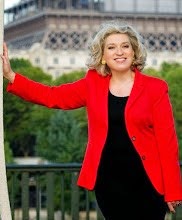
Paris Call the French inconsistent. They objected to their new president's perceived flaunting of his private life. But give him a picture-perfect trip to England, complete with horse-drawn carriage ride into Windsor next to Her Majesty Queen Elizabeth II, gala evenings, a speech before the Houses of Parliament, and a new commitment to a French-British alliance equal to the French-German "axis" that for the past half-century has kept France in the leadership of Europe--and what do the French pick up on but the accolades bestowed by the British press on Sarkozy's new wife. "London falls for Carla--Carlamania seizes Britain!" goes the headline in Le Monde. "Carla steals the show," trumpets Libération. And that's only the supposedly "serious" (and usually anti-Sarkozy) left-wing press. It took a 36-hour visit, one night at Windsor Castle, and nine dress changes (all in demure but très chic Dior) for Sarko's poll numbers, which had dropped 30 points in three months, to finally inch back up, from 35 percent to 40 percent favorable, leaving him a bit of elbow-room to announce a series of cuts in welfare spending last Friday. The week before last, everyone in France was dismissing Sarkozy as last year's wonder, a four-year lame-duck president who'd managed to squander a clear victory in record time. Worse, he'd managed to lose half a dozen large cities to the left in local elections on March 9 and 19--almost without help from the opposition Socialists. As France moves more and more into a two-party system (Sarkozy has destroyed Jean-Marie Le Pen's far-right National Front in a neat mirror-image of François Mitterrand's shrinking trick with the Communist party a quarter century ago), the Socialists still don't have a leader or a platform. Deciding on these--at their next national conference in November--promises a lively free-for-all, as former presidential candidate Ségolène Royal slugs it out with her archenemy, Paris mayor Bertrand Delanoë. Unlike their German Social Democratic or British Labour counterparts, the French Socialists still haven't formally abandoned Marxism. If they do, they fear losing the votes of France's three (count 'em!) small Trotskyite parties preaching class struggle and antiglobalization. As a result, the Socialists' message is often distorted by the tension between ideology and realism. Meanwhile, they look less modern, less diverse, and older than Sarkozy's troops, which helps explain his victory last year. (It took Sarko to appoint blacks and Muslims to major cabinet positions and to insist on strict equality between the sexes in appointments ranging from cabinet jobs to the Legion of Honor.) As Sarkozy seemed intent on an own-goal ignominious free fall, his real enemies started coming out of his own party's woodwork. They are the self-proclaimed Gaullists, to whom the new president's pro-Americanism is anathema, and the keenest of them all is a lanky figure well-known in Washington, Dominique de Villepin, the former foreign minister and prime minister of anti-Iraq war fame. Villepin and Sarkozy hate each other's guts. It's political--they have different views of the world, and Sarkozy despises in Villepin the career bureaucrat who never ran for elective office--but also personal. Villepin, who for a good while toyed with the idea of running for president himself in 2007, has been indicted in the Clearstream scandal, a smear campaign in which Sarkozy's name (and others') were faked on a computer list purporting to show holders of illegal Luxembourg bank accounts. Around 2004-05, Villepin and, in all likelihood, President Jacques Chirac, allegedly hired through intermediaries a computer expert to produce the list, in a dirty-tricks bid to prevent Sarkozy from running for president. The chief intermediary was an officer in the French intelligence service, General Philippe Rondot, who found the task distasteful enough that he kept detailed notes in his office safe, to be produced if any of this leaked. It did. It should probably be noted here that even if Villepin is found guilty and sentenced (in all likelihood to a fine and a suspended prison sentence), this will be no hindrance to his pursuing a political career. The bright line in France is personal pecuniary gain. Another former prime minister, Bordeaux mayor Alain Juppé, was three years ago sentenced to a 14-month suspended prison term for financing the Gaullist party through City of Paris coffers. Since he did not help himself to a centime, he was reelected in Bordeaux in March with an even higher majority. While Villepin is incensed that Sarko didn't lift a finger to slow down the judicial process against him (French judges are civil servants; it is not uncommon to convince them to slow a proceeding to a crawl), his official reason for opposing Sarkozy is that the president is betraying the "Gaullist legacy." One sure sign that Villepin intends to pursue an active political career, probably even run for president in 2012, is that he's recently registered with the Paris bar. He doesn't need the work--he is already getting both his prime minister's pension and an ambassador-at-large's salary from his civil service career--but as a lawyer, he can receive large fees from clients without having to disclose them. It is a known dodge in French political finance. Sarkozy himself was a barrister. So are Socialist chief François Hollande and his former partner Ségolène Royal, even though they're both (like Villepin, Chirac, and many more--but not Sarko) graduates of the illustrious Ecole Nationale d'Administration and therefore civil servants for life. Until last week, Villepin and his bevy of anti-American, anti-EU, largely pro-Arab "historic Gaullists" were licking their chops at Sarko's fall from grace, punctuating the president's descent in the polls with snide attacks. "Europe has never had borders. . . . Europe made concrete commitments vis-à-vis Turkey some decades ago and [those commitments] need to be honored," Villepin told students (and the local great and good) at Galatasaray University in Istanbul, in open criticism of Sarkozy's well-known refusal to let Turkey into the EU. "France has no call to reintegrate NATO," he thundered in an interview with the radio station Europe 1, just as Sarkozy prepared to announce exactly that at the Bucharest NATO summit. "I might very well run for election in France," he confided to La Tribune de Genève. "The government's message isn't clear enough," he sniped on public radio France-Info. Even when selling his collection of Napoleon memorabilia and papers (tellingly, through the auction house owned by a longtime Mitterrand acolyte, Pierre Bergé), Villepin seized the occasion to express his grave doubts about France sending more troops to Afghanistan "in the absence of clearly defined goals by the United States and NATO." Sarkozy's reaction was typical: Just as, after winning the election last year, he brought half a dozen leftwingers into his cabinet, throwing the defeated Socialists into further disarray, last week he had two Villepin associates appointed to leadership posts within the UMP, the Gaullist party, one of them as vice secretary in charge of defense. Sarko believes that while Villepin stays out in the cold, he can whittle some of his troops away from him. It's a daring strategy, undertaken even before the poll numbers started to improve, but Sarkozy, who at 53 is two years younger than Villepin, has been in politics for twenty years longer. Villepin has written several admiring books about his hero, Napoleon, but it's Sarkozy who's got the true Bonaparte style. © Copyright The Weekly Standard & Anne-Elisabeth Moutet 2008 |


"Sarkozy sinks even further!" was the headline in Le Canard Enchaîné, France's Left-wing answer to Private Eye, as the French president launched a new nuclear submarine at Cherbourg last week.
Nicolas Sarkozy, who is beginning a two-day state visit to Britain on Wednesday - three months before France assumes the European Union's rotating presidency - will arrive weighed down by a controversial image and baggage as heavy as the gold Rolex watch which he has only recently been persuaded to give up.
Fellow European leaders consider, with feelings ranging from fascination to dismay, his precipitous slide in the opinion polls of more than 30 points in less than three months; his party's poor performance in last week's local elections, and the cloud of high-octane gossip that has surrounded his very public divorce and his new marriage, to the model and singer Carla Bruni.
All those marital complications may sound horribly familiar to the Queen, of course, as the mother of three children who have divorced.
She will do the French president and the new Mrs Sarkozy what Élysée aides called the "rare honour" of accommodating them at Windsor Castle - not Buckingham Palace - on Wednesday. Mrs Sarkozy has rehearsed her curtsy, ready to "follow proper British protocol", French diplomatic advisers confirmed.
The Sarkozy visit is not just designed to make him look as lofty and presidential as polls at home suggest the French would like him to be. It is also aimed at producing some substantial diplomacy, drawing Britain into a more decisive role in Europe and as a supporter of France's return to Nato, four decades after General de Gaulle walked away from the Atlantic Alliance in a huff. If it happens to miff the German chancellor, Angela Merkel, after Berlin pulled the rug from under Mr Sarkozy's projected Mediterranean Union by voting against EU subsidies, so much the better.
For, almost obscured by the publicity and paparazzi pictures, is the fact that Mr Sarkozy has a long-matured plan of what he aims to achieve in France and abroad. "I've had 30 years to think of what I'm going to do," he told an interviewer shortly after his election last year.
He may have been surprised, and infuriated, by his loss of popularity; he thought he had been elected with a clear mandate to modernise France, and that the French wouldn't mind a younger look and style to go with it. (They did, terribly; they wanted a traditional figure who would adopt a grand bedside manner while applying the forceps.)
But anyone discounting Mr Sarkozy as a four-year lame-duck president, facing opprobrium at home and abroad just like America's George W Bush, is missing the point. Mr Sarkozy is no family heir comfortably groomed for power, no École Nationale d'Administration upper civil servant gone into politics with a safety net and a network of supercilious grad school friends.
His own father, a Hungarian refugee from communism, told him, before leaving the household for a peripatetic life full of pretty women, that "with a name like yours, you'll never make it in French politics".
Mr Sarkozy got his start at the grassroots, handing out leaflets and organising young Gaullists. He snatched the city hall at Neuilly aged 28, when his political mentor had to undergo a routine operation. He has always made enemies, and has often been unpopular.
In 1995, he briefly considered quitting politics, after he left Jacques Chirac's side to support his Right-wing rival Edouard Balladur's bid for the presidency, only to see Mr Balladur trounced by the more experienced Mr Chirac. At the time, newspaper cartoons showed Mr Sarkozy as a diminutive, cartoonish traitor, and it seemed his reputation could not recover. But it did, as he forged alliances, seized the Gaullist party from Mr Chirac's remote stewardship, and eventually defeated rivals to stand alone as the Right's presidential hopeful in the polls.
After the 2005 riots, when he was interior minister, the Left, attempting to whip up an "Anyone But Sarkozy" front, painted him as a quasi-fascist and racist. This doesn't work so well today, now that he has appointed six former Left-wingers to the most diverse cabinet in French history. Mr Sarkozy is no Margaret Thatcher. He is a man of conviction, but more of a pragmatist than an ideologue. Head-on conflict doesn't work with the French, so he would rather avoid it when possible.
He believes France will suffer fatally in the global competition stakes without reforms. But he wants to slide these past the unions by agreeing to any number of temporary sweeteners, so long as his real goals - structural reform of France's too-generous social and welfare net and of the health and state school services, plus lower tax on businesses and services - remain intact.
This strategy succeeded last November, when Mr Sarkozy defused a threatened transport strike while reaching an agreement on a common retirement age for public- and private-sector workers. And even as his party was dealt a resounding slap in last Sunday's local elections, an opinion poll found that two-thirds of voters want reforms to be implemented faster. Seated in their collective dentist's chair, the French seemed to beg for the drill - and for the whole thing to be over with already.
Mr Sarkozy has now announced that he will increase the pace of reforms, to derisive comments from the Left. He can, however, brush these aside because at national level he has only a divided opposition with which to contend.
The recent "bling-bling" anti-Sarkozy campaign was waged on style, not substance, precisely because the Socialist party is still split between two leadership contenders (Ségolène Royal, whom Mr Sarkozy beat to become president, and Bertrand Delanoë, the mayor of Paris), has no platform, and can't manage to make peace with the Greens and three small Trotskyite parties whose votes it crucially needs.
The president's real opponents are within his own party, where the old anti-Atlanticist Gaullists, horrified by what they see as a betrayal of France's non-aligned tradition, are hoping that a challenger will emerge to stand against him for the Gaullist candidacy in the 2012 presidential election.
One such might be Alain Juppé, mayor of Bordeaux and a former prime minister; another possibility is the former foreign secretary and prime minister, Dominique de Villepin. But Mr Sarkozy's bet is that he has more political experience, and more experience of life's reversals, than any of his rivals.
Watch him this week as he proclaims a "new fraternity" between France and Britain, in a carefully honed speech to both Houses of Parliament. He has been knocked down before, but never out.
© Copyright Telegraph Media Group & Anne-Elisabeth Moutet 2008