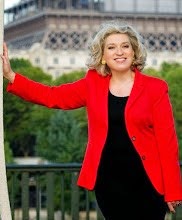
Anne-Elisabeth Moutet meets the refreshingly frank Bad Girl of French cinema.
There is something irredeemably rebellious about Béatrice Dalle that has kept her firmly outside any kind of Parisian establishment, even the movie crowd, not known here for being usually that exclusive. And so last week it was shocking, but not especially surprising, to see the police arrest and hold for an outrageous 72 hours of questioning, without a lawyer, in the garde-à-vue procedure usually reserved for dangerous terrorists, the actress who smouldered her way into international stardom with her first movie, Jean-Jacques Beineix's Betty Blue, back in 1986, for owning 0.7 gram of cocain and 0.2 gram of heroin.
Before she was released, a judge charged Dalle with drug use and being an accessory in drug dealing. As it turned out, police had raided and ransacked her Paris apartment on a tip-off from two homeless small dealers whom she had sheltered for a couple of days.
The entire scene was exactly the sort of thing that never happened to, say, Françoise Sagan, when she was accused of regular cocaine use and dealing five years ago. (Sagan, who happens to be an extremely nice person, readily admitted that she used the stuff and denied dealing, exactly like Béatrice Dalle). France's most famous novelist, who made a writing career of loving fast cars and difficult men, never saw the inside of a police station cell: she was politely notified of the charges, and was fined by a lenient judge a year later. Sagan had played at being bad and only managed naughty. Ever since the amazing success of Betty Blue, Béatrice Dalle has assumed the uneasy part of France's "bad girl", the one France's usually tame journos feel they can snigger at.
There was the radio columnist Philippe Aubert, who alway made nasty jokes about her sensuous mouth and deep cleavage. There was the film critic at L'Express who disparaged her looks and her acting. Three years ago, when she had her first brush with the police for shoplifting in a cheap jewellery store, the newsweekly Le Point called her a liar and a thief; and a few months later, TF1's star anchor Patrick Poivre d'Arvor, who'd invited her to speak about her latest movie, reneged on a deal with her publicity people to ask her live about the jewellery incident: the sort of thing he'd never, ever do to either Isabelle Adjani or Catherine Deneuve.
Such hatchet jobs are almost unheard of here: producers and actors are known to be capable of retaliating by withholding access to sets, rights to reproduce stills, invitations to gala nights or chummy dinner-parties at Le Fouquet's and, in some cases, advertising from offending newspapers. It's as if Béatrice Dalle's enemies had sensed she's not part of that little game, and therefore won't defend herself in the usual way. (She may slap someone's face, but she's unlikely to sue.) Those who dislike her, her independence, her wild streak, are usually men. There's something in her that taunts them. "I'm an outsider, and always was, even as a child," she has said. "I don't plan my career, I chose movies on a hunch, I've made mistakes and I'll make more."
Although she's acted in a lot of duds, Dalle has a presence on-screen that is truly powerful and makes her smallest parts stand out. With a good director (Beineix, Jim Jarmusch for Night on Earth, or Truffaut's former apprentice Jacques Doillon for La Vengeance d'une Femme) she gives the kind of performances that have made Quentin Tarantino, John Turturro, Neil Jordan, Spike Lee and Madonna seek her out and offer her parts, which she hasn't taken "because I don't speak good English, and I can't imagine being coached until I say my parts by rote; acting for me is saying something I mean."
In real life she is mesmerizing, devastatingly direct, a charmed sprite. I first met her on a magazine assignment, immediately after Betty Blue, on the set of her forgettable second movie, with and by the moody stage star, Francis Huster. She was 22 and knew the film would be terrible. "They've rewritten the screenplay after I signed, and now I get to undress on page 2," she moaned, dragging on a cigarette cadged from one of the technicians.
We had shooed off the film's publicist, something experienced actors know never to do when meeting an unknown interviewer, and Béatrice happily started to tell me about her childhood in a council block in Le Mans, her nosy neighbours who called her and her mother "sluts" because they wore make up, her dropping out of school at 16 to come to Paris, staying in and out of friends' flats or the odd squat, doing odd sales assistant jobs, living on fruit and milk, going out clubbing at night, and being "discovered" by a model agency scout on the Champs-Elysées. (The Betty Blue offer materialised after her first published pictures, a fairytale by filmland standards.) I felt I'd known her for years, so much that when she mentioned smoking joints, I put down my pen and notebook and made her promise never, ever to tell it to a journalist again.
We met again a few times. There was an interview in the wood-panelled bar of Hôtel Raphaël, which she had annexed as her second home for a while, and where all the waiters grinned at her in a slobbering trance. I remember we talked about diets and lipsticks and the expensiveness of Hermès Kelly handbags. Béatrice Dalle still believes to this day that she's ugly; and at the time she also thought she was fat. (She is now proudly waif-thin to the point of anorexia, beautiful in an almost tragic way, after a series of crazy diets that I immediately and unknowingly ascribed to cocaine when I first heard of her arrest last week.)
Another time I asked her to take part in a Clive James's Paris Special for BBC Two, and they got along like a dream, even though Béatrice swears she doesn't like reading books. (Well, not quite. For instance she read all of the Marquis de Sade after she saw Barry Lyndon and Peter Greenaway's The Draughtsman's Contract.) After they'd finished shooting, we walked up the Champs-Elysées to Le Fouquet's, the movie crowd legendary bar brasserie, where she'd never set foot before, and she told me about being madly in love with Rupert Everett, who'd just starred as Guy Burgess in Marek Kaniewski's Another Country. "He's soooo much more handsome and more intelligent than I am," she wailed. "Béatrice, he may be more educated, but you're more intelligent," I replied, meaning it. She didn't look as if she believed me.
She has been married once, to the painter Jean-François Dalle. She's still sorry it ended. They met in a club before Béatrice ever thought of standing in front of a camera. She was 19. He was 25. They hoped it would be forever. Then Béatrice started flying from location to location, being interviewed and photographed. "I'd go someplace with him, nobody even looked at him, they all rushed at me. I was the cause of the breakup," she says. Since then there were romances, always sincere, not always happy. "I am ab-so-lute-ly faithful to the man I'm in love with," she says. "I can't imagine cheating. What would be the point?"
She doesn't cheat and hates it in others. When suave father-of-four Poivre d'Arvor, whose wife appeared with him on many lovey-dovey TV magazine pictures, suddenly asked her about her shoplifting live on prime-time news, she hit back: "You said you'd not talk about it. Well then, I'll talk about the [love] letters you sent me. Aren't you sorry you wrote them now?"
But then Béatrice always preferred difficult men like the rap singer Joey Starr or the actor Christopher Lambert. Difficult neighbourhoods: her Paris apartment is on working-class Place de la République, not trendy Bastille. Difficult friends: she remembers when she relied on others' hospitality for a roof, and opens her door readily to people like the junkies who shopped her last week. Now she's holed up at a friend's house in leafy Yvelines, with instructions to visit a doctor once a month. It won't quite tame her.
© Copyright The European & Anne-Elisabeth Moutet 1995
Showing posts with label Françoise Sagan. Show all posts
Showing posts with label Françoise Sagan. Show all posts
Friday, June 9, 1995


Friday, May 2, 1986
The Frog Kissed by Three Princesses
Roger Vadim tells Anne-Elisabeth Moutet all about his memoirs, Bardot, Deneuve, Fonda.
Bertie Wooster would strongly disapprove of Roger Vadim. "One doesn't bandy a woman's name in mess" hardly ever was one of Vadim's ruling principles. France's best-known seductor, a director renowed less for his films than for the actresses he married and divorced, and one of the very few male exponents of the "kiss-and-tell" memoirs, Vadim just looooves to discuss his life, loves, and lovelife with the likes of Brigitte Bardot, Catherine Deneuve, or Jane Fonda. His conversation is peppered with anecdotes, the names gently dropped, a worldly half-smile softening the innuendos. He has also had several shots at his favourite subject in print. (In 1976 he stormed Britain with a publicity tour for his first autobiography, Memoirs of the Devil, with comments on all of his wives and girl friends - including the "Danish bombshell" Annette Stroyberg, and his then (fourth) wife Catherine Schneider, president Giscard's cousin.)
His latest book, of almost anatomical precision, is succintly entitled Bardot, Deneuve, Fonda - Three Women. They've all had a look at the manuscript, he swears - to forestall possible legal action - and have okayed it, but one can't help wondering how they can possibly like it. Not so Vadim, who seems to believe that Fonda and Bardot at least couldn't have any objections to having the torrid details of their nights with him recounted in graphic detail. If he isn't embarrassed, he reasons, why should they?
There he sits, the ultimate lounge-lizard, very much at his ease, drinking vodka at four in the afternoon in the bar of the Hôtel du Pont Royal, where he's agreed to have the interview. The Pont-Royal bar is a literary landmark in Paris - a meeting place for authors and publishers, where Françoise Sagan, once of Vadim's Saint-Germain des Prés restless crowd, used to beg her publishers for larger advances. Vadim likes the atmosphere - dark red leather, wood panelling, a perpetual late-evening feeling; 11:30 p.m. when it's broad daylight outside.
"My career did really suffer a lot from the fame of the ladies I helped succeed," he says, sipping vodka and looking gently sorrowful - the creator defeated by his creatures. "All this publicity - people paid attention to me, not to my work." He also says: "You see, when I married them, they were fresh, unknown - and then they became stars and changed entirely, and I couldn't cope with their new personalities anymore." And he says: "Officially, they all left me - but there are ways of making women leave you." (Let it be said, for the sake of historical accuracy - one likes to get these things straight - that the only surprise came from Annette Stroyberg, Wife Number Two, who did walk out before Vadim felt like initiating the severance manoeuvres.)
Two years from his sixtieth birthday, he does look incredibly handsome. He is tall and lean; the lines on his face still spell character, not age; the full lips curve in a wolfish grin; his thick hair is more pepper than salt. He dresses with casual elegance - the least one can expect from a former Paris-Match reporter - in corduroys, cashmere pull-over, well-cut tweed jacket. He is supremely self-possessed - making you feel you are the very best person in the world to share his little jokes, his risqué reminiscences, his ultimate judgements on his former harem. "The trouble with Brigitte," he explains, "is that she won't accept her age. She leads this tragic life really - surrounded by yes-men, alone in her house, alienated from the world, with her animals..." The trouble with Fonda was her crusading, but he is softer on Fonda; they actually get along quite well, are neighbours in Santa Monica, share in the education of their 17-year-old daughter Vanessa. The trouble with Stroyberg is of course that she walked out.
"I wasn't finished working on her, that's why she hasn't had the career of the others." She was wrong, you are led to infer. "She left me for Sacha Distel - it surprised me." Distel, he goes on explaining, was a paler copy of himself. A lapse of taste.
He says less about Catherine Schneider - Schneider wasn't an actress, wasn't interested in publicity, there's no point in discussing her. (Schneider, a daughter of one of France's great industrial dynasties, was also hardly ever defenceless.) But to get him really going, start him on Catherine Deneuve. There's very little love lost between them.
There is something eerie about the whole conversation - casual, intimate, catty gossip about the most beautiful women in the world - and it makes Vadim's presence in the Pont-Royal bar strangely affecting. This is the man who's slept with Bardot and Deneuve, you can't help thinking, and you feel troubled. Would he ever consider me? God, of course not. Not in the running. I wonder what he's like in bed. (You don't really; this is on par with wondering what it would be like to go about life's business in a silver-gray Rolls-Royce with chauffeur.) Vadim is probably aware of this effect he has on women, and uses it to his advantage. He is a scarce commodity - a tried and tested Don Juan, a wolf in wolf's clothing, a certified seductor. He doesn't try, but, just as truly beautiful women, he is so used to being desired that it shows - his smiles are never interrogative, for instance; he assumes automatically that you are under his charm.
How he became Le Vadim has been told, but not explained. The son of a French naturalised Russian aristocrat (and, he claims, a distant descendant of Genghis Khan) who had become a Consul in the French Foreign Service, he was born Roger Vadim Plemiannikov eleven years before World War II, and so lived the first years of his adolescence under the Occupation. Small wonder, he says, that in 1945, at 17, he felt like leading the mad, carefree life of Saint-Germain des Prés - dancing all night at Le Tabou, ogling girls from the terrace of the Flore, taking the odd job as an extra on film sets, selling screenplays for a pittance, hanging out all night with Juliette Gréco and Boris Vian and Edith Piaf at La Rose Rouge.
He graduated as a capable film director's assistant, and went on leading the life of Riley (with a stint in London on White Fury, a Sir Alexander Korda film starring Valerie Hobson and Stewart Granger) until he noticed one day the picture of a very pretty girl in ELLE. He decided she was just right for the lead for a screenplay he'd written, and looked her up. She was called Brigitte Bardot.
"Her parents didn't approve of my irregular habits, so to be finally allowed to marry Brigitte in 1951, I had to get a regular job." He knew the then editor in chief of Paris-Match, Hervé Mille, and obtained a 200-dollar a month reporting job, with unlimited expenses.
There was no better way to go on leading his charmed life. There's a quote all hacks take to heart, by the editor of the Washington Times, Arnaud de Borchgrave, who once said that "journalism is the only profession which enables you to remain a juvenile delinquent all your life." Very few news organisations fit that definition as well as Match in those halcyon pre-television days of the 50s and early 60s. The money was on an American scale, the gung-ho typically French. Vadim took to the Match rat-pack like a duck to water.
"We were everywhere. Kings and princesses, paratroopers from Indochina, mercenaries, film stars and politicians, they all talked to us." The Match people thought nothing of chartering planes, helicopters, bribing hotel concierges, pre-empting officers' transport to get faster to a front line, blowing wads of expense-money in three-rosette restaurants with their girlfriends, spend nights on the tiles before leaving for dangerous assignments, driving hard, drinking hard, living hard. Vadim loved it. He had seduced Bardot and soon made her a star; his erratic life finally proved too much for her, as it would with all his wives. "I didn't want to be nailed down,", he explains disingenuously. "If friends called me to a party at midnight, I went. Of course there were dramas." Even after he left Match, the old habits remained.
He graduated to fame in 1954 with his first film, And God created woman, with Bardot, the smooth Austrian actor Curt Jürgens, and a young French beginner who would eventually take Bardot away from him, Jean-Louis Trintignant. By then Bardot was showing evidence of a brain of her own - not necessarily what he liked best, however strenuous his assurances to the contrary. In a press conference, for instance, she showed wit and presence of mind. "What was the best day of your life?" she was asked. "A night." "Who is the person you admire most?" "Sir Isaac Newton, because he discovered that bodies attract each other." Possibly, but no longer those of Roger Vadim and Brigitte Bardot. Annette Stroyberg was soon to follow.
After Annette came Deneuve, the woman yet again voted the most glamorous in the world in a recent French opinion poll - and by then the pattern was established. Seventeen-year-old little girl needs to be awakened to her beauty and to the joys of sex. "Catherine was wary of me, or rather, of my reputation," Vadim smugly writes. "She was expecting to find a superficial, cynical and no doubt intelligent man. She discovered that I was rather tender and a good listener."
Except Deneuve soon turned "bossy", which Vadim didn't like - and doesn't even today. They communicate only through lawyers, have bitterly fought over their son's career (Christian Vadim, 21, read law for one year, then gave up to star in his father's latest (1983) film, the forgettable Surprise Party, to his mother's fury) and Vadim doesn't have enough nasty little anecdotes about Deneuve. "Whenever Christian would come spend a few days with me while he was still at school, she would type out a list of all the clothes and things in his suitcase, and scream if as much as a sock was missing. In the end we used to leave the suitcase in the hallway, and I'd go and buy Christian new clothes." Deneuve, he claims, is so interested in money that she's made a lucrative sideline of suing whoever "invades her privacy" - newspapers, paparazzi, writers, TV programmes. "She has this lawyer on an annual retainer, and she can make an extra 100,000 to 200,000 francs in a good year." You shudder. Is this the voice of the world's best-known seducer? More to the point, you ask him whether he's not afraid of a court case with this interview, and his book. He explains that he has deleted quite a bit from the book on lawyers' advice. And then he grins: "But if she starts to really annoy me, I'll tell more. I've got one or two little things about Catherine that I don't think she'd like known."
What strikes you most at this stage is how perfectly natural this all sounds. Vadim lives in a different world, reminding one forcibly of a male Alexis Colby. It all fits: his ageless beauty, his belief that the world - and women - are there to be taken, the jet-setting life, the dropping of famous names, the soap-opera situations. In his book, just as in Dynasty or Dallas (but quite unlike real life) his present mistress (Deneuve) throws a scene when she finds his ex-wife (Stroyberg) in his bed; he makes love to his nubile girlfriend (Bardot) in the house of her unsuspecting parents; his children are torn between parents; actors lend him love nests to seduce young starlets who after the momentous event open wide the windows to scream their happiness to the whole world in the nude. He even married serious money (Catherine Schneider), but it didn't last any more than the rest - even though he got a whiff of exalted circles there, with President Giscard dropping in or borrowing his Ferrari. (There's a story, which Vadim denies, of how Giscard was driving the Ferrari during a night on the tiles, and rammed it into a milkman's van in the small hours of the morning as he was getting back home to the Elysée Palace.)
But those heady days are over, and if Françoise Sagan is a frequent guest at the Elysée, Vadim is no friend of François Mitterrand's. He divides his time these days between Paris and Santa Monica, shooting made-for-TV pictures for HBO, the American pay-TV channel, and looking for backers for his grander projects. There's also a new woman in his life - she has been there for three or four years, a good average by Vadim standards. She's Ann Bidermann, a 30-year-old American screenwriter about whom he has nothing but praise. She is, he says, intelligent, beautiful, charming. You are slightly dazed by the news. A wolfish grin:
"Anyway, she's not an actress, she's not blonde, and she's an intellectual. Quite atypical. We should stand a fair chance."
Bertie Wooster would strongly disapprove of Roger Vadim. "One doesn't bandy a woman's name in mess" hardly ever was one of Vadim's ruling principles. France's best-known seductor, a director renowed less for his films than for the actresses he married and divorced, and one of the very few male exponents of the "kiss-and-tell" memoirs, Vadim just looooves to discuss his life, loves, and lovelife with the likes of Brigitte Bardot, Catherine Deneuve, or Jane Fonda. His conversation is peppered with anecdotes, the names gently dropped, a worldly half-smile softening the innuendos. He has also had several shots at his favourite subject in print. (In 1976 he stormed Britain with a publicity tour for his first autobiography, Memoirs of the Devil, with comments on all of his wives and girl friends - including the "Danish bombshell" Annette Stroyberg, and his then (fourth) wife Catherine Schneider, president Giscard's cousin.)
His latest book, of almost anatomical precision, is succintly entitled Bardot, Deneuve, Fonda - Three Women. They've all had a look at the manuscript, he swears - to forestall possible legal action - and have okayed it, but one can't help wondering how they can possibly like it. Not so Vadim, who seems to believe that Fonda and Bardot at least couldn't have any objections to having the torrid details of their nights with him recounted in graphic detail. If he isn't embarrassed, he reasons, why should they?
There he sits, the ultimate lounge-lizard, very much at his ease, drinking vodka at four in the afternoon in the bar of the Hôtel du Pont Royal, where he's agreed to have the interview. The Pont-Royal bar is a literary landmark in Paris - a meeting place for authors and publishers, where Françoise Sagan, once of Vadim's Saint-Germain des Prés restless crowd, used to beg her publishers for larger advances. Vadim likes the atmosphere - dark red leather, wood panelling, a perpetual late-evening feeling; 11:30 p.m. when it's broad daylight outside.
"My career did really suffer a lot from the fame of the ladies I helped succeed," he says, sipping vodka and looking gently sorrowful - the creator defeated by his creatures. "All this publicity - people paid attention to me, not to my work." He also says: "You see, when I married them, they were fresh, unknown - and then they became stars and changed entirely, and I couldn't cope with their new personalities anymore." And he says: "Officially, they all left me - but there are ways of making women leave you." (Let it be said, for the sake of historical accuracy - one likes to get these things straight - that the only surprise came from Annette Stroyberg, Wife Number Two, who did walk out before Vadim felt like initiating the severance manoeuvres.)
Two years from his sixtieth birthday, he does look incredibly handsome. He is tall and lean; the lines on his face still spell character, not age; the full lips curve in a wolfish grin; his thick hair is more pepper than salt. He dresses with casual elegance - the least one can expect from a former Paris-Match reporter - in corduroys, cashmere pull-over, well-cut tweed jacket. He is supremely self-possessed - making you feel you are the very best person in the world to share his little jokes, his risqué reminiscences, his ultimate judgements on his former harem. "The trouble with Brigitte," he explains, "is that she won't accept her age. She leads this tragic life really - surrounded by yes-men, alone in her house, alienated from the world, with her animals..." The trouble with Fonda was her crusading, but he is softer on Fonda; they actually get along quite well, are neighbours in Santa Monica, share in the education of their 17-year-old daughter Vanessa. The trouble with Stroyberg is of course that she walked out.
"I wasn't finished working on her, that's why she hasn't had the career of the others." She was wrong, you are led to infer. "She left me for Sacha Distel - it surprised me." Distel, he goes on explaining, was a paler copy of himself. A lapse of taste.
He says less about Catherine Schneider - Schneider wasn't an actress, wasn't interested in publicity, there's no point in discussing her. (Schneider, a daughter of one of France's great industrial dynasties, was also hardly ever defenceless.) But to get him really going, start him on Catherine Deneuve. There's very little love lost between them.
There is something eerie about the whole conversation - casual, intimate, catty gossip about the most beautiful women in the world - and it makes Vadim's presence in the Pont-Royal bar strangely affecting. This is the man who's slept with Bardot and Deneuve, you can't help thinking, and you feel troubled. Would he ever consider me? God, of course not. Not in the running. I wonder what he's like in bed. (You don't really; this is on par with wondering what it would be like to go about life's business in a silver-gray Rolls-Royce with chauffeur.) Vadim is probably aware of this effect he has on women, and uses it to his advantage. He is a scarce commodity - a tried and tested Don Juan, a wolf in wolf's clothing, a certified seductor. He doesn't try, but, just as truly beautiful women, he is so used to being desired that it shows - his smiles are never interrogative, for instance; he assumes automatically that you are under his charm.
How he became Le Vadim has been told, but not explained. The son of a French naturalised Russian aristocrat (and, he claims, a distant descendant of Genghis Khan) who had become a Consul in the French Foreign Service, he was born Roger Vadim Plemiannikov eleven years before World War II, and so lived the first years of his adolescence under the Occupation. Small wonder, he says, that in 1945, at 17, he felt like leading the mad, carefree life of Saint-Germain des Prés - dancing all night at Le Tabou, ogling girls from the terrace of the Flore, taking the odd job as an extra on film sets, selling screenplays for a pittance, hanging out all night with Juliette Gréco and Boris Vian and Edith Piaf at La Rose Rouge.
He graduated as a capable film director's assistant, and went on leading the life of Riley (with a stint in London on White Fury, a Sir Alexander Korda film starring Valerie Hobson and Stewart Granger) until he noticed one day the picture of a very pretty girl in ELLE. He decided she was just right for the lead for a screenplay he'd written, and looked her up. She was called Brigitte Bardot.
"Her parents didn't approve of my irregular habits, so to be finally allowed to marry Brigitte in 1951, I had to get a regular job." He knew the then editor in chief of Paris-Match, Hervé Mille, and obtained a 200-dollar a month reporting job, with unlimited expenses.
There was no better way to go on leading his charmed life. There's a quote all hacks take to heart, by the editor of the Washington Times, Arnaud de Borchgrave, who once said that "journalism is the only profession which enables you to remain a juvenile delinquent all your life." Very few news organisations fit that definition as well as Match in those halcyon pre-television days of the 50s and early 60s. The money was on an American scale, the gung-ho typically French. Vadim took to the Match rat-pack like a duck to water.
"We were everywhere. Kings and princesses, paratroopers from Indochina, mercenaries, film stars and politicians, they all talked to us." The Match people thought nothing of chartering planes, helicopters, bribing hotel concierges, pre-empting officers' transport to get faster to a front line, blowing wads of expense-money in three-rosette restaurants with their girlfriends, spend nights on the tiles before leaving for dangerous assignments, driving hard, drinking hard, living hard. Vadim loved it. He had seduced Bardot and soon made her a star; his erratic life finally proved too much for her, as it would with all his wives. "I didn't want to be nailed down,", he explains disingenuously. "If friends called me to a party at midnight, I went. Of course there were dramas." Even after he left Match, the old habits remained.
He graduated to fame in 1954 with his first film, And God created woman, with Bardot, the smooth Austrian actor Curt Jürgens, and a young French beginner who would eventually take Bardot away from him, Jean-Louis Trintignant. By then Bardot was showing evidence of a brain of her own - not necessarily what he liked best, however strenuous his assurances to the contrary. In a press conference, for instance, she showed wit and presence of mind. "What was the best day of your life?" she was asked. "A night." "Who is the person you admire most?" "Sir Isaac Newton, because he discovered that bodies attract each other." Possibly, but no longer those of Roger Vadim and Brigitte Bardot. Annette Stroyberg was soon to follow.
After Annette came Deneuve, the woman yet again voted the most glamorous in the world in a recent French opinion poll - and by then the pattern was established. Seventeen-year-old little girl needs to be awakened to her beauty and to the joys of sex. "Catherine was wary of me, or rather, of my reputation," Vadim smugly writes. "She was expecting to find a superficial, cynical and no doubt intelligent man. She discovered that I was rather tender and a good listener."
Except Deneuve soon turned "bossy", which Vadim didn't like - and doesn't even today. They communicate only through lawyers, have bitterly fought over their son's career (Christian Vadim, 21, read law for one year, then gave up to star in his father's latest (1983) film, the forgettable Surprise Party, to his mother's fury) and Vadim doesn't have enough nasty little anecdotes about Deneuve. "Whenever Christian would come spend a few days with me while he was still at school, she would type out a list of all the clothes and things in his suitcase, and scream if as much as a sock was missing. In the end we used to leave the suitcase in the hallway, and I'd go and buy Christian new clothes." Deneuve, he claims, is so interested in money that she's made a lucrative sideline of suing whoever "invades her privacy" - newspapers, paparazzi, writers, TV programmes. "She has this lawyer on an annual retainer, and she can make an extra 100,000 to 200,000 francs in a good year." You shudder. Is this the voice of the world's best-known seducer? More to the point, you ask him whether he's not afraid of a court case with this interview, and his book. He explains that he has deleted quite a bit from the book on lawyers' advice. And then he grins: "But if she starts to really annoy me, I'll tell more. I've got one or two little things about Catherine that I don't think she'd like known."
What strikes you most at this stage is how perfectly natural this all sounds. Vadim lives in a different world, reminding one forcibly of a male Alexis Colby. It all fits: his ageless beauty, his belief that the world - and women - are there to be taken, the jet-setting life, the dropping of famous names, the soap-opera situations. In his book, just as in Dynasty or Dallas (but quite unlike real life) his present mistress (Deneuve) throws a scene when she finds his ex-wife (Stroyberg) in his bed; he makes love to his nubile girlfriend (Bardot) in the house of her unsuspecting parents; his children are torn between parents; actors lend him love nests to seduce young starlets who after the momentous event open wide the windows to scream their happiness to the whole world in the nude. He even married serious money (Catherine Schneider), but it didn't last any more than the rest - even though he got a whiff of exalted circles there, with President Giscard dropping in or borrowing his Ferrari. (There's a story, which Vadim denies, of how Giscard was driving the Ferrari during a night on the tiles, and rammed it into a milkman's van in the small hours of the morning as he was getting back home to the Elysée Palace.)
But those heady days are over, and if Françoise Sagan is a frequent guest at the Elysée, Vadim is no friend of François Mitterrand's. He divides his time these days between Paris and Santa Monica, shooting made-for-TV pictures for HBO, the American pay-TV channel, and looking for backers for his grander projects. There's also a new woman in his life - she has been there for three or four years, a good average by Vadim standards. She's Ann Bidermann, a 30-year-old American screenwriter about whom he has nothing but praise. She is, he says, intelligent, beautiful, charming. You are slightly dazed by the news. A wolfish grin:
"Anyway, she's not an actress, she's not blonde, and she's an intellectual. Quite atypical. We should stand a fair chance."
© Copyright Cosmopolitan (UK) & Anne-Elisabeth Moutet 1986
Subscribe to:
Posts (Atom)