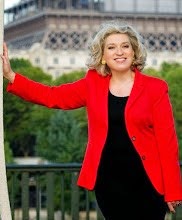
Even the Left is turning hostile to the president, says Anne-Elisabeth Moutet

Francois Hollande has built his career on being a canny political manoeuvrer Photo: Reuters
As he stood at a military airport last Wednesday to greet four French hostages
released by al-Qaeda militants in Niger, François Hollande could have been
forgiven for thinking his disastrous run of bad news in the past months
might finally be coming to an end.
Having announced an assortment of taxes the previous week, Mr Hollande suspended most of them over the weekend after widespread popular protests. He had managed to unite unlikely bedfellows, more often at loggerheads against one another, in the fiercest demonstrations seen in Brittany in a decade.
Having announced an assortment of taxes the previous week, Mr Hollande suspended most of them over the weekend after widespread popular protests. He had managed to unite unlikely bedfellows, more often at loggerheads against one another, in the fiercest demonstrations seen in Brittany in a decade.
A proposed green tax on lorry fuel that would raise transport costs by 4 per
cent had brought out farmers and supermarket owners as well as labourers and
trade unionists, brandishing the black and white Breton flag as a symbol of
their outrage against the cluelessness of Parisian technocrats, of whom Mr
Hollande is a central member. This was the face of a future French Tea
Party, a political development that seems increasingly likely.
Mr Hollande also had to “suspend” — a word that fills the French with unease, as it promises a stealthy return of the same measures whenever the fracas dies down — a 15.5 per cent retroactive tax on savings schemes that seemed tailor-made to infuriated his most natural voters.
A Parisian barrister, himself not a Hollande voter, told me that his Portuguese-born cleaning lady, a single mother of five children, had sworn never again to cast her ballot for the president, as she did last year. “You work hard all your life, you do what’s right, and then they come after the little bit you’ve managed to put aside for your retirement age?” she said. “What kind of a Left-wing government is that?”
Once again, the government’s “method”, if it can be called that, seemed to be to first float the idea of a new tax for a few days, then back down if the outcry became too loud. “It’s probably the worst way you can run a fiscal policy,” says Erwan Le Noan, a competition lawyer and international consultant. “The amateurism and uncertainty alone mean businesses have no visibility, and will defer investment — and hires — as long as they possibly can.”
Mr Hollande also had to “suspend” — a word that fills the French with unease, as it promises a stealthy return of the same measures whenever the fracas dies down — a 15.5 per cent retroactive tax on savings schemes that seemed tailor-made to infuriated his most natural voters.
A Parisian barrister, himself not a Hollande voter, told me that his Portuguese-born cleaning lady, a single mother of five children, had sworn never again to cast her ballot for the president, as she did last year. “You work hard all your life, you do what’s right, and then they come after the little bit you’ve managed to put aside for your retirement age?” she said. “What kind of a Left-wing government is that?”
Once again, the government’s “method”, if it can be called that, seemed to be to first float the idea of a new tax for a few days, then back down if the outcry became too loud. “It’s probably the worst way you can run a fiscal policy,” says Erwan Le Noan, a competition lawyer and international consultant. “The amateurism and uncertainty alone mean businesses have no visibility, and will defer investment — and hires — as long as they possibly can.”
An insider suggests that the ministry of finance mandarins at the Treasury and
budget departments, held in check by their previous bosses, have been trying
out all their pet tax plans, even the most outlandish, on Pierre Moscovici,
the finance minister, and Bernard Cazeneuve, the budget minister. “Moscovici
believes the tax burden is as high as it can go, but he has little
authority,” says the insider. “Cazeneuve, his junior, is a hard-working
realist, but he suffers from having been an exemplary European affairs
minister. He is convinced that France must abide by her European Treaty
obligations, which means reducing the deficit. Since the spending ministries
do not really want to make hard cuts, the only way — or so he thinks — is
through more taxes.” The Laffer curve theory (too much tax kills tax
revenue) does not seem to have made it to Bercy, the massive brutalist
fortress built 20 years go to accommodate the finance ministry’s plethoric
troops.
An unchecked French civil servant can think up some pretty outlandish tax
ideas. The French property market is under threat of a new rent control law.
This is the pet project of Cécile Duflot, the housing minister and a canny
Green ideologue who believes, against all concrete evidence to the contrary,
that it will make rents more affordable. Paris estate agents reply that
this, alongside the heap of protective regulations skewed towards renters,
has already convinced many landlords to just sell and get out, even though
the law has not yet been passed.
This is, however, small beer next to an earlier proposal, last June, by the Conseil d’Analyse Économique, the prime minister’s office’s forward planning think tank, advising the creation of a “virtual rent” that all property owners would pay, in order to restore more equality between households burdened with rent and the other, rent-free ones. After the CAE report came out, the subsequent fury caused the virtual rent proposal to be shelved, “but that shows you how they think”, says Mr Le Noan. “People remember this. They have no trust at all in this government.”
The beginning of the week saw Mr Hollande’s ratings plunge even lower than before, breaking records of unpopularity. Two separate polls have given him the worst ratings of any French president. Their breakdown shows, perhaps predictably, implacable, near-total hostility (93 per cent for one, 97 per cent for the other) on the Right; but opinions on the Left and within his own Socialist party are solidly negative too. He is perceived as “lacking courage”, “indecisive”, “incompetent”, “weak”, even “incoherent”.
To the French who elected him in May last year, Mr Hollande controls nothing and has no authority anywhere. Not in his own home, not in his party, not in his Cabinet, not in the country, and not — after Barack Obama eventually spurned his offer of military help in Syria — in the world.
The one bright spot in which he received across-the-board support was the French intervention in Mali, back in January. In two weeks, French troops, called by the Malian president Dioncounda Traoré to help the country fight an Islamist invasion in the north, pushed back the rebels, liberated Timbuktu and stabilised a country whose fall to al-Qaeda affiliates would have been a disaster for several French allies, from Algeria to Sudan. This was perhaps the model of a foreign expedition done well: experienced troops knowing the region, limited and clear aims, regional and local support. Mr Hollande, quite rightly, saw his popularity edge back up. Visiting Bamako, the Malian capital, in early February, basking in popular adulation, he told an enthusiastic rally that this was “the most beautiful day of his political career”.
And one he’s seemingly tried to replicate ever since — it’s probably the reason why he was so gung-ho on a Syrian intervention, even though French intelligence is perfectly aware of the complexity in which the Syrian rebellion is mired. It was therefore difficult not to wonder at the timeliness, in political terms, of the four hostages’ liberation. Questions about a ransom were raised immediately. Mr Hollande denied any payment had been made.
For one moment, it seemed as if Mr Hollande’s luck might turn: Marine Le Pen commented on television on the look of the head-covered and bearded hostages, implying they might have been “Islamicised” in captivity. It was tactless and crass — a boon, you might think, to the mainstream political class, who duly grabbed the ball and ran with it in their hurry to re-demonise the Front National leader.
Their moment of good, clean fun lasted only for a couple of hours. That very afternoon, Le Monde came out with an authoritative piece of reporting laying out the different stages of the negotiations that succeeded in getting the hostages back, complete with payment of €20 million (£16.9 million) to the kidnappers and Malian intermediaries. Intelligence experts in Paris agree that the article was completely accurate, “with great chunks taken under dictation, I should say”, one jokes.
They explain that Mr Hollande took the negotiations off the hands of the French intelligence service, DGSE, to give them to a series of local intermediaries and presidency advisers, exactly the same type of associates that Mr Hollande, in opposition, criticised Nicolas Sarkozy for using. The implication is that DGSE leaked the entire story to Le Monde, furious both at this and because the ransom, of which they disapprove, seems to have been paid out of their own budget.
You can get away, in French politics, with lying, or looking extremely likely to have lied, to the nation. Mr Hollande’s job is as safe as the Fifth Republic constitution makes it, which is very safe indeed. But as for the hoped-for reprieve in the polls? That is not happening.

How long can this last? Normally, until the next presidential and general elections, which are in 2017. There are no provisions for getting rid of the president, unless he resigns or calls for an early general election, which will not happen. Nationwide municipal elections will take place in March, and European Parliament elections are scheduled for May. The municipal elections, and local deals for the second round, explain why Mr Hollande has been pandering so much to the Greens and the Left of his party. Voting in the European elections, on the other hand, is full proportional representation, which makes them, in effect, a life-size poll.
Ms Le Pen’s party is expected to poll somewhere between 25 per cent and 30 per cent, and, as an MEP herself, she has already been busy making European alliances for the day after. Her platform, in many ways, is indistinguishable from that of the hard-Left: protectionist, anti-euro, anti-capitalist, pro-national regulations, supportive of Bashar al-Assad’s Syria. She is hoping to steal from Mr Hollande many of the disenchanted voters on his Left.
Mr Hollande may not be a very successful president, but he has built his career on being a canny political manoeuvrer and, like a rabbit in a Citroën’s headlights, he understands this, without being able to change his essential nature. He is currently pondering a Cabinet reshuffle — from all accounts unenthusiastically, as it means a complete rebalancing of his majority such as it is, for less than game-changing results. He is therefore likely to keep trudging on, earning himself a place in the Guinness Book of Records in the chapter on unloved political leaders.
© Telegraph Media Group & Anne-Elisabeth Moutet, 2013
This is, however, small beer next to an earlier proposal, last June, by the Conseil d’Analyse Économique, the prime minister’s office’s forward planning think tank, advising the creation of a “virtual rent” that all property owners would pay, in order to restore more equality between households burdened with rent and the other, rent-free ones. After the CAE report came out, the subsequent fury caused the virtual rent proposal to be shelved, “but that shows you how they think”, says Mr Le Noan. “People remember this. They have no trust at all in this government.”
The beginning of the week saw Mr Hollande’s ratings plunge even lower than before, breaking records of unpopularity. Two separate polls have given him the worst ratings of any French president. Their breakdown shows, perhaps predictably, implacable, near-total hostility (93 per cent for one, 97 per cent for the other) on the Right; but opinions on the Left and within his own Socialist party are solidly negative too. He is perceived as “lacking courage”, “indecisive”, “incompetent”, “weak”, even “incoherent”.
To the French who elected him in May last year, Mr Hollande controls nothing and has no authority anywhere. Not in his own home, not in his party, not in his Cabinet, not in the country, and not — after Barack Obama eventually spurned his offer of military help in Syria — in the world.
The one bright spot in which he received across-the-board support was the French intervention in Mali, back in January. In two weeks, French troops, called by the Malian president Dioncounda Traoré to help the country fight an Islamist invasion in the north, pushed back the rebels, liberated Timbuktu and stabilised a country whose fall to al-Qaeda affiliates would have been a disaster for several French allies, from Algeria to Sudan. This was perhaps the model of a foreign expedition done well: experienced troops knowing the region, limited and clear aims, regional and local support. Mr Hollande, quite rightly, saw his popularity edge back up. Visiting Bamako, the Malian capital, in early February, basking in popular adulation, he told an enthusiastic rally that this was “the most beautiful day of his political career”.
And one he’s seemingly tried to replicate ever since — it’s probably the reason why he was so gung-ho on a Syrian intervention, even though French intelligence is perfectly aware of the complexity in which the Syrian rebellion is mired. It was therefore difficult not to wonder at the timeliness, in political terms, of the four hostages’ liberation. Questions about a ransom were raised immediately. Mr Hollande denied any payment had been made.
For one moment, it seemed as if Mr Hollande’s luck might turn: Marine Le Pen commented on television on the look of the head-covered and bearded hostages, implying they might have been “Islamicised” in captivity. It was tactless and crass — a boon, you might think, to the mainstream political class, who duly grabbed the ball and ran with it in their hurry to re-demonise the Front National leader.
Their moment of good, clean fun lasted only for a couple of hours. That very afternoon, Le Monde came out with an authoritative piece of reporting laying out the different stages of the negotiations that succeeded in getting the hostages back, complete with payment of €20 million (£16.9 million) to the kidnappers and Malian intermediaries. Intelligence experts in Paris agree that the article was completely accurate, “with great chunks taken under dictation, I should say”, one jokes.
They explain that Mr Hollande took the negotiations off the hands of the French intelligence service, DGSE, to give them to a series of local intermediaries and presidency advisers, exactly the same type of associates that Mr Hollande, in opposition, criticised Nicolas Sarkozy for using. The implication is that DGSE leaked the entire story to Le Monde, furious both at this and because the ransom, of which they disapprove, seems to have been paid out of their own budget.
You can get away, in French politics, with lying, or looking extremely likely to have lied, to the nation. Mr Hollande’s job is as safe as the Fifth Republic constitution makes it, which is very safe indeed. But as for the hoped-for reprieve in the polls? That is not happening.
How long can this last? Normally, until the next presidential and general elections, which are in 2017. There are no provisions for getting rid of the president, unless he resigns or calls for an early general election, which will not happen. Nationwide municipal elections will take place in March, and European Parliament elections are scheduled for May. The municipal elections, and local deals for the second round, explain why Mr Hollande has been pandering so much to the Greens and the Left of his party. Voting in the European elections, on the other hand, is full proportional representation, which makes them, in effect, a life-size poll.
Ms Le Pen’s party is expected to poll somewhere between 25 per cent and 30 per cent, and, as an MEP herself, she has already been busy making European alliances for the day after. Her platform, in many ways, is indistinguishable from that of the hard-Left: protectionist, anti-euro, anti-capitalist, pro-national regulations, supportive of Bashar al-Assad’s Syria. She is hoping to steal from Mr Hollande many of the disenchanted voters on his Left.
Mr Hollande may not be a very successful president, but he has built his career on being a canny political manoeuvrer and, like a rabbit in a Citroën’s headlights, he understands this, without being able to change his essential nature. He is currently pondering a Cabinet reshuffle — from all accounts unenthusiastically, as it means a complete rebalancing of his majority such as it is, for less than game-changing results. He is therefore likely to keep trudging on, earning himself a place in the Guinness Book of Records in the chapter on unloved political leaders.
© Telegraph Media Group & Anne-Elisabeth Moutet, 2013


 273 Comments