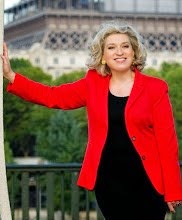
Remember the split-screen opening titles of the old Sixties television series The Persuaders, where Roger "Brett Sinclair" Moore's aristocratic, privileged childhood ran parallel with Tony "Danny Wilde" Curtis's up-from-the-slums, tough, brawling one? That's exactly what reading the cuttings on Paul Belmondo (son of Jean-Paul) and Anthony Delon (son of Alain) feels like.
By the time both were eighteen, Paul's proper wooing of Princess Stephanie of Monaco had gained him entry to the Grimaldi palace as well as Vogue's society pages, while his first car racing victories got treated with respect by France's sports daily L'Equipe's seasoned hacks.
Meanwhile Anthony was already crime-reporter material - his first arrest in a stolen BMW, which somehow contained a 9 mm gun traced to a famous French gangster, his trial, his time in remand, and eventual conviction (to an eight months' suspended sentence) made headlines in France-Soir and Le Parisien for months.
Paris-Match ran pictures of one kid's film-star dad picking him up from Kensington's Lycée Français - and of the other's waiting for him, stony-faced in a too large, too shiny Lancia, at the gate of Bois d'Arcy jail.
"The press really had a field day with Anthony and me, playing up the 'good boy/bad boy' image, and it was tough on him" Paul says carefully, deftly picking a piece of sushi with his wooden chopsticks in the subdued Suntory restaurant off the Champs Elysées.
The Suntory is mostly grazing land for neighbouring Japan Airlines executives, which makes it a good place for a quiet celeb interview, provided no-one objects to raw fish. Two days before, at the shoot for the pictures you see here, I'd tentatively suggested it to the younger Belmondo, and he'd agreed, pulling out a beige leather Hermès desk diary from his duffle bag and writing the address down. Any qualms I might have had disappeared when he ordered his meal - "how many rolls of tekka-maki are there on the platter? Good. And I'd like the squid without mustard, please." Anthony Delon's manager, on the other side, had set the locale for our interview: the bar of the swank Bristol hotel, on rue du Faubourg Saint-Honoré. Anthony and the bartender there were on first-name terms.
I'd just asked Paul about Princess Stephanie - whose tempestuous, short-lived affair with Anthony, around 1983, just after they had ended their two and a half-year relationship, had ensured that the "rivalry" between the two boys with the famous names would provide tabloid fodder for years to come. ("In His Father's Footsteps: Anthony Delon Captures The Heart Of Belmondo's Son Princess Girlfriend!" screamed a typical Ici Paris front page.)
"They got it wrong," Paul says. "By the time Stephanie met Anthony, we'd split up for almost a year. Well, drifted apart, really. People change a lot. I met her when I was 18 and she was 16. You don't marry the girl you met at 18." Some do, I suggest. He grins disarmingly: "Okay, sometimes they do. But rarely."
At this moment, he has every bit of his father's winning charm, the engaging scamp who walked down the Champs-Elysées, hawking the Paris Herald Tribune with Jean Seberg, in Jean-Luc Godard's Breathless; or Alain Resnais's inspired choice for his Stavisky, the Third Republic big-time swindler to whom no-one could refuse anything, and whose fall brought down a government.
There never was much truth to the famed Alain Delon - Jean-Paul Belmondo rivalry, except that both became France's leading film stars at about the same age (Delon was born in 1935, Belmondo in 1933), and exactly the same time. Their first films, in the late Fifties and throughout the Sixties, were often masterpieces: Delon starred in Luchino Visconti's neo-realist Rocco and his brothers as well as his sumptuous Sicilian epic The Leopard; in Jean-Pierre Melville's Le Samourai; in Joseph Losey's The Assassination of Trostky and Mr Klein. Belmondo was Jean-Luc Godard's Pierrot le Fou and Melville's Léon Morin Prêtre opposite that Muse of the New Wave, Emmanuelle Riva. He was directed by Marguerite Duras (Moderato Cantabile) and Francois Truffaut (La Sirene du Mississippi).
Then both stars' careers (if not their bank balances) took a downturn as each started making, almost back-to-back, predictable, tired gangster movies where all that seemed expected of them were a lot of car chases, bang-bang with big handguns, and final showdowns with either the police or the hoods (it didn't really matter which.) Somehow, this decline coincides with the one film in which they co-starred, Borsalino, a 1970 Jacques Deray period gangster movie set in Marseilles, which tried unsuccessfully for the effect The Sting would achieve three years later.
But every now and then, just when you'd almost discounted them for the younger generation of actors, the Depardieus and the Bohringers, one or the other would remind you how he could act, really act. There was Delon's incandescent cameo as Baron de Charlus in Volker Schloendorff's Swann's Way. (His son would shine with the same vibrant presence as the doomed Santiago Nasar in Francesco Rosi's 1987 Chronicle Of A Death Foretold, a film which the young Anthony neatly stole, with only three scenes, from a wooden Rupert Everett).
Equally inspired was Belmondo's much heralded return to the Paris stage three years ago, as Kean in the Jean-Paul Sartre rewrite of Alexandre Dumas' flamboyantly romantic play. (Its huge success prompted him to take on Cyrano de Bergerac last Christmas.)
Yet, if not enemies ("No-one ever spoke ill of Alain Delon at home," Paul Belmondo stresses) Delon and Belmondo the elders never became close friends. You could trace it all the way to their beginnings - while the pretty-faced, working-class Delon was picked, groomed, taken to parties by Visconti (whose title of Count of Modrone dates back to Piedmontais XIVth century), Belmondo, the son of a respected sculptor (who died three years ago a Membre de l'Institut) attended the Conservatoire, trying his hand at Molière when he wasn't getting his nose broken as an amateur boxer. With stardom, Delon took to hiring a retinue of gofers and yes-men, some of whom distinctly unsavoury (the discovery of the murdered corpse of one of his bodyguards, the Yougoslav hoodlum Stefan Markovic, in a limestone quarry in 1968, was used to start a political scandal aimed at tainting the wife of the then Prime Minister, Georges Pompidou.)
Delon's short-time wife Nathalie, Anthony's mother, then his glamorous girlfriends, from actress Mireille Darc to starlet Véronique Jeannot, were paraded like trophies in front of paparazzi flashbulbs, at parties, dancing at Régine's, at prizefights, at opening nights, for as long as they obediently remained in favour; then were discarded faster than gangster's molls.
Belmondo is so much of a family man that he remained friends with his wife Elodie, Paul's mother, after they'd divorced and she went on to marry Hugh Hudson. (He afterwards lived for several years with the original James Bond girl, Ursula Andress, then with Carlos Sottomayor, a Brazilian pop-singer and heiress to Banco Sottomayor, and he's still on friendly terms with both: he is famous in Paris for his parting gifts, such as the huge Seixième flat he offered Carlos Sottomayor when she moved out of his house.) Jean-Paul Belmondo still gives lunch to his mother at La Coupole most Sundays. A good party, for him, can mean getting drunk, raising hell and breaking glasses at Castel's with his photographer friend Claude Azoulay - but the one time he was actually beaten up by policemen whom he'd tried to stop from harassing a passersby (he was on his way to the clinic where his wife was giving birth to Paul, in 1963, the tense aftermath of the Algerian War) he let himself be clobbered rather than hit back: as a qualified boxer, he explained later, he knew that by French law his fists were considered as weapons.
If you know this - and everyone in France knows all about Alain Delon and Jean-Paul Belmondo - then the fates of their sons seem to bear the stamp of something like Greek tragic inevitability: aren't soap operas and fan magazines rewritten on Aeschyles plots the world over?
"Yes, I was incredibly lucky in my family," Paul says. (He has actually been a guest on a TV chat-show on divorce, telling how his parents had "made a success of theirs.") "My father has always been there when I needed him. I listen to him because he has 30 years' worth of experience ahead of me - and he supports me whenever I need help. I couldn't have started my racing career without him." There aren't many young men who can get away with this kind of saccharine statement, but Paul Belmondo is one - you cannot but believe him. Because of that, he has sometimes been labelled "transparent" by the French press, the times when even Paris-Match gets tired of the" good boy," wholesome image.
As we started on our sushi, I asked about his profession, with little more than an opening gambit in mind. What I got was Harvard Business School case-study material, all the more impressive since Paul dropped out of the Lycée after failing at his Bac exam: how he builds his presentations to prospective sponsors, the answers he has ready for the money men arguing that a TV commercial would be cheaper and more efficient for sales than having their brand-name plastered over a Formula 3000 450cv racing-car.
"A Formula 3000 season costs 12 million francs (1.4 million) for two cars, and the pilots are expected to bring in half the sponsoring themselves." He races for a British team, CBM, belonging to a businessman named Brian Holmes. ("Bree-yan 'Olmess, like the detective" he repeats so that I can take it down, with exactly his father's French accent.) His sponsors are a video conglomerate, the French state-run horse-racing betting agency, a natural gas distributor, a fast food chain.
"Quick, the fast-food people, circulate news of my results among the employees, as part of their internal communication and motivation programme. I give advice and lessons during race driving sessions they organise for their franchise-owners; and they also organise a lottery for the restaurants' customers, with a series of lessons as prize: I just gave some yesterday. Obviously that's good for their image as well as team spirit within the company. And they do benefit from the fact that my name is well-known."
He really speaks like this, I swear he does. His poise is remarkable; also the ease with which he accepts his father's fame, the unassuming self-confidence that enables him to say that his father gave him his (okay, used) Ferrari two years ago, without in the least sounding like a spoilt brat.
"My parents never gave me expensive presents," Anthony Delon had told me almost apologetically, his long legs stretched under the small, gilt coffee-table, drinking his third espresso at the Bristol Bar. "I bought my first motorcycle, my first car myself." From Anthony's artless account, both the flighty Nathalie (a thoroughly Sixties girl, she once told a French radio interviewer her child-rearing principles, which including smoking cigarettes from age 6 and reading Sade rather than fairytales) and Alain Delon (if and when he took the trouble to see his son,) seemed imbued with character-building theories. As a teen-ager, Anthony was given £10 a week pocket money "which really was enough, since I could always cadge something extra from Mum to go to the movies." He remembers leaving a china lion money-box near the door of his then single mother's flat near the Invalides, with a sign requesting all her visitors (of which there were many) to contribute to his "fund" and his amazement at finding, when he finally broke it, a fortune - the equivalent of £250 in small change.
When he was 14 - and had dropped out of several schools - his mercurial father decided to that his character could do with some more building, and summarily installed him in the large Seixième Sud flat he shared with Mireille Darc. "God, was it useless to leave a money-box in that place," Anthony says wearily. "For one thing, no-one ever came. All I remember is banging on walls."
He did like the blonde Darc. "She did listen to me. She tried to be a buffer between me and my father. No use. Eventually I left when I was 17, and of course, after that, I wouldn't ask money from my father." His mother hadn't yet met her present husband, Island Records tycoon Chris Blackwell (whom Anthony describes enthusiastically as "the best ear in the music business, and so sharp as well!") and was broke.
"Well, it stands to reason," Anthony says, "if you say you're going to make it on your own, you're not going to run to your parents for money." And so he ran elsewhere, to people who looked more like his father's parts than like his father, who spent their nights in clubs and jimmied open the first car they found on the kerb at 5 a.m. for a ride home.
Comparing these two boys, both handsome, engaging, gifted, is a chilling exercise, reminding one with final clarity that no man whose childhood wasn't secure will escape unscathed.
"I used to run across him every now and then, but I've only gotten to really talk to Anthony since his return from living in Los Angeles, last year," Paul says. "We're good friends, you know." And then he tells two stories.
The first is this: he is watching TV on New Year's Eve, Sacrée Soirée, a popular variety show with a bit of This is your life thrown in. The evening's guest is Alain Delon, who will be confronted with a "surprise" in the course of the evening. The "surprise" is Anthony, flown back from California to be "reconciled" on air with the father who did not attend his 1982 trial after fetching him from remand jail, and two years later sued him for using the Delon name to promote a line of clothes, Anthony Delon leatherwear. (There is an Alain Delon scent.) Jean-Pierre Foucault, the show's host, duly calls for the "surprise" - and gets everything he could ever hope for. Alain Delon embraces his son for all the cameras to see, an Italian bear-hug like a Sicilian don's; he is actually crying ON PRIME TIME. His emotions overwhelm him, Delon says (or words to that effect.) His son, his son has finally come back to him.
"Well, I'm sorry if Alain Delon isn't happy when he reads this, but it really shocked me," Paul says. "First that it happened in public like that. And also, I mean, it's unnatural for a father to cry because he sees his son. That is something my father will never do. He doesn't need to, he sees me all the time."
I then tell him what I learned from Anthony when I brought up the show the day before: that when it was over, Alain Delon just walked away, didn't even have dinner with his son. That Anthony - who'd eagerly agreed to come, just to see his father - had flown back to L.A. the following day. Paul doesn't say anything. He doesn't have to - you know what he's thinking.
The other story is that of the star-studded "reconciliation dinner party" for fifty staged by a mutual friend at Maxim's a year ago, between these two boys who barely knew one another, and which got written up in Paris Match - perhaps unsurprisingly since the friend also happens to work as a PR for Pierre Cardin, the couturier, who owns Maxim's. The really interesting thing about it is that Paul is still friends with the Cardin PR. "Oh well, it doesn't really matter," he shrugs. "Of course we didn't come to know one another at that dinner; but later Anthony and I got to talk, at this friend's country house. So who cares, some good did come out of it." On both occasions, the 26-year-old Belmondo's tone, talking of the 25-year-old Delon, takes a tinge of protectiveness. This is when you start to really like him a lot.
Both boys are quite likeable, as a matter of fact, and it is difficult to find someone in Paris who, knowing them, will bad-mouth either of them. The French actor Marc de Jonge, who met Anthony while having a drink with a producer at the Plaza Athenée, recalls how the young Delon, who knew the producer, eventually approached them and asked him eagerly what it was like to work with Sylvester Stallone. (De Jonge played the Russian baddie in Rambo III.) "He was much better known than I, yet he acted just like a nice kid. And he asked good questions."
Both Anthony and Paul answer the inevitable questions on Princess Stephanie like gentlemen: "She's had a really rough deal with the media," Paul staunchly says, before volunteering that yes, she may be badly advised. "If I'd had to organise her scent launch, I'd never have put her in those public situations [a Galeries Lafayette promotion appearance] that were so bad for her image, her status," he explains, his voice gettting protective again. (He doesn't see her anymore; the last time they met was a year ago, in an airport lounge.) Anthony is even more diffident: "I used to see her from time to time at friends' in L.A., hello-howareya, that's all," he says.
There are differences, of course. The ever-rational Paul says he want to give Formula 3000 yet another year, then, if he doesn't get to Formula One level, he'll quit. "I won't like it, but at least I'll know I'll have given it my really best shot." If he doesn't become another Alain Prost - and it is worth remembering, in a field that isn't governed by showbiz rules, and doesn't take kindly to moneyed amateurs, that Prost has commented favourably on his driving - then he'll work in films, producing or directing rather than acting, although he doesn't rule that out. "If you're a baker's son and you take over your father's boulangerie, nobody sees anything in it. Why shouldn't the same apply to movies? I was born in the movie world, I worked on my father's films' sets when I was a kid, I was even an assistant director on another film. Like it or not, I know more about the business than someone who's just starting."
He has a point, but then he always has. He's walking on air, Paul Belmondo is, never puts a foot wrong, not even down the Suntory's narrow staircase (man goes FIRST) after which he managed to let me pass him (woman gets seated at the table FIRST), no so that you'd notice, he does that instinctively, just as he instinctively made a move for the bill, because he usually never lets a girl pay. He lives in a Parisian duplex with his dog, which of course is a black Labrador, he is taking piano lessons, he likes going to deserted churches that no-one in Paris thinks of entering, his favourite books are Camus's L'Etranger and Balzac's César Birotteau - how more PERFECT could one get?
In contrast, Anthony had answered my first question on his everyday life with a not-too-promising "I am usually bored." He was in-between films; he'd left California and acting school for Paris and a rented Latin Quarter flat; he looked as if he wasn't too sure he would enjoy a talk. His manager, a Mr. Taieb Allard, had come too, and sat with us at the Bristol bar. An hour later the pair was due at yet another bar, the Crillon's this time, down the Faubourg Saint Honoré, on Place de la Concorde. I remembered that before he'd agreed to the Tatler pictures, Anthony had asked to meet our photographer, Thierry Rajic, at the Plaza Athenée bar - and I suddenly had this vision of him trekking from one luxury Parisian hotel lobby to another, time hanging on his hands, drinking strong espressos along the way, half slouched in repro armchairs, attended to by white-coated waiters. During his trial, his defence barrister, the star Paris lawyer Georges Kiejman, had referred to his dark good looks and clear blue-green eyes as those of a "languid Adonis," and you could see why - if there is such a thing as fatal beauty, then Anthony has it, in spades.
The thing is that he laughs if you say something of the kind, a genuine, dazzling smile, the smile that comes to his lips when he mentions his mother, his helicopter-flying lessons, his 16-month godson who is Taieb's fifth child. He wants children, he says, several children, whom he'll bring up and love. And so instead of liquefying at his feet, what you really feel is a strong urge to cuddle him. I'd brought his cuttings file with me, and mentioned that the first picture I'd seen published of him was at a picnic organised by his parents when he was five. He looked surprised, so I pulled out the yellowed France-Soir clipping. "I can't believe it!" he exclaimed, staring at it. "I know that picture. My father has it. He's got it in his house. I never knew he gave it to them. Great." It was as if the betrayal had taken place yesterday, not twenty years ago.
A little time ago, this boy who may be even more gifted than his father, and still hurts when he talk about him, who's done time in prison, and was given a party in New York by Régine at her Park Avenue disco barely weeks afterwards ("In honour of Princess Chantal of France and Anthony Delon," the tricolour stiffy read), started seeing an analyst, a man who'd saved, he said, one of his friends. "I believe you pay for everything in life," Anthony says. "You pay for your happiness, for your success, for your money. And all you can do is try to understand, try not to follow your instincts rather than your intelligence, try not to pass judgement on people."
© Copyright The Tatler & Anne-Elisabeth Moutet 1990
Showing posts with label Jean-Paul Belmondo. Show all posts
Showing posts with label Jean-Paul Belmondo. Show all posts
Monday, September 10, 1990


Sunday, July 16, 1978
Alain Resnais: 'I Never Have Ideas - Producers Usually Approach Me'
 |
| Director Alain Resnais and Anne-Elisabeth Moutet. Photo © Louis Monier. |
Special to the Washington Post
His films are often seen as
"intellectual" and "gloomy," but at 55, French
director Alain Resnais ("Last
Year in Marienbad," "Hiroshima Mon Amour," "The War Is
Over") would very much like to make a comedy.
"I once worked with Lee
Falk on a film adaption of 'Mandrake the Magician,' but we never got very far,
because we couldn't find the right cast," he recalls. "The character
was a myth. The only actor I could think of was Ronald Colman. He would have
been perfect for the part."
Resnais' last film,
"Providence," about an old writer fighting death and bitterly
questioning his relationship with his children, has just swept up a staggering
seven Césars, the French Oscars, but got mixed reviews in the
United States. Curiously enough, his previous movie, "Stavisky," did
just the opposite: American critics raved about it, but the French hated it.
"I have though about
this," says Resnais sitting in an easy chair in his office near the
Champs-Elysees, intent on his point.
"The French like things
to be clear-cut, so 'Stavisky' bothered them. He was part of their national
history, so they wanted a political, historical movie. The Americans will take
liberties with their national heroes, they will cast stars for the part; it
doesn't matter whether Billy the Kid looked like Paul Newman, or whether Bonnie
and Clyde were very different from Warren Beatty and Faye Dunaway. They also
hadn't much heard of the Stavisky affair (a political scandal in 1934 which
eventually led to the Popular Front of 1936). So Jean-Paul Belmondo did not
bother them in the leading part; they took the film for what it was, a reverie
about the loss of youth and about death . . . And there was Charles Boyer. The
Americans remembered him from all those films. Why, I remember him! He was
almost like a legend to me, too."
He smiles dreamily. He is a
tall man, with long, expressive hands, blue eyes and a mane of gray-white hair.
"'Providence' was
different. I think the big New York critics - Vincent Canby, Pauline Kael - did
not like it because it was in English. I was playing on their ground; I was no
longer protected by that kind of snobbishness you can find about French films
with subtitiles . . . I've also been told by American friends that they found
the British accent very annoying. They will like it in a comedy, but in a drama
it sounded pretentious. But we had good reviews in university towns like Boston
or Houston, and also on the West Coast. And in New York, some critics liked the
film: Rex Reed, of The Daily News, was so enthusiastic he wrote two stories!
The problem is just that they say you must have The New York Times."
"Providence" is
Resnais' first try at directing in English. "It had to be in
English," he explains. "At first, I thought Mercer (his screenwriter,
British playwright David Mercer) would write in English, and it would be
translated. And then I received something like 15 pages of French script, and I
though: I'm going to fall on my face, this thing doesn't exist. In English, I
might fall on my face as well, but at least doing the real thing . . . My
producers were great, they just said 'Go ahead.'"
He grins, recalling the
atmosphere on the set: "I have a terrible French accent in English, a
Breton accent, but the actors were very nice. I think the Americans like the
French accent, thanks to Maurice Chevalier. But I don't think the English do so
much, and I sometimes felt very sorry for them. I love the English tongue, and
I was very, very happy working on this film."
Languages and accents are
important to Resnais. He has already had three abortive English-language
projects. One was an adaptation of Dick Tracy.
"I would have loved to
do it," he says, "but I don't think I could have handled it. It all
depended on different American accents and gangsters' slang, over which I
really had no control at all."
A wry smile of regret, a
shrug. All of his films are commissions anyway. Resnais insists: "I never
have ideas. Producers usually approach me and ask whether I would consider
working with so-and-so - an actor, a writer. We meet - sometimes for the first
time, as with Mercer for 'Providence,' talk things over, and slowly, something
comes out of it . . . There's nothing restrictive in a commission, you know, as
long as you can work the way you feel. Take Stravinsky, for instance - and of
course, I'm not comparing myself to him.He never wrote a note that hadn't been
commissioned. Or take those painters who received an order for a 'Virgin and
Child' . . ."
He smiles and offers coffee.
Then he gets up and goes to fetch it from the machine in the corridor himself,
instead of calling for a secretary. The interview takes place in his office
partly because at his home "the phone would never stop ringing,"
partly because he is very secretive about his private life.
"I belong to the 'shy
club,' you know," he jokes. "(Eric) Rohmer, (Mike) Nichols, (George)
Cukor and I, we just don't speak about ourselves. And Florence is even shyer
than I am."
Florence is his wife,
Florence Malraux, the daughter of Andre Malraux. She is Resnais' assistant on
his films.
"They met on the set of
'Last Year in Marienbad' (in 1960)" once recounted Florence's mother,
Andre Malraux's ex-wife Clara, 79, also a writer. "Alain told Flo: 'I want
to take you to New York,' and they went for a week there, with the film
interrupted and everything. That's how they got married."
Resnais doesn't like to talk
about such personal matters. Instead, he talks shop with our photographer:
lenses, Leicas, Nikons, development. Technique is fundamental to him: the
nuances in color, the soundtrack. He will work in the lab himself to obtain a
blue or a red atmosphere. He also constructs the soundtrack like a musical
score: He refers to counterpoint about the dialogues in "Marienbad,"
and says he has used, on Mercer's very elaborate text for
"Providence," the voices of the actors as a Shubertian quintet (Dirk
Bogarde being the piano, Ellen Burstyn the violin, John Gielguld the cello, David
Warner the alto, and Elaine Strich the double-bass).
When working on a film,
Resnais asks his scriptwriter to produce a first draft, then they lock
themselves up in an apartment or in a quiet hotel in the country, and toil with
a tape-recorder, writing and polishing each sentence until they are perfectly
satisfied. "It takes two years," he says. "Nine months for the
script, then two or three months to draw up the budget and find the money,
three months to get actors free of commitments and to find the locations, two
months for shooting, two to three months for editing, synchronizing, etc., and
then the release with the public relations. . . ."
Resnais views himself as a
craftsman. He laughs off the suggestion that he could make a low-budget film on
his own, without producers or commissions. "What do you call
'low-budget?" he asks. "For one thing, I'm against not paying the
actors or the crew. I mean, you really have to have a lot of nerve to ask that
of people.Even so, you still have to pay for the film, the lab, some expenses
and the script has to be cheap - that is, not too many locations, few actors.
Okay, let's say $120,000. I just can't afford to lose that kind of money -
where would I find it? These low-budget films are for rich kids."
He has a practical approach
to money problems. Most ambitious films in France base their budgets on
hoped-for U.S. profits - box-office returns as well as television rights.
"There's a lot to be said against the habit of slicing films with
commercials," he admits, "but the big networks pay very well. Whereas
PBS, like Channel 13 in New York, which I like very much, pays almost nothing
at all for films, just like French television . . ." So Resnais won't
criticize commercial television - or, for that matter, purely commercial films,
from cheap B thrillers to soap operas.
"The film industry can
turn out a few 'quality' films every few years thanks to "The Other Side
of Midnight.' It's just the same in the record industry, without the Osmond
Brothers or some such best-selling pop singers, one could not listen to
Penderecki's "The Devils of Loudun,' because it would have ebeen too
expensive to record. . . ."
He evoked the years of the
late 1930s in Paris, when he would cross the city to see the new American films
in the Latin Quarter. As a child, he had not studied much because of poor
health. "I wanted to come to Paris," he recalls. "I was born in
Brittany (in Vannes, in 1922), but really, I don't remember it well. It was
Paris that fascinated me."
During the dark days of the
German occupation, he started studying cinema at a new institute, founded in
1943 as a gesture of defiance against the times. "I was not thinking of
becoming a director then; I wanted to be a film editor so that I could be close
to actors." Now he directs Boyer, but when he talks of him, his voice
retains the elation of the 15-year-old discovering "Liliom" or
"Shanghai."
In a country where the
intellectuals take sides loudly, Resnais refuses to talk politics; and as
others' films get more politically involved, his stay aloof. "You can make
statistics on the number of people in prison, on the number of people tortured
and on the number of people dying of hunger in a country, and you can size up
its government that way," he remarks."But the rest is never clear-cut.
It is like writing a screenplay, you cannot predict what will happen in
advance."
© Anne-Elisabeth Moutet & The Washington Post Company.
Subscribe to:
Posts (Atom)