Showing posts with label Tristane Banon. Show all posts

Saturday, July 23, 2011

Tristane Banon's attempted rape claim against Dominique Strauss-Kahn: why François Hollande wishes it would go away

François Hollande, France's Socialist front-running presidential candidate, wishes the Tristane Banon case would go away, says Anne-Elisabeth Moutet in Paris.

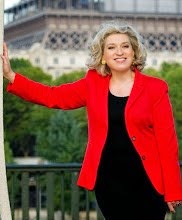
Tristane Banon, a French writer, has accused Mr Strauss-Kahn of sexually assaulting her
Tristane Banon, a French writer, has accused Mr Strauss-Kahn of sexually assaulting her Photo: AFP/GETTY

"This has nothing to do with me," Hollande said testily on Friday, after being interrogated by the police on what exactly Miss Banon's mother, a fellow-Socialist politician, had told him at the time of her daughter's alleged sexual assault by Dominique Strauss-Kahn, also a Socialist.

"The French are bored with this whole case. The Right is using smear tactics against me, but it will backfire. France deserves a higher class of debate."

Tristane Banon is the young French writer who in various talk shows and interviews over the past four years has accused the former French finance minister and IMF director general of attempting to rape her eight years ago - to general indifference but without contradiction.

She finally filed her complaint last month, after seeing the New York case against Strauss-Kahn, on broadly similar charges, seemingly disintegrate.

"I saw him having his bail money returned and walking free," Banon said in an interview to the magazine l'Express, "and immediately going out to dinner in a luxury restaurant. Meanwhile people called me a liar. It made me sick."

At first the DSK sex scandal seemed to destroy the best hopes the Socialist opposition had to finally seize power next year. Dominique Strauss-Kahn, in every poll, appeared a shoe-in in next year's presidential election, with a lead of 20 points and more over the embattled Nicolas Sarkozy.

This, as well as sheer embarrassment over the "unseemly" American case, made most Socialist leaders, including Strauss-Kahn's rivals, suspect a trap, a Gaullist "black op". Much was made of the fact that the hotel chain, Sofitel, where DSK stayed and allegedly assaulted a chambermaid, belongs to a French corporation whose CEO is in good terms with Mr Sarkozy.

Then the New York prosecutors themselves revealed that DSK's New York accuser, who had lied on various statements and her asylum-seeker visa application, would be an unreliable witness, opening the way to a possible dismissal of the case. In the meantime, a DSK presidential candidacy, still desperately touted by his friends, nevertheless looked increasingly impossible, and the party reorganised itself to field at least three major candidates in its October primaries.

For Hollande, who is now consistently given as next year's winner against the unpopular Sarkozy in polls, it could have looked, after all, as if the whole affaire had opened the way to the top job.

And then his name was given to the police, as a corroborating witness, by Miss Banon's mother, who said that she had asked for his advice, as the Socialist party leader at the time, and that he counselled her to sue. Asked point-blank in interviews, Mr Hollande flubbed his answers. He didn't remember; it was a long time ago; it was not his role to give judicial advice; well, yes, he did remember "vaguely something."

Gradually an increasing number of facts in Miss Banon's story started to check out – for instance, the address of the bachelor's flat where she said she had her disastrous meeting with him, 13 rue Mayet, in Paris near Montparnasse, turned out to be the same address Strauss-Kahn gave to a fellow Socialist female MP, Aurélie Filipetti, for an assignation she refused. And as they did so, Mr Hollande's denials became even more qualified.

After all, yes, Mrs Mansouret (Tristane Banon's mother) had indeed told him of "an incident" at the time, but "not in any detail." At any rate, it was he himself who had requested to be heard by the police, in a spirit of "complete transparency." He would sue anyone trying to implicate him in something that was "none of his concern."

"From now on, I shall take any mention of this as a political manipulation against me and my party," he said.

Ms Filipetti, who is on the record as saying, after an alleged "forceful grope" by DSK a couple of years ago, that she would take "very good care never to find herself alone in a room with him", has meanwhile also been heard by the police on Friday, since Ms Mansouret has produced emails from her in which she recommended Tristane file a complaint, and called DSK "dangerous for women."

The 38-year-old Filipetti is a remarkable character in her own right, with a reputation for being principled and fearless. A former Green councillor, she left them for the Socialists over matters of policy, including what she called at the time their "toxic anti-Israeli bias" – an increasingly unpopular stance on the Left. The daughter of a Lorraine Communist miner who was arrested by the Gestapo and sent to concentration camp for being a Résistant, she has written an acclaimed, sensitive autobiography about the vanishing French working class.

Yet on Friday she was uncharacteristically reticent about her police hearing. "I only did my duty as a citizen," she said, thereafter toeing the party line about "right-wing manipulating tactics".

Meanwhile, next year's other main Socialist hopefuls, who happen to be two women, current party leader and Lille Mayor Martine Aubry, as well as Ségolène Royal, the mercurial outsider who lost to Sarkozy in 2007, have also been strangely silent over the Banon case.

Aubry, who is herself being targeted in internet rumours accusing her, somewhat inconsistently, both of being an Islamist sympathiser and of having a drink problem, has issued a statement in support of her bitter rival Hollande, to the effect that he was the victim of a "political manoeuvre".

Royal, Hollande's former life partner (they have four children), who made much of her "feminism" during her 2007 campaign – in which she accused the other male candidates, who included, of trying to "railroad her" – has not piped up with a word upon the subject.

François Hollande professes "outrage" at what he calls "dirty tricks" – in which he includes a large front-page headline in Le Figaro, the centre-right daily, announcing that he would be heard by the police, under side-by-side pictures of himself and of Miss Banon. Le Figaro belongs to planemaker Sarge Dassault, a friend of Nicolas Sarkozy, whose dread hand the Socialists see behind the whole Banon lawsuit.

Mr Hollande believes readers would far rather find analyses on France's dire economic situation than sensational accusations by comely young women that implicate major political figures in their newspapers. This is a sentiment that he probably shares with every other candidate in next year's election, but right now it is doing nothing for his popularity in France.

Friday, July 8, 2011

Dominique Strauss-Kahn: what happens when a 'nobody’ takes him on

A young woman is feeling the full force of France’s Establishment.

Dominique Strauss-Kahn and French journalist and writer Tristane Banon, who has accused the former IMF chief of attempted rape - What happens when a 'nobody’ takes on DSK
Dominique Strauss-Kahn and French journalist and writer Tristane Banon, who has accused the former IMF chief of attempted rape Photo: AFP

It didn’t take long for the vilification of Tristane Banon to take off. Sleazy pictures of the young writer who has accused Dominique Strauss-Kahn of attempted rape nine years ago have started circulating online, along with barbed comments about how she “didn’t dislike a bit of a grope”, and worse.

Anonymous web users can’t find words scathing enough for her writing, her career, her books, and, oh, how “implausible” her allegations against DSK are. Her mother, Anne Mansouret, is described as a monster, both egging her on and preventing her from filing a complaint years ago. Banon, meanwhile, is a nymphomaniac, or a fabulist, or both, and did you know that she sometimes writes for a centre-Right news site? Sarkozy put her up to it…

You don’t need to be a conspiracy theorist to detect the heavy hand of spin doctors here. Orchestrating smear campaigns these days is a doddle, thanks to the internet. Not that every other method hasn’t been used as well against any single female mentioned in connection with DSK’s alleged womanising.

As I reported on DSK, I started receiving some strange calls. One PR rang out of the blue and launched into scurrilous accusations about Banon, as well as the Socialist MP Aurélie Filipetti, whom I had quoted as saying she would “take great care never to find herself alone in a room with Strauss-Kahn”. “You’re sophisticated,” my caller said, with an ugly laugh, “you know what they’re like, these women…” Suddenly I felt in need of a long shower.

As it happens, I find Tristane Banon credible. She did not go to the police at the time, but made the allegation on a TV chat show in 2007, when DSK’s name was bleeped out (it was printed in full in a magazine’s account of the show).

And I can understand how a mother might have hesitated to let her 22-year-old daughter take on a respected statesman in a “he said-she said” dirty tussle in France, a country where credit always goes to the “important” personality against a “nobody”; a country where established editors are quick to belittle anyone, especially women, who doesn’t fall in with the general consensus.

“She would have been destroyed – she would have been reduced to that single accusation, just when she was starting out,” a regretful Mrs Mansouret has since said; and there are people who are trying to ensure exactly that happens now.

Tristane Banon may have held her tongue back then, but she was hurt all the same. Her assignments for Paris-Match and Le Figaro suddenly dried up; her book was bowdlerised by her own publisher; she says she received threatening text messages from one of Strauss-Kahn’s less savoury spin doctors. She had a breakdown and still suffers from bouts of anorexia.

She’s 32 now, but her waif-like silhouette, with too sharp bones under transparent skin, dressed in an adolescent’s ripped jeans and a gaping T-shirt, looks as though her development was arrested with the assault.

“Nobody seemed to listen or believe me, and I wanted to take some control over what had happened to me,” she said by way of explanation when filing her suit. She may not have a legal case, but I admire her courage in coming forth.

If the single result is to expose the underhand methods employed to keep DSK in the presidential race, Tristane Banon will have performed a major service for France.

http://www.telegraph.co.uk/finance/dominique-strauss-kahn/8626875/Dominique-Strauss-Kahn-what-happens-when-a-nobody-takes-him-on.html

© Copyright Telegraph Media Group & Anne-Elisabeth Moutet 2011


Sunday, May 22, 2011

Dominique Strauss-Kahn: why French women put up with it

The culture that allows French men to see female colleagues as fair game is still alive and well, says Anne-Elisabeth Moutet in Paris

Dominique Strauss-Kahn
Dominique Strauss-Kahn listens to proceedings in his case in New York state Supreme Court Photo: AP

You could tell something unscripted was happening on the set of Thursday night's prime-time discussion programme on Dominique Strauss-Kahn by the stony faces of the male guests. There were several top newspaper and news magazines editors, a former Justice Minister and president of the Supreme Court, and a couple of politicians. The lone woman on the set, Hélène Jouan, a senior current affairs chief at France Inter - The French answer to Radio Four - broke into the cosy excuses mouthed by everyone for Strauss-Kahn's predicament. Every woman journalist, she said, knew the pervasive atmosphere fostered by powerful men in France, in which females were at the very least importuned with impunity, and disregarded – not even disbelieved – when worse happened. This had created, she said, the culture in which someone like Strauss-Kahn could, and did, think he could get away with anything.

She herself, Jouan said, hadn't been the victim of over-the-red-line harassment, but the very atmosphere in which salacious propositioning texts or late-night knocks on her hotel room door by politicians on the campaign trail were a common occurrence. She said it "was so heavy sometimes that at the beginning of my career, I almost gave up journalism."

The lack of response from the hitherto voluble other guests was spectacular. Robert Badinter, the former Socialist Justice Minister, had just ranted against the evils of the American justice system, which, he said, "submitted Strauss-Kahn to a death by public pillorying when he ought to have been protected by the presumption of innocence." Falling back on that hardy French perennial, anti-Americanism, everyone had opined that a system in which elected judges took into account public sentiment, sometimes even from "the popular classes", was "the worst possible" and "allowed every excess."

Jouan's statements hit the French Zeitgeist at a key moment. Ever since the French were confronted with the unimaginable pictures of one of their rulers, a man widely expected to become President of the Republic, unshaven and in handcuffs in the dock of a Manhattan courthouse, reactions have been increasingly split between disbelieving shock and knowing outrage – and more and more, as one tin-eared Strauss-Kahn supporter after another dropped a toxic brick into the debate, along gender, and, to a lesser extent, class lines.

"Why all the fuss? It's merely a bit of hanky-panky with the help," said Jean-François Kahn, the crusading editor of the Left-wing Marianne weekly. Jack Lang, a law don famous for having been François Mitterrand's high-profile, graffiti-loving, diversity-fostering Culture Minister, dismissed it all rather infelicitously as an "overblown" affair: "Really, nobody died in that hotel room."

Meanwhile, women started talking. Memona Hintermann, a respected television correspondent, recalled telling a couple of years back about being nearly assaulted by Colonel Muammar Gaddafi when she went to Tripoli's Presidential palace to interview him, only to be met with flippant indifference upon her return. "Well, of course, he's a seducer," she was told with knowing smirks.

Everyone suddenly had stories to tell. The actress who was ordered in a very few rude words by the legendary actor-director Jean-Louis Barrault to perform a sex act on him before he would even deign to allow her to audition for him (she walked out). The radiojournalist who, some years back, kneeling on the carpet of the Mayor of Rouen and one-time presidential hopeful, Jean Lecanuet, to plug in her Nagra recorder, found him close behind her in an expectant pose. The women political correspondents who recalled L'Express's famous editor, Françoise Giroud, advising them on how to dress and to make up in order to "make politicians talk."

I have good reason to believe them. First, because I had heard the stories over the years – and because it is impossible not to notice how many women journalists are "linked" - and sometimes married - to French politicians. Second because I, too, remember all too well my junior reporting days for a French news-weekly, a couple of decades ago, when the late Gaullist MP Robert-André Vivien called me "my little honeyrabbit" one minute into our interview; or when the former Socialist Paris Senator Claude Estier offered to drive me home since I lived in his constituency, only to "mistake" my knee for the stick shift at every red light.

This, and other similar instances, was far from the circumstances of Dominique Strauss-Kahn's alleged assault – although not getting the story for refusing to play the game with a vindictive interviewee, which was always possible, would have had me derided as a "sissy" by my French editor. Writing it up humorously was never an option in the obsequious world of French political journalism, at least at the time.

I never felt threatened, and was easily able to talk my way out of what was very obviously on offer – a valuable skill in France. But it always remains, like low-volume static, at the back of interactions between men in a situation of power and the women who have to work with them. Tristane Banon, the young writer who told of being violently assaulted by Strauss-Kahn back in 2002, when she was only 22, remarks tellingly that no secretary "under the age of 60 or not obese" ever wanted to work for him at the National Assembly.

Most of the time, Frenchwomen conform to expectations that they will be "sophisticated" and not take any of this "seriously", i.e. not complain. In the case of Strauss-Kahn, his womanising, with or without forceful persuasion, got far enough that his spin doctors, a four-person team with a manner to rival Alastair Campbell's, have had to threaten, bully and intimidate a number of his "conquests". Banon, for instance, saw her book bowdlerised, had job offers suddenly retracted and nasty unfounded rumours started on her alleged lifestyle. No wonder that she shies from lodging a formal lawsuit against Strauss-Kahn.

Two women have remained remarkably silent over the whole affair. One is Strauss-Kahn's long-suffering wife, the television personality and art heiress Anne Sinclair, who has supported him in über-Hillary Clinton style through this as in every previous episode. (If you look at previous French first ladies, from Anne-Aymone Giscard d'Estaing to Danielle Mitterrand to Bernadette Chirac, all in unflinching denial throughout well-charted "incidents" in their husbands' lives, you have to admit Sinclair had the genre nailed down.)

The other is France's leading feminist, Elisabeth Badinter, acknowledged as Simone de Beauvoir's intellectual successor, who is married to the former Socialist justice minister, Robert Badinter.

As it happens, the Badinters and the Strauss-Kahns, in addition to being political buddies, are close enough friends that they take holidays together and keep in regular touch. Breakfast conversation may remain strained for the foreseeable future chez les Badinter, after Robert's statements of the past week – but so far, the old, increasingly tattered French omertà still holds.

© Copyright Telegraph Media Group & Anne-Elisabeth Moutet 2011

Monday, May 16, 2011

Dominique Strauss-Kahn: A Frenchman sunk by a sex scandal?

If the allegations against Dominique Strauss-Kahn end the popular IMF chief's presidential candidacy, it would be a first for France, writes Anne-Elisabeth Moutet in Paris.

Dominique Strauss-Kahn: IMF head accused of sexually attacking a hotel chambermaid
Dominique Strauss-Kahn to appear in New York court over alleged sex attack on hotel maid Photo: AFP/GETTY

IMF chief Dominique Strauss-Kahn’s likely candidacy – and probable victory – next year against Nicolas Sarkozy in the French presidential elections (he had been leading by double digits in every poll in recent months, even without declaring himself officially) should have ushered in a series of firsts for France’s political life. First French Socialist leader to have officially discounted Marxism; first Jew directly elected to the presidency; and first seriously rich president in a country where money, not sex, is a dirty word.

Instead, DSK, as he is known here, will go down in history as the first French politician whose career imploded because of a sex scandal, not a financial one. When the news broke in Paris early yesterday that France’s former finance minister had been arrested by the New York police for alleged sexual assault on a hotel housekeeper, reactions here were split between sheer disbelief, suspicions of entrapment and all-too-many knowing shrugs.

“Dominique Strauss-Kahn is well-known as a seducer,” his official biographer, Michel Taubmann, said. “I can’t believe he would force himself on an unwilling woman. That doesn’t make sense.”

Such a statement would come across as damning in most Western countries. In France, it is seen as a spirited defence. Until today, complicated sexual lives, multiple divorces and serial adultery never hampered political careers. François Mitterrand famously ran three parallel families while president. He appointed a former girlfriend of his, Edith Cresson (a married woman) as prime minister in 1991. His predecessor, Valéry Giscard d’Estaing, used to borrow a Ferrari from his friend Roger Vadim, the film director and Brigitte Bardot’s first husband, when he went on the pull. (He once crashed it into a milk float early one morning on his way back to the Elysée.) Jacques Chirac and Nicolas Sarkozy were known for eyeing up comely reporters and female junior ministers.

In that context, DSK’s notorious penchant (and more) for a legion of pretty women did him no harm at all. “If anything,” Taubmann recalls, “he was the one harassed, not the reverse — I’ve seen time and again women MPs, party workers, etc brazenly passing on notes, hoping he would notice them.”

Alleged assault, however, is another matter entirely. “If the whole situation isn’t exposed for being a political set-up in the next 24 to 48 hours,” French leading polling expert Stéphane Rozès warns, “Monsieur Strauss-Kahn’s political career is finished. He is, of course, presumed innocent until proven guilty, but even suspicion of attempted rape will make it impossible for him to stand.”

It is well worth noting that it took the long arm of New York’s finest to make the Strauss-Kahn scandal incontrovertible even to the very cagey French press. With the help of the internet — the great difference with the Mitterrand years, where the average French voter was left ignorant of the president’s natural children, for instance, and stringent privacy laws were supplemented by thousands of illegal phone taps directly commandeered by his private office — all the stories about his womanising have filtered down for years.

What is more surprising is that DSK has also been accused in the past of assault along eerily similar lines, if not as brutal as what the NYPD spokesman has alleged. Journalist and novelist Tristane Banon, a god-daughter of DSK’s second wife Brigitte Guillemette, recalled in a 2007 book, then in a TV chat show that same year, going to interview Strauss-Kahn to an address “he gave me, neither his office nor his flat; an elegantly appointed studio, with a bed in an alcove”, in which, she said, he grabbed her, tore off her bra, and she only managed to escape after a serious scuffle. “I kicked him, I called him a rapist, he didn’t seem to care,” she said. (DSK’s name was bleeped out in the chat show.)

Banon’s mother, Anne Mansouret, a Socialist local politician, confirmed the story yesterday to the respected website Le Post. Banon consulted a barrister, but finally decided not to sue, a decision her mother now regrets having encouraged her to do so. “She was just starting out in journalism,” says Mansouret. “I was afraid she’d be defined by this story.” She says her daughter will give a press conference “in the coming days”.

Other instances may well resurface. Aurélie Filipetti, a respected Socialist MP and Ségolène Royal supporter, said in 2008 that she had been groped by DSK and would “forever make sure” she was never “alone in a room with him”.

And yet nobody among DSK’s spin doctors and advisers seemed to think this would blow up in the face of their candidate. In recent weeks, as the probability of his candidacy looked certain, and politicians and the press made hay of his taking a ride in a Porsche owned by his main adviser, Strauss-Kahn and his wife Anne Sinclair sued France-Soir, a Paris newspaper, for disclosing the benign fact that he had bought three suits from a French bespoke tailor in Washington, who also dressed several US presidents, for a sum estimated “between $7,000 and $35,000 apiece”. Looking rich – he is in his own right and his wife, the granddaughter of one of France’s great art collectors, is even more wealthy – was seen as infinitely more toxic.

On the other side of the divide, Nicolas Sarkozy’s team were rubbing their hands at the prospect of their own man’s taste for bling, Rolex watches and expensive pens being negated by DSK’s own tastes for luxury.

“What are holidays in my wife’s family house on the Mediterranean next to a three million euro riyad in Marakesh?” Sarkozy himself was reported to have said to Cabinet members.

When he was appointed to the IMF in 2007 with the support of Nicolas Sarkozy — who saw a welcome opportunity of ridding himself of a dangerous opponent, at least for a time — most DSK-watchers warned that Dominique, for all his sophistication and razor-sharp intelligence, would do well as head of the world’s economic watchdog, but might not realise the cultural gap between life in Paris and Washington. Sure enough, barely a year later, DSK’s affair with an IMF economist, the Hungarian Piroska Nagy, made international headlines.

Amazingly, he survived that crisis. It probably helped that the disclosures occurred exactly three days after the beginning of the financial meltdown, on October 18, 2008. After an internal inquiry, the IMF published findings that Strauss-Kahn, universally seen as a safe pair of hands in difficult times, had neither favoured his mistress, nor harassed her. Bowing to American mores, DSK apologised publicly to his high-profile wife, something he had never bothered to do before in France, and Ms Nagy soon afterwards took the opportunity of a well-compensated redundancy when DSK decided to bring cost-cutting home to the IMF, and shed 600 top jobs.

In the following years, he burnished his credentials as a hard-working boss, criss-crossing the globe to help bail out failing financial institutions and defaulting countries, all the while avoiding criticism from the Right or the Left — he is one of the stars of the Oscar-winning documentary Inside Job, for instance, in which he details the work done to keep the economic sphere from exploding, and calls for more regulation of financial institutions in moderate, convincing tones.

Unlike most of France’s political elite, but like Nicolas Sarkozy — and Marine Le Pen — Strauss-Kahn is not a civil servant and a graduate of the top government school, ENA. He found himself, as finance minister, constantly sneered at by his supercilious mandarins for what was seen as his “inferior” education, even though he has taught at Stanford and Harvard, and co-authored major economics books. When, between political mandates, he turned to the private sector to make a living, instead of sliding back effortlessly into a well-paid, guaranteed-for-life civil service job, he was derided for a supposed crass love of money. Helping to save the world economy and being constantly voted France’s most popular politician, on track for the presidency no less, was essential recognition at last.

But all this came to a crashing halt on Saturday, as DSK was walked out of the first-class cabin of Air France flight 23 sitting on the tarmac of JFK airport, to be arraigned at the Harlem Special Victims Unit of the NYPD, and subsequently charged with “attempted rape, [a] criminal sexual act, and unlawful imprisonment”.

The French presidential race is wide open again, as DSK’s closest contender in the Socialist primaries, the lacklustre François Hollande, and Nicolas Sarkozy refrain from commenting for fear of appearing too eager to take advantage of their rival’s meltdown.

The only untroubled beneficiary is the Front National’s Marine Le Pen. “I am utterly unsurprised,” she said yesterday. “He must be presumed innocent - but everyone in the Paris political village knew of Dominique Strauss-Kahn’s pathological relations with women.”

© Copyright Telegraph Media Group & Anne-Elisabeth Moutet 2011