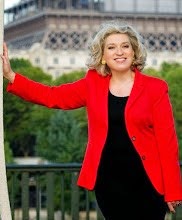
Anne-Elisabeth Moutet meets the widow of the great Surrealist in Paris.
What struck me first was the intercom button. It was made of ordinary translucid plastic, one in a row lit from inside, with "Man Ray" inscribed on it, among names like Jean Bernard and Jean-Claude Amselle, and Marie-Thérèse Fischer - who, come to think of it, could have been one of Picasso's mistresses, late Cubist period - and Berthe Michel, who sounded like a late XIXth century revolutionary; and Yolande Zelmanovich, who I was sure could have been one of those bedraggled Russian nihilists throwing bombs at the Czar's carriage. STOP! this was a lot too much to daydream about in this perfectly ordinary early seventies cossu French apartment block, admittedly marble-plated, admittedly in one of Paris's choicest locations (rue d'Assas, in the Sixième, just opposite the Luxembourg gardens, average price per square ft. freehold £ 350,) terribly banal nonetheless. We were about 800 yards and one zillion years away from La Coupole, circa 1922. This was not the kind of building where I expected Juliet Man Ray, widow of the famous Surrealist photographer, painter, sculptor, designer, touche-à-tout, to live.
Juliet herself was more like the real thing - even though, in many ways, she isn't. (For one thing she never knew Man Ray's truly great days, in Paris in the Twenties and Thirties, when everyone from James Joyce to the Marquis de Castellane vied to pose in his studio. They met in Hollywood, in Vine Street of all places, in the Forties: he'd fled Paris, she was a tourist from the Midwest.) She is a slight, vague, elegant little old lady with the dark hair colour she's obviously decided to keep forever, a quiet knit dress, Ferragamo pumps, who won't tell you her age with a simpering "Oh, a lady really doesn't say, does she?"
She has somehow appointed herself guardian of that curious unshrine-like shrine, that white, square-roomed, plate-glass-windowed modern flat on Rue d'Assas, almost entirely filled and furnished with Man Ray oeuvres d'art. There's the chess-set director Albert Lewin used in his best film, the mythical 1946 "Pandora", with Ava Gardner and James Mason. There are variations on Man Ray's Marquis de Sade's famous portrait - in copper, in wood, in watercolour. There are wonderful articulated screens with her name written in Man Ray's round, unchildlike, distinctive handwriting - "the twenty days and nights of Juliette", Juliette happening to be Sade's most famous heroine - the virtuous one. There are priapic compositions of two round stone balls and an erect column, several of them, set on the floor, size from 2 to 4 ft. There is a bronze broom which she urges you to try and use (impossible), giggling at the 55-year-old joke. There are her shopping lists on the coffee-table, presumably written for the French daily, "cibolette" for "chives", "aile" for "garlic", etc. in her bad French, on ordinary squared notepaper (Man Ray wrote grammatically impeccable French). Next to these is a book with a black and white photograph of an impossibly beautiful and enigmatic woman, partly veiled.
"I saw this in a bookstore recently and thought, 'this looks very much like me'," Juliet Man Ray says, in her slightly quivering voice. It doesn't, but you let it pass, because she is rambling on anyway, telling you that she almost got the main part in "A Farewell to Arms." Then she shows you the book, a French coffee-table edition of Man Ray's photographs, and there she is, you know her now, the shape of the jaw, something in the firm mouth, on every page, wonderful photographs etched over with strong lines by Man Ray, evocative of Matisse's or Picasso's drawings, or lit with sensuous softness, or superimposed with the shadows of a decaying stone wall. It is splendid, imaginative, elegant - and yes, yes, something does click now, you can forget about the white-walled, too modern apartment in which she has lived for only three years. (Every single object in the sitting-room, including the hardwood chairs with their inkwell-shaped ashtrays in the arm, was designed by Man Ray.)
"We met in Hollywood," she says. They were married there, with Max Ernst as their witness in front of a Beverly Hills justice of the peace. "It was quieter then," she says, "almost provincial." There she met other exiled surrealists, a French group unhappy in Southern California, the poets Paul Eluard and Tristan Tzara - both communist fellow-travelers; and Jean Renoir who was making movies and would, years later, after some years in France, reconciled with Hollywood, return to California to live his last years. But Man Ray didn't like his native country - he wasn't feted like some of the Surrealists, he wasn't exotic enough. They returned to Paris in 1951.
Then her memory fades a bit; dates and places and time waver just like in one of her husband's compositions. Tim Mayotte, the tennis champion, who's currently playing in the French Open at Roland Garros stadium, is coming to visit her this afternoon, she says. They are friends because his girlfriend in an American journalist and wrote an article on her, she says. He likes the chess-set, she says. Would I like to see her bedroom? Yes, I would, and so we go and see the same casual mixture of impersonal modern furnishing, Man Ray objetcts and paintings, and shelves with nothing but books on him and his work. Would I like to see the chess set? I remember the chess set from a passage in "Pandora", which has been playing in one or the other Paris revival houses almost non-stop for at least twenty years, and is the most surrealistic and romantic film I've ever seen, a blue-lit gem set in an imaginary Spanish coast in the madcap Twenties - no Revolution, no Spanish War, no Republic, no Francisco Franco... - with sets like Delvaux and Chirico paintings, and Ava Gardner as the femme fatale. There it is, in the beige pile wall-to-wall carpeed hallway, the board surrounded by Man Ray's inscription like a poem, in his rounded script: "Le Roi est à moi, la Reine est la tienne, la Tour fait un four, le Fou est comme vous, le Cavalier déraille, le Pion fait l'espion ,comme toute commande, fait de toutes pièces, Man Ray."
The two rooms on the other side of the flat are two offices where Jerome G__ , a soft-spoken American art expert, who doubles as sometimes nurse and dame de compagnie for Juliet Man Ray, quietly toils away at cataloguing all of Man Ray's as yet unpublished photograps and manuscripts, has been working on the forthcoming book and a large retrospective at the Smithsonian Museum in Washington, and, like some mediaeval monk, seems exclusively devoted to the anonymous praise of the artist (he didn't want to be quoted or his name printed.) "I will gladly help you to check any facts you need," he said humbly. "Mrs Man Ray can sometimes mix them up, as you perhaps have noticed." (I hadn't noticed that many facts in our rambling conversation.) He showed me photographic plates and prints and explained there were many more. He praised Bloomsbury for republishing Man Ray's autobiography, self-portrait. It was clear he'd written Juliet Man Ray's Afterword himself, although he was quick in denying any credit for it. His selflessness, whatever its motivations, was rather endearing.
And then, of course, next to the matt black filing drawers and the chrome office chair on its hi-tech casters, I saw the wooden filing cabinet, about four feet tall. It was ugly and scratched and overvarnished with the kind of cheap, yellowing varnish used on unexpensive, utilitarian office furniture in Paris in the Twenties and Thirties. It had four drawers with old lttle brass label holders on them, where you slid a card indicating the contents of the drawer. Two drawers were unremarkable but the third had a yellowing bit of cardboard that said "Letters", in a rounded script I'd seen on many priceless objects in the flat. "That was Man Ray's, wasn't it?" I couldn't help asking. "Yes," Jerome told me. "That's his handwriting, isn't it?" Yes, it was, and the drawer was used to store personal correspondence, as it alwas had been. That ugly wood filing cabinet touched me in a way no other art object in the flat had. It was neither on display nor exalted nor catalogued. But it had existed, serving the same purpose, in Paris in the Twenties when La Coupole was just the brasserie next door from Man Ray's atelier, a few yards and a zillion years away from this pretty modern flat. "Nice label," I said. "Label? Oh... yes," said Jerome.
© Copyright The Tatler & Anne-Elisabeth Moutet 1988
Showing posts with label La Coupole. Show all posts
Showing posts with label La Coupole. Show all posts
Wednesday, June 1, 1988


Friday, January 15, 1988
Fink Tank
Alain Finkielkraut is the Left Bank's most conspicuous new star. Anne-Elisabeth Moutet studies his fatal attraction
They may have sold La Coupole to the mass-market Brasseries Flo chain, and admittedly Lipp's is wall-to-wall nobody now that Monsieur Cazes has died, and yes, the level of the French novel has sunk to the point that Philippe Djian, of Betty Blue fame -- Philippe Djian! -- is rated the best writer in France these days; but don't let yourself be deceived: your Left-Bank French intellectual -- bright, elitist, arrogant, handsome, seductive, mad, bad, and bent on the pursuit of universal truth pour épater le bourgeois -- is around and kicking and still published by Gallimard's, juste like Sartre and Camus before him. The only concession he may make to these sad modern times is to chainsmoke Marlboros instead of Gauloises. (For our Gordon Gekkos of the intellect, low-tar is for wimps.)
Consider this: I am sitting at a choice table in Les Antiquaires, the Hôtel du Pont-Royal restaurant, just above the bar where Sartre and Malraux and Philippe Sollers drank, where Francoise Sagan used to beg her publisher Henri Flammarion for fatter advances, where Michel Foucault indulged in a spot of (harmless?) highbrow cruising. Pierre Nora, the historian, is engrossed in serious speculation with a Nouvel Observateur columnist two tables away. The white-maned, 70-year-old Claude Gallimard is ensconced behind me, his back (safely?) to the wall, with a novelist, whose face I know and whose name I can't place, from his nearby stable receiving eagerly The Word between morsels of Oeufs Savignac.
And, next to me, simultaneously berating les copains: Libération, the trendy Globe magazine, all six French television channels, humanitarian champion Bernard Kouchner, philosophers André Glucksmann, Bernard-Henri Lévy and Gilles Lipovetsky, and the slowness of the waiter, is Alain Finkielkraut, 38, latest boy wonder of the Paris literary scene, a former Agrégé de Lettres turned visiting professor at Berkeley, turned philosopher-at-large at Gallimard's, turned sudden bestseller and media superstar last summer with his eighth essay, La Défaite de la Pensée, now turned Savonarola of the establishment that created him. A ho-hum everyday success story on the Left Bank. The Parisian Dream writ in 12-point Plantin typeface inside the white and red covers of a Collection Blanche Gallimard novel.
"Television ought to be restricted to one, two channels maximum, and be forbidden to show movies, any movies at all," Finkielkraut is intoning. "This... debauch of images is perverting us, debilitating our culture, trivialising everything. It's a drug, an addiction -- you come home tired, you turn the box on, you leave it droning on and on. Fellini is right: films should be shown in theatres, on a real screen, in the dark, the way they were meant to be seen, none of this cropping the edges to make the pictures fit, no commercial breaks. Television shoud be educational -- definitely more than just one or two hours of intelligent programmes a week. I mean, how can you hope to counteract the daily effects of Wheel of Fortune or Falcon Crest with one hour on Lacan or Dumézil every other month? Am I talking too fast? Did you take all of this down?" he asks solicitously, peering at the illegible scrawl on my notebook. Yes, I assure him. "Will you be able to re-read it?" he insists, his voice gently blending concern and doubt. "Certainement," I say, which single reassuring word triggers new bursts of impassioned eloquence against those misguided spirits who think fashion is art and equate a Jean-Paul Gaultier suit with a Turner painting, graffiti on Métro cars with the Divine Comedy. "Do have some wine," he offers at the end of a period, never missing a beat -- hell, he must be a lot thirstier than I am. "It's not bad at all, non?"
Since it is Château La Lagune 1985, I should jolly well say it's not bad at all, nod, and down some more. These mad reforming monks of the French intelligentsia wouldn't dream of going out to the barricades without some decent claret. That's why changing the world in Left Bank cafés is so... well, comfortable. (The same form applies in, say, a fight between two motorists in the middle of a traffic jam on Place de La Concorde at 6:00 pm. You shout a lot, wave your arms a lot, "...et vous en êtes un autre, Monsieur!" a lot. You don't whisk out a .22 rifle and shoot indiscriminately. That's for Americans, who, as we know, are naught but overgrown children and flood our French airwaves with the deplorable Dallas and Dynasty.)
Yet, for all his imprecations against late 80s mod. cons., Finkielkraut is not your French egghead buffoon, as reviled in (for instance) Sun leaders. La Défaite de la Pensée is a surprisingly clear book, making a few points which Spectator readers might find themselves agreeing with. To wit: the seal of approval indiscriminatingly granted Third World dictatorships as long as they call themselves "progressive," punk musicians, rock video directors et al, always proceeds from the same spirit of appeasement -- when in doubt, follow the latest fashion. Finkielkraut dares to challenge current sacred cows (youth "culture;" the mediacracy -- no better in France that in England; the little coteries who run the publishing world; Live Aid; the myth that the Barbie trial would clear up France's past; France's most watched book programme, Apostrophes and its Clive James-style star presenter Bernard Pivot; the Pope) in a tone Peregrine Worsthorne might now disavow.
Finkielkraut himself is articulate, intense, handsome. For all his disdain of the star-system, he did allow himself to be photographed for an 8-page French ELLE spread enticingly headlined Les Nouveaux Séducteurs, in which he was profiled next to actors Peter Coyote, Rupert Everett, Jean-Hugues Anglade, and heartthrob Paul Belmondo -- and so he became the latest coqueluche in Paris, being interviewed on anything from Israel's policies to the deeper meanings of the film Fatal Attraction -- which, incidentally, he hated. "It's a regressive, infantile fantasy. Americans are so scared of AIDS that they'll call 'an instance of moral revival' what is really little more than a juju dance."
This is when I remember that Finkielkraut also wrote two essays on the need for a return to what he calls "the wisdom of love:" Le Nouveau Désordre Amoureux and La Sagesse de l'Amour. "You've read them?" he asks a little impatiently. Well, no, I haven't, for the very good reason (to me) that they're out of print. I am soon made to feel that I ought to have bought them at the outset. Broadly, he explains, we ought to try for fresh emotions, for a creative romanticism, for relationships that break out of our era's tired routine -- "not just between men and women but in all the relationships of love -- love toward friends, family, parents." (After our lunch I managed to track down copies of the books, and they indeed contained beautiful pages in his distinctive, clear, literary style -- on watching the face of someone you love; on dispelling a child's fear of the dark; on the rapture of being in love -- pages that brought to mind Stendhal's cristallisation theory, and bore evidence to Finkielkraut's literary training.)
He is Jewish, born of Polish parents who settled in France in the Thirties and managed to escape the Nazis during the Occupation. His unsettling, almost Sartrian honesty in describing the strange condition of being a young Jew growing up in France after the Holocaust has often provoked -- enraged -- militant French Jews. "I experienced all the vicarious advantages of being a hero without having been exposed to real danger. Being Jewish was an easy way out of the eventless Fifties." Jewishness as a safe course out of the Zeitgeist does not necessarily tally with the more orthodox views of a, say, Bernard-Henri Lévy, and Finkielkraut doesn't make things any easier with offhand remarks such as: "Of course I was not immune to bouts of depression -- but I had over the other children the immense superiority of being able to dramatise my own biography. Out of my people's real tragedy I created a tragic theatre in which I was the hero."
True to form, Finkielkraut delights in being hard to place. Having taken firm stands against the Revisionists during the Faurisson and Barbie trials -- he'll say flatly he doesn't believe, "on the dubious grounds of freedom of expression," in allowing the publication of Revisionist history treaties, the kind which pile up thousands of grim, surrealistic figures (time needed to consume a human body multiplied by square feet on concentration camp groundplans multiplied by cost of fuel...) to deny the Nazi genocide of the Jews -- he then voiced concern at Israel's invasion of Lebanon, and, recently, handling of the Palestinian riots.
"I don't think the French are anti-Semitic," he says, "but I do believe the real anti-Semites are the antii-Zionists. You just can't be anti-Semitic anymore in Europe -- you can't shout 'Death to the Jews' because too many Jews died already. But you can keep a smug Left-Wing stance and be anti-Zionist -- this is socially acceptable, this is the latest in radical chic. Instead of telling the Jews: "You are an evil race," you tell them "You are racist; Israel leads Nazi policies; therefore you have to justify yourselves for Israel's policies. I hear this all the time around me."
This is one of the exquisite attractions of La Rive Gauche: one can indeed have a serious, intense conversation while sipping Château La Lagune and ordering more coffee and bitter chocolates. Our talk turns to the loss of quality in life, the evermore accepted sloppiness in intellectual pursuits; in books, in films. Finkielkraut likes to quote Hannah Arendt wondering whether the world's greatest works of art would survive their trivialising commercial exploitation.
"Well, she wrote it of Hollywood in the Fifties. You know, people who saw Doctor Zhivago, or Madame Bovary, or The Idiot -- and assumed they'd read the books. Now they produce this pap for television." Doesn't he watch television? (He certainly has appeared on it quite a few times.) "Of course I do. I hate myself for it. I feel soiled, dirty when I've watched it -- but it's addictive and I can get myself sucked in by it." Oh, the demons that threaten a French Left Bank intellectual! The dragons that lurk in a book-lined Quatorzième flat! And all of this before you've bought your morning copy of Libé, which you'll read spluttering with rage at your rivals' infernal gall! "I loathe the Libération - Globe branché crowd because they work on a principle of exclusion. Fashion is exclusion. Trendiness is exclusion -- and an admission of defeat. You blow with the wind, you hold no moral convictions, you start pushing this infernal idea of consensus, you annihilate any kind of debate. Left is not Right! It is now de rigueur in France to despise the body politic. Well, politics have a function -- one that can't simply be fulfilled by humanitarian associations. One-shot orgies of charity, Live-Aid pop concerts and the such, are an easy way to buy oneself a clear conscience -- it's Wash'n Dri absolution!"
He motions to the waiter. No, no, I protest, the lunch's on Tatler. We go through the accepted motions, in French polite society, of fighting for the bill. (Finkielkraut does this ritual dance very well, and loses gracefully. I pay.) Whom does he like, then? He looks surprised. He likes lots of people and things. Francis Ford Coppola. Ryszard Kapuscinski. Jacques Derrida. Duke Ellington. Mozart. A new French writer called Claire Desréaux. Fellini's Intervista; in fact anything by Fellini. This, you understand, is Paris, where bookshops on Boulevard Saint-Germain, next to the Café de Flore, stay open until 2:00 am; where you can see 500 different films a week; where they're building a fourth Opéra on Place de la Bastille; where you can hear jazz at Le Rosebud and Barbara Hendricks at Théâtre des Champs-Elysées; where you can get up from lunch at Les Antiquaires at 3:45 pm, having agonised over the problems of the world, pronounced against false prophets from the rival publishing houses, polished off a bottle of Château La Lagune over a Navarin d'Agneau -- and all of this without guilt! For this is how we live, on the Left Bank, upholding our right to freedom, truth, equality, and the pursuit of happiness. Or at least of a really good book programme on prime time television.
They may have sold La Coupole to the mass-market Brasseries Flo chain, and admittedly Lipp's is wall-to-wall nobody now that Monsieur Cazes has died, and yes, the level of the French novel has sunk to the point that Philippe Djian, of Betty Blue fame -- Philippe Djian! -- is rated the best writer in France these days; but don't let yourself be deceived: your Left-Bank French intellectual -- bright, elitist, arrogant, handsome, seductive, mad, bad, and bent on the pursuit of universal truth pour épater le bourgeois -- is around and kicking and still published by Gallimard's, juste like Sartre and Camus before him. The only concession he may make to these sad modern times is to chainsmoke Marlboros instead of Gauloises. (For our Gordon Gekkos of the intellect, low-tar is for wimps.)
Consider this: I am sitting at a choice table in Les Antiquaires, the Hôtel du Pont-Royal restaurant, just above the bar where Sartre and Malraux and Philippe Sollers drank, where Francoise Sagan used to beg her publisher Henri Flammarion for fatter advances, where Michel Foucault indulged in a spot of (harmless?) highbrow cruising. Pierre Nora, the historian, is engrossed in serious speculation with a Nouvel Observateur columnist two tables away. The white-maned, 70-year-old Claude Gallimard is ensconced behind me, his back (safely?) to the wall, with a novelist, whose face I know and whose name I can't place, from his nearby stable receiving eagerly The Word between morsels of Oeufs Savignac.
And, next to me, simultaneously berating les copains: Libération, the trendy Globe magazine, all six French television channels, humanitarian champion Bernard Kouchner, philosophers André Glucksmann, Bernard-Henri Lévy and Gilles Lipovetsky, and the slowness of the waiter, is Alain Finkielkraut, 38, latest boy wonder of the Paris literary scene, a former Agrégé de Lettres turned visiting professor at Berkeley, turned philosopher-at-large at Gallimard's, turned sudden bestseller and media superstar last summer with his eighth essay, La Défaite de la Pensée, now turned Savonarola of the establishment that created him. A ho-hum everyday success story on the Left Bank. The Parisian Dream writ in 12-point Plantin typeface inside the white and red covers of a Collection Blanche Gallimard novel.
"Television ought to be restricted to one, two channels maximum, and be forbidden to show movies, any movies at all," Finkielkraut is intoning. "This... debauch of images is perverting us, debilitating our culture, trivialising everything. It's a drug, an addiction -- you come home tired, you turn the box on, you leave it droning on and on. Fellini is right: films should be shown in theatres, on a real screen, in the dark, the way they were meant to be seen, none of this cropping the edges to make the pictures fit, no commercial breaks. Television shoud be educational -- definitely more than just one or two hours of intelligent programmes a week. I mean, how can you hope to counteract the daily effects of Wheel of Fortune or Falcon Crest with one hour on Lacan or Dumézil every other month? Am I talking too fast? Did you take all of this down?" he asks solicitously, peering at the illegible scrawl on my notebook. Yes, I assure him. "Will you be able to re-read it?" he insists, his voice gently blending concern and doubt. "Certainement," I say, which single reassuring word triggers new bursts of impassioned eloquence against those misguided spirits who think fashion is art and equate a Jean-Paul Gaultier suit with a Turner painting, graffiti on Métro cars with the Divine Comedy. "Do have some wine," he offers at the end of a period, never missing a beat -- hell, he must be a lot thirstier than I am. "It's not bad at all, non?"
Since it is Château La Lagune 1985, I should jolly well say it's not bad at all, nod, and down some more. These mad reforming monks of the French intelligentsia wouldn't dream of going out to the barricades without some decent claret. That's why changing the world in Left Bank cafés is so... well, comfortable. (The same form applies in, say, a fight between two motorists in the middle of a traffic jam on Place de La Concorde at 6:00 pm. You shout a lot, wave your arms a lot, "...et vous en êtes un autre, Monsieur!" a lot. You don't whisk out a .22 rifle and shoot indiscriminately. That's for Americans, who, as we know, are naught but overgrown children and flood our French airwaves with the deplorable Dallas and Dynasty.)
Yet, for all his imprecations against late 80s mod. cons., Finkielkraut is not your French egghead buffoon, as reviled in (for instance) Sun leaders. La Défaite de la Pensée is a surprisingly clear book, making a few points which Spectator readers might find themselves agreeing with. To wit: the seal of approval indiscriminatingly granted Third World dictatorships as long as they call themselves "progressive," punk musicians, rock video directors et al, always proceeds from the same spirit of appeasement -- when in doubt, follow the latest fashion. Finkielkraut dares to challenge current sacred cows (youth "culture;" the mediacracy -- no better in France that in England; the little coteries who run the publishing world; Live Aid; the myth that the Barbie trial would clear up France's past; France's most watched book programme, Apostrophes and its Clive James-style star presenter Bernard Pivot; the Pope) in a tone Peregrine Worsthorne might now disavow.
Finkielkraut himself is articulate, intense, handsome. For all his disdain of the star-system, he did allow himself to be photographed for an 8-page French ELLE spread enticingly headlined Les Nouveaux Séducteurs, in which he was profiled next to actors Peter Coyote, Rupert Everett, Jean-Hugues Anglade, and heartthrob Paul Belmondo -- and so he became the latest coqueluche in Paris, being interviewed on anything from Israel's policies to the deeper meanings of the film Fatal Attraction -- which, incidentally, he hated. "It's a regressive, infantile fantasy. Americans are so scared of AIDS that they'll call 'an instance of moral revival' what is really little more than a juju dance."
This is when I remember that Finkielkraut also wrote two essays on the need for a return to what he calls "the wisdom of love:" Le Nouveau Désordre Amoureux and La Sagesse de l'Amour. "You've read them?" he asks a little impatiently. Well, no, I haven't, for the very good reason (to me) that they're out of print. I am soon made to feel that I ought to have bought them at the outset. Broadly, he explains, we ought to try for fresh emotions, for a creative romanticism, for relationships that break out of our era's tired routine -- "not just between men and women but in all the relationships of love -- love toward friends, family, parents." (After our lunch I managed to track down copies of the books, and they indeed contained beautiful pages in his distinctive, clear, literary style -- on watching the face of someone you love; on dispelling a child's fear of the dark; on the rapture of being in love -- pages that brought to mind Stendhal's cristallisation theory, and bore evidence to Finkielkraut's literary training.)
He is Jewish, born of Polish parents who settled in France in the Thirties and managed to escape the Nazis during the Occupation. His unsettling, almost Sartrian honesty in describing the strange condition of being a young Jew growing up in France after the Holocaust has often provoked -- enraged -- militant French Jews. "I experienced all the vicarious advantages of being a hero without having been exposed to real danger. Being Jewish was an easy way out of the eventless Fifties." Jewishness as a safe course out of the Zeitgeist does not necessarily tally with the more orthodox views of a, say, Bernard-Henri Lévy, and Finkielkraut doesn't make things any easier with offhand remarks such as: "Of course I was not immune to bouts of depression -- but I had over the other children the immense superiority of being able to dramatise my own biography. Out of my people's real tragedy I created a tragic theatre in which I was the hero."
True to form, Finkielkraut delights in being hard to place. Having taken firm stands against the Revisionists during the Faurisson and Barbie trials -- he'll say flatly he doesn't believe, "on the dubious grounds of freedom of expression," in allowing the publication of Revisionist history treaties, the kind which pile up thousands of grim, surrealistic figures (time needed to consume a human body multiplied by square feet on concentration camp groundplans multiplied by cost of fuel...) to deny the Nazi genocide of the Jews -- he then voiced concern at Israel's invasion of Lebanon, and, recently, handling of the Palestinian riots.
"I don't think the French are anti-Semitic," he says, "but I do believe the real anti-Semites are the antii-Zionists. You just can't be anti-Semitic anymore in Europe -- you can't shout 'Death to the Jews' because too many Jews died already. But you can keep a smug Left-Wing stance and be anti-Zionist -- this is socially acceptable, this is the latest in radical chic. Instead of telling the Jews: "You are an evil race," you tell them "You are racist; Israel leads Nazi policies; therefore you have to justify yourselves for Israel's policies. I hear this all the time around me."
This is one of the exquisite attractions of La Rive Gauche: one can indeed have a serious, intense conversation while sipping Château La Lagune and ordering more coffee and bitter chocolates. Our talk turns to the loss of quality in life, the evermore accepted sloppiness in intellectual pursuits; in books, in films. Finkielkraut likes to quote Hannah Arendt wondering whether the world's greatest works of art would survive their trivialising commercial exploitation.
"Well, she wrote it of Hollywood in the Fifties. You know, people who saw Doctor Zhivago, or Madame Bovary, or The Idiot -- and assumed they'd read the books. Now they produce this pap for television." Doesn't he watch television? (He certainly has appeared on it quite a few times.) "Of course I do. I hate myself for it. I feel soiled, dirty when I've watched it -- but it's addictive and I can get myself sucked in by it." Oh, the demons that threaten a French Left Bank intellectual! The dragons that lurk in a book-lined Quatorzième flat! And all of this before you've bought your morning copy of Libé, which you'll read spluttering with rage at your rivals' infernal gall! "I loathe the Libération - Globe branché crowd because they work on a principle of exclusion. Fashion is exclusion. Trendiness is exclusion -- and an admission of defeat. You blow with the wind, you hold no moral convictions, you start pushing this infernal idea of consensus, you annihilate any kind of debate. Left is not Right! It is now de rigueur in France to despise the body politic. Well, politics have a function -- one that can't simply be fulfilled by humanitarian associations. One-shot orgies of charity, Live-Aid pop concerts and the such, are an easy way to buy oneself a clear conscience -- it's Wash'n Dri absolution!"
He motions to the waiter. No, no, I protest, the lunch's on Tatler. We go through the accepted motions, in French polite society, of fighting for the bill. (Finkielkraut does this ritual dance very well, and loses gracefully. I pay.) Whom does he like, then? He looks surprised. He likes lots of people and things. Francis Ford Coppola. Ryszard Kapuscinski. Jacques Derrida. Duke Ellington. Mozart. A new French writer called Claire Desréaux. Fellini's Intervista; in fact anything by Fellini. This, you understand, is Paris, where bookshops on Boulevard Saint-Germain, next to the Café de Flore, stay open until 2:00 am; where you can see 500 different films a week; where they're building a fourth Opéra on Place de la Bastille; where you can hear jazz at Le Rosebud and Barbara Hendricks at Théâtre des Champs-Elysées; where you can get up from lunch at Les Antiquaires at 3:45 pm, having agonised over the problems of the world, pronounced against false prophets from the rival publishing houses, polished off a bottle of Château La Lagune over a Navarin d'Agneau -- and all of this without guilt! For this is how we live, on the Left Bank, upholding our right to freedom, truth, equality, and the pursuit of happiness. Or at least of a really good book programme on prime time television.
© Copyright The Tatler & Anne-Elisabeth Moutet 1988
Subscribe to:
Posts (Atom)