Saturday, January 10, 2009

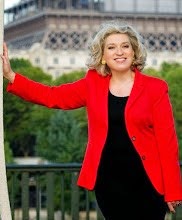
Rachida Dati left baby at home to save career

If you think France's most famous single mother, the justice minister Rachida Dati, had a choice when she returned to work just five days after delivering her daughter Zohra by caesarean section, think again.
Rachida Dati feared losing her job if she decided to stay at home with her baby. Photo: REUTERS

Pictures of the radiant mother in the Elysée forecourt, coiffed, made-up and manicured, in a severe but figure-hugging size eight black Yves Saint Laurent outfit and four inch heels, stirred debate across France.

Was the 43-year-old minister striking a blow for women's liberation or setting it back 40 years?

Amid the clamour of competing opinions one important point can be easily overlooked: Miss Dati went back to work not from a position of strength but from a position of weakness. She feared losing her job if she decided to stay at home with her baby.

The French president, Nicolas Sarkozy, who is planning a government reshuffle next week, is a notoriously impatient boss and his justice minister's competence has been called into question.

The purpose of her stage-managed picture opportunity was to ensure that nobody could possibly have thought of her as an unfit, over-the-hill mother left pregnant by a commitment-shy (and possibly adulterous) casual boyfriend.

In French politics, weakness is the cardinal mistake; image matters above everything. And women make it by being four times tougher than everybody else.

Miss Dati, was a highly-praised adviser to Mr Sarkozy, when he was interior minister. She was also an efficient presidential campaign spokesman for him 18 months ago when he won the highest office in the land.

However, no one could pretend she has been a successful justice minister. Given the task of making sweeping reforms to get more efficiency from France's creaking judicial bureaucracy, she antagonised magistrates' and prison wardens' unions – not least when they saw her modelling a Dior chiffon dress on the cover of Paris-Match the same week that she called for more budget cuts.

She has gone through more chiefs of staff at her ministry (conveniently located next to the Ritz on Place Vendôme) than Diana, the Princess of Wales, did at Kensington Palace.

Like almost every powerful woman in high office, she is said to be mercurial and bad-tempered, a charge rarely levelled against her equally Napoleonic male counterparts in France's political elite.

All the same, few ministers would have hauled a provincial judge out of bed after midnight to explain why a young thief had been sent to prison, where he subsequently committed suicide, prompting angry headlines.

Miss Dati had no such reluctance.

And fewer ministers, perhaps, would have chosen a tête-à-tête breakfast with Prince Albert of Monaco over a long-scheduled meeting with representatives from the prison wardens' unions, an incident said to have enraged Mr Sarkozy.

Significantly, he took it upon himself to announce yet another major, and potentially unpopular, reform of the justice system last week rather than waiting for his minister to return to work.

Any other minister would have been a foregone casualty in the projected cabinet reshuffle. Once an intimate of the Sarkozy couple – she and Mr Sarkozy's previous wife Cecilia called one another "sister" – Miss Dati has fallen from grace at the Elysée. She is a bête noire of the new Madame Sarkozy, Carla Bruni.

More significantly, she is not included in the Group of Seven, the seven ministers most appreciated by the president, who gather informally with him to plan the government's next moves.

However, it should be said that neither is the prime minister, François Fillon, who is nevertheless expected to keep his job next week.

For months, Miss Dati's job was saved by who she was: the primary face of Mr Sarkozy's rainbow coalition, the first Muslim in charge of a major cabinet post.

If not quite the most popular politician in the country, she is certainly the one whose face sells the most newspapers and magazine covers.

Young people like her. Women like her. Minorities like her. The Left pulls its punches when it comes to her.

Even her well-publicised spat with Mr Sarkozy's other high-profile cabinet minority appointment, the popular Senegal-born human rights secretary, Rama Yade, has failed to make a dent in her reputation. Her rival is in hot water with Mr Sarkozy, having refused to lead the Gaullist list in the European elections, prompting the president to call her a "spoiled brat".

But all this is predicated on one essential quality: Miss Dati must at all costs look like a winner. Let her stumble but once, and the thumbs will turn down in seconds. French politics is like a gladiator's arena: woe to the vanquished.

Her pregnancy could have finished her, and she knew it.

Hence the cameras outside the maternity clinic (positively restrained, the minister's friends will tell you, compared with the former Socialist presidential candidate, Ségolène Royal, who held a photocall in the room where she had given birth to her daughter). Hence the YSL outfits and the make-up artist; hence the coy speculation, sometimes fuelled by the minister herself, about the identity of the baby's father.

The candidates include a Spanish politician, two chief executives of France's largest companies, a cabinet colleague, a television presenter and the president's brother.

Far from being a social reject, Miss Dati revelled in the celebrity spotlight. Mr Sarkozy saw his ratings plummet when he was tagged the "bling-bling president". But Miss Dati correctly assessed that making headlines, any kind of headlines, was better than fading into the background. Every newspaper article on her motherly qualities (or lack thereof), her feminism (or crass destruction of such) puts her firmly at the centre of attention.

Would you fire a woman triumphantly embodying the 21st century's contradictions?

© Copyright Telegraph Media Group & Anne-Elisabeth Moutet 2009

Monday, November 24, 2008

Saakashvili Takes Paris

A president and an intello walk into a Left-Bank bar...

Paris
As an exercise in diplomatic deployment, Mikhail Saakashvili had his French trip planned to near perfection. The French like you more if you've published a book. Check. Even better if the book is originally in French. Check two. And most of all if you've written the book with a card-carrying member of a dynasty of Nouveaux Philosophes. Check three.

Thus it was that last Wednesday night, I was yakking away, glass of red in hand in approved Left Bank form, in a crowded Georgian restaurant at the heart of Saint-Germain des Prés, waiting for the president of Georgia and his co-author Raphaël Glucksmann, who in equally approved form were both late. Piles of Je vous parle de liberté (Hachette Littératures, 2008) awaited inscribing under the watchful eye of two Hachette publicists. Nobody was checking invitations. There was no visible security among the modish crowd jostling for spicy canapés inside the bar and only a small police van parked at the corner of rue du Sabot and rue de Rennes down the block. You could not have better telegraphed that Saakashvili--who, as he reminded everyone regularly during his 48-hour-trip, spent a year studying in Strasbourg and there met his future wife--felt at home in France, in the Sixth Arrondissement, and with this crowd.

Saakashvili eventually arrived and gave a short, graceful speech in very good French--more family reunion than formal declaration--particularly saluting his co-author's father, André Glucksmann, the bowl-cut coiffed author of The Master Thinkers and famous as the reuniter of Jean-Paul Sartre and Raymond Aron (over the fate of Vietnamese boat-people in 1979). Glucksmann père floated above the proceedings looking like a gaunt but rather healthy mummy. He had read him while a student, Saakashvili explained, marvelling that someone understood the Soviet evil so well. He had not even known if Glucksmann were still alive, much less could he have imagined that he would one day meet the philosopher's son in a muddy park in Kiev during the Orange Revolution, that the two would become friends, and would write a book together. Everyone in the overcrowded room was smiling. After all, one could hardly do better in terms of well-connected tourisme engagé. (The French don't play Six Degrees of Kevin Bacon but Six Degrés de Jean-Paul Sartre.)

It was a perfect moment, one of the best of Saakashvili's whole tour. He was in France to make the case that Russia had violated the terms of the imperfect cease-fire agreements negotiated by Sarkozy in the name of the European Union on August 12 and September 8, and urge firmness. Saakashvili had even cadged an Elysée invite from Sarko just a day before the EU-Russia summit began in Nice with the French in the seat of the rotating EU presidency.

Throughout his whirlwind tour, Saakashvili was careful to give credit to the Sarkozy-led EU intervention, but it was felt at the time that the Europeans had conceded too much, especially in treating as a fait accompli a Russian military presence in the two seceding Georgian provinces of Abkhazia and South Ossetia. Today, Europe is split between the established "engagement with Russia is necessary" line, peddled by Commission president José Manuel Barroso among others, and a resistance front let by the Baltic States, Poland, the Czech Republic, and a somewhat wobbly Gordon Brown, who argue that there should be no resumption of talks on EU-Russia commercial partnership before Russia pulls back the 8,000 soldiers she has on the ground --some as close to Tbilisi as 30 miles. Overall, the engagement line is winning.

Nowhere could this be more strongly felt than on France Inter, the state radio, bright and early Thursday morning as Saakashvili sat in the studio as the guest of the 8 A.M. news program. We French still get our hard news and spin from radio throughout the day, only switching to television at night. France Inter is a kind of mass-market NPR, with a relentlessly po-faced liberal line that has only ever pleased, or sought to please, the Quai d'Orsay--as France's foreign ministry is known (the mandarins, not the minister himself, whose ideas are largely seen as irrelevant by his administration).

They were awaiting the Georgian aventuriste loaded for bear. Introducing the guest, Bernard Guetta, the morning foreign affairs moderator, reminded us that Saakashvili's calling Europe's possible abandonment of Georgia a "new Munich" had "the support of the American right." Having painted the Neocon cross squarely on Saakashvili's chest, Guetta continued. Georgia had "provoked" Russia, which felt threatened by the suggestion of an "unnecessary and unfeasible extension of NATO" to Georgia and Ukraine, but "thankfully" the United States "had not moved" to defend its ally. Common sense and world stability dictated that Europe and the United States should abstain from "pushing Russia too far" and should instead consider her "offer of cooperation." Nicolas Demorand, France Inter's news editor, then brought out "independent evidence" that Georgia had attacked first. Even the listeners during the phone-in segment were hostile.

Saakashvili, though, gave as good as he got. The OSCE monitor who gave the supposed "independent evidence" has since been fired, he countered. "There wasn't a single Georgian soldier on Russian soil at any time. It was our towns which were bombed, our territory which was invaded, our population which was pushed out or killed by the thousands, even after the EU agreement was signed." A town called Akhalgory was even renamed Leningory: "This in the 21st century." His hosts were dismissive and urged him to reconsider. Joining NATO was a pipedream. "America's support for Georgia weakens and will weaken even more under President Obama." In vain did Saakashvili quote the president-elect's words from the debates, or note Senator Biden's trip to Georgia during the summer war. "Don't you feel how the wind is changing in Washington?" he was admonished.

The rest of the day, save for his 40-minute meeting with Sarkozy, Saakashvili spent giving print interviews, taping more television segments, and, finally, joining Raphaël Glucksmann on Le Grand Journal, a one-hour early evening news program on Canal+, France's premier pay-TV channel.

This could have gone for or against Saakashvili. Glucksmann's presence and the duo's practiced, if slightly smug, allusions to their youth, clinched it. The Le Monde-quoting Saakashvili (with one more reference to meeting his wife in Strasbourg) was anointed as cool by both the studio audience and the show's regulars. These had decided to use the occasion to bash Sarkozy, always a well-received exercise. ("He campaigned saying that Putin had Chechen blood on his hands, and now they're best buddies! All he answered last summer when Putin said he wanted to have you 'strung up by the balls' was 'You can't do that, do you want to end up like George Bush?' ")

Saakashvili smiled at the show's famous political puppets, at the generously décolletaged weather girl, and even during the short video segment showing him coming out of the Elysée meeting earlier in the afternoon and looking a little forlorn on the palace steps when Sarkozy turns away after shaking his hand. The Georgian president demonstrated the required sense of distance accepted as proper manners in the postmodern political discourse practiced by countries where the memories of foreign invasion has faded away.

Throughout his French tour, Saakashvili gave his rather impressively sophisticated all and could only hope that it had advanced the cause of his beleaguered country on the European stage.

© Copyright The Weekly Standard & Anne-Elisabeth Moutet 2008

Wednesday, November 19, 2008

Sarkozy has been played like a Stradivarius by Putin and Medvdev


November 19, 2008 6:00 AM
| Anne-Elisabeth Moutet
Journalist; Executive Director, Jean-Jacques Rousseau Institute
French Lessons For The U.S.

President-elect Barack Obama has lessons to learn from France's Nicolas Sarkozy, but they may not be what Sarkozy intended. When he greeted the visiting Democratic candidate at the Elysée last summer, the French president meant for a bit of Obama's cool to rub off on him (and his dwindling poll ratings.) He also wanted to play the elder statesman, bequeathing the wealth of his foreign-affairs experience on the freshman from far-away Illinois. As it turns out, it's Sarko who's been played, like a Stradivarius, by the redoubtable team of Russian president Dmitri Medvedev and his remote handler Vladimir Putin, at the EU-Russia summit at Nice last week-end.

Sarkozy, who as recently as 2006 peppered his ultimately successful presidential campaign with statements like "I'd rather shake hands with George Bush than with Vladimir Putin - Putin has Chechen blood on his hands," has of late experienced what can be termed a Damascene conversion in more ways than one. Russia, he believes, must be "engaged". (So must Putin himself, it would seem: at his first G-8 last year, Sarko was snapped lending his cell phone to the Russian strongman, so that he, Putin, could share a joke with his, Sarkozy's, wife.)

The French president built his political reputation on his willingness to personally engage any number of opponents. He made the cardinal mistake of thinking that he could successfully bluff his way among the autocrat leaders of an empire stretching over 12 time zones, who cut their political teeth in a totalitarian system punishing thoughtcrime with secret police, tanks, and a prison camp system second to none. Why not? the reasoning seems to have gone. It worked with union picket lines, angry demonstrators, even a hostage-taker threatening to bomb a primary school when Sarkozy was the 28-year-old mayor of a Paris suburb. Sarko has always trusted his gut, and most of the time this has served him well - together with his genuine physical courage.

But winging it, even with the best intentions, simply doesn't work in this case. For the sake of "engagement", Sarkozy, in his capacity as rotating president of the EU, abandoned beleaguered Georgia, and agreed to resume talks on EU-Russian economic partnership, event though Russia violates to this day even the favourable ceasefire brokered by that self-same Sarkozy last August in Tbilisi - there are Russian troops not only in Abkhazia and South Ossetia, but as close as 30 miles from the Georgian capital.

To "help" Medvedev feel he was in congenial company in Nice, and - as he thought - get the negotiating ball rolling - Sarko didn't hesitate to state that the US plans to install an anti-missile shield against Iranian nukes in willing countries like Poland or the Czech Republic "would bring nothing to European security." (Only the week before, Medvedev, for his part, had shown no compunction to threaten to target missiles on EU and NATO countries.)

Sarkozy believes he can "mediate" between Russia and the West. He is wrong on several counts. The first is that no-one gave him a mandate. (He believes success will validate him after the fact, but his definition of "success" while bleeding advantages left and right should be unacceptable to the West and the United States.) The second is that he seems to forget what Ronald Reagan always knew (from his past as a tough union negotiator battling Communists in Hollywood): that for a certain type, which was Russian even before it was Soviet, everything that's theirs is theirs and everything that's yours is negotiable. The third is that you do not talk with an adversary who does not share your basic values without preconditions. It is strange that Sarkozy understands this about Iran, but won't see it when it comes to Russia. From all accounts, President-elect Obama does see this about Russia, but is still uncertain about Iran. Each of them should learn something from the other; but they should not be mistaken on what there is to learn.

© Anne-Elisabeth Moutet & Hudson Institute, 2008

Tuesday, November 4, 2008

The Euro Shoe-In

Here in Paris it is the bright sunny dawn of November 4th - “just the day,” interviewees tell you unselfconsciously on the morning news, “to start liking America again.” It doesn’t matter that the first US election results won’t fall until the small hours tomorrow (a day scheduled with rain.) The French have already elected - anointed - Barack Obama as The US President They Want.

For weeks now, neither newspapers nor radio or television channels have even bothered sending a reporter with the McCain campaign, which they view as best as an irrelevance, and mainly as a useful foil for the Tales of Barack. (Voters repelled by Sarah Palin’s anti-abortion stance? Check. McCain partisans guilty of racism in the voting booth? Check. Gun-totin’ embittered Joe Six-Packs shooting baby fawns from their pick-up trucks on the way to the megachurch? Check.)

Instead, reporters have been dispatched to Harlem to report on the planning of street parties tonight (France Info); to Dixville, NH for the first Democrat victory of the day (“the first since Humbert Humphrey’s candidacy in 1968,” France 2 TV adds helpfully); even to Hawaii for the coming funeral of Madelyn Dunham, the candidate’s grandmother (TF1 TV, which never thinks of mentioning how Mrs Dunham first entered the campaign rhetoric, as a useful comparison to Rev. Wright in terms of racial prejudice.) America, we are told, will finally set an example to the world.

And what if, in a surprise upset, this beloved screenplay is brutally rewritten?

“There will be riots,” pundits pronounce. Those riots, you understand, would be justified. America’s “visible minorities” will have been cheated of their victory. So will ours, who have no hope in the next decade of achieving anything like the US’s political integration. What few Muslims and French-African politicians occupy Cabinet jobs were high-handedly appointed by a right-wing president, Sarkozy, going against established habit and party power plays in apportioning the spoils. Not coincidentally, those same appointees have been the butt of most of the criticism levelled at the government by professional civil service leakers. Rachida Dati, the Justice minister, who is of Algerian/Moroccan origin, has been branded “incompetent”, “unqualified,” and, yes, “a diva.” Fadela Amara, the Housing Undersecretary, a French-Algerian feminist, is “disorganised and can’t run a team.” Sounds familiar?

In reality, we Europeans, who pride ourselves on our supposed forward thinking, respect nothing more than Establishment figures. In our reasoning, it is up to you, dear American voters, to provide us with the right Harvard Law School grad of the right colour, to simply start the wheels of change here (and to keep our restless minorities happy in the bargain.) How could you even consider disappointing us? What better motive can there be? Make the Paris MSM and French political party machines time-servers happy! Vote Obama!

© Copyright Hudson Institute New York & Anne-Elisabeth Moutet 2008

Friday, October 31, 2008

Old World Wiles

As the European press from L'Humanité to the Financial Times (what were they smoking?) endorses the Imminent Coming Of Saint Barack, we other Europeans are seized by a strangely familiar feeling. We have been here before. Namely in 1981, when 23 years of conservative (Gaullist, at any rate) rule in France finally ended with the election of the Socialist François Mitterrand. Mitterrand appointed four Communist ministers among his cabinet, and proceeded to nationalize the banks (sounds familiar?) as well as most large industrial corporations. France resolutely ploughed into the Reagan-Thatcher Eighties in deep contrarian denial: exchange controls, punitive redistributive taxes, a shorter workweek, legal vacation time raised from 4 to 5 weeks annually, a 10% raise on the minimum wage, etc.

Wealth had to be shared. The byword was solidarité: the new wealth tax went by the acronym ISF, Impôt de Solidarité sur la Fortune (it has never been abolished since all our successive presidents believe our Marxist-lite media-massaged public opinion wouldn’t stand for it.) Keynesian economics would inevitably provide jobs and prosperity. When newly-flush consumers had the bad taste to prefer Japanese-made VCRs to French-produced goods, stiff tariffs and regulations were slapped on faster than you can say WTO. The result was predictable: inflation; more, not less, unemployment; and successive devaluations of the franc.

It took Mitterrand’s sobered cohorts, minus the Communists who did not survive the first Cabinet reshuffle, less than two years to make a complete u-turn. By the mid-80s, France was dipping a collective toe in the uncharted waters of stock-market deregulation. By 1990, a nominally-Socialist Finance minister (later PM), Pierre Bérégovoy, prided himself on the success of Paris’s derivatives exchange.

It would be tempting to resign oneself to the likely election of Barack Obama as a coming moment of painful silliness, tinged with vainglorious ideology, to be endured for a relatively short time, before its more noxious side-effects can be reversed. Some points, after all, have to be made. The French wanted to show that the Fifth Republic was not the property of a single party. Americans would like to prove - to themselves first - that they have put behind them for good a past of racism and bigotry.

Mitterrand and Obama, both lawyers with little actual practice but ample oratory gifts, have a lot in common, foremost a burning ambition and far less ideological principles than their troops. The Obama who cites as solipsistic proof of his executive experience the very fact that he is running a large campaign, is not so far removed from the maneuvering Fourth Republic hack who showed an undistinguished but long career as evidence of his capacity to lead the Republic. Supporting in turn Vichy France and the resistance, French Algeria then anti-Colonialism, anti-Communists then the Socialist-CP alliance, François Mitterrand never failed to reinvent himself in the direction he felt would more advance his personal ambition. (The Socialist Party he remodelled to his own specifications ended up with a lot in common with the Chicago Democrat machine, too.) In throwing under the bus his pastor or his foreign adviser, Obama shows signs of a similar flexibility.

Yet the situation is hardly comparable. In an interesting reversal, a President Obama might well find himself the Leftmost head of State at any forthcoming G8 among the likes of Sarkozy, Merkel and Harper, just as the Socialist Mitterrand had to deal with Maggie and Ronnie. But the world was a far less interconnected place a quarter of century ago. Economic decisions in France affected the world economy even less than they would today. The leading position of the US, despite constant claims that it’s been overtaken by the New Tigers, means that a housing slump in North Dakota influences the Italian stock market - and an Italian stock market plunge destroys jobs in Detroit. The stakes today are higher, faster, riskier.

And, of course, there’s the rhinoceros in the room - foreign policy and the threat from Islamist extremism. For all his faults - he misread, and mistrusted, the collapse of Communism, and appointed as his last Foreign Minister Hubert Védrine, the architect of codified international anti-Americanism - François Mitterrand fell on the right side of the fence at critical moments, such as when France sent troops to Beirut in 1982, or joined the first Gulf War coalition. The worst terrorist attacks on French soil occurred under Mitterrand, masterminded by Algerian Salafists or Pasdaran-commissioned Iranians. A Hezbollah suicide bomber killed 58 of our paratroopers at 6:20am on October 23, 1983, precisely two minutes after another hit 241 US marines at Beirut airport. An old man with a very long memory and an acute sense of the balance of power, Mitterrand would never have opened talks with Iran without stiff preconditions.

Obama has none of these old world wiles. Surrounded by superannuated Carter administration hacks, frisky neo-Marxists, and UN-admiring CFR alumni, he buys into the al-Jazeera image of the US and believes America can gain the world’s affection with the same charming techniques he employed to win a seat on the Illinois State Senate, or that his wife deployed to soften her image on The View. He may realize his error at the first lost round of negotiations, but by then it might be too late.

© Copyright Hudson Institute New York & Anne-Elisabeth Moutet 2008

Sunday, September 7, 2008

The French press play it cool over Rachida Dati

Rachida Dati
French journalists are keeping quiet about the father
of Rachida Dati's unborn child

The French press is hunting for the name of the father of (unmarried) justice minister Rachida Dati's unborn child. Well, the journalists write that they are. When you break Poilâne with them at chic dinner parties, they tell you they have known for weeks. The names being bandied about include a television show host, two millionaire chief executives, married former Spanish premier José-María Aznar and even Nicolas Sarkozy.

Twenty years ago, it was the same with François Mitterrand's mistress and her daughter. It was only the public, poor saps, who weren't supposed to know. It's always been the case with French journalists that they would rather be in the loop than have a scoop, which is why they don't really complain about the country's stringent privacy laws.

When the elegant Ms Dati, sporting a slightly rounded belly under a charcoal cashmere jumper, told inquiring hacks: "I have a very complicated private life, and that's where I draw the line with the press," they didn't push her. At any rate, she said, she was 42, which meant she was still at a stage where her pregnancy might not succeed. "If it happens, I'll be over the moon. If not, I'll be hugely disappointed, but I'll put on a coat of lipstick, and I'll carry this burden alone."

You might expect more than one French politician to seize this opportunity to brand Dati as another "pitbull with lipstick", using the best example of the breed, the US vice-presidential candidate Sarah Palin. But Ms Dati is getting a cushy ride, from the Right-most wing of her party to the extreme Left. Single mother? Pregnant? Yawn. France, which encourages marriage and children with significant tax incentives and benefits, is not hung up on what people here won't even call "morality". Will she stay on as minister? "It's not an illness," Ms Dati snaps. Of course she will. This will make her the fourth pregnant French cabinet minister in office; before her, Ségolène Royal, Florence Parly, and Frédérique Bredin had babies while taking their boxes all the way to the maternity clinic. The unmarried Royal even invited a camera crew to her delivery room, which was rightly seen as the first step of her presidential bid.

* Mrs Palin is getting no credit in France for being a successful, savvy woman and an exciting new face in politics. If the US elections were held in France, Barack Obama would poll a Mugabe-esque 83 per cent of the vote. Palin is painted here as an ignorant religious fanatic, a gun nut, and proof positive that the American heartland is a more dangerous place than Anbar province.

She is also seen as irrelevant, and one more reason why John McCain's bid is doomed. Even the usually sharp-antennaed Sarkozy tilts towards Obama, whom, unlike McCain, he greeted on the Élysée steps and favoured with a high-profile joint press conference during the American's whirlwind French visit. It will be interesting to watch reassessments should the Republican ticket win.

* Long defined as a country of farmers, France is slowly seeing wimpy townie manners take over. The inhabitants of the Alpine village of Villaz (pop 3,000) are suing a local farmer, Michel Déronzier, because they don't like being kept awake by his herd of Pie Rouges' cowbells at night.

"It's only seven cows out of 70 who have a bell!" Déronzier protests. "It's necessary, because it helps the dogs locate them faster. And at any rate, there have always been cowbells in the country. If people don't like it, they should move to the city; they won't like the noise of cars there." So far, it's a standoff.

Monday, August 4, 2008

Le Kennedy Noir

Paris sulks: Why Berlin and not us?

Paris
However you slice it, the Obama whirlwind Paris tour (three hours on the ground), sandwiched between the candidate's rock-star speech to ecstatic crowds in Berlin's Tiergarten and dinner with Gordon Brown at 10 Downing Street, left the French, well, rather miffed. It was the second question posed at the press conference Obama gave with President Sarkozy at the Elysée on Friday afternoon. "Is it," the Agence France-Presse reporter asked, noting that the candidate had chosen Berlin for his major speech, "because it's not so well considered to like France in America?"

Obama waffled elegantly, choosing to explain that he'd already been abroad for an unprecedented period, over a week, unheard of for a candidate. (There was more than a hint of weary duty at work here, as if he were already president with a life constrained by greater forces, instead of having calibrated the entire exercise, from Helmand Province to Whitehall, with a micron-accurate eye to the best transformative spin.) Later in the 40-minute conference, Obama obliquely acknowledged the point, crediting Sarkozy, with whom he'd been indulging in a somewhat self-conscious best-buddies lovefest throughout, with "having made it possible to call French fries 'French fries' again in America." "Americans love France," he protested.

Setting the tone, Sarko sparked guffaws with his less convincing opening statement that "the French love America." ("It would be worse if I didn't say it," he countered, which elicited more genuine laughter.)

Amid all the courteous hypocrisies, it was obvious each saw in the other a first-rate political animal. Sarkozy had been quick to recall he'd met Obama in Washington back in 2006, when he himself was a candidate for the presidency. "And during that visit, Mr. Sarkozy only met with two senators, myself and John McCain," Obama added. "So it's obvious he has a very good political nose."

"When I think of the two of us sitting in that [Senate] office that day," Sarko reminisced, "well, one has managed to get elected. It's the other's turn now, isn't it? I'm not saying this to meddle. France will do very well with whoever becomes president of the United States."

Obama, whom French pundits call le Kennedy noir, had traveled to the Middle East and Europe to acquire gravitas and foreign-affairs polish. Sarkozy made much of what the two men had in common.

"We are both the sons of immigrants, with foreign-sounding names, went into politics at a time when people like us weren't expected to get to the top, and we both beat women opponents in a presidential contest" he said, very much aware of the reflected glamour Obama-who by some polls is favored by 86 percent of the French-could shine on his own currently dismal numbers. (The first question at the press conference, from an articulate and pugnacious black American reporter, was to Sarkozy, asking how he felt standing next to someone who looked like the people he'd called "scum" when faced with riots as minister of the interior. Sarkozy replied that he was the first French president to appoint people very much like that to his cabinet, pointing out that during the 2005 French race riots, "nobody died, and the only injured were in the ranks of the police. Thank you for allowing me to make that point.")

Obama, you could tell, was the ultimate arm-candy for embattled European leaders, beating even Carla Bruni (Sarkozy's beautiful new wife, who remained absent from the short Paris proceedings) in sheer wattage. And the senator knew it. His staff, no doubt briefed on the not very dignified leadership free-for-all currently tearing apart the French Socialist party, had cagily refused to meet with any French opposition leaders. Adding insult to injury, Obama did agree to see Britain's David Cameron, the Conservative leader, telegraphing an undiplomatic but probably accurate assessment of Prime Minister Gordon Brown's political chances.

When challenged by the AFP reporter, Obama said apologetically he felt he'd been addressing not just Germany but all of Europe from Berlin. From anyone else, this could have been taken as the height of tactlessness, but Obama, facing a smaller but just as enthusiastic audience in the Elysée's Salle des Fêtes as he had near the Berlin Victory column, was given a free pass.

For in Paris, it's the media and the banlieues (the projects) that drive the Obamamania filling every front page, from Libération to Le Figaro. There were more people inside the Elysée, jostling for a seat in the press room or a good camera angle in front of the palace, than in the rue du Faubourg Saint-Honoré outside. A crowd 300 strong, including a sizable number of tourists and more black faces than one usually sees in this exclusive part of town, started a chant of "Yes, We Can!" outside as the candidate's motorcade was leaving at full speed for the airport, followed by a busload of traveling correspondents. We, the Paris-based press, went to interview them under the blasé gaze of the police.

"Did you see him? Isn't he marvelous?" a cheerful secretary named Victoire, come specially from her office near the Opéra with a girlfriend, gushed. "We wouldn't see this in France." "That's why America is so formidable," said the friend, who like Victoire was born in northern Paris of Cameroonian parents.

I couldn't help contrasting their large smiles and enthusiastic tone with the silkily venomous and cultured voice of Hubert Védrine, the former Socialist foreign minister, heard this very morning on Radio Luxembourg. Védrine coined the expression "hyperpower" about America. He opposes it. It was, he explained, simply time for America to understand she couldn't go it alone, but had to behave responsibly among other nations and international institutions. Unfortunately, in his view, Barack Obama had started making worrisome statements, several steps back from his earlier multilateralist commitments. "But you know," Védrine confided to his morning-show audience with Talleyrand-like sophistication, "that's just the way you have to win an election, isn't it? From a few things Mr. Obama has let escape, I think he still believes in the principles he had at the beginning. I am very hopeful."

© Copyright The Weekly Standard & Anne-Elisabeth Moutet 2008

Monday, July 7, 2008

L'Affaire Enderlin

Being a French journalist means never having to say you're sorry.

Paris
To understand the al-Dura affair, it helps to keep one thing in mind: In France, you can't own up to a mistake. This is a country where the law of the Circus Maximus still applies: Vae victis, Woe to the vanquished. Slip, and it's thumbs-down. Not for nothing was Brennus a Gaul. His modern French heirs don't do apologies well, or at all if they can possibly help it. Why should they? That would be an admission of weakness. Blink, and you become the fall guy.

So, in the case of Muhammad al-Dura-a 12-year-old Palestinian boy allegedly killed by Israeli fire during a skirmish in the Gaza strip on September 30, 2000-it was not really to be expected that the journalist who released the 59-second news report, Charles Enderlin, longtime Jerusalem correspondent for France 2 TV, would immediately admit having hastily slapped together sensational footage supplied by the channel's regular Palestinian stringer, and not checked whose bullets had, in fact, killed, or perhaps even not killed, the boy.

In the ensuing eight years, the small figure of Muhammad al-Dura cowering beside his crouching father became the defining image of the second Intifada. The "child martyr's" picture cropped up on posters, websites, postage stamps, and street names throughout the Muslim world from Mali to Indonesia, fueling lynchings and suicide bombings. The Israeli authorities at first took the French report more or less at face value and blandly deplored the child's death in a hasty release ("To the best of our knowledge, the boy was hit by our fire"). Others, however, were not so sure.

They parsed and scoured each of the 59 seconds of the film and every corner of the location for clues, ballistic angles, improbable moves, and hidden motivations. The film showed the two figures first seeking cover from gunfire, then later slumped over, though with no sign of blood or wounds. When increasingly convincing voices came to question, at the very least, the point of origin of the shots-the location of the small Israeli garrison made it pretty much impossible for Muhammad and his father, who was allegedly wounded, to have been hit by Israeli bullets-it took six weeks for the Israeli army spokesman to state in an interview that "both versions of the incident [are] possible," and two more months for an official investigation to be launched.

Meanwhile, Enderlin and his bosses at the state-run France 2, who had distributed their news item free worldwide, were refusing to answer questions. They flatly declined to provide the complete 27 minutes of footage taken that afternoon by the cameraman, or to concede any possible error, ping-ponging in the classical obfuscating pattern of bureaucracies everywhere. ("It's not the crime, it's the cover-up" hasn't yet made it to France.) It took two years for Enderlin to give his first interview, to a friendly colleague, Elisabeth Schemla, the respected editor of the Proche-Orient.info website and a former L'Express associate editor, in the course of which he confused "protecting one's sources" with not providing the tape. (Personal disclosure: I was at the time deputy editor of Proche-Orient.info.)

Even an hour-long documentary produced in 2002 by the award-winning German broadcaster Esther Schapira, who works for German state television's First Channel, failed to make a dent in the stance of France 2. While purposely keeping away from more controversial theories, Schapira's work comprehensively put paid to the "Israeli bullets killed Muhammad al-Dura" theory. Asked by Schemla why French television would not broadcast Schapira's film, Enderlin stonewalled: "I don't decide what the channel runs. I have bosses, there are people above me in charge  .  .  .  a professional hierarchy."

Having dug in his heels in time-honored fashion, Enderlin, a seasoned journalist and a French-Israeli dual national who'd spent most of his adult life at the same job, never imagined the al-Dura story would dog him. He was covered by his superiors in the hierarchy, affording him the Zen-like serenity achievable in large French organizations, which are profoundly top-down and basically unchanged in spirit since the court of the Sun King. His coverage of Israel and the Palestinian Authority, while regularly criticized by pro-Israeli groups, was highly esteemed by his peers. He had produced a well-informed documentary series on the Oslo Accords, the peace process, and the 2000 Camp David talks, tied to a book that has been published in English; and, while it could be argued that he was perhaps too close to some of his sources (several of the parties to the peace talks actually held discussions at the France 2 bureau, loaned by a helpful Enderlin as discreet neutral ground), this was a notable achievement. Such a person could not, in the order of things, be seriously threatened by a bunch of activists or scruffy bloggers behind their computer screens questioning his professional judgment. When he dismissed accusations of a cover-up by explaining that he had chosen "not to show the full footage of the child's agony," which would have been "unbearable," he fully expected to be taken on trust.

Yet the bloggers and the activists refused to let the story die. In fact the unlikely alliance of, among others, a professor of medieval history from Boston University, a hot-headed former financial executive, and a former Le Monde reporter soon brought to light practices that would surprise no journalist with experience working in a totalitarian state. Most foreign correspondents covering the Palestinian territories from Israel rely on local stringers, cameramen, fixers. These Palestinian nationals do not benefit from the protections routinely granted international journalists. They and their families can be subjected to all sorts of pressures by a system not known for its respect for human rights and free speech niceties. The staging of scenes for the benefit of photographers is common.

The medieval history professor, Richard Landes, a soft-spoken American who spent his childhood in France and got his early education in a Paris public school, now one of the case's most devoted parsers, coined a word for Palestinian manipulation of the media: "Pallywood." He believes the whole al-Dura incident was staged. Using footage taken by other cameramen on the scene that day, he argues his case forcefully on two well-visited and regularly updated websites (theaugeanstables.com and seconddraft.org) as well as in countless articles and interviews.

Enter the hothead. Philippe Karsenty is a French Jew who felt so let down by the mainstream coverage of the second Intifada and the Middle East in general that he gave up a successful career in finance to start a media monitoring agency. His Media Ratings (web address m-r.fr) challenges the validity of press stories on all subjects with a test he dubs "the P.H.I.L.T.R.E method," rating articles for "accuracy, consistency, independence, freedom, transparency, accountability, and exhaustiveness." Karsenty took up the al-Dura case and started firing away at everyone he saw as responsible for perpetrating a dangerous lie.

Karsenty is a boyish character in his early 40s with rapid-fire delivery, a serious cell-phone habit, and an unflagging, self-appointed sense of mission. He makes enemies among his friends with as much gusto as he takes on the French establishment. (There is something of the neighborhood kid ringing all the doorbells on the block about him.) He has attacked various French Jewish leaders as well as France 2's news director, Arlette Chabot; Enderlin; France 2's chairman, Patrick de Carolis; and a slew of politicians. He routinely uses expressions such as "I will bury him!" and "I will end that conniving bastard's career!" He is a bit mad, but it can be argued that many saints and heroes were a bit mad-if Joan of Arc had been happier in her Lorraine village, we Parisians might all be speaking English.

Karsenty is no saint, but it was his peculiar blend of bravado, doggedness, testosterone, and plain bad manners that eventually caused France 2 to blink. (I was reminded, meeting him, of the former New York senator Alfonse D'Amato, who gloried in his "Brooklyn Rottweiler" nickname and was turned loose by the Senate Banking Committee on Swiss banks that refused to reveal the number and balances of their Holocaust victims' accounts. Until then, the Swiss had only been confronted with polite delegations headed by the suave likes of Paul Volcker, the former Fed chairman, and Stuart Eizenstat, the former undersecretary of state. They had gotten nowhere. D'Amato, taking no prisoners, unlocked the process in a couple of months.)

At any rate, two years ago, after one Karsenty op-ed too many about the "arrant hoax" of the al-Dura affair, France 2 sued him for libel. In a country where judges are civil servants, their first ruling surprised few observers: They ruled for the national institution, France 2, and ordered the outsider, Karsenty, to pay one euro in damages to the plaintiffs, a fine of 1,000 euros, and another 3,000 euros in costs. Even accounting for France's relatively moderate legal rates, this was a slap on the wrist. Taking a gamble, Karsenty appealed.

The appeals court convened last month and asked for-gasp-evidence, namely the famous 27-minute France 2 unedited master footage, which not even Enderlin had seen when he filed his item for the evening news. (His Palestinian cameraman, Talal Abu Rahmeh, had sent him by remote link about 6 minutes from which to make the news segment.) France 2, dragging its feet, eventually produced 18 minutes of film. (There is practically no such thing as "contempt of court" in such circumstances in the French judicial system.) The showing of this film made for an eerie moment at the trial, when the hitherto blasé judges sat up and started watching with more attention, then took a recess, after which they asked for all of France 2's footage. It would prove to be the turning point in the proceeding.

Karsenty came to court loaded for bear, with trolleyfuls of documentation, including a 90-page ballistics report. Out of it all, the court also trained its sights on a telling 2005 Le Figaro opinion piece by two establishment journalists, Denis Jeambar, then editor in chief of L'Express (France's answer to Newsweek), and Daniel Leconte, head of news documentaries at the state-run French-German cultural channel, Arte (a kind of French-German PBS), both unlikely participants in this undignified scrum. Jeambar and Leconte, egged on by a former Le Monde journalist, Luc Rosenzweig, who had taken a great interest in the case and started writing about it for the small Israeli news outfit Mena, asked France 2 as early as 2004 to show them the original raw rushes. Acknowledging Jeambar and Leconte's weight in the French establishment, France 2 had done for them what it had refused to do for countless others and had shown them, and Rosenzweig, the 27 minutes of film.

What happened then was typical of the cat-on-a-hot-tin-roof behavior even powerful French figures display when faced with any kind of violation of the unspoken but well-understood order of precedence obtaining among the elite here. While Jeambar and Leconte took their time to ponder what they'd seen, Rosenzweig had the nerve to file a piece for Mena describing the tape's scenes of staging just before the fatal shooting. You could see Palestinians being carried on stretchers into ambulances, then coming out again unharmed, all in a kind of carnival atmosphere, with kids throwing stones and making faces at the camera, despite what was supposed to be a tense situation. The tape showed occasional gunshots, not continuous firing. From the general horsing around captured on film by Abu Rahmeh, Mena concluded that the whole scene must have been staged.

Their being preempted by Rosenzweig incensed Leconte and Jeambar, who expressed their displeasure in the 2005 op-ed in the center-right Le Figaro. They spent so much of the piece denouncing Rosenzweig, his gall in reporting first on what he'd seen in the company of his betters, and the conclusions he'd dared draw independently, that it was easy to overlook a key fact: Jeambar and Leconte themselves not only conceded that the tape showed Palestinians stage-managing various shots and horsing around, they also described joking about those very scenes with the France 2 executives who were screening the tape for them.

All of those present at the screening-illustrious visitors and France 2 executives alike, the op-ed recounted-had ended up in full agreement that it was impossible to determine where the bullets had come from, but that it was highly unlikely that they could have come from the Israeli garrison. More crucially, Jeambar and Leconte also had caught Enderlin lying (or, as they kindly put it, "extrapolating"): "There was no 'unbearable agony' of the child anywhere on the tape," they wrote. "It wasn't edited out, it simply did not exist."

The Figaro piece had little impact when it was published, but it turned out to be one of the crucial elements in Karsenty's challenge to France 2's version of events. He won his appeal. The ruling, handed down on May 21, stated that he had acted in good faith as a media commentator and that he had presented a "coherent body of evidence," although the hoax could not be definitively proven. The judge also noted "inexplicable inconsistencies and contradictions in the explanations by Charles Enderlin," whose appearance in court was his first sworn testimony in the matter.

You might think Enderlin's professional standing would have been damaged by all this. You would be wrong. In less than a week, a petition was whipped up by his friends at Le Nouvel Observateur, France's premier left-wing newsweekly. The petition conceded no gray areas, no hint of doubt. It called Karsenty's vehemently argued but exhaustively documented stance a "seven-year hate-filled smear campaign" aimed at destroying Enderlin's "professional dignity." It flatly stated in the opening paragraph that Muhammad al-Dura was killed "by shots coming from the Israeli position." It expressed rank astonishment at a legal ruling "granting equal credibility to a journalist renowned for his rigorous work, and to willful deniers ignorant of the local realities and with no journalistic experience." It professed concern about a jurisprudence that would-shock! horror!-allow "anyone, in the name of good faith and of a supposed right to criticize and so-called freedom of speech, to smear with impunity the honor and the reputation of news professionals."

There followed the names of over 300 journalists-sorry, "news professionals"-and hundreds more miscellaneous celebrity intellectuals (under the heading "Personalités"), as well as a vast slew of mere web surfers ("Internautes"). Note, here again, that while the journalists were listed in apparently neutral alphabetical order, the managing editor of a provincial news conglomerate cheek by jowl with a lowly travel magazine stringer-the key distinction between pros and outsiders was maintained. It was as if the eight-year controversy had been irrelevant. From "news professionals," who were viewed as right by definition, no accountability could possibly be required. The guild was closing ranks.

Scanning the long list (to which new signatures are added daily at the Nouvel Obs website), I experienced a kind of life-flashing-before-my-eyes moment. There were the names of people from every magazine or newspaper I'd ever worked at; people I'd trained with; people I'd been great pals with before life packed us off in different directions; and people I'd last seen only the week before. It was, to tell the truth, Stepford-like scary.

I resolved to call as many of the familiar names as I could. I knew, or thought I knew, where these people came from. Why had they signed? It might be awkward to ask, I reasoned, but wasn't it our business to ask questions?

As it turned out, it was plenty awkward. I came to recognize the moment when, after the "voice-from-your-past" greetings and the "where-are-you-now" fat-chewing and the nostalgic memories of past editors, colleagues, competitors, copy-takers ("all done by computer now, nobody to tell you you're not making sense!"), I got around to the subject at hand. As I started explaining that I was writing a piece on the al-Dura affair and was wondering why they had signed the petition, I learned to recognize the telltale pause, the "Good Lord, she's caught Scientology! She's gone over to the crazies!" moment, after which the whole object of the exercise would become to hang up on me as fast as possible.

There were those, like a foreign editor at a liberal magazine with whom I'd spent boozy evenings bemoaning the failings of our respective boyfriends 25 years ago, who now brushed me off like an inconvenience. "Haven't got time, too many pages to edit, staffer off sick, really, why do you ask such questions, have a catastrophic week, can't really talk to you until . . . well, Friday, but you will have filed by Friday, right?"

"Oh, no, there'll still be time on Friday." (Palpable disappointment on the line.) I did call the following Friday-I only got past her voicemail by reprogramming my cell phone not to send out my caller ID-and got an angry hiss in answer to my greeting. "I'm in an interview, can't talk, have nothing to say"-click.

There was the noted Paris-based former Washington Post foreign correspondent, 75-year-old Jon Randal, a Middle East expert I'd looked up to for years as a cub reporter, who trenchantly explained that he was seeing in all this a dangerous American trend of "vindictive pressure groups interfering with news organizations," now unfortunately crossing the Atlantic. (Having lived in Paris for over 40 years, Jon had become alarmingly French.)

"Americans have been under the gun of such people for some time, but France used to be free of this kind of thing. [These groups] are paranoid, they're persistent, they never give up, they sap the energy of good reporters. I can't imagine how much money France 2 has spent defending this case. Charles Enderlin is an excellent journalist! I don't care if it's the Virgin Birth affair, I would tend to believe him. Someone like Charles simply doesn't make a story up."

But, I tried to interject, the absence of the boy's "agony" from the tape?-

"Nonsense! Televisions don't show extreme violence. You know that. Look, I don't know what side you're on in this?"

"I'm trying to make sense of it all."

"I want you to call my friend at NPR, Loren Jenkins; call David Greenway at the Boston Globe; they'll tell you about pressure groups."

That was a different story; I had no time left and didn't call.

Similarly, there was the seasoned reporter from Le Figaro who thought Charles Enderlin, quite simply, was the best reporter operating in the Near East today. "These people, the ones attacking him, they're extreme rightists, yes? You can't take anything they say seriously." I conceded that the hoax wasn't proven, but that the shots had in all likelihood come from the Palestinian side. Esther Schapira  . . .  There was a sniff. "Pas très sérieuse, non?"

"Well, actually," I said, Schapira had just received the 2007 Europa Prize for her documentary on the murder of Theo van Gogh and been nominated for the 2008 Banff Television Awards. There was a small noise of well-bred surprise. All the same, nothing he'd heard until now had remotely convinced him or was likely to change his mind.

Then there was someone who insisted so vehemently on not being quoted or described in any way that I won't even reveal this person's sex. "Look, this whole thing has been a nightmare for Charles. He's received hate mail, his wife has been threatened, he's about to have a nervous breakdown. You want the truth? I don't give a flying monkey about the case. I signed for Charles. In all honesty, I think he edited his film on deadline and was careless, and afterwards he didn't want to admit he'd screwed up. A one-minute film, and it snowballed from there. Don't put in anything that might identify me, I don't want him to think I don't believe 100 percent in what he says, he'd be devastated."

This, at least, was bluntly honest. Jean-Yves Camus, the political scientist and expert on radical Islam, with whom I'd worked at Proche-Orient.info, was another unrepentant signatory, one who didn't mind being quoted. "Do I think Charles Enderlin lost a good opportunity to own up to a mistake early in the day, and spare himself this anguish? Of course. You know how we work in a hurry? Guy sends him pictures from Gaza, tells him the Israelis shot the kid, he believes him-I mean, even the Israeli Defense Forces spokesman believed it! But you can't own up one, two years after the fact. It's too late, it would mean you abdicate. It's a nice job Charles has, he's nearing retirement age. I don't think he wanted to rock the boat. You know Charles, he's always been status-conscious; he likes being the France 2 man in Israel. Plus, these people behind their computers, they're not real journalists, are they? You can't come from your day job and blog at night and imagine you've become a reporter. It doesn't don't work like that. There are standards."

Still, I asked, why sign a text adamantly asserting the dangerous notion that Muhammad al-Dura had been shot by the Israelis if you don't believe it?

"I was asked to. It was to support Charles. Did you know his wife is Danielle Kriegel? Daughter of Annie Kriegel [a great anti-Communist academic, now dead], sister of Blandine [a philosopher and a former Chirac aide at the Elysée palace], sister-in-law of Alexandre Adler [Blandine's husband, who writes about geostrategy and politics in most French quality newspapers, perennial guest on highbrow talk-shows]."

With all those credentials, the cloud of respectability surrounding Charles Enderlin was reaching pea-soup opacity. I tried one last time.

"Couldn't you have asked for the wording of the petition to be amended? Or started your own petition?" It would have been, Camus told me in the tone of someone who had too much on his plate to busy himself with ancillary details, "too complicated." We made a date for lunch two weeks hence and hung up.

At the other end of the scale, there was the rather intimidating star lawyer Theo Klein, getting on in years, who 20 years ago had been the president of CRIF, the official umbrella representative body of French Jews. I called him and reminded him that he'd been kind enough to invite me to his 1989 French Revolution Bicentennial party. (His office was on the Champs-Elysées, and it was the dream vantage point from which to watch the Jean-Paul Goude-designed parade and listen to Jessye Norman, draped in a giant French flag, belting out the "Marseillaise.") Theo Klein took my call pleasantly and dove into the thick of the matter.

"Well, perhaps the bullets were not Israeli after all, but if something was set up, I'm sure Charles had nothing to do with it. He is a remarkable journalist. I respect him, and I'm sure this matters more than whether a bullet came from the right or from the left. After all, many Palestinian children have been killed in the Intifada. You know, the Israelis haven't made half the noise about this that some French Jews have." He was outraged, outraged by the court ruling.

The daughter and granddaughter of lawyers myself, I gently reminded him that it wasn't done in France to criticize a court ruling. He changed the subject as if stung. "Really, I find deplorable that people are hounding Charles Enderlin like that. He has suffered, really suffered. And his poor wife.  .  .  .  They wanted to emigrate to America at one stage, do you realize?"

Well, I suggested, Americans were actually rather big on correcting reporters' mistakes.

"Surely not after so much time?"

Even after a long time. Corrections were duly appended to stories on the websites of newspapers, to prevent the eternal metastasizing of factual errors. Maître Klein marvelled for a moment at such thoroughness. It seemed, I could tell, a little pointless to him: He, like almost everyone else I'd spoken to, rated facts far below reputation. Still, I decided to go over that ground one last time. Wasn't there some doubt about the actual fatal shot? Why sign this text?

"My dear," Theo Klein said, in an infinitely weary voice, "I'm not a journalist. I haven't read this petition. I have macular retina degeneration. I can no longer read."

© Copyright The Weekly Standard & Anne-Elisabeth Moutet 2008