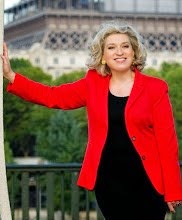
Sunday, October 9, 2011

An expectant nation waits for Carla to deliver

Could the president's popular wife become Paris' first yummy mummy, asks Anne-Elisabeth Moutet

Carla Bruni-Sarkozy has complained about not being allowed to smoke or drink during pregnancy (REUTERS)

Forget little Florence Cameron. Forget Tony and Cherie’s Leo – and those embarrassing Balmoral disclosures. Nicolas and Carla’s bébé, due to arrive imminently, promises to send France into a rarely-seen frenzy, right in time for next year’s presidential election.

Coyly alluded to for months before the obviously growing bump prompted the happy Maman to disclose her condition in a Bastille Day interview about Libya (as one does), the presidential child will, we are assured, be shielded from media intrusion. No pictures, either, at the chic Clinique de La Muette in the 16th arrondissement of Paris where she is expected to give birth (rated on the forums of auFeminin.com, France’s answer to Mumsnet, as the Parisian woman’s favourite).

“I made a mistake early on when I allowed my son Aurélien to be photographed,” Carla told Madame Figaro magazine a few weeks ago, referring to her much-publicised first holiday in Egypt with the then-courting Sarkozy in 2008. She went on to explain that children should be “protected from the world”.

Few in France doubt that her actual meaning was that Nicolas Sarkozy should be protected from any relapse into his early show-off antics, when the president swaggered in Ray-Ban aviator glasses with his glamorous wife du jour on his arm, seemingly measuring his success by the number of paparazzi clicking away in the immediate vicinity. This has never gone down well here, where aloofness – even cold arrogance – has, over the centuries, been the default attitude of successful monarchs and presidents alike. It is especially a no-no in times of economic hardship.

Carla Bruni, a wealthy and successful woman in her own right, has always managed to stay far more popular than her husband by a combination of understated simplicity, precision-calibrated self-deprecation – and a shrewd instinct for discretion honed by an Italian childhood spent under the very real threat of kidnapping by the Red Brigades.

In this she blends seamlessly with her adopted habitat, the Seizième sud, home of the discreet Parisian bourgeoisie. Her neighbours in the 75016 postcode, Nicolas Sarkozy’s natural constituency, strongly disapproved of the initial Sarko style, which included parading his three sons (by his two previous wives) and two bottle-blonde stepdaughters at his 2007 Elysée inauguration.

The new régime, in which Carla’s instincts collude with Sarko’s spin-doctoring team, has been protesting (unconvincingly) that “no-one is interested in this private event” – there won’t even be an official Presidency communiqué for the birth – while overseeing a few strategic leaks to upmarket women’s magazines.

Adding a light skirmishing touch to the whole setup is Sarkozy’s somewhat louche 82-year-old father, the Hungarian-born Baron Pal Sarkozy de Nagy-Bocsa, who has become an unofficial but quite chatty source to German tabloids, on every matter from the Catholic baptism to the (inaccurate, as it turned out) date planned for the birth. There is no love lost between Nicolas Sarkozy and his four-times-married father who abandoned his wife when young Nicolas was eight; but there is a feeling here that if the president had really wanted to shut Daddy up, he would have succeeded.

Predictably, all the celebrity websites and weeklies have been scrambling to find out every possible detail of the forthcoming birth. A picture of the baby is currently quoted at €50,000 by the main photo agencies. Clinique de La Muette, where the former justice minister Rachida Dati had her own daughter Zohra two years ago, denied that a whole floor had been booked and cordoned off to ensure Carla’s privacy, implicitly confirming the rest of the reports – that a couple of €250-a-night “ordinary rooms” on either side of Ms Bruni-Sarkozy’s modest suite will be occupied by security officers. La Muette has a controversially-high rate of C-sections, but there has been no indication that the 43-year-old Bruni thinks herself too posh to push.

Carla herself has tried to forestall probable criticism in acknowledging herself “incredibly fortunate – I have help, staff; I don’t have to get back to a job.” (And a good thing, too, as she has indicated she will use “green” washable cloth nappies.)

She, Sarkozy and Aurélien do not live at the Elysée but in her pretty rue Pierre Guérin townhouse, right next to the leafy Villa Montmorency gated enclave where Gérard Depardieu, Celine Dion and missile-and-media tycoon Arnaud Lagardère have homes – and just across the garden from Aurélien’s father, the philosopher and radio personality Raphaël Enthoven. Far from resenting this proximity, Sarko relishes it: an unhappy, lonely boy himself, raised by a working mother and an adored grandfather, he famously likes to gather his children and extended families, and greeted a bemused Enthoven the first time he met him, at the traditional 2008 Elysée Christmas party, with: “Now you’re a member of the tribe...”

France doesn’t really have yummy mummies, but if anyone were to start the trend, Carla Bruni is by far the best-placed. Like famous mothers here before her – Catherine Deneuve, Inès de La Fressange, Princess Caroline – she’d bring a definite Gallic twist to it. “I can’t stand this pregnancy any longer; this baby can’t come soon enough so that I can smoke and drink again,” she moaned recently, to no outrage whatsoever.

But it is also Bruni who put her husband on a strict training regimen with her personal trainer almost as soon as they got together. The trainer, the improbably-named Julie Imperiali, talked to the press about the “perineal exercises” she designed for the couple, to “tone up posture” and “improve their sex life”. Apart from her rounded belly, Carla seems to have gained no weight at all during her pregnancy: everyone expects her – and, indeed, this being Paris, expects of her – to be back in model shape by Christmas. (It’s not just mummies: all Frenchwomen are deeply competitive when it comes to appearance.)

Carla Bruni breast-fed Aurélien briefly, and may well do the same this time, although enquiries on the subject are met with a stony silence at the Elysée – Frenchwomen are rarely evangelical about this, and take the transition to bottles in their stride. It is likely the baby will be dressed by Bonpoint, Jacadi, Tartine et Chocolat, possibly even receive presents from Baby Dior – although since this is all too often nicknamed “Baby Emir”, Carla might decide to steer clear of it.

Carla won’t have a real nanny problem. She already has live-in staff (to whom she is notably generous: she once employed an ex-convict she had met begging in the streets); and her mother, the expansive concert pianist Marisa Bruni-Tedeschi, who likes her son-in-law very much, will certainly insist on baby-sitting her new grandchild. She can afford to hire the best, who need only be vetted for security reasons by the French police.

Of course, most Frenchwomen aren’t in the same elevated circumstances, and while dreaming of the Norland graduates only employed these days by oligarchs and Gulf princes, end up with au pairs from Britain, Germany, Eastern Europe (there is a brisk network for Nice Polish Girls among traditionalist Catholic mothers), and girls from former French colonies such as Morocco and Sénégal. If you’re lucky, they have the accumulated experience of having cared for six small brothers and sisters, and become a family member, then friend, for years. If you’re unlucky, they are mostly interested in your dress cupboard and/or your husband – and everything ends up in a spectacularly messy divorce.

The Sarkozys will not have to worry about finding a good school for their child (or the vast amounts needed for the fees). France still enjoys an overall decent public education system, and a highly-subsidised private system which must follow the national curriculum by law. While Carla should not have to resort to state-subsidised day care, she might start her child in her local state nursery school at three – the received wisdom here being that this is a good time to start socialising children.

Frenchwomen also have a far less dogmatic attitude to child-rearing than their British middle-class counterparts. Their priorities are different – parents will pay vast premiums to move to the catchment area of a top-rate collège or lycée, but they will not, as a rule, interfere much with the teachers. Both Sarkozys attended private but not especially-distinguished schools, Carla in Switzerland and Sarkozy as a day pupil in Paris, after flunking out of Lycée Chaptal. If their child manages, down the line, to find a place in the infinitely more prestigious State-run Lycées Louis le Grand, Henri IV or Saint Louis in Paris, he or she will be considered to have done better than them.

It is worth noting that in this process, nobody here seems to be interested in a child’s self-esteem: the psychoanalyst Pascal Baudry has estimated that by the time he or she reaches the age of 18, a French child has been criticised 100,000 times – mostly with little kindness in mind. Schools are expected to produce academically-able children, not well-rounded characters. (This occasionally helps explain the humourless tone of public debate in the country.)

But this is still far in the future, when, no matter how next May’s election pans out, Baby Sarkozy will be the child of a former, not a sitting chief of State. Meanwhile the nation awaits l’enfant, the first legitimate baby to be born to a French president in history. However she decides to play things, Carla Bruni will be blazing a trail.


Saturday, September 3, 2011

Sarkozy's France: wiretaps, brown envelopes - and never any regrets

As a shrewd student of political history and keen judge of the French pulse, he will probably consider the current accusations against him as merely light skirmishes, writes Anne-Elisabeth Moutet

Sarkozy's France: Wiretaps, brown envelopes - and never any regrets
Sarkozy's game plan for 2012, in other words, was never to refashion himself as the country's ideal son-in-law, but as the safest pair of hands in difficult times Photo: PATRICK HERTZOG/AFP/Getty Images

It was a first for a French president: an apology, gracefully expressed, in front of the Cabinet, the Speakers of the House and Senate, and a roomful of French officials.

France, said Nicolas Sarkozy, had far too long supported authoritarian regimes that had very little to do with her core values. He himself had been "part of this". But no longer. The time had come to make morally exemplary choices.

This was Dr Jekyll-Sarkozy at his best, commenting on French foreign policy in the light of Gaddafi's fall for his traditional annual conference with French ambassadors from around the world. (The French don't apologise. Like the ancient Romans, they think owning up to a mistake is a fatal admission of weakness)

But don't expect this new, fresh approach to be extended to domestic politics, and especially to the skein of old scandals rising up this past week to encumber Mr Sarkozy as he prepares for the eight-month trek to the 2012 Presidential contest.

The two-year-old affaire Bettencourt has come to haunt him and his party again, with fresh allegations of illegal financing of his 2007 campaign by the L'Oréal heiress.

There have also been claims of Secret Service wiretaps on the mobile phones of a Le Monde investigative reporter and the co-author of a new book titled Sarko Killed Me.

The book is compiled of interviews with 27 personalities – ex-ministers, civil servants, television presenters, MPs, a number of journalists – who claim presidential displeasure cost them their career, reputation, or simply the favour they once enjoyed at the Elysée.

Prominent among them is an investigating magistrate, Isabelle Prévost-Desprez, who was removed from the Bettencourt case.

She tells of accusations, from two witnesses, that Liliane Bettencourt once gave Nicolas Sarkozy cash in a brown paper envelope – but says those were relayed outside of a formal interrogation, and therefore she did not include them in the record of her own official inquiry. (The one named witness, a former nurse working for Mrs Bettencourt, denied all yesterday.)

The general feeling in Paris is that Ms Prévost-Desprez claims raise more questions than they answer.

"Why then did she not re-interrogate her witnesses?" asked budget minister Valérie Pécresse: It's a valid question, given that investigating magistrates have notoriously extended powers in France – Eva Joly, who made her name in the 1980s and 1990s as a tough investigating judge in corporate corruption cases, did not hesitate send witnesses to jail to "soften them up", including the chairman of oil giant Elf.

The claims of Secret Service wiretaps, however, may be more of a problem.

The Interior Minister, Claude Guéant, a close Sarkozy associate and former Elysée chief of staff, was quick to answer that nobody's telephone was actually eavesdropped, but admitted that security services requested records of calls to the Le Monde journalist, Gérard Davet, in order to seek the source of a Ministry of Justice whistleblower who'd leaked records on the Bettencourt case.

The whistleblower, who was demoted and sent to an obscure civil service posting in Cayenne, French Guiana, isn't protected by law, but journalistic sources are, in deference to a recent 2007 law passed by ... Nicolas Sarkozy.

Overall, it doesn't yet look as if the current accusations have yet reached the danger stage for the French president.

They will, however, form part of the Opposition general counter-attack after Nicolas Sarkozy's unexpected run of luck in the past few months.

His good fortunes include not just France's role in the Libyan victory, and the baby son his wife Carla Bruni is expecting in October, but also the disappearance of his toughest rival, Dominique Strauss-Kahn, after his arrest on suspicion of suspicion of sexually assaulting a New York chambermaid.

A deeply polarising figure, Sarkozy was never elected because the French liked him.

Soon nicknamed the "bling-bling president" for his love of Rolex watches, Ray-Ban aviator sun-specs, thick cigars, holidays on friendly tycoons' yachts, and trophy wives, he was seen as the "President of the rich" after a very first budget that limited to 50p the top tax rate.

It didn't help either to be nicknamed "the American" for his eagerness to rejoin Nato, his considered support for presidents Bush and Obama, even his habit to jog in a NYPD tee-shirt given him by Rudy Giuliani.

The French prefer their leaders, from Louis XIV to de Gaulle, to stay icily aloof: Sarkozy's populist manner, four-letter-word use, and short temper did him no favours.

They did, however, respect his courage, believing that he would not shy of making hard reforms after his predecessor Jacques Chirac avoided any kind of social conflict for twelve years.

Sarkozy's game plan for 2012, in other words, was never to refashion himself as the country's ideal son-in-law, but as the safest pair of hands in difficult times.

As a shrewd student of political history and keen judge of the French pulse, he will probably consider the current accusations against him as merely light skirmishes, which will be forgotten soon.

He knows the French despise money, are overall tolerant of sexual hijinks as long as they're consensual, and are forgiving of a degree of political dirty work. (To this day, the most popular president of the Fifth Republic after de Gaulle remains François Mitterrand, despite the fact that he ordered over 5,000 illegal wiretaps in order to conceal his natural daughter and parallel family.)

Unlike most male politicians, Sarkozy has already understood the one great change in the electorate, wrought by the DSK affair – French women voters will no longer tolerate sexism.

That's why he immediately dropped his junior minister and suburban mayor Georges Tron, when Tron was accused of foot fetishism with his female City Hall employees, whom he pressured into allowing him to give them massages. (Tron is now the object of two separate criminal lawsuits.)

He also knows that for centuries the French accepted their government's need to keep a watchful eye on the citizens: until a year ago, there was a police department known as the Renseignements Généraux, or RG, whose business it was to compile dossiers on any person of note in the country, so that the government would not be wrongfooted if "notables" suddenly found themselves in the spotlight.

(Le Monde recently published some sizzling 2007 RG records on Dominique Strauss-Kahn's visits to swingers' clubs and to prostitutes in the Bois de Boulogne.)

Few people in France believe that because the RG were abolished in name, there doesn't remain some police unit somewhere, in charge of knowing who's doing what where.

As for losing the favour of the president when you do something he doesn't like, that's the way the country has been run since the Middle-Ages, and is perfectly familiar to anyone here employed either in the civil service, or in the notoriously top-down French corporate world.

Meanwhile, the last thing Nicolas Sarkozy plans to do is to apologise.


Tuesday, August 23, 2011

Even the French won’t vote for Dominique Strauss-Kahn now

It’s not the sex, but the financial extravagance that has turned France against him.

Does a true Socialist live like he did? - Even the French won’t vote for Dominique Strauss-Kahn now
Does a true Socialist live like he did? Photo: REUTERS

Dominique Strauss-Kahn is out of jail, but is he out of the woods? The leaders of the French Socialist party may profess “satisfaction that justice was finally served in New York”, and claim that Strauss-Kahn can still take up his career where he left it, before that unfortunate incident with the chambermaid and the rape accusation. But don’t believe a word of it.

True, many French people still buy the various conspiracy theories peddled on internet forums about DSK’s downfall. Sarkozy did it. No, Putin did. No, it was Wall Street, because as director-general of the International Monetary Fund, DSK wanted to regulate the banks. (The fact that nobody suspects his main rivals within his party, François Hollande and Martine Aubry, of being organised enough to arrange a foreign honeytrap may not bode well for their chances in 2012.)

The French can tolerate a lot from their politicians, as long as they remain discreet. Like old-style wives, the voters would rather be lied to than hear the blunt truth, because at least it shows that their leaders want to keep a vestige of the relationship alive.

What has hurt DSK – and the reason why 61 per cent of the public believe his career is over, against 35 per cent who have kept the faith – is not the sex, but the lifestyle. His lawyer’s version of the events in that Sofitel hotel might be tawdry: a 10-minute consensual encounter with a hotel chambermaid, sandwiched between a telephone call to his wife in Paris and a lunch date with his daughter in mid-town Manhattan. But what sticks in the craw of crisis-hit France are the revelations about his money.

DSK’s camp has long known this is his Achilles’ heel: they once sued a newspaper for reporting that he’d bought some £5,000 suits from a Washington tailor. But now the public has been regaled with tales of the vast wealth of the Socialist statesman’s TV-star, heiress wife; the elegant houses and apartments in five different cities; the £35,000-a-month townhouse rented for the duration of the New York court case; the $100 steaks delivered to his door during his enforced sojourn; the $600 pasta dinner (with truffle shavings) at Madonna’s favourite Italian bistro to celebrate the return of his bail cheque.

“A Socialist doesn’t live like this”, say the comments – indeed, Sarkozy earned himself the title of the “the bling-bling president” for far less. And Sarko’s much-derided love for yacht-owning friends and Rolex watches pales besides the Strauss-Kahns’ conspicuous consumption: “Next to Anne Sinclair” – aka Mrs DSK – “Carla is on benefits,” a gleeful president reportedly told his friends.

Of course, the sex issue has had an impact. It is significant that this week’s news that prosecutors have dropped the sexual assault charges was welcomed with relieved statements from male politicians on both sides of the spectrum, and criticism from their female counterparts. The defence minister, Gérard Longuet, said the whole affair had been “a terrible waste – such a brilliant man deserved better”. Jean-François Copé, the Gaullist party chief, expressed (a possibly disingenuous) “happiness for Dominique Strauss-Kahn, who was targeted by a harsh judicial procedure”. Meanwhile, the Communist MP Marie-Georges Buffet called the DA’s decision “bad news for justice and for women” – for once agreeing with her Gaullist colleague in the House, Françoise Hostalier.

DSK’s reputation has also taken a battering from the French press, as newspapers, perhaps ashamed of having ignored his personal life for so long, came up with a series of uncharacteristic revelations. Le Monde subscribers spluttered into their espressos in June when they read a full-page story that included the name of the swingers’ club where DSK was an habitué, or excerpts from a police report on his being caught with a prostitute in a parked car in the Bois de Boulogne in 2007. The French have a strong stomach, but this may have tested it too far.

DSK’s spinners have now switched to full attack mode, believing that this is their last chance to rebuild their man’s tattered reputation. Both Le Monde and Le Journal du Dimanche have come out with competing accounts (worthy of Sylvie Krin herself) of the torment endured over the past three months by DSK and his wife, cloistered in their luxury New York pad. It’s so ham-fisted and overblown that you’d think it was really sponsored by his Socialist rivals, cottoning on at last to the fact that his support in any capacity in the upcoming presidential race might come as the kiss of death. The spin doctors seem to think that dubbing Anne Sinclair “Mother Courage” and DSK “the homeless, harsh exile, treated like a pariah”, who “spent his prison days… solving complicated mathematical equations or playing chess on his iPad” will decisively tip public opinion in his favour once more. Somehow, it doesn’t seem likely.

Saturday, July 23, 2011

Tristane Banon's attempted rape claim against Dominique Strauss-Kahn: why François Hollande wishes it would go away

François Hollande, France's Socialist front-running presidential candidate, wishes the Tristane Banon case would go away, says Anne-Elisabeth Moutet in Paris.

Tristane Banon, a French writer, has accused Mr Strauss-Kahn of sexually assaulting her
Tristane Banon, a French writer, has accused Mr Strauss-Kahn of sexually assaulting her Photo: AFP/GETTY

"This has nothing to do with me," Hollande said testily on Friday, after being interrogated by the police on what exactly Miss Banon's mother, a fellow-Socialist politician, had told him at the time of her daughter's alleged sexual assault by Dominique Strauss-Kahn, also a Socialist.

"The French are bored with this whole case. The Right is using smear tactics against me, but it will backfire. France deserves a higher class of debate."

Tristane Banon is the young French writer who in various talk shows and interviews over the past four years has accused the former French finance minister and IMF director general of attempting to rape her eight years ago - to general indifference but without contradiction.

She finally filed her complaint last month, after seeing the New York case against Strauss-Kahn, on broadly similar charges, seemingly disintegrate.

"I saw him having his bail money returned and walking free," Banon said in an interview to the magazine l'Express, "and immediately going out to dinner in a luxury restaurant. Meanwhile people called me a liar. It made me sick."

At first the DSK sex scandal seemed to destroy the best hopes the Socialist opposition had to finally seize power next year. Dominique Strauss-Kahn, in every poll, appeared a shoe-in in next year's presidential election, with a lead of 20 points and more over the embattled Nicolas Sarkozy.

This, as well as sheer embarrassment over the "unseemly" American case, made most Socialist leaders, including Strauss-Kahn's rivals, suspect a trap, a Gaullist "black op". Much was made of the fact that the hotel chain, Sofitel, where DSK stayed and allegedly assaulted a chambermaid, belongs to a French corporation whose CEO is in good terms with Mr Sarkozy.

Then the New York prosecutors themselves revealed that DSK's New York accuser, who had lied on various statements and her asylum-seeker visa application, would be an unreliable witness, opening the way to a possible dismissal of the case. In the meantime, a DSK presidential candidacy, still desperately touted by his friends, nevertheless looked increasingly impossible, and the party reorganised itself to field at least three major candidates in its October primaries.

For Hollande, who is now consistently given as next year's winner against the unpopular Sarkozy in polls, it could have looked, after all, as if the whole affaire had opened the way to the top job.

And then his name was given to the police, as a corroborating witness, by Miss Banon's mother, who said that she had asked for his advice, as the Socialist party leader at the time, and that he counselled her to sue. Asked point-blank in interviews, Mr Hollande flubbed his answers. He didn't remember; it was a long time ago; it was not his role to give judicial advice; well, yes, he did remember "vaguely something."

Gradually an increasing number of facts in Miss Banon's story started to check out – for instance, the address of the bachelor's flat where she said she had her disastrous meeting with him, 13 rue Mayet, in Paris near Montparnasse, turned out to be the same address Strauss-Kahn gave to a fellow Socialist female MP, Aurélie Filipetti, for an assignation she refused. And as they did so, Mr Hollande's denials became even more qualified.

After all, yes, Mrs Mansouret (Tristane Banon's mother) had indeed told him of "an incident" at the time, but "not in any detail." At any rate, it was he himself who had requested to be heard by the police, in a spirit of "complete transparency." He would sue anyone trying to implicate him in something that was "none of his concern."

"From now on, I shall take any mention of this as a political manipulation against me and my party," he said.

Ms Filipetti, who is on the record as saying, after an alleged "forceful grope" by DSK a couple of years ago, that she would take "very good care never to find herself alone in a room with him", has meanwhile also been heard by the police on Friday, since Ms Mansouret has produced emails from her in which she recommended Tristane file a complaint, and called DSK "dangerous for women."

The 38-year-old Filipetti is a remarkable character in her own right, with a reputation for being principled and fearless. A former Green councillor, she left them for the Socialists over matters of policy, including what she called at the time their "toxic anti-Israeli bias" – an increasingly unpopular stance on the Left. The daughter of a Lorraine Communist miner who was arrested by the Gestapo and sent to concentration camp for being a Résistant, she has written an acclaimed, sensitive autobiography about the vanishing French working class.

Yet on Friday she was uncharacteristically reticent about her police hearing. "I only did my duty as a citizen," she said, thereafter toeing the party line about "right-wing manipulating tactics".

Meanwhile, next year's other main Socialist hopefuls, who happen to be two women, current party leader and Lille Mayor Martine Aubry, as well as Ségolène Royal, the mercurial outsider who lost to Sarkozy in 2007, have also been strangely silent over the Banon case.

Aubry, who is herself being targeted in internet rumours accusing her, somewhat inconsistently, both of being an Islamist sympathiser and of having a drink problem, has issued a statement in support of her bitter rival Hollande, to the effect that he was the victim of a "political manoeuvre".

Royal, Hollande's former life partner (they have four children), who made much of her "feminism" during her 2007 campaign – in which she accused the other male candidates, who included, of trying to "railroad her" – has not piped up with a word upon the subject.

François Hollande professes "outrage" at what he calls "dirty tricks" – in which he includes a large front-page headline in Le Figaro, the centre-right daily, announcing that he would be heard by the police, under side-by-side pictures of himself and of Miss Banon. Le Figaro belongs to planemaker Sarge Dassault, a friend of Nicolas Sarkozy, whose dread hand the Socialists see behind the whole Banon lawsuit.

Mr Hollande believes readers would far rather find analyses on France's dire economic situation than sensational accusations by comely young women that implicate major political figures in their newspapers. This is a sentiment that he probably shares with every other candidate in next year's election, but right now it is doing nothing for his popularity in France.

Friday, July 8, 2011

Dominique Strauss-Kahn: what happens when a 'nobody’ takes him on

A young woman is feeling the full force of France’s Establishment.

Dominique Strauss-Kahn and French journalist and writer Tristane Banon, who has accused the former IMF chief of attempted rape - What happens when a 'nobody’ takes on DSK
Dominique Strauss-Kahn and French journalist and writer Tristane Banon, who has accused the former IMF chief of attempted rape Photo: AFP

It didn’t take long for the vilification of Tristane Banon to take off. Sleazy pictures of the young writer who has accused Dominique Strauss-Kahn of attempted rape nine years ago have started circulating online, along with barbed comments about how she “didn’t dislike a bit of a grope”, and worse.

Anonymous web users can’t find words scathing enough for her writing, her career, her books, and, oh, how “implausible” her allegations against DSK are. Her mother, Anne Mansouret, is described as a monster, both egging her on and preventing her from filing a complaint years ago. Banon, meanwhile, is a nymphomaniac, or a fabulist, or both, and did you know that she sometimes writes for a centre-Right news site? Sarkozy put her up to it…

You don’t need to be a conspiracy theorist to detect the heavy hand of spin doctors here. Orchestrating smear campaigns these days is a doddle, thanks to the internet. Not that every other method hasn’t been used as well against any single female mentioned in connection with DSK’s alleged womanising.

As I reported on DSK, I started receiving some strange calls. One PR rang out of the blue and launched into scurrilous accusations about Banon, as well as the Socialist MP Aurélie Filipetti, whom I had quoted as saying she would “take great care never to find herself alone in a room with Strauss-Kahn”. “You’re sophisticated,” my caller said, with an ugly laugh, “you know what they’re like, these women…” Suddenly I felt in need of a long shower.

As it happens, I find Tristane Banon credible. She did not go to the police at the time, but made the allegation on a TV chat show in 2007, when DSK’s name was bleeped out (it was printed in full in a magazine’s account of the show).

And I can understand how a mother might have hesitated to let her 22-year-old daughter take on a respected statesman in a “he said-she said” dirty tussle in France, a country where credit always goes to the “important” personality against a “nobody”; a country where established editors are quick to belittle anyone, especially women, who doesn’t fall in with the general consensus.

“She would have been destroyed – she would have been reduced to that single accusation, just when she was starting out,” a regretful Mrs Mansouret has since said; and there are people who are trying to ensure exactly that happens now.

Tristane Banon may have held her tongue back then, but she was hurt all the same. Her assignments for Paris-Match and Le Figaro suddenly dried up; her book was bowdlerised by her own publisher; she says she received threatening text messages from one of Strauss-Kahn’s less savoury spin doctors. She had a breakdown and still suffers from bouts of anorexia.

She’s 32 now, but her waif-like silhouette, with too sharp bones under transparent skin, dressed in an adolescent’s ripped jeans and a gaping T-shirt, looks as though her development was arrested with the assault.

“Nobody seemed to listen or believe me, and I wanted to take some control over what had happened to me,” she said by way of explanation when filing her suit. She may not have a legal case, but I admire her courage in coming forth.

If the single result is to expose the underhand methods employed to keep DSK in the presidential race, Tristane Banon will have performed a major service for France.

http://www.telegraph.co.uk/finance/dominique-strauss-kahn/8626875/Dominique-Strauss-Kahn-what-happens-when-a-nobody-takes-him-on.html

© Copyright Telegraph Media Group & Anne-Elisabeth Moutet 2011


Saturday, July 2, 2011

It's all smiles in Manhattan for Dominique Strauss-Kahn, but in France sexual politics has changed for ever

For Dominique Strauss-Kahn, it was all smiles as he walked out of court. But back in France there has been a tectonic change in attitudes, writes Anne-Elisabeth Moutet.

For Dominique Strauss-Kahn, it was all smiles as he walked out of court. But back in France there has been a tectonic change in attitudes, writes Anne-Elisabeth Moutet.
Strauss-Kahn and his wife Anne Sinclair leave the apartment where they are staying in New York Photo: AFP

The photograph of Dominique Strauss-Kahn smiling with his glamorous wife, Anne Sinclair, as a free man in New York speaks volumes.

Everything about their appearance and demeanour telegraphs "victory", in this legal wrangle worthy of a television courtroom drama.

But, regardless of the outcome, the allegations that have emerged, both in court and in the media, about Mr Strauss-Kahn's escapades have caused a tectonic change in French politics, where habitual sexism and routine male straying were once seen as harmless.

French male politicians seemed slow on the uptake, but the women made up for it in spades. Seven of them, from the far Right to the far Left, and including two cabinet ministers, promptly denounced the chauvinism of their colleagues in scathing tones.

"I never wear a skirt when I come to the National Assembly for Wednesday's questions," disclosed Chantal Jouanno, the secretary of state for sports, and a former karate national champion, explaining thatSophie rude gestures, catcalls and jeers were so habitual among male MPs that they were never recorded or censured.

In a country where the most stringent privacy laws in the Western world are usually supported by public opinion and editors, suddenly the media were re-examining their choices. "Investigative reporting must stop at the bedroom door" had once been a mantra.

A couple of weeks ago, Le Monde, France's most austere broadsheet, where "all the news that's fit to print" had for half a century mostly meant arcane political and economics features written in high jargon, gave pride of place on most of its page three to a long piece on Strauss-Kahn's alleged escapades. This included the name and address of a swingers dining club where he was apparently known to habitués as "Le Ministre", and a police report on his having been surprised enjoying a prostitute's favours in a parked car in the Bois de Boulogne in 2007.

This was strong, indeed unprecedented, stuff.

A few days later, a Gaullist junior minister, Gorges Tron, who is also the mayor of his suburban town, got accused of sexual assault by two City Hall employees who alleged that he had abused them during reflexology foot massage seances he was, it was disclosed, in the habit of giving women in a specially appointed office. That this bizarre arrangement, on City time and presumably budget, was allowed to go on for years showed how much French politicians believed they could get away with.

Mr Tron, in time-honoured fashion, accused the women of political manoeuvring, and one of them of theft. But he was ordered by Nicolas Sarkozy to resign from the cabinet; and the National Assembly promptly voted to lift his MP's immunity, meaning he will have to fight charges in a criminal court in the coming months. The feeling in France was that this would never have happened before "L'Affaire DSK".

Now, however, if you are to believe the Socialist luminaries being interviewed all day on television after the latest developments in New York, everything is supposed to go back to square one.

Never mind that, as the alleged victim's lawyer said, "you can be a liar and still have been raped". "Dominique" was coming back: the white knight of the Socialist primaries. "It has all been a nightmare," as Jack Lang, the former culture minister said. The philosopher Bernard Henri-Lévy, a prominent proponent of DSK's innocence, expressed his "happiness".

It remains to be seen whether French women will cave in meekly. This, to put it mildly, is very unlikely.

"Are we supposed to go back to our baskets nicely like before?" the novelist and feminist Sophie Chauveau asked. "I think not. You can't put this toxic paste back into the tube now."

Mr Sarkozy, who remained silent throughout L'Affaire, is watching with interest. Soon to be a father again, his own wife's wealth a pittance next to Miss Sinclair's, he feels that the character and extravagant habits he has been excoriated for in the past are no longer the issue for him, but rather for his adversary.

© Copyright Telegraph Media Group & Anne-Elisabeth Moutet 2011

Monday, May 30, 2011

Cherchez la Femme

French women are starting to speak up.

May 30, 2011, Vol. 16, No. 35 • By ANNE-ELISABETH MOUTET

Paris
Ever since the news broke, a week ago Saturday, of the IMF head’s surprise arrest, for alleged attempted rape, in the first-class cabin of an Air France jet minutes from takeoff on the JFK tarmac, the Dominique Strauss-Kahn meltdown has caused France to experience a kind of cosmic O.J. moment. Specials take up every slot between news bulletins on all cable channels as well as on network prime time. Talking heads and supposed experts are called in to wall-to-wall illustrate, commentate, and pontificate. Every front page and magazine cover features a tieless, unshaven, haggard DSK—as he is known here—snapped during his infamous New York perp walk. Nobody talks about anything else.

Dominique Strauss-Kahn

Did he do it? How could he have been so stupid as to do it? Who entrapped him into doing it? Who benefits from his doing it? Did he jump? Was he pushed? Is this a dastardly Sarkozyste plot against the front-runner in next year’s presidential election? (Nobody suspects DSK’s main rivals within the Socialist party, François Hollande and Martine Aubry, of being practical-minded and organized enough to sort out a foreign honeytrap for him. This may not bode well for their chances in 2012.) Is this an evil international plot against France/the euro/the IMF/the EU, masterminded by Obama/Wall Street/Boeing/the Germans/China?

Really. Not joking here. A nice and smart friend of mine, a longtime lobbyist for one of France’s major corporations, which manufactures both civilian and military hardware, ticked off all the reasons why “stealing France’s [presidential] election simply can’t have happened by chance.” France was weakened by this, she explained. This worked against the euro. It threatened Europe’s economic recovery. Even if DSK hadn’t become president of France, he would have been a perfect contender for Herman Van Rompuy’s job as president of the European Union.

“But that’s a non-job,” I weakly objected, “given to a committee-handpicked bland candidate chosen especially for his unsurpassed tedium.”

“Precisely! Both Van Rompuy and [Baroness] Ashton [the EU’s gaffe-prone foreign minister] have demonstrated that Europe needs stronger and more competent personalities at its head.” Say what you will, we in France have a better class of conspiracy theorists.

As the week passed, with the unpleasant realization by the French public that the TV law and cop shows they love so much are an actual reflection of what happens to alleged criminals when they’re caught, opinions started to polarize in Paris. A bevy of DSK’s Left Bank intello and political friends, well-connected newspaper editors and pundits, insisted on the cruelty of the “public shaming” inflicted on DSK by “publicity-seeking attorneys and judges.” Every day brought more tin-eared pleas.

“It’s a new Dreyfus Affair,” Jean-Pierre Chevènement, the former Socialist defense minister, thundered. “Overblown! Really, nobody died in that hotel room,” dismissed Jack Lang, the charismatic former culture minister from Mitterrand times (and a law professor with a refreshingly easygoing view of rape). Robert Badinter, the former justice minister and president of the Conseil Constitutionnel (the French supreme court), declared the treatment inflicted on DSK, from the perp walk to allowing cameras in the Manhattan courtroom where he was arraigned, a “shameful public execution.” (Badinter is married to Elisabeth Badinter, perhaps France’s most famous feminist. Breakfast conversation chez les Badinter may be strained in the next couple of weeks.)

All this insensitive babble—as well as the startling lack of empathy from these platinum-credentialed liberals for the actual alleged victim, a working-class African single mother—was soon picked up by British and American reporters in a less than charitable mood. Next thing you knew, French papers were running the predictable headlines about “Anglo-Saxons criticizing France.” Less predictable was the growing reaction, especially among women of all classes, that enough was enough. The French have always known that their Revolution changed comparatively little to a system sharply divided between the rulers and the ruled. Whenever they complain of this state of affairs, they are branded “populists,” and if the complaints grow louder, someone will eventually warn of the “temptation of the Extreme Right.”

Now, as more women came out of the woodwork with DSK stories, and his defenders and spin doctors tried to brush these new accusers off as opportunists, it emerged that they had, in fact, mentioned Strauss-Kahn’s unpleasant, sometimes downright violent, advances, as early as the mid-2000s, to no interest whatsoever. The writer Tristane Banon, who told of going to interview DSK and having her bra torn off and jeans pushed down while she kicked back; the respected Socialist MP Aurélie Filipetti, who famously said she would always take care never to find herself alone in a room with DSK, had both been dismissed, not as liars but as unsophisticated pests.

This was the last straw for many. Thursday night, Hélène Jouan, newsmagazines editor in chief at France Inter, the country’s answer to NPR, broke into the cozy apologies of a panel of male editors on a prime time special on France 2, the national TV network, to accuse the entire male-dominated French political class of a quasi-harassment culture in which politicians view women journalists as “available”—making it possible to turn a blind eye to early warning signs of the DSK disaster.

She told of incessant text messages; of politicians on the campaign trail knocking insistently on her hotel door at night. “It never happened with DSK,” she said, “and of course it wasn’t assault or anything like it; but at the beginning of my career it was so heavy that I almost gave up journalism.”

This sounded horribly familiar. I, too, have clear memories from a couple of decades ago of this Gaullist mayor calling me “my little honeyrabbit” one minute into our interview; and of that Socialist Paris councilman offering to drive me home since I lived in his constituency and “mistaking” my knee for the stick shift at every red light. I never felt really threatened—and I would argue that learning how to fend off advances like these without getting hysterical is a valuable skill—but I was glad to be saved from the domestic politics beat by the Italian Red Brigades, which I started being sent to cover in Rome.

You could tell from the stony faces of the other France 2 panel members that Jouan’s account didn’t come as a complete surprise. Not much, in fact, about the DSK news has come as a surprise to the French media and political classes, except that he got caught; and that’s what the public is beginning to cotton on to. “They” knew, but “they” decided to hide behind the convenient pieties of French vaunted sophistication and tolerance, of respect for privacy—so much better, my dear, than the Anglo-Saxons’ tabloid culture. “Reporting stops at the bedroom door,” the editor in chief of Le Canard enchaîné, the satirical and investigative weekly, famously intoned in the 1970s. As it happens, that particular editor himself led at the time what we’ll euphemistically call a complicated private life. More than one correspondent felt that Le Canard’s “ethical” rule, become bylaw for the whole of the French press, amounted to little more than a drawing of lines between the hunters and their prey.

The DSK thunderbolt may well change all this. It will become increasingly difficult in the future for the media not to report on politicians’ and top bosses’ excesses the way they do on Hollywood—and for judges not to permit the defense, if privacy laws are invoked, that it was in the public interest. No wonder the pundits look gloomy these days: They and their politician friends can hear the tumbrils rolling across the cobblestones. Their cozy lives may never be the same again.

Anne-Elisabeth Moutet is a regular columnist for the London Telegraph and a commentator for the BBC.

Friday, May 27, 2011

Christine Lagarde: the Coco Chanel of world finance could save Sarko

If France’s finance minister gets the IMF job, her boss will be Europe's happiest man, says Anne-Elisabeth Moutet.
Christine Lagarde: the Coco Chanel of world finance could save Sarko; French Minister Christine Lagarde in Paris, 2009; Sipa Press
French Minister Christine Lagarde in Paris, 2009 Photo: Sipa Press

It would be impossible to overestimate the depth of the embarrassment the French feel about Dominique Strauss-Kahn’s spectacularly sleazy fall from grace. Yet the nation is agog at the prospect of a largely unhoped-for consolation prize: the appointment of Christine Lagarde, currently France’s finance minister, to replace him as managing director of the International Monetary Fund.

Lagarde seems to be the woman without enemies. She is supported by an unlikely alliance of her German counterpart, Wolfgang Schaüble, and Britain’s George Osborne, who doubtless admires her passion for Hayekian economics. Despite their reservations about a European stitch-up, the Brazilians and Chinese seem to be warming to her. The opposition Socialists have, after praising her fine qualities, decided to oppose her candidacy, but have been seen as bungling and unpatriotic for doing so.

All this is quite a triumph for a near-unknown, who spent her entire career in one of America’s largest law firms, and only took a junior cabinet post in 2005 – and for Nicolas Sarkozy, the man who four years ago made her the first female finance minister in the entire G8. Yet Lagarde has a track record of terrifying competence. The elegant 55-year-old (still a size eight) is trilingual in French, English and Spanish. A former scholarship student, champion synchronised swimmer and scout troop leader, she joined the firm of Baker-McKenzie straight out of law school, rising to become its chairman before jumping ship to enter politics.

Part of the secret of Lagarde’s success is that she maintains complete control over her image. She has been married twice, before settling down with an old friend from university whom she met again six years ago. But neither of her former husbands – the mysterious M. Lagarde, who fathered her two sons, or Eacran Gilmour, nationality uncertain, who runs companies in Poland – is even mentioned in her official biography or Who’s Who listing.

She is also a first-rate television performer, capable of showing up for an interview with the US comic Jon Stewart wearing a Gallic beret and play-acting the caricature Frenchman. It is possible she made the outfit herself – she has been known to run up smart dresses on her mother’s old sewing machine – but generally, she favours severe Armani and Chanel suits, Hermès handbags and discreet scarves. In doing so, she embodies a distinctive chic miles away from the bling of the early Sarkozy presidency, which has made her a regular in the pages of the glossy magazines.

Her focus, though, has always been on her work: even the supercilious énarques, France’s civil service mandarins, value her. In addition to her competence, explains one Elysée aide, she always deals with challenges or feuds herself, never asking for support from the president (in contrast to all too many of France’s political divas). “She is the least heavy-maintenance in the entire cabinet,” he gushes.

Although she has few enemies, those who have crossed Lagarde share the shell-shocked look of someone who has been hit by a semi-articulated lorry. Her junior minister for foreign trade – a job she had herself held – found himself shorn of most of his sensitive work soon after Lagarde decided he was a lightweight. “She’s always smiling, always polite, but she’s an American lawyer at heart – a killer shark,” says a former Ministry of Finance official, who was fired for not showing up at her job enough, even though she is one of Lagarde’s party and sits with her in the Paris City Council. “You don’t do this to a fellow councilwoman, let alone someone of your own party.”

Outside of France, Lagarde is known as a networker among the world’s most powerful women, championing quiet affirmative action “when needed” to break the glass ceiling. She has been called the “rock star” of international finance, but she’s more the Coco Chanel, preferring to build consensus and reach elegant solutions to testosterone-fuelled posturing. (Famously, she said that if Lehman Brothers had been called Lehman Sisters, it might not have imploded.)

It is, however, that preference for arbitration over conflict that could derail her IMF candidacy. As finance minister, Lagarde put an end to a legal battle over the near-collapse of Crédit Lyonnais in the 1990s – but France’s official Court of Audits has now indicated that the plaintiff received too much in compensation, and questioned Lagarde’s decision to overrule her bureaucrats. Piquantly, they will announce whether a judicial case will result on June 10, the very day when the IMF will name its next boss. Still, do the magistrates really want to dash France’s hope of saving the IMF job for La Patrie?

If they decide against a court case, and Lagarde does get the job, then Nicolas Sarkozy will doubtless contemplate the turn in his fortunes with glee. Ten days ago, his poll numbers were burning holes in the Elysée carpets. Now his most dangerous presidential competitor is facing a long term in jail; the Socialists are about to tear themselves to pieces in a take-no-prisoners primary; his wife is awaiting the birth of a son and receiving rave reviews for her “luminous” performance in Woody Allen’s new film Paris at Midnight; and he has even come across as lovable in La Conquête, a The Deal-style biopic about his 2007 election campaign. As everyone, even Les Rosbifs, lines up to back his finance minister to blaze a feminist trail at the world’s financial watchdog, Le Président must be feeling that there is a God after all.

© Copyright Telegraph Media Group & Anne-Elisabeth Moutet 2011