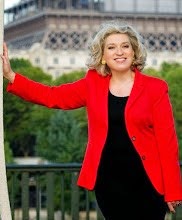
Anne-Elisabeth Moutet meets the refreshingly frank Bad Girl of French cinema.
There is something irredeemably rebellious about Béatrice Dalle that has kept her firmly outside any kind of Parisian establishment, even the movie crowd, not known here for being usually that exclusive. And so last week it was shocking, but not especially surprising, to see the police arrest and hold for an outrageous 72 hours of questioning, without a lawyer, in the garde-à-vue procedure usually reserved for dangerous terrorists, the actress who smouldered her way into international stardom with her first movie, Jean-Jacques Beineix's Betty Blue, back in 1986, for owning 0.7 gram of cocain and 0.2 gram of heroin.
Before she was released, a judge charged Dalle with drug use and being an accessory in drug dealing. As it turned out, police had raided and ransacked her Paris apartment on a tip-off from two homeless small dealers whom she had sheltered for a couple of days.
The entire scene was exactly the sort of thing that never happened to, say, Françoise Sagan, when she was accused of regular cocaine use and dealing five years ago. (Sagan, who happens to be an extremely nice person, readily admitted that she used the stuff and denied dealing, exactly like Béatrice Dalle). France's most famous novelist, who made a writing career of loving fast cars and difficult men, never saw the inside of a police station cell: she was politely notified of the charges, and was fined by a lenient judge a year later. Sagan had played at being bad and only managed naughty. Ever since the amazing success of Betty Blue, Béatrice Dalle has assumed the uneasy part of France's "bad girl", the one France's usually tame journos feel they can snigger at.
There was the radio columnist Philippe Aubert, who alway made nasty jokes about her sensuous mouth and deep cleavage. There was the film critic at L'Express who disparaged her looks and her acting. Three years ago, when she had her first brush with the police for shoplifting in a cheap jewellery store, the newsweekly Le Point called her a liar and a thief; and a few months later, TF1's star anchor Patrick Poivre d'Arvor, who'd invited her to speak about her latest movie, reneged on a deal with her publicity people to ask her live about the jewellery incident: the sort of thing he'd never, ever do to either Isabelle Adjani or Catherine Deneuve.
Such hatchet jobs are almost unheard of here: producers and actors are known to be capable of retaliating by withholding access to sets, rights to reproduce stills, invitations to gala nights or chummy dinner-parties at Le Fouquet's and, in some cases, advertising from offending newspapers. It's as if Béatrice Dalle's enemies had sensed she's not part of that little game, and therefore won't defend herself in the usual way. (She may slap someone's face, but she's unlikely to sue.) Those who dislike her, her independence, her wild streak, are usually men. There's something in her that taunts them. "I'm an outsider, and always was, even as a child," she has said. "I don't plan my career, I chose movies on a hunch, I've made mistakes and I'll make more."
Although she's acted in a lot of duds, Dalle has a presence on-screen that is truly powerful and makes her smallest parts stand out. With a good director (Beineix, Jim Jarmusch for Night on Earth, or Truffaut's former apprentice Jacques Doillon for La Vengeance d'une Femme) she gives the kind of performances that have made Quentin Tarantino, John Turturro, Neil Jordan, Spike Lee and Madonna seek her out and offer her parts, which she hasn't taken "because I don't speak good English, and I can't imagine being coached until I say my parts by rote; acting for me is saying something I mean."
In real life she is mesmerizing, devastatingly direct, a charmed sprite. I first met her on a magazine assignment, immediately after Betty Blue, on the set of her forgettable second movie, with and by the moody stage star, Francis Huster. She was 22 and knew the film would be terrible. "They've rewritten the screenplay after I signed, and now I get to undress on page 2," she moaned, dragging on a cigarette cadged from one of the technicians.
We had shooed off the film's publicist, something experienced actors know never to do when meeting an unknown interviewer, and Béatrice happily started to tell me about her childhood in a council block in Le Mans, her nosy neighbours who called her and her mother "sluts" because they wore make up, her dropping out of school at 16 to come to Paris, staying in and out of friends' flats or the odd squat, doing odd sales assistant jobs, living on fruit and milk, going out clubbing at night, and being "discovered" by a model agency scout on the Champs-Elysées. (The Betty Blue offer materialised after her first published pictures, a fairytale by filmland standards.) I felt I'd known her for years, so much that when she mentioned smoking joints, I put down my pen and notebook and made her promise never, ever to tell it to a journalist again.
We met again a few times. There was an interview in the wood-panelled bar of Hôtel Raphaël, which she had annexed as her second home for a while, and where all the waiters grinned at her in a slobbering trance. I remember we talked about diets and lipsticks and the expensiveness of Hermès Kelly handbags. Béatrice Dalle still believes to this day that she's ugly; and at the time she also thought she was fat. (She is now proudly waif-thin to the point of anorexia, beautiful in an almost tragic way, after a series of crazy diets that I immediately and unknowingly ascribed to cocaine when I first heard of her arrest last week.)
Another time I asked her to take part in a Clive James's Paris Special for BBC Two, and they got along like a dream, even though Béatrice swears she doesn't like reading books. (Well, not quite. For instance she read all of the Marquis de Sade after she saw Barry Lyndon and Peter Greenaway's The Draughtsman's Contract.) After they'd finished shooting, we walked up the Champs-Elysées to Le Fouquet's, the movie crowd legendary bar brasserie, where she'd never set foot before, and she told me about being madly in love with Rupert Everett, who'd just starred as Guy Burgess in Marek Kaniewski's Another Country. "He's soooo much more handsome and more intelligent than I am," she wailed. "Béatrice, he may be more educated, but you're more intelligent," I replied, meaning it. She didn't look as if she believed me.
She has been married once, to the painter Jean-François Dalle. She's still sorry it ended. They met in a club before Béatrice ever thought of standing in front of a camera. She was 19. He was 25. They hoped it would be forever. Then Béatrice started flying from location to location, being interviewed and photographed. "I'd go someplace with him, nobody even looked at him, they all rushed at me. I was the cause of the breakup," she says. Since then there were romances, always sincere, not always happy. "I am ab-so-lute-ly faithful to the man I'm in love with," she says. "I can't imagine cheating. What would be the point?"
She doesn't cheat and hates it in others. When suave father-of-four Poivre d'Arvor, whose wife appeared with him on many lovey-dovey TV magazine pictures, suddenly asked her about her shoplifting live on prime-time news, she hit back: "You said you'd not talk about it. Well then, I'll talk about the [love] letters you sent me. Aren't you sorry you wrote them now?"
But then Béatrice always preferred difficult men like the rap singer Joey Starr or the actor Christopher Lambert. Difficult neighbourhoods: her Paris apartment is on working-class Place de la République, not trendy Bastille. Difficult friends: she remembers when she relied on others' hospitality for a roof, and opens her door readily to people like the junkies who shopped her last week. Now she's holed up at a friend's house in leafy Yvelines, with instructions to visit a doctor once a month. It won't quite tame her.
© Copyright The European & Anne-Elisabeth Moutet 1995
Friday, June 9, 1995


Monday, January 30, 1995
"Life of the Party": Blowing the Whistle on Pamela Harriman
A new, tell-all biography of the American Ambassador won't faze the French, predicts Anne-Elisabeth Moutet
If the whistle indeed had to be blown on Pamela Digby Churchill Hayward Harriman's notorious lovelife and career, then the best place by far for her to reside when that bomb exploded was where she is right now: in Paris, once the theatre of some of her exploits, and where she currently officiates as Bill Clinton's competent and respected Ambassador.
Mrs Harriman is reported to be hopping mad about her indiscreet (and riveting) unauthorized biography written by the former Time Magazine chief diplomatic correspondent, Christopher Ogden, Life of the Party. Worse, she has chiefly herself to blame: she's the one who initially approached Ogden in June 1991 as a suitable co-writer when asked by a publishing house to write her autobiography. She had been, Ogden explains, favourably impressed by a biography of Margaret Thatcher he had recently penned.
A contract was duly drawn up, and Harriman sat for over 40 hours of taped interviews with Ogden before she started getting uncharacteristically cold feet. The publishers, Ogden reports, had offered a generous 1,625,000-dollar advance, and Pam realised she would have to produce a fairly complete memoir for that kind of money. Mercifully, at 73 and after three rewarding marriages, the multimillionnaire Harriman didn't need it. As is often the wont of the rich, she forgot that Ogden was not similarly circumstanced, and left him high and dry, having given up his Time job to write her book for her. Hence his decision to forge ahead.
The resulting book is a wonderful read, and Mrs Harriman shouldn't worry about the effect it has on her Parisian socialite friends (as opposed to the depressingly conformist inside-the- Beltway Washington crowd, or even her former British compatriots). The Pamela Harriman Tips On How To Seduce Rich And Powerful Men have been the guiding principles of Frenchwomen over the centuries. "When with a man, socially or professionally, not merely sexually, [Harriman] concentrated on him with laserlike intensity," Ogden writes.
"She would take a man who interested her out of a group the way a cowbow and fine horse could cut a steer from a herd for branding. She would approach the man, bring him out of the traffic pattern to a sofa, sit down and talk to him for five to ten minutes. She focused on his strengths: what he was doing, what had happened since they last met, his plans, all in a low, throaty, conspiratorial whisper, and in the process learned his weaknesses or what troubled him. She was glad to answer his questions if he had any, but she was extremely careful never to babble and never to burden the fellow with anything that might be troubling her. She wanted him to shine even as she learned what was on his mind.
"Careful never to keep anyone long, especially if his wife was with him, she would then return the man to the group, pick out another and repeat the process, perhaps half a dozen times or more. Rarely did she attempt to talk to a man in a group, rarely did she talk to women, although she tried not to alienate them unnecessarily. For those moments, those men sensed that no-one else in the world existed for Pamela. As her reputation grew, receiving the full frontal Pamela treatment, being Pamelized, was a heady experience for most men."
The time is 1947, the place is Paris, and Pamela Digby, 27, had been divorced for two years from Randolph Churchill. The "fast" debutante who'd married after a two-week courtship the son of the legendary British PM, then, neglected by him, had enjoyed a string of passionate affairs with some of the most interesting men to be found in London in the war years, from Jock Whitney to CBS broadcaster Ed Murrow and (déjà) US envoy Averell Harriman, had moved to to Paris to properly enjoy her divorcee status.
Paris was made for Pamela and Pamela was made for Paris. She met Aly Khan, son of the Aga, at the annual ball he threw each June at the Pre Catelan after the Grand Prix de Paris race, and to which she'd been invited in 1947 with her friend Kathleen "Kick" Kennedy, daughter of Joe's and sister of Jack's. Aly Khan's 33 to 1 longshot horse, Avenger, had just won. It was lust at first grope. The two danced cheek to cheek as if welded. When Kick warned Pam against Aly Khan as a known womanizer, she made the mistake of hinting at his dark skin as well. It was enough to decide the headstrong Pamela.
Other playboys of the Parisian nights would follow: the young Gianni Agnelli, whom she eventually found too hard to pin down to the serious business of marriage, and even more tantalising, Baron Elie de Rothschild, whom she simply snatched away from his less beautiful, less devoted wife Liliane in 1953. An intellectual who was a voracious reader and an expert on eighteenth-century art, "Liliane certainly wasn't going to worry about bringing Elie his slippers," her own brother-in-law once explained. "Pam was. She's so good about paying attention to all the small things."
Although the new couple were trying to keep their affair discreet, all of Paris knew. Where an English or an American wife would have confronted her husband with recriminations and tears, Liliane de Rothschild was wiser. The Duke of Windsor once asked her which of the Rothschilds was involved with Pamela. "My husband", she replied. And yet she suffered so much that forty years later, she still can't bring herself to say Pamela Harriman's name, calling her "that woman". Elie didn't divorce.
But the beauty of Paris was that Pamela Digby Churchill could lead her own life as freely as she wished, and still be received by everyone without difficult explanations. She was a regular at Louise de Vilmorin's salon, where she could meet the poetess's lover, André Malraux, and the future Academicien Francais Maurice Druon, with whom she had a fling. The American brigade - the Irwin Shaws, the Art Buchwalds, Theodore White, the 24-year-old Ben Bradlee, then press attache at the American Embassy she was one day to command - introduced her to the brilliant photographer, Robert Capa, whom she fell for. Later she'd complain to a Parisian friend: "Everyone always talks about the rich men I have slept with, no one ever talks about the poor men I have slept with."
When she left Paris for New York and marriage to the Broadway producer, Leland Hayward, in 1958, Pamela had made a host of French friends, from Ysabel de Faucigny-Lucinge (later Marquise de Ravenel) to viscountess Jacqueline de Ribes, Versailles curator Gerald Van Der Kemp, billionaire industrialist Paul-Louis Weiller, or Princess Irene Galitzine, connections which would serve her crucially upon her return.
Never fazed by her style even at its wildest, Parisians these days find her positively low-key. And no-one, but positively no-one, would ever dream of not attending one of her dinner parties at the Ambassador's residence on 41, rue du Faubourg Saint-Honore - fittingly, a former Rothschild residence, in which her move with her own Impressionists and furniture was duly recorded by Karl Lagerfeld's camera for "Vogue". There are rumours that she plans to settle in Paris even after the end of her tenure as Ambassador. It could be her wisest move yet, especially since another unauthorized biography, this time by the experienced writer Sally Bedell Smith, is in the works in Washington. Whatever new comes out, it will only add to Pam Harriman's prestige here.
"Life of the Party: the biography of Pamela Digby Churchill Hayward Harriman," by Christopher Ogden, Little, Brown and Company, £ 18.99.
© Copyright The European & Anne-Elisabeth Moutet 1996
If the whistle indeed had to be blown on Pamela Digby Churchill Hayward Harriman's notorious lovelife and career, then the best place by far for her to reside when that bomb exploded was where she is right now: in Paris, once the theatre of some of her exploits, and where she currently officiates as Bill Clinton's competent and respected Ambassador.
Mrs Harriman is reported to be hopping mad about her indiscreet (and riveting) unauthorized biography written by the former Time Magazine chief diplomatic correspondent, Christopher Ogden, Life of the Party. Worse, she has chiefly herself to blame: she's the one who initially approached Ogden in June 1991 as a suitable co-writer when asked by a publishing house to write her autobiography. She had been, Ogden explains, favourably impressed by a biography of Margaret Thatcher he had recently penned.
A contract was duly drawn up, and Harriman sat for over 40 hours of taped interviews with Ogden before she started getting uncharacteristically cold feet. The publishers, Ogden reports, had offered a generous 1,625,000-dollar advance, and Pam realised she would have to produce a fairly complete memoir for that kind of money. Mercifully, at 73 and after three rewarding marriages, the multimillionnaire Harriman didn't need it. As is often the wont of the rich, she forgot that Ogden was not similarly circumstanced, and left him high and dry, having given up his Time job to write her book for her. Hence his decision to forge ahead.
The resulting book is a wonderful read, and Mrs Harriman shouldn't worry about the effect it has on her Parisian socialite friends (as opposed to the depressingly conformist inside-the- Beltway Washington crowd, or even her former British compatriots). The Pamela Harriman Tips On How To Seduce Rich And Powerful Men have been the guiding principles of Frenchwomen over the centuries. "When with a man, socially or professionally, not merely sexually, [Harriman] concentrated on him with laserlike intensity," Ogden writes.
"She would take a man who interested her out of a group the way a cowbow and fine horse could cut a steer from a herd for branding. She would approach the man, bring him out of the traffic pattern to a sofa, sit down and talk to him for five to ten minutes. She focused on his strengths: what he was doing, what had happened since they last met, his plans, all in a low, throaty, conspiratorial whisper, and in the process learned his weaknesses or what troubled him. She was glad to answer his questions if he had any, but she was extremely careful never to babble and never to burden the fellow with anything that might be troubling her. She wanted him to shine even as she learned what was on his mind.
"Careful never to keep anyone long, especially if his wife was with him, she would then return the man to the group, pick out another and repeat the process, perhaps half a dozen times or more. Rarely did she attempt to talk to a man in a group, rarely did she talk to women, although she tried not to alienate them unnecessarily. For those moments, those men sensed that no-one else in the world existed for Pamela. As her reputation grew, receiving the full frontal Pamela treatment, being Pamelized, was a heady experience for most men."
The time is 1947, the place is Paris, and Pamela Digby, 27, had been divorced for two years from Randolph Churchill. The "fast" debutante who'd married after a two-week courtship the son of the legendary British PM, then, neglected by him, had enjoyed a string of passionate affairs with some of the most interesting men to be found in London in the war years, from Jock Whitney to CBS broadcaster Ed Murrow and (déjà) US envoy Averell Harriman, had moved to to Paris to properly enjoy her divorcee status.
Paris was made for Pamela and Pamela was made for Paris. She met Aly Khan, son of the Aga, at the annual ball he threw each June at the Pre Catelan after the Grand Prix de Paris race, and to which she'd been invited in 1947 with her friend Kathleen "Kick" Kennedy, daughter of Joe's and sister of Jack's. Aly Khan's 33 to 1 longshot horse, Avenger, had just won. It was lust at first grope. The two danced cheek to cheek as if welded. When Kick warned Pam against Aly Khan as a known womanizer, she made the mistake of hinting at his dark skin as well. It was enough to decide the headstrong Pamela.
Other playboys of the Parisian nights would follow: the young Gianni Agnelli, whom she eventually found too hard to pin down to the serious business of marriage, and even more tantalising, Baron Elie de Rothschild, whom she simply snatched away from his less beautiful, less devoted wife Liliane in 1953. An intellectual who was a voracious reader and an expert on eighteenth-century art, "Liliane certainly wasn't going to worry about bringing Elie his slippers," her own brother-in-law once explained. "Pam was. She's so good about paying attention to all the small things."
Although the new couple were trying to keep their affair discreet, all of Paris knew. Where an English or an American wife would have confronted her husband with recriminations and tears, Liliane de Rothschild was wiser. The Duke of Windsor once asked her which of the Rothschilds was involved with Pamela. "My husband", she replied. And yet she suffered so much that forty years later, she still can't bring herself to say Pamela Harriman's name, calling her "that woman". Elie didn't divorce.
But the beauty of Paris was that Pamela Digby Churchill could lead her own life as freely as she wished, and still be received by everyone without difficult explanations. She was a regular at Louise de Vilmorin's salon, where she could meet the poetess's lover, André Malraux, and the future Academicien Francais Maurice Druon, with whom she had a fling. The American brigade - the Irwin Shaws, the Art Buchwalds, Theodore White, the 24-year-old Ben Bradlee, then press attache at the American Embassy she was one day to command - introduced her to the brilliant photographer, Robert Capa, whom she fell for. Later she'd complain to a Parisian friend: "Everyone always talks about the rich men I have slept with, no one ever talks about the poor men I have slept with."
When she left Paris for New York and marriage to the Broadway producer, Leland Hayward, in 1958, Pamela had made a host of French friends, from Ysabel de Faucigny-Lucinge (later Marquise de Ravenel) to viscountess Jacqueline de Ribes, Versailles curator Gerald Van Der Kemp, billionaire industrialist Paul-Louis Weiller, or Princess Irene Galitzine, connections which would serve her crucially upon her return.
Never fazed by her style even at its wildest, Parisians these days find her positively low-key. And no-one, but positively no-one, would ever dream of not attending one of her dinner parties at the Ambassador's residence on 41, rue du Faubourg Saint-Honore - fittingly, a former Rothschild residence, in which her move with her own Impressionists and furniture was duly recorded by Karl Lagerfeld's camera for "Vogue". There are rumours that she plans to settle in Paris even after the end of her tenure as Ambassador. It could be her wisest move yet, especially since another unauthorized biography, this time by the experienced writer Sally Bedell Smith, is in the works in Washington. Whatever new comes out, it will only add to Pam Harriman's prestige here.
"Life of the Party: the biography of Pamela Digby Churchill Hayward Harriman," by Christopher Ogden, Little, Brown and Company, £ 18.99.
© Copyright The European & Anne-Elisabeth Moutet 1996
Monday, November 28, 1994
The Happiest Yuppie In Paris
Moutet's Paris: The Happiest Yuppie In Paris
The European, 28 November 1994
THE successive corruption scandals involving France's largest water and building utility, the 150 billion-franc Compagnie Générale des Eaux, have made at least one happy yuppie. This is Jean-Marie Messier, 37 and 3/4 [he'll be 38 on 13 December], youngest partner at the prestigious investment bank Lazard since 1989 and former adviser to Finance Minister Edouard Balladur in 1986-1988. Messieur has been installed last week as designated successor of the redoubtable, secretive Guy Dejouany, 73, at what may be France's highest salary, 16 million francs a year.
For 18 years Dejouany ruled as an absolute monarch over his 200,000 employee-strong empire (where he started working in 1961) from his discreet rue d'Anjou headquarters, a chequebook's throw away from the Elysee. Nobody knew his diary, not even his secretary. His personal telephone lines were scrambled by state-of-the-art military devices. Strong men were daily seen leaving his office in a sweat: Dejouany, who never held a meeting of more than three people outside his company board, played at naming favourites, hinting that he would leave them in charge when he retired, then at pitting them against one another. Under his stewardship CGE became the world leader in water treatment, but also diversified into cable and pay TV (he's the one who really got Mitterrand's old friend André Rousselet fired from Canal Plus.)
But now, as revelation after revelation of payoffs to politicians in exchange for local contracts have made Dejouany the target of several judicial inquiries, the old man had to step down. When he announced his choice of successor, the CGE board (not to mention the infighting top executives) were enraged. Messier? This chubby baby Enarque with absolutely no industrial experience and only five years in investment banking under his belt? Peugeot's Jacques Calvet, a board member, loudly threatened to resign, before bowing to the decision. Young Messier, now effectively in charge of running the company, should be formally made its president in June 1996, after the board approves the 1995 results. "We needed someone clean, not someone from inside the company, who might one day be charged with yet another corruption scandal," CGE insiders told the press.
This drew guffaws from the Paris political and business establishment. Young Messier, who has more than once been dubbed the most ambitious Frenchman of the Nineties, used to be in charge of the first big round of privatisations at the Balladur Finance ministry. The bank advising most of these privatisations was Lazard. Barely a few months after the reelection of Francois Mitterrand to the presidency, ending the first two-year cohabitation, Messier was hired by, surprise, surprise, Lazard, with unheard-of privileges, directly as a full partner (associé-gerant) aged 33, with an office significantly located next to the bank's chairman, the billionnaire Michel David-Weill.
His first job was of course to follow the smooth workings of the newly privatised companies, in direct contradiction with French law, which stipulates that civil servants are not allowed to move into private jobs directly related to their former goverment activities.
Next Messieur was sent to New York for a while, to work with the legendary Felix Rohatyn on the multi-billion franc acquisition by Groupe Schneider of Sqare D, an electrical company, snatching the fat success fees from JP Morgan's, the white-shoe Wall Street bank that had initially presented Square D to Schneider. When he came back to Paris, he was the bank's star, and David-Weilll's obvious favourite.
How does young Jean-Marie do it? "He calculates every single move," says an associate. "For instance, he dresses more modestly than your average investment banker, which usually reassures industrialists. His 17th-arrondissement flat is rented, the furniture is dowdy Napoleon III. His wife Antoinette is no socialite, she prefers to care for their three kids. He listens a lot and unlike most members of the French establishment -- to which he belongs both by background (his family once were partners in the aviation firm Messier-Latecoère) and by right as an Inspecteur des Finances, one of the top 5 of his ENA class -- he never shows off. Balladur likes young men who can keep secrets and he called Messier 'as safe as a tumb'. David-Weill, too, likes people who can keep secrets. Messier knows where most Establishment bodies are buried."
REMEMBER this figure next time French farmers are out in the streets burning prefectures and dumping artichauts: according to the highly reliable INSEE (Institut National des Statistiques et Etudes Economiques), the average French farm income went up 11.5% in 1994, the CAP's second year over 4 times current inflation. Meat farmers made 12% more than last year; winegrowers took in a whopping 40% and large cereal and grain growers (usually accused of reaping all the benefit from demonstrations organised by poorer small farmer) 3% only.
© Anne-Elisabeth Moutet, 1994.
Sunday, June 12, 1994
The recession hits the Prix de Diane
The Prix de Diane is hit by the recession, discovers Anne-Elisabeth Moutet in Chantilly
You really know there's a recession on in France when the House of Hermès - of FF40,000 ostrich skin 'Kelly' handbags and FF1,450 horsey print silk scarves fame - decide they won't hold a luncheon this year at the June 13th Prix de Diane, which they have been sponsoring for yonks, my dear, and will give their guests PICNIC BOXES instead.
This, in Paris, is the equivalent of Royal Ascot going grunge. Especially since I'm told the vintage car competition, Le Gratin Du Panier, won't happen either. (Usually, when the Right came back to power, people showed off the 1937 Rollers they'd been hiding from the Socialist taxman, surely not the other way round?)
In past years the Hermès tent village, erected right in the middle of the delightful Chantilly racecourse, has been host to all sort of suitable charities, of the kind that mix properly with morning coats and exotic ladies' hats. (The year before last, the late lamented Audrey Hepburn showed up in her UNICEF ambassadorial role, and everyone sighed, remembering her Cecil-Beaton-designed black and white Ascot outfit in My Fair Lady: the perfect woman in the perfect place.)
For Chantilly in mid-June IS the perfect place, and you can bet Parisians toffs will bravely rough it and make do with sandwiches. It will be the spirit of the Blitz again, or perhaps the spirit of the Blitzkrieg, or Dunkirk if it rains. But the show will go on.
You notice I haven't mentioned horses yet. That's because, except for a handful of owners and serious punters, horses do not count at all at the Prix de Diane, unlike at the Arc de Triomphe in September, where they get serious about these things. The Diane is all about having a nice garden party with about 1,500 PLU, showing off the most outlandish hats (having acquired Motsch, France's wonderfully fuddy-duddy answer to Lock's, Hermès now has a stake in that, too), drinking lots of bubbly, being photographed for Point de Vue and Vogue, and airkissing six times per minute people you pretend to be astonished to meet here: 'Mais tu es là! Quelle surprise!'
One shows up around 11:30 a.m. or noon, having ineffectually sworn to be on time to avoid the traffic on the A1 from Paris, and having been delayed by 1) the sudden disappearance of one glove, 2) finding out that you don't fit your morning coat anymore to the tune of a stone or more, 3) having lost one of the children after having finally got them all properly dressed up, or/and 4) losing your way when trying to bypass the traffic on the autoroute by taking the Survilliers shortcut. (DO NOT park too near the enclosure, because it means you'll be stuck behind the poshest traffic jam of the year when you try to make your getway at the end of the day.)
The Prix de Diane - devoted to Spain this year, with the possible attendance of members of the much-admired Spanish Royal Family - is definitely the high point of the Paris Season. The word evokes a series of parties in the English tradition: teas, little dinner-dances, picnics al fresco, opera outings, garden-parties, country fetes, culminating with the big May balls (in June.) This charming picture, relentlessly fostered by every PR agency in town, belongs to another, gentler age. Two-thirds at least of any of those parties supposed to constitute The Season are in fact commercial affairs, sponsored by anyone from a champagne house (the Carré Rive Gauche Antiques Fair) to a hotel chain (the Prix de l'Arc de Triomphe at Longchamp.)
A certain amount of social editing is therefore required before throwing oneself into the bop till you drop scene. You can live without showing yourself at either Auteuil or Deauville (it is actually strongly advised to avoid Deauville altogether), but nobody feels like giving the Diane a miss.
At the time of writing, it was still uncertain whether the traditional evening cocktail party in the Prince de Condé's splendid stables - where Milos Forman shot the first duelling scene in Valmont, and which look a lot better than the château de Chantilly itself, the latter having been rebuilt in the XIXth century while the stables are the original Louis XIV ones.
Having recently gone public on the Paris OTC Bourse, no doubt Hermès feel they can't give their shareholders the feeling they're wasting their future dividends. Perhaps this will comfort at last the HSP (short for Haute Société Protestante) families who've been owning the company for 150 years, and may have felt a bit uneasy at their own success during the Roaring Eighties: certainly the company resisted going big, even if it means you have to wait six months for any handbag that doesn't happen to be available right now in the boutique's windows in the colour of your choice.
Such considerations probably won't affect the success of the party next Sunday 13th. Tips: it's a lot more chic to picnic alongside the racecourse than behind the main tent, even (or especially) if this means you'll be in everyone's way. DO bring a plaid blanket (or a red-and-gold one to make the Spanish Ambassador happy). DON'T take Cristal Roederer bubbly in your hamper because the clear bottle tends to get warm faster than the dark Dom Pérignon or Krug ones. (Additional points this year for bringing vintage Rioja instead, but with the sun you may get very drunk very fast. Remember it's not done to be sloshed before at least the second race.)
DO take off your shoes to walk on the grass if you feet are killing you by mid-afternoon (last year, Hermine de Clermont-Tonnerre set the tone by actually spending the last two races slumped on the grass with her two fet in two champagne buckets filled with ice cubes.) DON'T go alongside the enclosure ropes to throw brioche crumbs at the hoi polloi massed there, making remarks such as 'Mon Dieu qu'ils ont l'air pauvre!' (also heard last year).
DO watch out for the green badges (meaning Jockey Club) on the best men. DO NOT go and sit on the Jockey's stands, on the flimsy grounds that they're about the only place from which one can see a horse for a split second however, since you're likely to be thrown out politely but firmly by one of the members of this arch-elite (who regard the rest of the scene as rather mixed). DO go and gatecrash the little sponsored dos in various tents: there will be more free drinks, and you're the public they're trying to impress anyway. DO wangle as many extra tickets as possible: 'The secret is to take several friends, so you have your own little party inside the party,' says Dominique de Lastours, who being a 28-year-old personable Marquis is something of an expert social butterfly on the Paris social scene. Dominique and his friends do gate-crash "but we behave a lot better than the English gate-crashers. We never break anything and we keep very polite. Sometimes, I assure you, we set a better tone than the actual guests."
I have a soft spot for Dominique, whom I've seen at the best (or the most publicized) parties. The Prix de Diane is a welcome relief from his usual haunt, Castel's, he says, "because the food is a lot better and the women are older." I also suspect the formidable PR women in charge of things actually let him in when they haven't actually got him on their lists. It's difficult enough to get the right mix as it is. When the Lebanese middleman Samir Traboulsi was indicted for insider trading three years ago - he is to take the stand in the Paris courts the very week of the Prix de Diane - one of them wailed to me: 'This is a disaster. His wife was always the first to send me her cheque. She'd buy whole tables of 10 and 12 guests for the charity luncheon, and pay immediately. I'll miss her.' So shall we, digging into our picnic boxes.
© Copyright The European & Anne-Elisabeth Moutet 1994
You really know there's a recession on in France when the House of Hermès - of FF40,000 ostrich skin 'Kelly' handbags and FF1,450 horsey print silk scarves fame - decide they won't hold a luncheon this year at the June 13th Prix de Diane, which they have been sponsoring for yonks, my dear, and will give their guests PICNIC BOXES instead.
This, in Paris, is the equivalent of Royal Ascot going grunge. Especially since I'm told the vintage car competition, Le Gratin Du Panier, won't happen either. (Usually, when the Right came back to power, people showed off the 1937 Rollers they'd been hiding from the Socialist taxman, surely not the other way round?)
In past years the Hermès tent village, erected right in the middle of the delightful Chantilly racecourse, has been host to all sort of suitable charities, of the kind that mix properly with morning coats and exotic ladies' hats. (The year before last, the late lamented Audrey Hepburn showed up in her UNICEF ambassadorial role, and everyone sighed, remembering her Cecil-Beaton-designed black and white Ascot outfit in My Fair Lady: the perfect woman in the perfect place.)
For Chantilly in mid-June IS the perfect place, and you can bet Parisians toffs will bravely rough it and make do with sandwiches. It will be the spirit of the Blitz again, or perhaps the spirit of the Blitzkrieg, or Dunkirk if it rains. But the show will go on.
You notice I haven't mentioned horses yet. That's because, except for a handful of owners and serious punters, horses do not count at all at the Prix de Diane, unlike at the Arc de Triomphe in September, where they get serious about these things. The Diane is all about having a nice garden party with about 1,500 PLU, showing off the most outlandish hats (having acquired Motsch, France's wonderfully fuddy-duddy answer to Lock's, Hermès now has a stake in that, too), drinking lots of bubbly, being photographed for Point de Vue and Vogue, and airkissing six times per minute people you pretend to be astonished to meet here: 'Mais tu es là! Quelle surprise!'
One shows up around 11:30 a.m. or noon, having ineffectually sworn to be on time to avoid the traffic on the A1 from Paris, and having been delayed by 1) the sudden disappearance of one glove, 2) finding out that you don't fit your morning coat anymore to the tune of a stone or more, 3) having lost one of the children after having finally got them all properly dressed up, or/and 4) losing your way when trying to bypass the traffic on the autoroute by taking the Survilliers shortcut. (DO NOT park too near the enclosure, because it means you'll be stuck behind the poshest traffic jam of the year when you try to make your getway at the end of the day.)
The Prix de Diane - devoted to Spain this year, with the possible attendance of members of the much-admired Spanish Royal Family - is definitely the high point of the Paris Season. The word evokes a series of parties in the English tradition: teas, little dinner-dances, picnics al fresco, opera outings, garden-parties, country fetes, culminating with the big May balls (in June.) This charming picture, relentlessly fostered by every PR agency in town, belongs to another, gentler age. Two-thirds at least of any of those parties supposed to constitute The Season are in fact commercial affairs, sponsored by anyone from a champagne house (the Carré Rive Gauche Antiques Fair) to a hotel chain (the Prix de l'Arc de Triomphe at Longchamp.)
A certain amount of social editing is therefore required before throwing oneself into the bop till you drop scene. You can live without showing yourself at either Auteuil or Deauville (it is actually strongly advised to avoid Deauville altogether), but nobody feels like giving the Diane a miss.
At the time of writing, it was still uncertain whether the traditional evening cocktail party in the Prince de Condé's splendid stables - where Milos Forman shot the first duelling scene in Valmont, and which look a lot better than the château de Chantilly itself, the latter having been rebuilt in the XIXth century while the stables are the original Louis XIV ones.
Having recently gone public on the Paris OTC Bourse, no doubt Hermès feel they can't give their shareholders the feeling they're wasting their future dividends. Perhaps this will comfort at last the HSP (short for Haute Société Protestante) families who've been owning the company for 150 years, and may have felt a bit uneasy at their own success during the Roaring Eighties: certainly the company resisted going big, even if it means you have to wait six months for any handbag that doesn't happen to be available right now in the boutique's windows in the colour of your choice.
Such considerations probably won't affect the success of the party next Sunday 13th. Tips: it's a lot more chic to picnic alongside the racecourse than behind the main tent, even (or especially) if this means you'll be in everyone's way. DO bring a plaid blanket (or a red-and-gold one to make the Spanish Ambassador happy). DON'T take Cristal Roederer bubbly in your hamper because the clear bottle tends to get warm faster than the dark Dom Pérignon or Krug ones. (Additional points this year for bringing vintage Rioja instead, but with the sun you may get very drunk very fast. Remember it's not done to be sloshed before at least the second race.)
DO take off your shoes to walk on the grass if you feet are killing you by mid-afternoon (last year, Hermine de Clermont-Tonnerre set the tone by actually spending the last two races slumped on the grass with her two fet in two champagne buckets filled with ice cubes.) DON'T go alongside the enclosure ropes to throw brioche crumbs at the hoi polloi massed there, making remarks such as 'Mon Dieu qu'ils ont l'air pauvre!' (also heard last year).
DO watch out for the green badges (meaning Jockey Club) on the best men. DO NOT go and sit on the Jockey's stands, on the flimsy grounds that they're about the only place from which one can see a horse for a split second however, since you're likely to be thrown out politely but firmly by one of the members of this arch-elite (who regard the rest of the scene as rather mixed). DO go and gatecrash the little sponsored dos in various tents: there will be more free drinks, and you're the public they're trying to impress anyway. DO wangle as many extra tickets as possible: 'The secret is to take several friends, so you have your own little party inside the party,' says Dominique de Lastours, who being a 28-year-old personable Marquis is something of an expert social butterfly on the Paris social scene. Dominique and his friends do gate-crash "but we behave a lot better than the English gate-crashers. We never break anything and we keep very polite. Sometimes, I assure you, we set a better tone than the actual guests."
I have a soft spot for Dominique, whom I've seen at the best (or the most publicized) parties. The Prix de Diane is a welcome relief from his usual haunt, Castel's, he says, "because the food is a lot better and the women are older." I also suspect the formidable PR women in charge of things actually let him in when they haven't actually got him on their lists. It's difficult enough to get the right mix as it is. When the Lebanese middleman Samir Traboulsi was indicted for insider trading three years ago - he is to take the stand in the Paris courts the very week of the Prix de Diane - one of them wailed to me: 'This is a disaster. His wife was always the first to send me her cheque. She'd buy whole tables of 10 and 12 guests for the charity luncheon, and pay immediately. I'll miss her.' So shall we, digging into our picnic boxes.
© Copyright The European & Anne-Elisabeth Moutet 1994
Monday, May 2, 1994
The Saigon Kid
Moutet's Paris: The Saigon Kid
The European, 2 May, 1994
An amusing photograph is making the rounds in Paris these days. It shows a rather surly young man, black hair parted in the middle, dressed in a wrinkled shirt and sawn-off denims uncovering white knees, lounging in the seat of a bicycle rickshaw in the middle of a Saigon boulevard.
This is none other than Romain Balladur, 24, the youngest of our PMs four sons. This apple of his father's eye has mysteriously managed, after graduating from ISG, a second-string Paris business school, to be posted for his military service as a VSNE (Volontaire pour le Service National en Entreprise), or business trainee, for the water and construction conglomerate Lyonnaise des Eaux-Dumez.
It is perhaps worth mentioning that a recent parliamentary report on campaign finance in the last General Election showed Lyonnaise-Dumez to have been the third largest contributor overall to candidates of whatever political stripe, even though its chairman, Jérôme Monod, is a card-carrying member of the Gaullist RPR.Balladur the younger alighted in the former French colonial capital last November, I'm told, and set up his quarters at the Rex, one of the city's better hotels. Since then his activities have been mysterious. He has been having a wonderful time, members of the local French expatriate community will tell you, not very helpfully.
In an interesting coincidence, young Romain's tracks in Saigon and Hanoi crossed those of another famous scion of French officialdom, Jean-Christophe Mitterrand, formerly his father's African affairs adviser at the Elysée palace, now a consultant for Lyonnaise-Dumez's arch-rival, the mammoth Compagnie Générale des Eaux (also a generous contributor to many an electoral campaign). Having managed to pull off a contract to build a tubings factory near Hanoi for CGE, Jean-Christophe couldn't help a dig when asked about his young rival: "Don't confuse us, please. I'm involved in serious work!"
IT WILL be even more difficult than usual setting up an appointment with any Parisian of note between 12 and 23 May next: everyone who's anyone has managed to wangle, earn or steal some sort of assignment at the Cannes Film Festival, enabling them to hop South for at least three days of sun, screenings, galas, and gossip at the Hotel Majestic bar (tip: the Carlton is for Hollywood types).
One celeb however will be conspicuously absent from the opening star-studded gala dinner, traditionally given by the French Ministry of Culture: Jack Lang, the long-serving, charismatic and extremely popular former Culture minister under Mitterrand's both terms, has been informed by his lackluster successor Jacques Toubon's secretary that he was not welcome to dinner on the 12. News of this ham-handed slight went round Paris like lightning, with comments overwhelmingly detrimental to the hapless Toubon. Had he wanted to emphasize his (legitimate) fear of being upstaged by his predecessor, the gossip goes, he couldn't have gone about it in better way.
Meanwhile Jack Lang and his wife Monique have booked a suite at the Hotel du Cap-Eden Roc, like Bel-Air royalty, for the duration of the Festival, and will be among the guests of honour at the even more glittering party given on the following day, Friday 13th May, by the unsuperstitious Claude Berri (of Germinal and Jean de Florette fame) for his existentialist, Patrice Chéreau-directed megaproduction of Alexandre Dumas's La Reine Margot, starring Isabelle Adjani. Nobody in Paris doubts that Jack and Monique will be better seated than Toubon and his wife Lise
WOULD YOU willingly spend an evening reading 260 pages of statistics? Well, possibly, if they all have to do with Frenchwomen. Or so bets Agnes Michaux, a sociologist with an appreciable sense of humour, who has just come up with a book gathering every fact, poll, figure, statistic, test, market study, and assorted theses devoted to the female of the French species. The result is of course riveting (albeit better absorbed in small instalments.) Did you know that 7% of Frenchwomen have already made love in a lift? That 22% are bosses of their company? That 87% define the ideal man as "the one who makes me laugh"? (but that 84% also define him as owning a building society savings account large enough to buy them a house.) That 58% of them believe in astrology? (but 68% believe in Paradise.) That 27% would have liked to have been born in the aristocracy? That they account for 35% of the French homeless? That 3% would have liked to be Francois Mitterrand's mistress? That 26% keep their bank account separate from their spouses? That 91% say they're happy? And that 0%, not a single one, would leave their place in a liferaft to Madonna?METEOROLOGICAL studies have just proven that Paris, the most compact city in Europe (and the one with the largest population density) enjoys a specific microclimate with temperatures 6°C warmer on average compared to its immediate surroundings. This is caused by the heat radiated by the city's buildings and population, but also by Paris's waterproof quality (most of it is covered in asphalt, stone or zinc, so that rainwater flows straight into gutters and sewers instead of slowly evaporating in the air as it does in cities with more public and private parks and gardens.) The heat of the city also repels rain in the cold season: in the past twenty years the average annual raintime was 840 hours at Orly airport, as opposed to 529 hours only in the Parc Montsouris weather observatory.
THE PARISIAN couture world is waiting with bated breath for 18 May, when Paris's Tribunal de Commerce pronounces its ruling on the bitter fight pitting Yves Saint Laurent against the American designer, Ralph Lauren, whom the Frenchman accuses of having plagiarized one of his designs, and is suing for 5 million francs. Sides are being taken, self-appointed goodwill ambassadors spend hours on transatlantic phone calls; even US Ambassador Pamela Harriman has been drawn into the battle between the two rag-trade primadonnas.
Ralph Lauren, who is countersuing YSL supremo Pierre Bergé for defamation for 1 million francs, has already sold 123 of his thousand-dollar black sleeveless tuxedo-cut evening dresses, "the exact copy, minus the qulity," Bergé sneers, of a FF140,000 ($25,000) couture model from YSLs 1970 winter collection. Perhaps significantly, the company withdrew the model from its racks the minute Saint Laurent sued. (In 1992-93 YSL had shown the dress again in its Rive gauche ready-to-wear collection.)
Respectively standing in each corner, watched over like prizefighters by huddles of protective lawyers, two top models wearing the two dresses were in turns sent sashaying in the narrow courtroom to demonstrate the fraud, or absence thereof, last Friday. "The Saint Laurent dress is obviously more beautiful, but that can't influence my ruling," Judge Madeleine Cotello remarked before retiring.
© Anne-Elisabeth Moutet, 1994.Friday, March 18, 1994
The Renault Blues (and Was De Gaulle A Royalist?)
Moutet's Paris: The Renault Blues (and Was De Gaulle A Royalist?)
The European, 18 March, 1994
The European, 18 March, 1994
Renault's boss Louis Schweitzer, the quiet Protestant Polytechnicien who used to be chief of staff to Socialist PM Laurent Fabius (and is a direct descendent of legendary Dr Albert Schweitzer), has cause to feel sore these days. First of all, his long-planned merger with Volvo, the ailing Swedish carmakers, was botched at the last minute. The jittery, privately-owned Swedes left their French bride standing at the altar after our new Minister for Industry Gérard Longuet's undiplomatic gesticulations, insisting to announce and sign the new contract himself, thereby showing how little the French government believes in the independence of the companies it controls.
This cost Renault, in addition to a massive loss of face, hundreds of millions of francs in fees to their investment bankers, the arch-establishment Lazard Frères. (The Lazard partner who drew up the contract, énarque François Polge de Combret, a former aide to President Valéry Giscard d'Estaing, is also said to have included, with Giscard-like arrogance, clauses leaving the Swedes in casual ignorance as to the French government's golden shares.)
Secondly, Schweitzer, who thought he would preside over the Renault privatisation, now awaits to be sacked on 22 May, the date at which he could reasonably have expected his mandate to be renewed. (The company is comfortably in the black and the entire Renault range of cars is a success, to the extent that the R21 is now the best-selling foreign car in Germany.) Longuet, a naive soul, was all in favour.
Yet instead of Renault, the government will next put the loss-making Bull computers company on the block, even if it means flogging it off at bargain basement prices to IBM: Edouard Balladur has decided that no Socialist could possibly have the power to set up a noyau dur, the tightly-knit group of influential shareholders which prevent large French corporations from being taken over. Instead, Schweitzer is currently being enticed to accept the chairmanship of SNCF, the national railways, which has posted losses of FF 10Bn last year, is overstaffed, strike-ridden, under attack from the Greens for its projected TGV-Provence, and has just failed miserably to introduce its new reservations system, Socrates. Schweitzer's qualifications, you are told in Paris, is that he has always collected model electric trains and of course that he's a Fabiusien.
POOR Jacques Delors is rumoured to be on the verge of a nervous breakdown. At the very time when he is being pressed to run for the presidency by a wide majority of left-wingers, who believe he can attract enough votes from the centre to win in 1995, his strong-willed daughter, former employment minister Martine Aubry, has put her foot down. Aubry has a good shot to become France's first woman president in 2002, and reportedly told her father that his taking the top job would be damaging to her own career (she would hate the likely suspicions of nepotism). The mousy Madame Delors herself, a bespectacled, unfashionable woman who may not relish the perspective of living in the Elysée glass-house, is said to have sided with her daughter, telling the beleaguered Delors that it was ''Martine's turn.''
WAS General de Gaulle a Royalist? So says Henri, Comte de Paris, 85, the pretender to the throne of France, who for years told intimates (and not-so-intimates) how Le General really intended to make him his successor in 1965.
The Comte prefers to underline that he's descended from Louis XIV younger brother, Philippe, Duc d'Orléans, than from France's last reigning King (and first Constitutional monarch), Louis-Philippe, called ''the regicide'' by most of his family since he voted the death of his cousin Louis XVI in 1793.
Barred from living on French soil by an 1886 Bill of Exile repealed only in 1950, Henri de Paris fought in the Foreign Legion during the Second World War, and finally came back to France with his family, soon to be sought out, says he, by General de Gaulle. They started meeting regularly over lunch, a habit which didn't stop with de Gaulle's return to power in 1958. The Comte claims de Gaulle had in mind for him a scheme not unlike Franco's high-handed restoration of Juan-Carlos de Borbon in Spain - but that the General's entourage almost coerced him into standing a second time. Surviving Gaullists guffaw at this. One didn't coerce de Gaulle, they say, adding that the Comte would have believed anything.
Now the Comte has published in book form his entire correspondence with de Gaulle (Dialogue sur la France, éditions Fayard), as well as what he claims to be exact transcripts of their conversations. The result is, how shall one put it, embarrassing.
The conversations show de Gaulle discussing everything from Algerian independence to the Fifth Republic Constitution with the Comte. The letters are considerably sparer, to the extent that the Comte has had to include absolutely every single piece of paper that ever circulated between them: bread-and-butter letters, Christmas cards, condolences, congratulations for the Comte's thirteen children's marriages, cover- and thank-you notes, stiffies from long-forgotten State dinners at the Elysée (robe longue, décorations), transcripts of telephone calls between de Gaulle's and the Comte's private secretaries, opinion pieces the Comte wrote for his own political newsletter and sent to the Elysée, everything is grist to his mill to fill up some 200 widely-spaced pages.
The most interesting revelation is no doubt that the General usually signed off with l'hommage de mon fidèle devouement, while the Comte never failed to conclude as votre affectionné, Henri., which I can't help believing must have sounded to the General as a deplorable instance of familiarity.
HOWEVER ungallant this sounds, it's hard not to notice that as his ratings plunge in the polls, Edouard Balladur seems to have gained the few extra pounds that cause his beautiful, made-to-measure Henry Poole Savile Row suits to strain at the seams. In his five years in Opposition, preparing for his current job with amazing determination (and a full-time staff of half a dozen political advisers), the sweet-toothed Balladur lost over 10 kilos in order to look younger on the day of his projected appointment as PM, a remarkable achievement for a man of 60 whose favourite pudding is a heavenly confection of whipped cream, chocolate and chestnut mousse called a Mont-Blanc from the renowned rue de Rivoli tea-room Angelina's. Vowing he'd never regain his flab, Balladur intrepidly had all his pinstripes, herringbone tweeds, exquisite Prince of Wales checks and heather mixture sports jackets flown to London to be taken in. Considering the price (some 2,000 for a coat, a decent shirt and two pairs of trousers) of a single Henry Poole outfit suitable for the nattiest man in France, the PM now has what might be called a considerable vested interest in staying popular and keeping off the gratification food.
Sunday, May 9, 1993
Salon Decadence: Hair-Raising Tales at Carita
An interest ought to be declared here. I have been a Carita customer for I don't know how long. Well, I do know how long: even since, just out of university at 22, and earning less than today's minimum wage in my first magazine job, I started blowing almost a third of my earnings on a really good haircut, highlights, and the odd facial, regularly: I simply couldn't resist the way I could be made to look from what, over years of school and undergraduate years, I thought ineradicable ugly-duckling basic material. All of you non-French readers (except possibly the Italians, who know what I mean), take note: this is what Paris does to you. Frenchwomen (and French men) are usually good-looking, but there's no secret to it: they work at it. Hard. And expensively.
The grand old house of Carita's, at 11 rue du Faubourg Saint-Honoré, a stone's throw from the Elysée Palace, was founded in the late Fifties by two emigré Spanish sisters, Rosy and Maria Carita, and is now owned (with commendable lightness of touch) by the Japanese cosmetics giant Shiseido. It is arguably the most sybaritic beauty and hairdressing salon in the world, not discounting establishments aspiring to that title in Los Angeles, Tokyo and New York. On four Andrée-Putnam-starkly designed floors, men and women are offered a range of beauty care undreamt of anywhere else. I am not lightly indulging in puffspeak here. They have a regular Italian customer, a man, who flies over every month from Rome to get his eyelashes permed. It may cost FF495 sans le service, but I'm told it gives him that extra velvety eye no doubt necessary to his feminine conquests.
Other perfectly respectable Frenchmen (and discerning foreigners) come to Carita Monsieur not just for a shave and a short back-and-sides (which they can of course get) but to get their backs waxed (FF265), their chest hairs dyed (FF275), their scalps, neck and shoulders massaged for an hour (an absolute snip at FF368), their extremities pedicured and manicured (FF345 and 145 respectively), and anything else you can think of from a light beard trim à la Yasser Arafat (FF115) to a one-and-a-half-hour shiatsu massage (FF500) with the best practitioner in Paris, a trim Japanese called Sendi, who is usually booked eight weeks in advance.
I've always been fascinated by the Carita Monsieur section of the salon, chiefly because, in an interesting role-reversal, it's men who are in complete purdah here on the top floor, with a discreet separate entrance and almost complete anonymity. Carita's efficient press officers will happily namedrop feminine luminaries ranging from Catherine Deneuve to Paloma Picasso, Isabelle Adjani, Carole Bouquet, the late Indira Gandhi, Jerry Hall-Jagger, Princesses Caroline of Monaco and Ira of Furstenberg et al, but do clam up the minute you try and find out who les messieurs are. (Broad-mindedness, even in France, still has some limits.) Over the years, I have however espied, passing the little door at the left in the hallway, such diverse stars as Jean d'Ormesson, the Académicien Francais and Le Figaro columnist, the champion jockey Yves Saint-Martin - and I still remember the frisson at knowing from his own hairdresser (summoned at the nearby Palais Marigny, official residence of France's most honoured guests) definite confirmation that Ronald Reagan did indeed dye his hair.
If the men's salon is discreet, the women's is flamboyant, with some of the city's best gossip being bandied over salmon canapés and champagne (Carita's, where a star hairdressers like Jean-Michel Henry has been known to keep addicted customers waiting for over three hours, happily has its own restaurant). Sometimes the object of the gossip itself takes place there, and the parties for which everyone is being readied turn out to be an anticlimax.
I still remember the time, a good ten years ago, when Baroness Marie-Hélène de Rothschild found herself, for some unfathomable reason, driverless. 'Un taxi pour madame la Baronne!' echoed round and round the salon. Alas, the chasseur downstairs couldn't find a taxi, and for some reason the switchboard had gone kaput. The Baroness, in her impeccable hairdo and makeup, still clad in her white peignoir over a little Givenchy something, was led with many apologies to the payphone in the corner. 'But how do I go about this?' she was heard to ask. 'You need a one-franc coin, Madame La Baronne. Un franc!' She fumbled ineffectually into her Hermès handbag. In a matter of minutes, four hairdressers had proferred franc coins, pushed them into the slot. 'Appuyez sur le bouton, madame la Baronne!' There was the taxi service number to be dialled, the muzak waiting tone to endure: the whole process defeated her. As I left, my own hairdresser was suggesting lending his own cherished BMW so that one of his teen-aged assistants could be allowed to drive the Baroness to Hotel de Lambert, her splendid Ile de la Cité townhouse. I never knew the end of the story, although I don't think the BMW was totalled, and certainly Marie-Hélène de Rothschild has been seen, perfectly coiffed, at many parties since.
Yet the new, revamped Carita (they have hired as their new Directeur Artistique Bruno Pittini, who until recently had established his own house in New York) is keen to establish their technical pre-eminence: the Nineties may no longer be the time to rely only on the 'star effect.' They therefore invited me to come and spend a full day at the salon, promising, among other delights, their new star treatment, a 'body lifting' care called 'prolifting.' 'You'd need a forklift truck to lift my body,' I answered. They insisted. Reader, I selflessly accepted. All day long, my hair was massaged with oils, washed, streaked, cut and set; my face was sloughed, moisturised and made up, and yes, yes, my body was massaged all over with tingling little sponges linked to an electronic machine. At the end of all this I looked, and felt, like a zillion Francs Forts. (Which, thank God, I didn't have to pay this time.) They needn't have gone all this way out with me: I was already convinced. I'll be back with the mortgage money. Soon.
© Copyright The European & Anne-Elisabeth Moutet 1993
© Anne-Elisabeth Moutet, 1993.
The grand old house of Carita's, at 11 rue du Faubourg Saint-Honoré, a stone's throw from the Elysée Palace, was founded in the late Fifties by two emigré Spanish sisters, Rosy and Maria Carita, and is now owned (with commendable lightness of touch) by the Japanese cosmetics giant Shiseido. It is arguably the most sybaritic beauty and hairdressing salon in the world, not discounting establishments aspiring to that title in Los Angeles, Tokyo and New York. On four Andrée-Putnam-starkly designed floors, men and women are offered a range of beauty care undreamt of anywhere else. I am not lightly indulging in puffspeak here. They have a regular Italian customer, a man, who flies over every month from Rome to get his eyelashes permed. It may cost FF495 sans le service, but I'm told it gives him that extra velvety eye no doubt necessary to his feminine conquests.
Other perfectly respectable Frenchmen (and discerning foreigners) come to Carita Monsieur not just for a shave and a short back-and-sides (which they can of course get) but to get their backs waxed (FF265), their chest hairs dyed (FF275), their scalps, neck and shoulders massaged for an hour (an absolute snip at FF368), their extremities pedicured and manicured (FF345 and 145 respectively), and anything else you can think of from a light beard trim à la Yasser Arafat (FF115) to a one-and-a-half-hour shiatsu massage (FF500) with the best practitioner in Paris, a trim Japanese called Sendi, who is usually booked eight weeks in advance.
I've always been fascinated by the Carita Monsieur section of the salon, chiefly because, in an interesting role-reversal, it's men who are in complete purdah here on the top floor, with a discreet separate entrance and almost complete anonymity. Carita's efficient press officers will happily namedrop feminine luminaries ranging from Catherine Deneuve to Paloma Picasso, Isabelle Adjani, Carole Bouquet, the late Indira Gandhi, Jerry Hall-Jagger, Princesses Caroline of Monaco and Ira of Furstenberg et al, but do clam up the minute you try and find out who les messieurs are. (Broad-mindedness, even in France, still has some limits.) Over the years, I have however espied, passing the little door at the left in the hallway, such diverse stars as Jean d'Ormesson, the Académicien Francais and Le Figaro columnist, the champion jockey Yves Saint-Martin - and I still remember the frisson at knowing from his own hairdresser (summoned at the nearby Palais Marigny, official residence of France's most honoured guests) definite confirmation that Ronald Reagan did indeed dye his hair.
If the men's salon is discreet, the women's is flamboyant, with some of the city's best gossip being bandied over salmon canapés and champagne (Carita's, where a star hairdressers like Jean-Michel Henry has been known to keep addicted customers waiting for over three hours, happily has its own restaurant). Sometimes the object of the gossip itself takes place there, and the parties for which everyone is being readied turn out to be an anticlimax.
I still remember the time, a good ten years ago, when Baroness Marie-Hélène de Rothschild found herself, for some unfathomable reason, driverless. 'Un taxi pour madame la Baronne!' echoed round and round the salon. Alas, the chasseur downstairs couldn't find a taxi, and for some reason the switchboard had gone kaput. The Baroness, in her impeccable hairdo and makeup, still clad in her white peignoir over a little Givenchy something, was led with many apologies to the payphone in the corner. 'But how do I go about this?' she was heard to ask. 'You need a one-franc coin, Madame La Baronne. Un franc!' She fumbled ineffectually into her Hermès handbag. In a matter of minutes, four hairdressers had proferred franc coins, pushed them into the slot. 'Appuyez sur le bouton, madame la Baronne!' There was the taxi service number to be dialled, the muzak waiting tone to endure: the whole process defeated her. As I left, my own hairdresser was suggesting lending his own cherished BMW so that one of his teen-aged assistants could be allowed to drive the Baroness to Hotel de Lambert, her splendid Ile de la Cité townhouse. I never knew the end of the story, although I don't think the BMW was totalled, and certainly Marie-Hélène de Rothschild has been seen, perfectly coiffed, at many parties since.
Yet the new, revamped Carita (they have hired as their new Directeur Artistique Bruno Pittini, who until recently had established his own house in New York) is keen to establish their technical pre-eminence: the Nineties may no longer be the time to rely only on the 'star effect.' They therefore invited me to come and spend a full day at the salon, promising, among other delights, their new star treatment, a 'body lifting' care called 'prolifting.' 'You'd need a forklift truck to lift my body,' I answered. They insisted. Reader, I selflessly accepted. All day long, my hair was massaged with oils, washed, streaked, cut and set; my face was sloughed, moisturised and made up, and yes, yes, my body was massaged all over with tingling little sponges linked to an electronic machine. At the end of all this I looked, and felt, like a zillion Francs Forts. (Which, thank God, I didn't have to pay this time.) They needn't have gone all this way out with me: I was already convinced. I'll be back with the mortgage money. Soon.
© Copyright The European & Anne-Elisabeth Moutet 1993
© Anne-Elisabeth Moutet, 1993.
Monday, September 10, 1990
The Sons Also Rise: Paul Belmondo and Anthony Delon
Remember the split-screen opening titles of the old Sixties television series The Persuaders, where Roger "Brett Sinclair" Moore's aristocratic, privileged childhood ran parallel with Tony "Danny Wilde" Curtis's up-from-the-slums, tough, brawling one? That's exactly what reading the cuttings on Paul Belmondo (son of Jean-Paul) and Anthony Delon (son of Alain) feels like.
By the time both were eighteen, Paul's proper wooing of Princess Stephanie of Monaco had gained him entry to the Grimaldi palace as well as Vogue's society pages, while his first car racing victories got treated with respect by France's sports daily L'Equipe's seasoned hacks.
Meanwhile Anthony was already crime-reporter material - his first arrest in a stolen BMW, which somehow contained a 9 mm gun traced to a famous French gangster, his trial, his time in remand, and eventual conviction (to an eight months' suspended sentence) made headlines in France-Soir and Le Parisien for months.
Paris-Match ran pictures of one kid's film-star dad picking him up from Kensington's Lycée Français - and of the other's waiting for him, stony-faced in a too large, too shiny Lancia, at the gate of Bois d'Arcy jail.
"The press really had a field day with Anthony and me, playing up the 'good boy/bad boy' image, and it was tough on him" Paul says carefully, deftly picking a piece of sushi with his wooden chopsticks in the subdued Suntory restaurant off the Champs Elysées.
The Suntory is mostly grazing land for neighbouring Japan Airlines executives, which makes it a good place for a quiet celeb interview, provided no-one objects to raw fish. Two days before, at the shoot for the pictures you see here, I'd tentatively suggested it to the younger Belmondo, and he'd agreed, pulling out a beige leather Hermès desk diary from his duffle bag and writing the address down. Any qualms I might have had disappeared when he ordered his meal - "how many rolls of tekka-maki are there on the platter? Good. And I'd like the squid without mustard, please." Anthony Delon's manager, on the other side, had set the locale for our interview: the bar of the swank Bristol hotel, on rue du Faubourg Saint-Honoré. Anthony and the bartender there were on first-name terms.
I'd just asked Paul about Princess Stephanie - whose tempestuous, short-lived affair with Anthony, around 1983, just after they had ended their two and a half-year relationship, had ensured that the "rivalry" between the two boys with the famous names would provide tabloid fodder for years to come. ("In His Father's Footsteps: Anthony Delon Captures The Heart Of Belmondo's Son Princess Girlfriend!" screamed a typical Ici Paris front page.)
"They got it wrong," Paul says. "By the time Stephanie met Anthony, we'd split up for almost a year. Well, drifted apart, really. People change a lot. I met her when I was 18 and she was 16. You don't marry the girl you met at 18." Some do, I suggest. He grins disarmingly: "Okay, sometimes they do. But rarely."
At this moment, he has every bit of his father's winning charm, the engaging scamp who walked down the Champs-Elysées, hawking the Paris Herald Tribune with Jean Seberg, in Jean-Luc Godard's Breathless; or Alain Resnais's inspired choice for his Stavisky, the Third Republic big-time swindler to whom no-one could refuse anything, and whose fall brought down a government.
There never was much truth to the famed Alain Delon - Jean-Paul Belmondo rivalry, except that both became France's leading film stars at about the same age (Delon was born in 1935, Belmondo in 1933), and exactly the same time. Their first films, in the late Fifties and throughout the Sixties, were often masterpieces: Delon starred in Luchino Visconti's neo-realist Rocco and his brothers as well as his sumptuous Sicilian epic The Leopard; in Jean-Pierre Melville's Le Samourai; in Joseph Losey's The Assassination of Trostky and Mr Klein. Belmondo was Jean-Luc Godard's Pierrot le Fou and Melville's Léon Morin Prêtre opposite that Muse of the New Wave, Emmanuelle Riva. He was directed by Marguerite Duras (Moderato Cantabile) and Francois Truffaut (La Sirene du Mississippi).
Then both stars' careers (if not their bank balances) took a downturn as each started making, almost back-to-back, predictable, tired gangster movies where all that seemed expected of them were a lot of car chases, bang-bang with big handguns, and final showdowns with either the police or the hoods (it didn't really matter which.) Somehow, this decline coincides with the one film in which they co-starred, Borsalino, a 1970 Jacques Deray period gangster movie set in Marseilles, which tried unsuccessfully for the effect The Sting would achieve three years later.
But every now and then, just when you'd almost discounted them for the younger generation of actors, the Depardieus and the Bohringers, one or the other would remind you how he could act, really act. There was Delon's incandescent cameo as Baron de Charlus in Volker Schloendorff's Swann's Way. (His son would shine with the same vibrant presence as the doomed Santiago Nasar in Francesco Rosi's 1987 Chronicle Of A Death Foretold, a film which the young Anthony neatly stole, with only three scenes, from a wooden Rupert Everett).
Equally inspired was Belmondo's much heralded return to the Paris stage three years ago, as Kean in the Jean-Paul Sartre rewrite of Alexandre Dumas' flamboyantly romantic play. (Its huge success prompted him to take on Cyrano de Bergerac last Christmas.)
Yet, if not enemies ("No-one ever spoke ill of Alain Delon at home," Paul Belmondo stresses) Delon and Belmondo the elders never became close friends. You could trace it all the way to their beginnings - while the pretty-faced, working-class Delon was picked, groomed, taken to parties by Visconti (whose title of Count of Modrone dates back to Piedmontais XIVth century), Belmondo, the son of a respected sculptor (who died three years ago a Membre de l'Institut) attended the Conservatoire, trying his hand at Molière when he wasn't getting his nose broken as an amateur boxer. With stardom, Delon took to hiring a retinue of gofers and yes-men, some of whom distinctly unsavoury (the discovery of the murdered corpse of one of his bodyguards, the Yougoslav hoodlum Stefan Markovic, in a limestone quarry in 1968, was used to start a political scandal aimed at tainting the wife of the then Prime Minister, Georges Pompidou.)
Delon's short-time wife Nathalie, Anthony's mother, then his glamorous girlfriends, from actress Mireille Darc to starlet Véronique Jeannot, were paraded like trophies in front of paparazzi flashbulbs, at parties, dancing at Régine's, at prizefights, at opening nights, for as long as they obediently remained in favour; then were discarded faster than gangster's molls.
Belmondo is so much of a family man that he remained friends with his wife Elodie, Paul's mother, after they'd divorced and she went on to marry Hugh Hudson. (He afterwards lived for several years with the original James Bond girl, Ursula Andress, then with Carlos Sottomayor, a Brazilian pop-singer and heiress to Banco Sottomayor, and he's still on friendly terms with both: he is famous in Paris for his parting gifts, such as the huge Seixième flat he offered Carlos Sottomayor when she moved out of his house.) Jean-Paul Belmondo still gives lunch to his mother at La Coupole most Sundays. A good party, for him, can mean getting drunk, raising hell and breaking glasses at Castel's with his photographer friend Claude Azoulay - but the one time he was actually beaten up by policemen whom he'd tried to stop from harassing a passersby (he was on his way to the clinic where his wife was giving birth to Paul, in 1963, the tense aftermath of the Algerian War) he let himself be clobbered rather than hit back: as a qualified boxer, he explained later, he knew that by French law his fists were considered as weapons.
If you know this - and everyone in France knows all about Alain Delon and Jean-Paul Belmondo - then the fates of their sons seem to bear the stamp of something like Greek tragic inevitability: aren't soap operas and fan magazines rewritten on Aeschyles plots the world over?
"Yes, I was incredibly lucky in my family," Paul says. (He has actually been a guest on a TV chat-show on divorce, telling how his parents had "made a success of theirs.") "My father has always been there when I needed him. I listen to him because he has 30 years' worth of experience ahead of me - and he supports me whenever I need help. I couldn't have started my racing career without him." There aren't many young men who can get away with this kind of saccharine statement, but Paul Belmondo is one - you cannot but believe him. Because of that, he has sometimes been labelled "transparent" by the French press, the times when even Paris-Match gets tired of the" good boy," wholesome image.
As we started on our sushi, I asked about his profession, with little more than an opening gambit in mind. What I got was Harvard Business School case-study material, all the more impressive since Paul dropped out of the Lycée after failing at his Bac exam: how he builds his presentations to prospective sponsors, the answers he has ready for the money men arguing that a TV commercial would be cheaper and more efficient for sales than having their brand-name plastered over a Formula 3000 450cv racing-car.
"A Formula 3000 season costs 12 million francs (1.4 million) for two cars, and the pilots are expected to bring in half the sponsoring themselves." He races for a British team, CBM, belonging to a businessman named Brian Holmes. ("Bree-yan 'Olmess, like the detective" he repeats so that I can take it down, with exactly his father's French accent.) His sponsors are a video conglomerate, the French state-run horse-racing betting agency, a natural gas distributor, a fast food chain.
"Quick, the fast-food people, circulate news of my results among the employees, as part of their internal communication and motivation programme. I give advice and lessons during race driving sessions they organise for their franchise-owners; and they also organise a lottery for the restaurants' customers, with a series of lessons as prize: I just gave some yesterday. Obviously that's good for their image as well as team spirit within the company. And they do benefit from the fact that my name is well-known."
He really speaks like this, I swear he does. His poise is remarkable; also the ease with which he accepts his father's fame, the unassuming self-confidence that enables him to say that his father gave him his (okay, used) Ferrari two years ago, without in the least sounding like a spoilt brat.
"My parents never gave me expensive presents," Anthony Delon had told me almost apologetically, his long legs stretched under the small, gilt coffee-table, drinking his third espresso at the Bristol Bar. "I bought my first motorcycle, my first car myself." From Anthony's artless account, both the flighty Nathalie (a thoroughly Sixties girl, she once told a French radio interviewer her child-rearing principles, which including smoking cigarettes from age 6 and reading Sade rather than fairytales) and Alain Delon (if and when he took the trouble to see his son,) seemed imbued with character-building theories. As a teen-ager, Anthony was given £10 a week pocket money "which really was enough, since I could always cadge something extra from Mum to go to the movies." He remembers leaving a china lion money-box near the door of his then single mother's flat near the Invalides, with a sign requesting all her visitors (of which there were many) to contribute to his "fund" and his amazement at finding, when he finally broke it, a fortune - the equivalent of £250 in small change.
When he was 14 - and had dropped out of several schools - his mercurial father decided to that his character could do with some more building, and summarily installed him in the large Seixième Sud flat he shared with Mireille Darc. "God, was it useless to leave a money-box in that place," Anthony says wearily. "For one thing, no-one ever came. All I remember is banging on walls."
He did like the blonde Darc. "She did listen to me. She tried to be a buffer between me and my father. No use. Eventually I left when I was 17, and of course, after that, I wouldn't ask money from my father." His mother hadn't yet met her present husband, Island Records tycoon Chris Blackwell (whom Anthony describes enthusiastically as "the best ear in the music business, and so sharp as well!") and was broke.
"Well, it stands to reason," Anthony says, "if you say you're going to make it on your own, you're not going to run to your parents for money." And so he ran elsewhere, to people who looked more like his father's parts than like his father, who spent their nights in clubs and jimmied open the first car they found on the kerb at 5 a.m. for a ride home.
Comparing these two boys, both handsome, engaging, gifted, is a chilling exercise, reminding one with final clarity that no man whose childhood wasn't secure will escape unscathed.
"I used to run across him every now and then, but I've only gotten to really talk to Anthony since his return from living in Los Angeles, last year," Paul says. "We're good friends, you know." And then he tells two stories.
The first is this: he is watching TV on New Year's Eve, Sacrée Soirée, a popular variety show with a bit of This is your life thrown in. The evening's guest is Alain Delon, who will be confronted with a "surprise" in the course of the evening. The "surprise" is Anthony, flown back from California to be "reconciled" on air with the father who did not attend his 1982 trial after fetching him from remand jail, and two years later sued him for using the Delon name to promote a line of clothes, Anthony Delon leatherwear. (There is an Alain Delon scent.) Jean-Pierre Foucault, the show's host, duly calls for the "surprise" - and gets everything he could ever hope for. Alain Delon embraces his son for all the cameras to see, an Italian bear-hug like a Sicilian don's; he is actually crying ON PRIME TIME. His emotions overwhelm him, Delon says (or words to that effect.) His son, his son has finally come back to him.
"Well, I'm sorry if Alain Delon isn't happy when he reads this, but it really shocked me," Paul says. "First that it happened in public like that. And also, I mean, it's unnatural for a father to cry because he sees his son. That is something my father will never do. He doesn't need to, he sees me all the time."
I then tell him what I learned from Anthony when I brought up the show the day before: that when it was over, Alain Delon just walked away, didn't even have dinner with his son. That Anthony - who'd eagerly agreed to come, just to see his father - had flown back to L.A. the following day. Paul doesn't say anything. He doesn't have to - you know what he's thinking.
The other story is that of the star-studded "reconciliation dinner party" for fifty staged by a mutual friend at Maxim's a year ago, between these two boys who barely knew one another, and which got written up in Paris Match - perhaps unsurprisingly since the friend also happens to work as a PR for Pierre Cardin, the couturier, who owns Maxim's. The really interesting thing about it is that Paul is still friends with the Cardin PR. "Oh well, it doesn't really matter," he shrugs. "Of course we didn't come to know one another at that dinner; but later Anthony and I got to talk, at this friend's country house. So who cares, some good did come out of it." On both occasions, the 26-year-old Belmondo's tone, talking of the 25-year-old Delon, takes a tinge of protectiveness. This is when you start to really like him a lot.
Both boys are quite likeable, as a matter of fact, and it is difficult to find someone in Paris who, knowing them, will bad-mouth either of them. The French actor Marc de Jonge, who met Anthony while having a drink with a producer at the Plaza Athenée, recalls how the young Delon, who knew the producer, eventually approached them and asked him eagerly what it was like to work with Sylvester Stallone. (De Jonge played the Russian baddie in Rambo III.) "He was much better known than I, yet he acted just like a nice kid. And he asked good questions."
Both Anthony and Paul answer the inevitable questions on Princess Stephanie like gentlemen: "She's had a really rough deal with the media," Paul staunchly says, before volunteering that yes, she may be badly advised. "If I'd had to organise her scent launch, I'd never have put her in those public situations [a Galeries Lafayette promotion appearance] that were so bad for her image, her status," he explains, his voice gettting protective again. (He doesn't see her anymore; the last time they met was a year ago, in an airport lounge.) Anthony is even more diffident: "I used to see her from time to time at friends' in L.A., hello-howareya, that's all," he says.
There are differences, of course. The ever-rational Paul says he want to give Formula 3000 yet another year, then, if he doesn't get to Formula One level, he'll quit. "I won't like it, but at least I'll know I'll have given it my really best shot." If he doesn't become another Alain Prost - and it is worth remembering, in a field that isn't governed by showbiz rules, and doesn't take kindly to moneyed amateurs, that Prost has commented favourably on his driving - then he'll work in films, producing or directing rather than acting, although he doesn't rule that out. "If you're a baker's son and you take over your father's boulangerie, nobody sees anything in it. Why shouldn't the same apply to movies? I was born in the movie world, I worked on my father's films' sets when I was a kid, I was even an assistant director on another film. Like it or not, I know more about the business than someone who's just starting."
He has a point, but then he always has. He's walking on air, Paul Belmondo is, never puts a foot wrong, not even down the Suntory's narrow staircase (man goes FIRST) after which he managed to let me pass him (woman gets seated at the table FIRST), no so that you'd notice, he does that instinctively, just as he instinctively made a move for the bill, because he usually never lets a girl pay. He lives in a Parisian duplex with his dog, which of course is a black Labrador, he is taking piano lessons, he likes going to deserted churches that no-one in Paris thinks of entering, his favourite books are Camus's L'Etranger and Balzac's César Birotteau - how more PERFECT could one get?
In contrast, Anthony had answered my first question on his everyday life with a not-too-promising "I am usually bored." He was in-between films; he'd left California and acting school for Paris and a rented Latin Quarter flat; he looked as if he wasn't too sure he would enjoy a talk. His manager, a Mr. Taieb Allard, had come too, and sat with us at the Bristol bar. An hour later the pair was due at yet another bar, the Crillon's this time, down the Faubourg Saint Honoré, on Place de la Concorde. I remembered that before he'd agreed to the Tatler pictures, Anthony had asked to meet our photographer, Thierry Rajic, at the Plaza Athenée bar - and I suddenly had this vision of him trekking from one luxury Parisian hotel lobby to another, time hanging on his hands, drinking strong espressos along the way, half slouched in repro armchairs, attended to by white-coated waiters. During his trial, his defence barrister, the star Paris lawyer Georges Kiejman, had referred to his dark good looks and clear blue-green eyes as those of a "languid Adonis," and you could see why - if there is such a thing as fatal beauty, then Anthony has it, in spades.
The thing is that he laughs if you say something of the kind, a genuine, dazzling smile, the smile that comes to his lips when he mentions his mother, his helicopter-flying lessons, his 16-month godson who is Taieb's fifth child. He wants children, he says, several children, whom he'll bring up and love. And so instead of liquefying at his feet, what you really feel is a strong urge to cuddle him. I'd brought his cuttings file with me, and mentioned that the first picture I'd seen published of him was at a picnic organised by his parents when he was five. He looked surprised, so I pulled out the yellowed France-Soir clipping. "I can't believe it!" he exclaimed, staring at it. "I know that picture. My father has it. He's got it in his house. I never knew he gave it to them. Great." It was as if the betrayal had taken place yesterday, not twenty years ago.
A little time ago, this boy who may be even more gifted than his father, and still hurts when he talk about him, who's done time in prison, and was given a party in New York by Régine at her Park Avenue disco barely weeks afterwards ("In honour of Princess Chantal of France and Anthony Delon," the tricolour stiffy read), started seeing an analyst, a man who'd saved, he said, one of his friends. "I believe you pay for everything in life," Anthony says. "You pay for your happiness, for your success, for your money. And all you can do is try to understand, try not to follow your instincts rather than your intelligence, try not to pass judgement on people."
© Copyright The Tatler & Anne-Elisabeth Moutet 1990
By the time both were eighteen, Paul's proper wooing of Princess Stephanie of Monaco had gained him entry to the Grimaldi palace as well as Vogue's society pages, while his first car racing victories got treated with respect by France's sports daily L'Equipe's seasoned hacks.
Meanwhile Anthony was already crime-reporter material - his first arrest in a stolen BMW, which somehow contained a 9 mm gun traced to a famous French gangster, his trial, his time in remand, and eventual conviction (to an eight months' suspended sentence) made headlines in France-Soir and Le Parisien for months.
Paris-Match ran pictures of one kid's film-star dad picking him up from Kensington's Lycée Français - and of the other's waiting for him, stony-faced in a too large, too shiny Lancia, at the gate of Bois d'Arcy jail.
"The press really had a field day with Anthony and me, playing up the 'good boy/bad boy' image, and it was tough on him" Paul says carefully, deftly picking a piece of sushi with his wooden chopsticks in the subdued Suntory restaurant off the Champs Elysées.
The Suntory is mostly grazing land for neighbouring Japan Airlines executives, which makes it a good place for a quiet celeb interview, provided no-one objects to raw fish. Two days before, at the shoot for the pictures you see here, I'd tentatively suggested it to the younger Belmondo, and he'd agreed, pulling out a beige leather Hermès desk diary from his duffle bag and writing the address down. Any qualms I might have had disappeared when he ordered his meal - "how many rolls of tekka-maki are there on the platter? Good. And I'd like the squid without mustard, please." Anthony Delon's manager, on the other side, had set the locale for our interview: the bar of the swank Bristol hotel, on rue du Faubourg Saint-Honoré. Anthony and the bartender there were on first-name terms.
I'd just asked Paul about Princess Stephanie - whose tempestuous, short-lived affair with Anthony, around 1983, just after they had ended their two and a half-year relationship, had ensured that the "rivalry" between the two boys with the famous names would provide tabloid fodder for years to come. ("In His Father's Footsteps: Anthony Delon Captures The Heart Of Belmondo's Son Princess Girlfriend!" screamed a typical Ici Paris front page.)
"They got it wrong," Paul says. "By the time Stephanie met Anthony, we'd split up for almost a year. Well, drifted apart, really. People change a lot. I met her when I was 18 and she was 16. You don't marry the girl you met at 18." Some do, I suggest. He grins disarmingly: "Okay, sometimes they do. But rarely."
At this moment, he has every bit of his father's winning charm, the engaging scamp who walked down the Champs-Elysées, hawking the Paris Herald Tribune with Jean Seberg, in Jean-Luc Godard's Breathless; or Alain Resnais's inspired choice for his Stavisky, the Third Republic big-time swindler to whom no-one could refuse anything, and whose fall brought down a government.
There never was much truth to the famed Alain Delon - Jean-Paul Belmondo rivalry, except that both became France's leading film stars at about the same age (Delon was born in 1935, Belmondo in 1933), and exactly the same time. Their first films, in the late Fifties and throughout the Sixties, were often masterpieces: Delon starred in Luchino Visconti's neo-realist Rocco and his brothers as well as his sumptuous Sicilian epic The Leopard; in Jean-Pierre Melville's Le Samourai; in Joseph Losey's The Assassination of Trostky and Mr Klein. Belmondo was Jean-Luc Godard's Pierrot le Fou and Melville's Léon Morin Prêtre opposite that Muse of the New Wave, Emmanuelle Riva. He was directed by Marguerite Duras (Moderato Cantabile) and Francois Truffaut (La Sirene du Mississippi).
Then both stars' careers (if not their bank balances) took a downturn as each started making, almost back-to-back, predictable, tired gangster movies where all that seemed expected of them were a lot of car chases, bang-bang with big handguns, and final showdowns with either the police or the hoods (it didn't really matter which.) Somehow, this decline coincides with the one film in which they co-starred, Borsalino, a 1970 Jacques Deray period gangster movie set in Marseilles, which tried unsuccessfully for the effect The Sting would achieve three years later.
But every now and then, just when you'd almost discounted them for the younger generation of actors, the Depardieus and the Bohringers, one or the other would remind you how he could act, really act. There was Delon's incandescent cameo as Baron de Charlus in Volker Schloendorff's Swann's Way. (His son would shine with the same vibrant presence as the doomed Santiago Nasar in Francesco Rosi's 1987 Chronicle Of A Death Foretold, a film which the young Anthony neatly stole, with only three scenes, from a wooden Rupert Everett).
Equally inspired was Belmondo's much heralded return to the Paris stage three years ago, as Kean in the Jean-Paul Sartre rewrite of Alexandre Dumas' flamboyantly romantic play. (Its huge success prompted him to take on Cyrano de Bergerac last Christmas.)
Yet, if not enemies ("No-one ever spoke ill of Alain Delon at home," Paul Belmondo stresses) Delon and Belmondo the elders never became close friends. You could trace it all the way to their beginnings - while the pretty-faced, working-class Delon was picked, groomed, taken to parties by Visconti (whose title of Count of Modrone dates back to Piedmontais XIVth century), Belmondo, the son of a respected sculptor (who died three years ago a Membre de l'Institut) attended the Conservatoire, trying his hand at Molière when he wasn't getting his nose broken as an amateur boxer. With stardom, Delon took to hiring a retinue of gofers and yes-men, some of whom distinctly unsavoury (the discovery of the murdered corpse of one of his bodyguards, the Yougoslav hoodlum Stefan Markovic, in a limestone quarry in 1968, was used to start a political scandal aimed at tainting the wife of the then Prime Minister, Georges Pompidou.)
Delon's short-time wife Nathalie, Anthony's mother, then his glamorous girlfriends, from actress Mireille Darc to starlet Véronique Jeannot, were paraded like trophies in front of paparazzi flashbulbs, at parties, dancing at Régine's, at prizefights, at opening nights, for as long as they obediently remained in favour; then were discarded faster than gangster's molls.
Belmondo is so much of a family man that he remained friends with his wife Elodie, Paul's mother, after they'd divorced and she went on to marry Hugh Hudson. (He afterwards lived for several years with the original James Bond girl, Ursula Andress, then with Carlos Sottomayor, a Brazilian pop-singer and heiress to Banco Sottomayor, and he's still on friendly terms with both: he is famous in Paris for his parting gifts, such as the huge Seixième flat he offered Carlos Sottomayor when she moved out of his house.) Jean-Paul Belmondo still gives lunch to his mother at La Coupole most Sundays. A good party, for him, can mean getting drunk, raising hell and breaking glasses at Castel's with his photographer friend Claude Azoulay - but the one time he was actually beaten up by policemen whom he'd tried to stop from harassing a passersby (he was on his way to the clinic where his wife was giving birth to Paul, in 1963, the tense aftermath of the Algerian War) he let himself be clobbered rather than hit back: as a qualified boxer, he explained later, he knew that by French law his fists were considered as weapons.
If you know this - and everyone in France knows all about Alain Delon and Jean-Paul Belmondo - then the fates of their sons seem to bear the stamp of something like Greek tragic inevitability: aren't soap operas and fan magazines rewritten on Aeschyles plots the world over?
"Yes, I was incredibly lucky in my family," Paul says. (He has actually been a guest on a TV chat-show on divorce, telling how his parents had "made a success of theirs.") "My father has always been there when I needed him. I listen to him because he has 30 years' worth of experience ahead of me - and he supports me whenever I need help. I couldn't have started my racing career without him." There aren't many young men who can get away with this kind of saccharine statement, but Paul Belmondo is one - you cannot but believe him. Because of that, he has sometimes been labelled "transparent" by the French press, the times when even Paris-Match gets tired of the" good boy," wholesome image.
As we started on our sushi, I asked about his profession, with little more than an opening gambit in mind. What I got was Harvard Business School case-study material, all the more impressive since Paul dropped out of the Lycée after failing at his Bac exam: how he builds his presentations to prospective sponsors, the answers he has ready for the money men arguing that a TV commercial would be cheaper and more efficient for sales than having their brand-name plastered over a Formula 3000 450cv racing-car.
"A Formula 3000 season costs 12 million francs (1.4 million) for two cars, and the pilots are expected to bring in half the sponsoring themselves." He races for a British team, CBM, belonging to a businessman named Brian Holmes. ("Bree-yan 'Olmess, like the detective" he repeats so that I can take it down, with exactly his father's French accent.) His sponsors are a video conglomerate, the French state-run horse-racing betting agency, a natural gas distributor, a fast food chain.
"Quick, the fast-food people, circulate news of my results among the employees, as part of their internal communication and motivation programme. I give advice and lessons during race driving sessions they organise for their franchise-owners; and they also organise a lottery for the restaurants' customers, with a series of lessons as prize: I just gave some yesterday. Obviously that's good for their image as well as team spirit within the company. And they do benefit from the fact that my name is well-known."
He really speaks like this, I swear he does. His poise is remarkable; also the ease with which he accepts his father's fame, the unassuming self-confidence that enables him to say that his father gave him his (okay, used) Ferrari two years ago, without in the least sounding like a spoilt brat.
"My parents never gave me expensive presents," Anthony Delon had told me almost apologetically, his long legs stretched under the small, gilt coffee-table, drinking his third espresso at the Bristol Bar. "I bought my first motorcycle, my first car myself." From Anthony's artless account, both the flighty Nathalie (a thoroughly Sixties girl, she once told a French radio interviewer her child-rearing principles, which including smoking cigarettes from age 6 and reading Sade rather than fairytales) and Alain Delon (if and when he took the trouble to see his son,) seemed imbued with character-building theories. As a teen-ager, Anthony was given £10 a week pocket money "which really was enough, since I could always cadge something extra from Mum to go to the movies." He remembers leaving a china lion money-box near the door of his then single mother's flat near the Invalides, with a sign requesting all her visitors (of which there were many) to contribute to his "fund" and his amazement at finding, when he finally broke it, a fortune - the equivalent of £250 in small change.
When he was 14 - and had dropped out of several schools - his mercurial father decided to that his character could do with some more building, and summarily installed him in the large Seixième Sud flat he shared with Mireille Darc. "God, was it useless to leave a money-box in that place," Anthony says wearily. "For one thing, no-one ever came. All I remember is banging on walls."
He did like the blonde Darc. "She did listen to me. She tried to be a buffer between me and my father. No use. Eventually I left when I was 17, and of course, after that, I wouldn't ask money from my father." His mother hadn't yet met her present husband, Island Records tycoon Chris Blackwell (whom Anthony describes enthusiastically as "the best ear in the music business, and so sharp as well!") and was broke.
"Well, it stands to reason," Anthony says, "if you say you're going to make it on your own, you're not going to run to your parents for money." And so he ran elsewhere, to people who looked more like his father's parts than like his father, who spent their nights in clubs and jimmied open the first car they found on the kerb at 5 a.m. for a ride home.
Comparing these two boys, both handsome, engaging, gifted, is a chilling exercise, reminding one with final clarity that no man whose childhood wasn't secure will escape unscathed.
"I used to run across him every now and then, but I've only gotten to really talk to Anthony since his return from living in Los Angeles, last year," Paul says. "We're good friends, you know." And then he tells two stories.
The first is this: he is watching TV on New Year's Eve, Sacrée Soirée, a popular variety show with a bit of This is your life thrown in. The evening's guest is Alain Delon, who will be confronted with a "surprise" in the course of the evening. The "surprise" is Anthony, flown back from California to be "reconciled" on air with the father who did not attend his 1982 trial after fetching him from remand jail, and two years later sued him for using the Delon name to promote a line of clothes, Anthony Delon leatherwear. (There is an Alain Delon scent.) Jean-Pierre Foucault, the show's host, duly calls for the "surprise" - and gets everything he could ever hope for. Alain Delon embraces his son for all the cameras to see, an Italian bear-hug like a Sicilian don's; he is actually crying ON PRIME TIME. His emotions overwhelm him, Delon says (or words to that effect.) His son, his son has finally come back to him.
"Well, I'm sorry if Alain Delon isn't happy when he reads this, but it really shocked me," Paul says. "First that it happened in public like that. And also, I mean, it's unnatural for a father to cry because he sees his son. That is something my father will never do. He doesn't need to, he sees me all the time."
I then tell him what I learned from Anthony when I brought up the show the day before: that when it was over, Alain Delon just walked away, didn't even have dinner with his son. That Anthony - who'd eagerly agreed to come, just to see his father - had flown back to L.A. the following day. Paul doesn't say anything. He doesn't have to - you know what he's thinking.
The other story is that of the star-studded "reconciliation dinner party" for fifty staged by a mutual friend at Maxim's a year ago, between these two boys who barely knew one another, and which got written up in Paris Match - perhaps unsurprisingly since the friend also happens to work as a PR for Pierre Cardin, the couturier, who owns Maxim's. The really interesting thing about it is that Paul is still friends with the Cardin PR. "Oh well, it doesn't really matter," he shrugs. "Of course we didn't come to know one another at that dinner; but later Anthony and I got to talk, at this friend's country house. So who cares, some good did come out of it." On both occasions, the 26-year-old Belmondo's tone, talking of the 25-year-old Delon, takes a tinge of protectiveness. This is when you start to really like him a lot.
Both boys are quite likeable, as a matter of fact, and it is difficult to find someone in Paris who, knowing them, will bad-mouth either of them. The French actor Marc de Jonge, who met Anthony while having a drink with a producer at the Plaza Athenée, recalls how the young Delon, who knew the producer, eventually approached them and asked him eagerly what it was like to work with Sylvester Stallone. (De Jonge played the Russian baddie in Rambo III.) "He was much better known than I, yet he acted just like a nice kid. And he asked good questions."
Both Anthony and Paul answer the inevitable questions on Princess Stephanie like gentlemen: "She's had a really rough deal with the media," Paul staunchly says, before volunteering that yes, she may be badly advised. "If I'd had to organise her scent launch, I'd never have put her in those public situations [a Galeries Lafayette promotion appearance] that were so bad for her image, her status," he explains, his voice gettting protective again. (He doesn't see her anymore; the last time they met was a year ago, in an airport lounge.) Anthony is even more diffident: "I used to see her from time to time at friends' in L.A., hello-howareya, that's all," he says.
There are differences, of course. The ever-rational Paul says he want to give Formula 3000 yet another year, then, if he doesn't get to Formula One level, he'll quit. "I won't like it, but at least I'll know I'll have given it my really best shot." If he doesn't become another Alain Prost - and it is worth remembering, in a field that isn't governed by showbiz rules, and doesn't take kindly to moneyed amateurs, that Prost has commented favourably on his driving - then he'll work in films, producing or directing rather than acting, although he doesn't rule that out. "If you're a baker's son and you take over your father's boulangerie, nobody sees anything in it. Why shouldn't the same apply to movies? I was born in the movie world, I worked on my father's films' sets when I was a kid, I was even an assistant director on another film. Like it or not, I know more about the business than someone who's just starting."
He has a point, but then he always has. He's walking on air, Paul Belmondo is, never puts a foot wrong, not even down the Suntory's narrow staircase (man goes FIRST) after which he managed to let me pass him (woman gets seated at the table FIRST), no so that you'd notice, he does that instinctively, just as he instinctively made a move for the bill, because he usually never lets a girl pay. He lives in a Parisian duplex with his dog, which of course is a black Labrador, he is taking piano lessons, he likes going to deserted churches that no-one in Paris thinks of entering, his favourite books are Camus's L'Etranger and Balzac's César Birotteau - how more PERFECT could one get?
In contrast, Anthony had answered my first question on his everyday life with a not-too-promising "I am usually bored." He was in-between films; he'd left California and acting school for Paris and a rented Latin Quarter flat; he looked as if he wasn't too sure he would enjoy a talk. His manager, a Mr. Taieb Allard, had come too, and sat with us at the Bristol bar. An hour later the pair was due at yet another bar, the Crillon's this time, down the Faubourg Saint Honoré, on Place de la Concorde. I remembered that before he'd agreed to the Tatler pictures, Anthony had asked to meet our photographer, Thierry Rajic, at the Plaza Athenée bar - and I suddenly had this vision of him trekking from one luxury Parisian hotel lobby to another, time hanging on his hands, drinking strong espressos along the way, half slouched in repro armchairs, attended to by white-coated waiters. During his trial, his defence barrister, the star Paris lawyer Georges Kiejman, had referred to his dark good looks and clear blue-green eyes as those of a "languid Adonis," and you could see why - if there is such a thing as fatal beauty, then Anthony has it, in spades.
The thing is that he laughs if you say something of the kind, a genuine, dazzling smile, the smile that comes to his lips when he mentions his mother, his helicopter-flying lessons, his 16-month godson who is Taieb's fifth child. He wants children, he says, several children, whom he'll bring up and love. And so instead of liquefying at his feet, what you really feel is a strong urge to cuddle him. I'd brought his cuttings file with me, and mentioned that the first picture I'd seen published of him was at a picnic organised by his parents when he was five. He looked surprised, so I pulled out the yellowed France-Soir clipping. "I can't believe it!" he exclaimed, staring at it. "I know that picture. My father has it. He's got it in his house. I never knew he gave it to them. Great." It was as if the betrayal had taken place yesterday, not twenty years ago.
A little time ago, this boy who may be even more gifted than his father, and still hurts when he talk about him, who's done time in prison, and was given a party in New York by Régine at her Park Avenue disco barely weeks afterwards ("In honour of Princess Chantal of France and Anthony Delon," the tricolour stiffy read), started seeing an analyst, a man who'd saved, he said, one of his friends. "I believe you pay for everything in life," Anthony says. "You pay for your happiness, for your success, for your money. And all you can do is try to understand, try not to follow your instincts rather than your intelligence, try not to pass judgement on people."
© Copyright The Tatler & Anne-Elisabeth Moutet 1990
Subscribe to:
Posts (Atom)