Monday, February 20, 2012

Needy Nicolas Sarkozy looks to the upper class to get re-elected

The French president has said he is going for posh, not brash, in this election, writes Anne-Elisabeth Moutet.
Needy Nicolas looks to the upper class; Sarkozy is running for office again, despite low opinion poll ratings; Reuters
Sarkozy is running for office again, despite low opinion poll ratings Photo: Reuters

Once, as he blithely launched into his first presidential campaign five years past, Nicolas Sarkozy made a point of staffing his team with the kind of faces few were used to in the arch-homogeneous French political world. (Think white, middle-class, middle-aged, usually male, graduated from two or three elite institutions, unbearably smarmy.) Out the conservative candidate went to the country’s banlieues and tough estates, plucking French-Arab and African community organisers and entrepreneurs to help blur his Rightist image. For his spokesperson, Sarkozy picked Rachida Dati, a combative mid-level judge born of a Moroccan father and Algerian mother, who became a star, then – as the new face of diverse France – justice minister, featuring on magazine covers in Dior and Louboutin heels.

As it turned out, the hirings soon soured on Sarkozy, or he soured on them. The president has just announced he is going for posh, not brash this time. His campaign spokesperson is the arch-establishment Nathalie Kosciusko-Morizet, the 38-year-old minister for environment, grand-daughter of a former ambassador to the US and descended from a general who fought with George Washington.

NKM, as she is known, cultivates a pre-Raphaelite beauty – diaphanous skin, long red hair, large blue eyes – with the blunt expressions of someone who chose to do national service in the French Navy. Her style is about as far from Rachida Dati’s conventional haute-bling as possible – NKM mixes arcane Japanese designers with white silk shirts, a family signet ring with artist-designed chokers. NKM is a hard worker and a canny communicator – she has by far the most Twitter followers of the cabinet, at 110,000. She has been known to stand up to Sarkozy – at one stage he demoted her to junior minister to the digital economy, seen as the graveyard shift. She fulfils the almost impossible equation of pleasing both the traditional Right, where the president’s pollsters think that there are enough votes to claw back from the dismal figures, and the Bobos, the affluent liberal voters seduced by the Greens and the more modern wing of the Socialist party.

What she isn’t, though, is well-liked among her own. She is seen, not without cause, as no team player. The youth employment minister, Nadine Morano, the John Prescott of the cabinet, a lorry-driver’s daughter competing for the spokeswoman job, sees NKM as a personal enemy. Not a single one of the MPs in NKM’s constituency call her an ally. They recall bitterly that as minister she used up all her subsidies budget for the one train line that reached her town, leaving not a centime for the other branch line.

If Sarkozy scrapes by for a second term on May 6, NKM is well-placed for a major ministry, possibly even for the PM’s job. She obviously feels that it is worth ruffling a few feathers.

...

I am now (sort of) famous on Twitter, after Sarah Brown elle-même retweeted my last Telegraph piece on the Merkozy duo. Obviously she felt calling Angela Merkel “Sarko’s latest arm candy” was offensive to women everywhere. I would have thought seeing Sarkozy start his presidency flaunting, as a PR stunt, a Prada-dressed trophy wife on his arm and ending it with the leader of Europe’s most powerful country at his side signalled a realigned sense of priorities. Never mind, I’m enjoying all the nice new followers.

...

They used to call it Tinseltown, but it may become Glittertown now that the statuesque Nadja Swarovski, of the crystal dynasty, has set up a production company to put out a new Hollywood version of Romeo and Juliet, scripted by Julian Fellowes. No doubt we’ll finally get to know why the Capulets wouldn’t let Juliet marry Romeo. Too nouveau? Fish knives and cruet holders at the Montague dinners?

© Telegraph Media Group & Anne-Elisabeth Moutet, 2012

Tuesday, February 7, 2012

France falls for Nicolas Sarkozy’s new arm-candy

They may seem an odd couple, but Angela Merkel is working wonders for the struggling president.

Sarko-Merkel: a grudging respect has developed between these two mismatched characters - France falls for Sarkozy’s new arm-candy
Sarko-Merkel: a grudging respect has developed between these two mismatched characters Photo: Christopher Jones / Rex Features

Back in 2007, a grinning Nicolas Sarkozy was inaugurated at the Élysée under the watchful gaze of his statuesque second wife, Cecilia, wrapped in Prada oyster satin. Last Monday, coming into the final straight of his 2012 re-election campaign, badly lagging in the polls with less than 80 days to run, a sobered, silver-templed Sarkozy appeared on television in the exact same place next to another woman of his age, whom he similarly expects to buttress his popularity among the French voters.

There the similarities end: Angela Merkel, the doughty German chancellor, has never attained anything approaching glamour, even when sporting a vertiginous décolletage at the opera to the vocal dismay of her compatriots (and more than a few snarky giggles from the French).

In many ways, this was the point. Nicolas Sarkozy – once so certain that the French wanted a glittering, Kennedy-style First Family that he piled tin-eared mistake upon mistake, for which he still hasn’t been forgiven by the electorate – now aims to project a realistic image. It’s too late, he feels, for the French to start loving him. Not that they were ever going to; Sarkozy has never stopped viewing himself as the ultimate outsider: too foreign, too short, unclubbable, not an ENA graduate (the government school from which most politicians, mandarins and bosses originate), not enough enamoured of style over substance – the French elites’ besetting sin.

Now he presents himself as the competent helmsman in a crisis, the man who fought for the euro (and prevented two out of three ratings agencies from downgrading France); the champion of tough but ultimately effective policies, ready to do what it takes to keep the country prosperous, instead of inflating the deficit sky-high by (among other spending measures) hiring 60,000 new civil servants, as the Socialist candidate, François Hollande, promises in his platform.

Mrs Merkel is his last trump card – whether Sarkozy is whisking her out for a prime-time television interview, or for two rallies in the campaign he hasn’t formally declared yet (but is already planning). Poll after poll by the Élysée spin teams show that the French rate the German chancellor far higher than their own man. They see her as competent, serious, powerful. This is the new kind of arm-candy the Sarkozy of 2012 is aiming for.

The president once believed that the French admired his 2008 speed-wooing of Carla Bruni, who fast became the third Mme Sarkozy. He now thinks winning Angela Merkel over will show how much he has matured. After all, if the financial crisis has solidified their partnership to the extent of coining the “Merkozy” tag for their duet, it wasn’t always thus.

It is no secret that early on, Merkel could barely stand to be in the same room as the French president. He immediately took to kissing her on both cheeks – not as bad as George W Bush’s neck-and-shoulders massage at the 2006 St Petersburg G8, but still – to grabbing her arm and calling her “my dear Angela”. But this was far from making up for decisions such as the French-British military treaty, for calling her “La Boche” (The Kraut) behind her back, or joking about her longstanding battle with her weight (“she tells you she’s on this new diet, then she helps herself to cheese twice”).

Until the appointment to the Cabinet of Bruno Le Maire, the agriculture minister, Sarkozy’s inner circle did not feature one German-speaker. “Would you spend your holidays in Germany?” the president once asked visitors in bewildered tones, a jibe that was swiftly leaked to the German press. And as late as last year, Sarkozy berated Merkel’s “pusillanimity”, saying her failure to commit early on to shoring up Greece let the debt crisis spiral out of control, “all this to keep her own voters happy”.

Merkel, for her part, looked on Sarkozy so uncomprehendingly that her staff, many of whom have actually studied in France, prepared a “cultural package” for her. It notoriously included several movies starring the great French comic actor Louis de Funès, who specialised in playing short, outrageously unfair, irate, aggressive characters. “She had to have every joke explained to her!” a weary Merkel aide told one of his French buddies – who promptly leaked it to the French press.

Yet a grudging respect has developed between these two mismatched characters. Merkel has made no secret of her growing respect for Sarkozy’s dogged determination during the marathon Euro-summits of the past year, even when she sometimes disagreed. She has publicly said that Germany should model its welfare net and social policies on France’s. Sarkozy, meanwhile, has been praising Germany’s handling of the economic crisis, willingness to tackle salary inflation, and, of course, its robustly positive trade balance.

Nicolas Sarkozy counts as a major personal victory the fact that Angela Merkel is willing to support him in his campaign for re-election, even at the risk of criticism at home. Long past are the days when Élysée press officers briefed on the “non-inevitability” of the French-German axis, and explained that France and Britain had at least as many reasons to foster a new entente cordiale. When push comes to shove, even beyond hard economic realities, the old De Gaulle-Adenauer alliance wins. It was really a foregone conclusion, after Giscard d’Estaing-Schmidt, Mitterrand-Kohl and Chirac-Schröeder. After all, how else would France get to (co)lead Europe, and Germany’s power be seen as acceptable?

Wednesday, November 30, 2011

Dominique Strauss-Kahn is left with only 'French maids’ for company

Once Dominique Strauss-Kahn was a shoo-in for the next president of France - but those heady days are long gone.

Dominique Strauss-Khan's wife has moved back to Morocco, and demonstrators and the press follow his every move - Dominique Strauss-Kahn is left with only 'French maids’ for company
Dominique Strauss-Khan's wife has decamped to Morocco, and demonstrators and the media follow his every move Photo: GETTY
It’s no fun being Dominique Strauss-Kahn these days. His long-suffering wife, the millionaire art heiress Anne Sinclair, has decamped for the family ryad in Marrakesh, leaving him to face the daily revelations about prostitutes being flown to him in Washington. His Place des Vosges neighbours are up in arms as the quiet of their beautiful, 400-year-old Parisian square is disturbed by demonstrations against the “sexism” of the former head of the IMF. (A recent one involved a gaggle of Ukrainian feminists, bussed in from Kiev, wearing bikinis, “French maid” outfits, stilettos, stockings and garter belts.

His every move is followed by paparazzi. And even though the case that put his adventurous sex life in the open was dismissed by the New York courts, the hotel maid Nafissatou Diallo is suing him in a civil court, where she expects to win massive damages. Once he was a shoo-in for the next president of France; those heady days are long gone.

Now Edward Epstein has written an “investigative” piece for the New York Review of Books, which attempts to prove that the alleged rape was a set-up masterminded by Nicolas Sarkozy’s party, the UMP. Using footage from the hotel’s security cameras and telephone records, presumably fed by DSK’s defenders, Epstein constructs a ripping story of entrapment.

He makes much of a supposed “victory dance” caught on CCTV by two low-level hotel employees after the police were brought in to hear Diallo on the day of the alleged assault, using it to suggest that Accor, the French chain managing the hotel, were involved in bringing Sarkozy’s most dangerous rival down. (The employees, however, have said they were discussing sport.)

Alas for DSK, even his closest friends and political supporters aren’t buying Epstein’s thesis. The latest one to dismiss it is Jean-Christophe Cambadélis, a Socialist MP who was widely tipped be part of a 2012 DSK cabinet, and who once carried the can for DSK in a party financing scandal. But Paris is almost entirely unanimous on one point: that Epstein’s very readable piece is predicated on an assumption of competence by the UMP dirty tricks department that’s nothing short of fantastic. “That lot couldn’t conspire their way out of a paper bag” is the consensus.

-------
It’s not just the Right that’s disorganised. The team running the campaign for François Hollande, the Socialist presidential challenger, has had to assign a minder to his gaffe-prone partner, the former Paris Match reporter Valérie Trierweiler (nicknamed Valérie Rottweiler). Trierweiler, who covered Hollande and his then partner of 20 years, Ségolène Royal, for Match (even reporting from the post-delivery room after the birth of the last of the couple’s four children in 1992) says coyly that her “relationship with François changed in 2005”, a date that some dispute. She took to giving embarrassing interviews in which she said that Ségolène should “learn to step back”. Rottweiler is now being “advised” by one Nathalie Mercier, a PR hack from the very agency which conducted the campaign to clear DSK’s name with such alacrity. Oh for the days of Madame de Gaulle, who never said a word.

-------
Is sex compulsory in France? A man who “mostly’’ stopped having sexual relations with his wife of 21 years has just been fined 10,000 euros damages by an Aix-en-Provence court on appeal, confirming a similar 2009 ruling. Two sets of judges concurred in finding that the man’s wedding vows had not been followed, even though he “occasionally” still performed, and that his wife’s rights and expectations were not respected. The couple are now divorced in a ruling setting the fault 100 per cent on him. Can damages for unsatisfying performances be far behind?

© Telegraph Media Group & Anne-Elisabeth Moutet, 2012

Monday, November 28, 2011

EN FRANÇAIS • Pourquoi je ne retournerai pas chez Marks & Spencer (unauthorised translation by Courrier International)


La fermeture soudaine des 18 magasins de la marque britannique avait traumatisé les Français en 2001. Dix ans après, la réouverture d'un premier magasin sur les Champs-Elysées est loin de satisfaire les fans de M&S. 

 The Daily Telegraph | Anne-Elisabeth Moutet |
28 novembre 2011
  
Comme toutes les Parisiennes, j'étais assez contente à l'annonce du retour de Marks & Spencer (M&S) à Paris. D'ailleurs, nous n'avons jamais compris pourquoi les Britanniques étaient partis [en 2001, M&S a fermé ses 18 magasins en France]. Ils avaient ce merveilleux magasin situé juste en face des Galeries Lafayette, dans cette partie du boulevard Haussman dédiée au shopping, la réponse de Paris à Oxford Street [la grande rue commercante de Londres].
Après avoir subi l'épreuve des conseillers de ventes à l'air distant aux Galeries et au Printemps - rutilants temples des marques de créateurs, des It-bags [sacs à la mode], des parfums renommés et des robes taille mannequin vendues à un prix astronomique - M&S faisait figure de refuge avec ses rayons remplis de petites culottes sages, de discrets pantalons en jersey noirs qui allaient avec tout, et son Food Hall, le marché d'alimentation qui représentait pour nous le comble de l'exotisme.
On n'allait pas chez "Marks and Sparks" faire ses courses pour le déjeuner dominical français normal, mais pour faire ses provisions en vue d'une fête, du repas de Noël, de l'anniversaire d'un enfant. Ou tout simplement pour se gâter.
Pour une fois, au diable le comptage des calories. Le bacon entrelardé grésillait allègrement en compagnie de nos œufs*  fermiers Label rouge. Le thé était bio (à l'époque, on n'en trouvait pas facilement à Paris) mais les biscuits et les gâteaux étaient, semblait-il, entièrement fabriqués avec des additifs alimentaires, du sucre raffiné et d'improbables colorants chimiques approuvés par la commission européenne.
On décorait la table du dîner avec des toffees, des boules de gomme et des caramels de la marque M&S, encore dans leurs emballages. Les agences publicitaires servaient des sandwiches M&S durant leurs séances de remue-méninges - c'était tellement décalé*, tellement créatif. On n'essayait jamais de faire croire qu'un plat cuisiné M&S avait été préparé à la maison si on le servait au dîner. Au contraire, on annonçait triomphalement : "Ce soir, dîner anglais ! Je suis allée le chercher spécialement chez Marks et Spencer* !"
A l'autre extrémité de l'échelle, dans le Septième* et le Seizième Sud*, pour les familles bourgeoises lectrices de Madame Figaro, dont les valeurs traditionnelles comprenaient une anglophilie préservée dans un genre d'aspic bcbg des années 1950 - vague mélange de jupes à carreaux écossais, de twin-sets en cachemire, de bons pensionnats de jeunes filles, de Prince Charles et du thé de cinq heures -, M&S était "la" Source, le fournisseur attitré de tout ce qui est authentiquement britannique, ayant à peine entendu parler des marques de luxe Mulberry ou Fortnum's.
Elles faisaient provision de thé, de scones, de muffins, de sablés écossais et de chocolats à la menthe avant de filer en voiture vers la maison de campagne, le vendredi soir. C'étaient là les gens qui écrivaient des messages de profond désespoir sur le livre des visiteurs mis en place par les employés licenciés du boulevard Haussmann lorsque M&S nous a abandonnés en 2001.
Et maintenant, M&S est de retour. Au coin de ma rue, en fait. Sur les Champs Elysées. Là où la boutique Esprit a mis la clé sous la porte après moins de deux années d'existence. Tout comme le magasin qui l'avait précédé. Et le journal dont les bureaux se trouvent au cinquième étage, le malheureux France Soir, maintenant pratiquement en redressement judiciaire.
Depuis que le café Sélect a été rasé il y a belle lurette, au coin de la rue de Berri, l'emplacement portait malheur. Je me suis également demandé ce qu'un client normal de M&S avait en commun avec la racaille des Champs Elysées. 
Tous les week-ends, environ un million de personnes envahissent l'avenue, une foule en sweat-shirts, jeans baggy, mini jupes ou baskets Adidas (une grande boutique Adidas se trouve au numéro 22), à laquelle se mêlent d'habiles pickpockets, des mendiants agressifs, et de supporteurs de football (un énorme magasin du club Paris Saint Germain est situé au numéro 27), faisant la queue pour voir le dernier film de Tom Cruise, s'acheter un Big Mac (au numéro 140) ou acquérir les leggings tachetés à 9,95 euros de chez H&M (numéro 90).
Je connais mes Champs Elysées. J'ai vécu dans le quartier la moitié de ma vie. De fait, je suis née à 100 mères de ce que l'Office du tourisme de Paris aime appeler "la plus belle avenue du monde", une étiquette dûment reprise par la publicité annonçant  le retour de M&S. Bien avant l'ouverture effective le 24 novembre, on pouvait se demander comment l'enseigne réussirait à mettre tout M&S dans un magasin aux allures d'appartement familial. Je m'y suis arrêtée à la sortie du bureau le lendemain. Une longue queue s'était formée dans la fraîcheur d'un soir de novembre. Les clients d'un certain âge étaient admis, l'air médusé, à l'intérieur deux par deux.
A travers les vitrines, on apercevait les rayons de vêtements à moitié vides. On ne pouvait s'empêcher de se demander si la queue - dont parlaient tous les quotidiens après l'inauguration - ne tenait pas quelque peu du coup de pub.
A l'intérieur, la plupart des visiteurs faisaient de nouveau la queue pour le rayon alimentation - qui ressemble davantage à une caverne, reléguée au fond du magasin, pas plus grand que chez le marchand de journaux de votre quartier. De fait, les produits alimentaires ont été ajoutés presque à la dernière minute. A l'origine, le magasin était censé asseoir la réputation de M&S dans la mode. Ce ne fut qu'après une sorte de campagne spontanée par courriels, une fois la rumeur partie dans Paris, que l'enseigne a libéré de l'espace pour l'alimentation. Laquelle représenterait d'ores et déjà 35 % du chiffre d'affaires de la première semaine, au lieu des 10 % prévus.
Les cadres débordés donnaient un coup de main aux employés qui réassortissaient à tour de bras les rayonnages, à mesure que œufs écossais, poulet à l'indienne*, sandwiches au bacon* et autres scones s'envolaient au cours de scènes dignes des temps de guerre. Je cherchais mes articles M&S préférés, les cinq petites culottes en coton roulées, vendues au prix de 6 livres [7 euros], mais elles étaient visiblement considérées comme trop bas de gamme pour traverser la Manche. Même chose pour les collants noirs opaques à 8 livres [9 euros]. En tout cas, je pensais ne pas pouvoir imaginer, ni moi ni qui que ce soit d'autre, faire la queue une demi heure sous l'œil torve d'un agent de sécurité bâti comme une armoire à glace, pour un sandwich ou un poulet tikka masala. Quant aux petites culottes sages, je continuerais de les acheter à Londres.

Note : *En français dans le texte 

© Telegraph Media Group & Anne-Elisabeth Moutet, 2011

Sunday, November 27, 2011

Paris has a Marks and Spencer again, but it's the wrong size and in the wrong place

After years without a store in Paris, Marks and Spencer brought one back last week. But the shop on the Champs-Elysées doesn't quite fit, says Anne-Elisabeth Moutet

Paris has a Marks and Spencer again, but it's the wrong size and in the wrong place
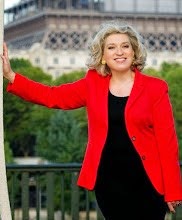
Anne-Elisabeth Moutet outside the Marks & Spencer's on the Champs-Elysées Photo: ALASTAIR MILLER
 
Like every Parisienne, I was pretty chuffed when I first heard Marks & Spencer were coming back to Paris. We'd never understood why they'd gone away in the first place.

They used to have this wonderful huge store just opposite Galeries Lafayette, in the shopping haven segment of Boulevard Haussmann that's Paris's answer to Oxford Street.

After going through the gauntlet of stand-offish sales counsellors at the Galeries and Au Printemps – shiny places all about designer brands, It-bags, big-name scents and eye-wateringly expensive size zero dresses – M&S was a refuge with acres of sensible knickers, tactful knit black trousers that went with everything, and the Food Hall, which to us was the height of exoticism.

You didn't go to Marks and Sparks to make your normal French Sunday lunch; you went to stock up for a party, for Christmas dinner, for a kid's birthday, for a treat. (Buying your Christmas cake, not the very morning from your neighbouring boulangerie, but in September? In a tin? This was more outlandish than anything they could dream up in Papua-New Guinea.)

The calorie count, for once, went out the window. The streaky bacon sizzled gloriously with our farm oeufs Label Rouge. The tea was organic (which at the time wasn't readily available here) but the biscuits and cakes were seemingly entirely made of additives, processed sugar, and improbable chemical colourings approved by the Brussels Commission.

Our kids loved it. We loved it. My friend Nadalette's twin daughters religiously celebrated their birthdays, year after year, with the M&S caterpillar-shaped chocolate cake, gaily sprinkled with multicoloured M&M shavings. They cried when they were told they couldn't have it any longer.

You'd decorate a sophisticated dinner table with M&S toffees, wine gums and caramels in their wrappings. Ad agencies would serve M&S sandwiches during their brainstorming sessions – it was so décalé, so creative.

You'd never try to pass off a ready-made M&S dish as your own if you served it at dinner; on the contrary, you'd triumphantly announce "Ce soir, dîner anglais! Je suis allée le chercher spécialement chez Marks et Spencer!"

At the other end of the scale, in the Septième and Seixième Sud, to Madame Figaro-reading bourgeois families, whose traditional values include an Anglophilia preserved in a kind of ideal 1950s Sloaney aspic - a hazy mix of tartan skirts, cashmere twin-sets, good boarding schools for girls, Prince Charles and le five 'o clock - M&S was the Source, the Ur-provider of The Right Stuff, when they barely knew about Mulberry or Fortnum's.

They'd stock up on tea, scones, muffins, shortbread and chocolate mints before driving off to the country on Friday afternoon. They were the people who wrote messages of bleak despair on the visitors' book set up by the redundant employees of Boulevard Haussmann when M&S abandoned us in 2001.

And now M&S were back. Round the corner from me, in fact. On the Champs-Elysées. Where the Esprit shop closed in under two years. And the shop before that. And the newspaper whose offices are on the fifth floor, the ill-fated France-Soir, bought by yet another Russian oligarch, Sergei Pugachev, for his 25-year-old son, Alexander, now nearly in receivership. (The paper, not the son.)

Ever since they tore down the Sélect café yonks ago at the corner of rue de Berri, this has been something of a jinxed location.

I also wondered what your normal M&S shopper had in common with the chav zoo the Champs have become.

Every weekend there are about a quarter of a million people on the avenue, in hoodies, baggy jeans, short skirts or Adidas trainers (big Adidas store at number 22), dodging pickpockets, intrusive beggars, and football fans (huge Paris Saint-Germain football club store, at number 27, complete with the odd optimistic David Beckham picture) to queue up for the latest Tom Cruise movie, get a Big Mac (McDonald's at number 140) or buy sprayed-on jeggings for €9.95 at H&M (number 90).

I know my Champs-Elysées: I have lived in the area half my life; and was in fact born about 100 metres off what the Paris Tourism office likes to call "the most beautiful avenue in the world", a tag duly picked up by the M&S advance publicity.

Long before the actual opening last Thursday, you had to question how they would manage to fit a complete M&S into a store with the footprint of a family flat.

I dropped by on my way home on Friday. There was a long queue patiently waiting outside in the nippy late November evening, with bewildered middle-aged shoppers admitted one couple at a time.
Through the windows, you could see near-empty clothes aisles. You had to wonder if the queue – spotlighted by every daily newspaper after the opening, Blitz spirit, free tea and biscuits, so Anglais – wasn't a bit of publicity stunt.

When I put this to the store manager, she blanched and went all elf 'n safety on me. There Were Rules, she explained. Which were Essential. It got a bit like pulling teeth, until I managed to get out of her that only 420 people are allowed inside the 14,000 square ft store at any time.

Most of these were queuing again, inside, for the "food hall" – which is more like a food grotto, in the back, the average size of your local newsagent. The food was in fact added as a bit of an afterthought: originally, the store was supposed to establish M&S as a fashion retailer.

It was only after something of a spontaneous email campaign, once the rumours started in Paris, that some space was freed for it. It apparently already accounts for 35 per cent of sales this first week, instead of the projected 10 per cent. "There will be Simply Food outlets in Paris soon," the nice publicity woman told me.

It's very obvious they can't open fast enough for us. Harried shop executives were helping the assistants continuously restocking the shelves, as the oeufs écossais, the poulet à l'Indienne, the sandwiches au bacon and the scones got grabbed in quasi-wartime scenes.

When we came back on Saturday morning to take pictures, the queue was still there, but the inside of the store was fuller. It was still the food that attracted the most customers – very few seemed to have found their way to the lingerie department, occupying most of the entire first floor – but the women's clothes now also got some attention.

The choice, I have to say, is very stylish and covetable. There was a €25 Autograph gold lamé tank top that looked just as good as something nearly similar I recently bought from Max Mara at €200, scrumptious shearling gloves in buttery suede for €62, a cashmere hoodie for €120. Not cheap by any standards – my favourite Per Una £15 nightie was €32.50 – and certainly more than the 10 per cent mark up on London prices announced.

I went looking for some of my favourite M&S items, the five rolled up cotton knickers for £6, but they obviously had been deemed too down-market to cross the Channel. Ditto the opaque black tights at £8.

M&S Paris have gone chic on us. They should be a success – I espied on a whiteboard, as we were dropping the photographer's heavy kit bag in a back office, that 3,100 customers have visited it the last two days, each spending an average basket of €36.50.

If the objective was to create a buzz in advance of the normal-sized stores scheduled to open within the next two years outside central Paris, they probably have achieved that.

All the same, as I walked home past my local supermarket, whose manager was hugely miffed that M&S are allowed to open on Sundays while he cannot, I thought I couldn't see myself or anyone queuing for half an hour under the baleful eye of a basketball-player-sized security guard for a sandwich or a Chicken Tikka Masala.

As for the sensible knickers, I'll still get them in London.

© Telegraph Media Group & Anne-Elisabeth Moutet, 2011

Sunday, October 9, 2011

An expectant nation waits for Carla to deliver

Could the president's popular wife become Paris' first yummy mummy, asks Anne-Elisabeth Moutet

Carla Bruni-Sarkozy has complained about not being allowed to smoke or drink during pregnancy (REUTERS)

Forget little Florence Cameron. Forget Tony and Cherie’s Leo – and those embarrassing Balmoral disclosures. Nicolas and Carla’s bébé, due to arrive imminently, promises to send France into a rarely-seen frenzy, right in time for next year’s presidential election.

Coyly alluded to for months before the obviously growing bump prompted the happy Maman to disclose her condition in a Bastille Day interview about Libya (as one does), the presidential child will, we are assured, be shielded from media intrusion. No pictures, either, at the chic Clinique de La Muette in the 16th arrondissement of Paris where she is expected to give birth (rated on the forums of auFeminin.com, France’s answer to Mumsnet, as the Parisian woman’s favourite).

“I made a mistake early on when I allowed my son Aurélien to be photographed,” Carla told Madame Figaro magazine a few weeks ago, referring to her much-publicised first holiday in Egypt with the then-courting Sarkozy in 2008. She went on to explain that children should be “protected from the world”.

Few in France doubt that her actual meaning was that Nicolas Sarkozy should be protected from any relapse into his early show-off antics, when the president swaggered in Ray-Ban aviator glasses with his glamorous wife du jour on his arm, seemingly measuring his success by the number of paparazzi clicking away in the immediate vicinity. This has never gone down well here, where aloofness – even cold arrogance – has, over the centuries, been the default attitude of successful monarchs and presidents alike. It is especially a no-no in times of economic hardship.

Carla Bruni, a wealthy and successful woman in her own right, has always managed to stay far more popular than her husband by a combination of understated simplicity, precision-calibrated self-deprecation – and a shrewd instinct for discretion honed by an Italian childhood spent under the very real threat of kidnapping by the Red Brigades.

In this she blends seamlessly with her adopted habitat, the Seizième sud, home of the discreet Parisian bourgeoisie. Her neighbours in the 75016 postcode, Nicolas Sarkozy’s natural constituency, strongly disapproved of the initial Sarko style, which included parading his three sons (by his two previous wives) and two bottle-blonde stepdaughters at his 2007 Elysée inauguration.

The new régime, in which Carla’s instincts collude with Sarko’s spin-doctoring team, has been protesting (unconvincingly) that “no-one is interested in this private event” – there won’t even be an official Presidency communiqué for the birth – while overseeing a few strategic leaks to upmarket women’s magazines.

Adding a light skirmishing touch to the whole setup is Sarkozy’s somewhat louche 82-year-old father, the Hungarian-born Baron Pal Sarkozy de Nagy-Bocsa, who has become an unofficial but quite chatty source to German tabloids, on every matter from the Catholic baptism to the (inaccurate, as it turned out) date planned for the birth. There is no love lost between Nicolas Sarkozy and his four-times-married father who abandoned his wife when young Nicolas was eight; but there is a feeling here that if the president had really wanted to shut Daddy up, he would have succeeded.

Predictably, all the celebrity websites and weeklies have been scrambling to find out every possible detail of the forthcoming birth. A picture of the baby is currently quoted at €50,000 by the main photo agencies. Clinique de La Muette, where the former justice minister Rachida Dati had her own daughter Zohra two years ago, denied that a whole floor had been booked and cordoned off to ensure Carla’s privacy, implicitly confirming the rest of the reports – that a couple of €250-a-night “ordinary rooms” on either side of Ms Bruni-Sarkozy’s modest suite will be occupied by security officers. La Muette has a controversially-high rate of C-sections, but there has been no indication that the 43-year-old Bruni thinks herself too posh to push.

Carla herself has tried to forestall probable criticism in acknowledging herself “incredibly fortunate – I have help, staff; I don’t have to get back to a job.” (And a good thing, too, as she has indicated she will use “green” washable cloth nappies.)

She, Sarkozy and Aurélien do not live at the Elysée but in her pretty rue Pierre Guérin townhouse, right next to the leafy Villa Montmorency gated enclave where Gérard Depardieu, Celine Dion and missile-and-media tycoon Arnaud Lagardère have homes – and just across the garden from Aurélien’s father, the philosopher and radio personality Raphaël Enthoven. Far from resenting this proximity, Sarko relishes it: an unhappy, lonely boy himself, raised by a working mother and an adored grandfather, he famously likes to gather his children and extended families, and greeted a bemused Enthoven the first time he met him, at the traditional 2008 Elysée Christmas party, with: “Now you’re a member of the tribe...”

France doesn’t really have yummy mummies, but if anyone were to start the trend, Carla Bruni is by far the best-placed. Like famous mothers here before her – Catherine Deneuve, Inès de La Fressange, Princess Caroline – she’d bring a definite Gallic twist to it. “I can’t stand this pregnancy any longer; this baby can’t come soon enough so that I can smoke and drink again,” she moaned recently, to no outrage whatsoever.

But it is also Bruni who put her husband on a strict training regimen with her personal trainer almost as soon as they got together. The trainer, the improbably-named Julie Imperiali, talked to the press about the “perineal exercises” she designed for the couple, to “tone up posture” and “improve their sex life”. Apart from her rounded belly, Carla seems to have gained no weight at all during her pregnancy: everyone expects her – and, indeed, this being Paris, expects of her – to be back in model shape by Christmas. (It’s not just mummies: all Frenchwomen are deeply competitive when it comes to appearance.)

Carla Bruni breast-fed Aurélien briefly, and may well do the same this time, although enquiries on the subject are met with a stony silence at the Elysée – Frenchwomen are rarely evangelical about this, and take the transition to bottles in their stride. It is likely the baby will be dressed by Bonpoint, Jacadi, Tartine et Chocolat, possibly even receive presents from Baby Dior – although since this is all too often nicknamed “Baby Emir”, Carla might decide to steer clear of it.

Carla won’t have a real nanny problem. She already has live-in staff (to whom she is notably generous: she once employed an ex-convict she had met begging in the streets); and her mother, the expansive concert pianist Marisa Bruni-Tedeschi, who likes her son-in-law very much, will certainly insist on baby-sitting her new grandchild. She can afford to hire the best, who need only be vetted for security reasons by the French police.

Of course, most Frenchwomen aren’t in the same elevated circumstances, and while dreaming of the Norland graduates only employed these days by oligarchs and Gulf princes, end up with au pairs from Britain, Germany, Eastern Europe (there is a brisk network for Nice Polish Girls among traditionalist Catholic mothers), and girls from former French colonies such as Morocco and Sénégal. If you’re lucky, they have the accumulated experience of having cared for six small brothers and sisters, and become a family member, then friend, for years. If you’re unlucky, they are mostly interested in your dress cupboard and/or your husband – and everything ends up in a spectacularly messy divorce.

The Sarkozys will not have to worry about finding a good school for their child (or the vast amounts needed for the fees). France still enjoys an overall decent public education system, and a highly-subsidised private system which must follow the national curriculum by law. While Carla should not have to resort to state-subsidised day care, she might start her child in her local state nursery school at three – the received wisdom here being that this is a good time to start socialising children.

Frenchwomen also have a far less dogmatic attitude to child-rearing than their British middle-class counterparts. Their priorities are different – parents will pay vast premiums to move to the catchment area of a top-rate collège or lycée, but they will not, as a rule, interfere much with the teachers. Both Sarkozys attended private but not especially-distinguished schools, Carla in Switzerland and Sarkozy as a day pupil in Paris, after flunking out of Lycée Chaptal. If their child manages, down the line, to find a place in the infinitely more prestigious State-run Lycées Louis le Grand, Henri IV or Saint Louis in Paris, he or she will be considered to have done better than them.

It is worth noting that in this process, nobody here seems to be interested in a child’s self-esteem: the psychoanalyst Pascal Baudry has estimated that by the time he or she reaches the age of 18, a French child has been criticised 100,000 times – mostly with little kindness in mind. Schools are expected to produce academically-able children, not well-rounded characters. (This occasionally helps explain the humourless tone of public debate in the country.)

But this is still far in the future, when, no matter how next May’s election pans out, Baby Sarkozy will be the child of a former, not a sitting chief of State. Meanwhile the nation awaits l’enfant, the first legitimate baby to be born to a French president in history. However she decides to play things, Carla Bruni will be blazing a trail.


Saturday, September 3, 2011

Sarkozy's France: wiretaps, brown envelopes - and never any regrets

As a shrewd student of political history and keen judge of the French pulse, he will probably consider the current accusations against him as merely light skirmishes, writes Anne-Elisabeth Moutet

Sarkozy's France: Wiretaps, brown envelopes - and never any regrets
Sarkozy's game plan for 2012, in other words, was never to refashion himself as the country's ideal son-in-law, but as the safest pair of hands in difficult times Photo: PATRICK HERTZOG/AFP/Getty Images

It was a first for a French president: an apology, gracefully expressed, in front of the Cabinet, the Speakers of the House and Senate, and a roomful of French officials.

France, said Nicolas Sarkozy, had far too long supported authoritarian regimes that had very little to do with her core values. He himself had been "part of this". But no longer. The time had come to make morally exemplary choices.

This was Dr Jekyll-Sarkozy at his best, commenting on French foreign policy in the light of Gaddafi's fall for his traditional annual conference with French ambassadors from around the world. (The French don't apologise. Like the ancient Romans, they think owning up to a mistake is a fatal admission of weakness)

But don't expect this new, fresh approach to be extended to domestic politics, and especially to the skein of old scandals rising up this past week to encumber Mr Sarkozy as he prepares for the eight-month trek to the 2012 Presidential contest.

The two-year-old affaire Bettencourt has come to haunt him and his party again, with fresh allegations of illegal financing of his 2007 campaign by the L'Oréal heiress.

There have also been claims of Secret Service wiretaps on the mobile phones of a Le Monde investigative reporter and the co-author of a new book titled Sarko Killed Me.

The book is compiled of interviews with 27 personalities – ex-ministers, civil servants, television presenters, MPs, a number of journalists – who claim presidential displeasure cost them their career, reputation, or simply the favour they once enjoyed at the Elysée.

Prominent among them is an investigating magistrate, Isabelle Prévost-Desprez, who was removed from the Bettencourt case.

She tells of accusations, from two witnesses, that Liliane Bettencourt once gave Nicolas Sarkozy cash in a brown paper envelope – but says those were relayed outside of a formal interrogation, and therefore she did not include them in the record of her own official inquiry. (The one named witness, a former nurse working for Mrs Bettencourt, denied all yesterday.)

The general feeling in Paris is that Ms Prévost-Desprez claims raise more questions than they answer.

"Why then did she not re-interrogate her witnesses?" asked budget minister Valérie Pécresse: It's a valid question, given that investigating magistrates have notoriously extended powers in France – Eva Joly, who made her name in the 1980s and 1990s as a tough investigating judge in corporate corruption cases, did not hesitate send witnesses to jail to "soften them up", including the chairman of oil giant Elf.

The claims of Secret Service wiretaps, however, may be more of a problem.

The Interior Minister, Claude Guéant, a close Sarkozy associate and former Elysée chief of staff, was quick to answer that nobody's telephone was actually eavesdropped, but admitted that security services requested records of calls to the Le Monde journalist, Gérard Davet, in order to seek the source of a Ministry of Justice whistleblower who'd leaked records on the Bettencourt case.

The whistleblower, who was demoted and sent to an obscure civil service posting in Cayenne, French Guiana, isn't protected by law, but journalistic sources are, in deference to a recent 2007 law passed by ... Nicolas Sarkozy.

Overall, it doesn't yet look as if the current accusations have yet reached the danger stage for the French president.

They will, however, form part of the Opposition general counter-attack after Nicolas Sarkozy's unexpected run of luck in the past few months.

His good fortunes include not just France's role in the Libyan victory, and the baby son his wife Carla Bruni is expecting in October, but also the disappearance of his toughest rival, Dominique Strauss-Kahn, after his arrest on suspicion of suspicion of sexually assaulting a New York chambermaid.

A deeply polarising figure, Sarkozy was never elected because the French liked him.

Soon nicknamed the "bling-bling president" for his love of Rolex watches, Ray-Ban aviator sun-specs, thick cigars, holidays on friendly tycoons' yachts, and trophy wives, he was seen as the "President of the rich" after a very first budget that limited to 50p the top tax rate.

It didn't help either to be nicknamed "the American" for his eagerness to rejoin Nato, his considered support for presidents Bush and Obama, even his habit to jog in a NYPD tee-shirt given him by Rudy Giuliani.

The French prefer their leaders, from Louis XIV to de Gaulle, to stay icily aloof: Sarkozy's populist manner, four-letter-word use, and short temper did him no favours.

They did, however, respect his courage, believing that he would not shy of making hard reforms after his predecessor Jacques Chirac avoided any kind of social conflict for twelve years.

Sarkozy's game plan for 2012, in other words, was never to refashion himself as the country's ideal son-in-law, but as the safest pair of hands in difficult times.

As a shrewd student of political history and keen judge of the French pulse, he will probably consider the current accusations against him as merely light skirmishes, which will be forgotten soon.

He knows the French despise money, are overall tolerant of sexual hijinks as long as they're consensual, and are forgiving of a degree of political dirty work. (To this day, the most popular president of the Fifth Republic after de Gaulle remains François Mitterrand, despite the fact that he ordered over 5,000 illegal wiretaps in order to conceal his natural daughter and parallel family.)

Unlike most male politicians, Sarkozy has already understood the one great change in the electorate, wrought by the DSK affair – French women voters will no longer tolerate sexism.

That's why he immediately dropped his junior minister and suburban mayor Georges Tron, when Tron was accused of foot fetishism with his female City Hall employees, whom he pressured into allowing him to give them massages. (Tron is now the object of two separate criminal lawsuits.)

He also knows that for centuries the French accepted their government's need to keep a watchful eye on the citizens: until a year ago, there was a police department known as the Renseignements Généraux, or RG, whose business it was to compile dossiers on any person of note in the country, so that the government would not be wrongfooted if "notables" suddenly found themselves in the spotlight.

(Le Monde recently published some sizzling 2007 RG records on Dominique Strauss-Kahn's visits to swingers' clubs and to prostitutes in the Bois de Boulogne.)

Few people in France believe that because the RG were abolished in name, there doesn't remain some police unit somewhere, in charge of knowing who's doing what where.

As for losing the favour of the president when you do something he doesn't like, that's the way the country has been run since the Middle-Ages, and is perfectly familiar to anyone here employed either in the civil service, or in the notoriously top-down French corporate world.

Meanwhile, the last thing Nicolas Sarkozy plans to do is to apologise.


Tuesday, August 23, 2011

Even the French won’t vote for Dominique Strauss-Kahn now

It’s not the sex, but the financial extravagance that has turned France against him.

Does a true Socialist live like he did? - Even the French won’t vote for Dominique Strauss-Kahn now
Does a true Socialist live like he did? Photo: REUTERS

Dominique Strauss-Kahn is out of jail, but is he out of the woods? The leaders of the French Socialist party may profess “satisfaction that justice was finally served in New York”, and claim that Strauss-Kahn can still take up his career where he left it, before that unfortunate incident with the chambermaid and the rape accusation. But don’t believe a word of it.

True, many French people still buy the various conspiracy theories peddled on internet forums about DSK’s downfall. Sarkozy did it. No, Putin did. No, it was Wall Street, because as director-general of the International Monetary Fund, DSK wanted to regulate the banks. (The fact that nobody suspects his main rivals within his party, François Hollande and Martine Aubry, of being organised enough to arrange a foreign honeytrap may not bode well for their chances in 2012.)

The French can tolerate a lot from their politicians, as long as they remain discreet. Like old-style wives, the voters would rather be lied to than hear the blunt truth, because at least it shows that their leaders want to keep a vestige of the relationship alive.

What has hurt DSK – and the reason why 61 per cent of the public believe his career is over, against 35 per cent who have kept the faith – is not the sex, but the lifestyle. His lawyer’s version of the events in that Sofitel hotel might be tawdry: a 10-minute consensual encounter with a hotel chambermaid, sandwiched between a telephone call to his wife in Paris and a lunch date with his daughter in mid-town Manhattan. But what sticks in the craw of crisis-hit France are the revelations about his money.

DSK’s camp has long known this is his Achilles’ heel: they once sued a newspaper for reporting that he’d bought some £5,000 suits from a Washington tailor. But now the public has been regaled with tales of the vast wealth of the Socialist statesman’s TV-star, heiress wife; the elegant houses and apartments in five different cities; the £35,000-a-month townhouse rented for the duration of the New York court case; the $100 steaks delivered to his door during his enforced sojourn; the $600 pasta dinner (with truffle shavings) at Madonna’s favourite Italian bistro to celebrate the return of his bail cheque.

“A Socialist doesn’t live like this”, say the comments – indeed, Sarkozy earned himself the title of the “the bling-bling president” for far less. And Sarko’s much-derided love for yacht-owning friends and Rolex watches pales besides the Strauss-Kahns’ conspicuous consumption: “Next to Anne Sinclair” – aka Mrs DSK – “Carla is on benefits,” a gleeful president reportedly told his friends.

Of course, the sex issue has had an impact. It is significant that this week’s news that prosecutors have dropped the sexual assault charges was welcomed with relieved statements from male politicians on both sides of the spectrum, and criticism from their female counterparts. The defence minister, Gérard Longuet, said the whole affair had been “a terrible waste – such a brilliant man deserved better”. Jean-François Copé, the Gaullist party chief, expressed (a possibly disingenuous) “happiness for Dominique Strauss-Kahn, who was targeted by a harsh judicial procedure”. Meanwhile, the Communist MP Marie-Georges Buffet called the DA’s decision “bad news for justice and for women” – for once agreeing with her Gaullist colleague in the House, Françoise Hostalier.

DSK’s reputation has also taken a battering from the French press, as newspapers, perhaps ashamed of having ignored his personal life for so long, came up with a series of uncharacteristic revelations. Le Monde subscribers spluttered into their espressos in June when they read a full-page story that included the name of the swingers’ club where DSK was an habitué, or excerpts from a police report on his being caught with a prostitute in a parked car in the Bois de Boulogne in 2007. The French have a strong stomach, but this may have tested it too far.

DSK’s spinners have now switched to full attack mode, believing that this is their last chance to rebuild their man’s tattered reputation. Both Le Monde and Le Journal du Dimanche have come out with competing accounts (worthy of Sylvie Krin herself) of the torment endured over the past three months by DSK and his wife, cloistered in their luxury New York pad. It’s so ham-fisted and overblown that you’d think it was really sponsored by his Socialist rivals, cottoning on at last to the fact that his support in any capacity in the upcoming presidential race might come as the kiss of death. The spin doctors seem to think that dubbing Anne Sinclair “Mother Courage” and DSK “the homeless, harsh exile, treated like a pariah”, who “spent his prison days… solving complicated mathematical equations or playing chess on his iPad” will decisively tip public opinion in his favour once more. Somehow, it doesn’t seem likely.